Spectator Life

Spectator Life

An intelligent mix of culture, style, travel, food and property, as well as where to go and what to see.

AI is the end of writing

Unless you’ve been living under a snowdrift – with no mobile signal – for the past six months, you’ll have heard of the kerfuffle surrounding the new generations of artificial intelligence. Especially a voluble, dutiful, inexhaustible chatbot called ChatGPT, which has gone from zero users to several million in the two wild weeks since its inception. Speculation about ChatGPT ranges from the curious, to the gloomy, to the seriously angry. Some have said it is the death of Google, because it is so good at providing answers to queries – from instant recipes comprising all the ingredients you have in your fridge right now (this is brilliant) to the definition of quantum physics in French (or Latin, or Armenian, or Punjabi, or – one memorable day for me – Sumerian).


Crying shame: the weaponisation of weeping

‘Tears are not enough,’ ABC once sang defiantly - but these days, they’re more than enough for handsomely rewarded celebrities to assure us that they suffer like the rest of us, so please don’t hate them. Watching the BBC Breakfast presenter Sally Nugent - a 51-year-old woman - boo-hooing recently after watching a clip of some cute guide dogs, I sincerely wished that Lord Reith might rise from his grave and bundle the heaving hack under a cold shower. I’m just so bored by celebrity tears. Or take Frankie Bridge, the ex-Saturdays singer, an attractive young woman with an adoring husband and adorable children, who like her footballer spouse Wayne has a net worth of around £9 million.

Books to look out for in 2023

After a fair-to-middling 2022, it’s not unreasonable to hope that 2023 will see several stars burn brightly in the literary firmament. Whether what promises to be the most talked-about book of the year, Prince Harry’s Spare (out tomorrow with Bantam), is included in this number remains to be seen. On the plus side, the Prince has the estimable J.R. Moehringer as his ghostwriter; on the negative side is the fact that his every public appearance over the past few years has been so combative that we might expect little more than a 416-page exercise in score-settling. More reliable pleasures await. Pamela Anderson’s memoir Love, Pamela (Headline, January) should be a revelatory and fascinating dive beyond the usual bimbo clichés.

The tyranny of voice notes

Ping! My phone vibrates with a message from a new friend. A mild spike of dopamine dissipates on seeing she’s left me a WhatsApp voice note. However, it’s short and, hopefully, it’s a one-off.  I reply with a text message, hoping she’ll register the switch in communications. Ping! Oh no. She’s a voice-noter. She’s a bloody voice-noter. And this one is well over two minutes long and I don’t know her very well, so I’m going to have to listen to the whole thing without speeding it up. It’s an invitation to dinner, but this does nothing to quell my mounting frustration and irrational thoughts of disengaging myself from this nascent friendship.  ‘Yes great thanks,’ I reply by text, without – pointedly – an ‘X’.

My advice to Harry and William

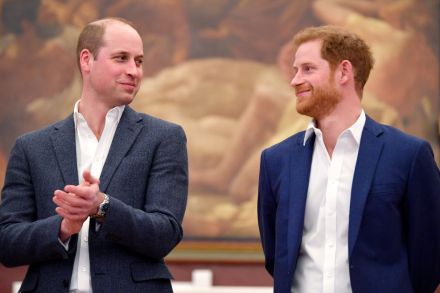
Reading about the latest about the pathetic-sounding scuffle between Prince Harry and his older brother, I think I could tell the pair a thing or two about fraternal enmity. My older brother, another Harry, and I have not spoken to each other in more than 30 years. He was taller, blond and looked Germanic. I was shorter, brown-haired and looked Greek. He never made it at school, whereas I collected lots and lots of sporting trophies. My father named him an executive in his shipping companies, I was the odd man out. Harry had the largest house in the Hamptons and the poshest apartment in New York, whereas I sort of lived a gypsy life. Harry was not athletic, I excelled in sports and represented Greece in three of them.

In defence of Netflix’s Ancient Apocalypse

British writer Graham Hancock has riled the archaeology community with his Netflix documentary, Ancient Apocalypse. The series follows Hancock to ancient sites around the world in pursuit of proof that an advanced human civilisation existed thousands of years before the first cities of Mesopotamia. Hancock, a former Economist correspondent, argues that most archaeologists are too stubborn to admit even the possibility of such a civilisation. Several archaeologists have rebuked Ancient Apocalypse since its release in November. They claim that it propagates false theories, avoids inconvenient facts and regurgitates old beliefs about ancient myths. One Guardian columnist called it ‘the most dangerous show on Netflix’.

Stop broadcasting your ‘personal news’

‘Some personal news! Delighted to announce I’ll be joining [insert major company] as the new [insert extremely impressive-sounding, well-paid, prestigious job title] this week! It’s been great working at [insert other major, if slightly less gleaming company] but I’m so [insert word denoting excitement or thrill, including "excited" and "thrilled"] at what the future holds! You can find me at [new prestigious institutional email address].’ It is no exaggeration to say that over the past week, half of my Twitter feed has been composed of alerts that follow this exact script. As the trickle thickened to a deluge, I wondered if there was some secret spoof going on. Were they all in on a new year joke?

The rise and fall of agony aunts

What better barometer of the nation’s psyche could there be than the questions in an agony aunt’s postbag – and the answers they receive? ‘My transgender brother is furious over my choice of baby name’, ‘My Remainer husband is refusing to get a new passport’ and ‘My leftie wife is condescending and annoying’ are just a few of the timely examples from one recent broadsheet column. These days, many responses to such dilemmas are variations on ‘Live your truth’ (in other words, do and say whatever makes you happy) – which may go some way towards explaining why agony aunts are no longer the essential reading they once were.

There are no ‘correct’ recipes when it comes to pasta

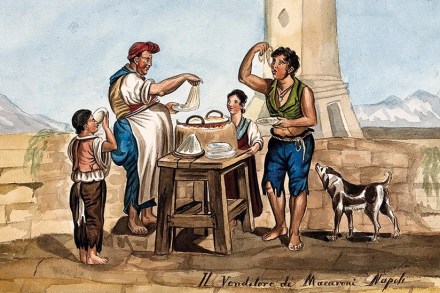
A few years ago I was feeling peckish at Catania airport. I wandered over to the main café and spotted – beyond the stacks of panini stuffed with wilting prosciutto – a sign promising pasta. I assumed they’d be doling it out ready-made from a hulking pot, school-canteen style. But no: they were carefully blanching each portion of rigatoni, then finishing it in the sauce (a humble pomodoro). Who cares about foot-tapping customers on the verge of missing their flights? There were more noble priorities. The celebrity chef Carlo Cracco caused an uproar when he included garlic in his amatriciana sauce This national pedantry – more interesting than the British and their tea – has often been mined for comedy.

There’s nothing new about ‘nepo babies’

One of the neologisms of 2022 was the phrase ‘nepo baby’. Short for ‘nepotism baby’, it was coined by younger people, the so-called Gen Z, to describe the syndrome of the increased attention and opportunity afforded to the children of celebrities – in practice giving them a leg-up into a career in modelling, acting or singing.  A curious aspect of the trend is that these newly cynical youths are only belatedly realising that many of the young stars in their firmament have famous parents: Lily Collins of Emily in Paris, for example, is the daughter of the rather-better-known-to-their-parents Phil.   But it’s only the term itself that is new.

The Spectator’s best TV shows of the year

The Offer (Paramount Plus) https://www.youtube.com/watch?v=iowLzO9-aew Even when you know the ending, this ten-part drama about the making of The Godfather, seen from the perspective of novice producer Albert S. Ruddy (Miles Teller), is outrageously gripping, gorgeously evocative of louche, cocktail-drenched late 1960s Hollywood, wittily scripted and superbly acted. Matthew Goode is especially watchable as superproducer Robert Evans. And this mostly true story has so many eye-popping moments – often involving the real mafia who at first resisted, then supported the movie – it feels more like the raciest and most implausible fiction. Reacher (Amazon) https://www.youtube.com/watch?

Films to watch out for in 2023

It would be fair to say 2022 was not a vintage year in cinema, reflected in UK box office receipts which remain around a third below the pre-pandemic year of 2019. That’s not to say there weren’t some enjoyable releases (such as The Banshees of Inisherin, Triangle of Sadness and The Northman) – but the biggest hits of the year consisted of superhero franchises and movie sequels (Top Gun: Maverick, Avatar: The Way of Water, Jurassic World Dominion, Fantastic Beasts: The Secrets of Dumbledore, etc).

The best new year celebrations in literature

Literature presents many different ways of observing the new year. Much like real life, the options range from big parties to quiet stay-at-home gatherings… and existential crises. In Louisa May Alcott’s Little Women, Meg and Jo March attend a New Year’s Eve party at the home of their family friend Mrs Gardiner. ‘Down they went, feeling a trifle timid, for they seldom went to parties, and informal as this little gathering was, it was an event to them.’ This is the moment that Jo converses with Laurie for the first time and sparks fly as they watch the New Year’s Eve party from their shared point of refuge in a small curtained recess.

The Spectator’s best films of 2022

Banshees of Inisherin: a magnificent cinematic metaphor https://www.youtube.com/watch?v=uRu3zLOJN2c The In Bruges writer-director Martin McDonagh has made another film starring Colin Farrell and Brendon Gleeson which, this time, is set in 1923 on the tiny Irish island of Inisherin. Colm (Gleeson) and Padraic (Farrell) are lifelong pals and drinking buddies until Colm abruptly decides that’s it, friendship over, and he’s deadly serious. If Padraic so much as approaches him he’ll cut off one of his own fingers.

The remaking of Gainsborough’s House

From the road Gainsborough’s House looks like it could be a thoroughly plausible restaurant in a town like Godalming or Chertsey, the sort of place where a prawn cocktail costs £15 and comes with most of a lemon in a white gauze satchel on a separate plate. The stout two-storey structure is Georgian, red brick and has a front door flanked by a pair of handsome Regency windows. Glance up the neighbouring side street, however, and you immediately see that something extraordinary has happened: there’s an enormous, ultra-modern, industrial-looking extension to the rear in brick and flint. Is it a carbuncle? I’ll leave you to decide, but yes, I’m confident it’s the sort of thing that would make King Charles choke on his fountain pen.

A diary of divorce

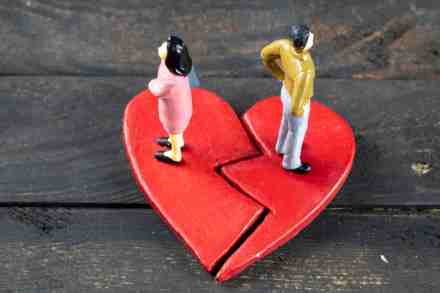
I’m living in the interstices between smokes. I fill the gaps ruminating, on the unretrievable past and the foreclosed future. I can’t concentrate enough for any one of my thousands of books to be a distraction. I wake up and count the hours until I’ll be tired enough to go back to sleep (or, on the weekends, until Match of the Day). My wife is gone. She’s gone for ever. Sometimes I hear the voices of reassurance. Be grateful for the time you had with her. I’m idealising our marriage. There are other fish in the sea. Thoughts which seem momentarily plausible. Until, as C.S. Lewis writes in A Grief Observed, ‘then comes the sudden jab of red-hot memory and all this “commonsense” vanishes like an ant in the mouth of a furnace’.

The Lord of Misrule and the lost spirit of Christmas past

The Lord of Misrule is surely the jolliest spirit of Christmas past. He is certainly the best named. He used to gambol through cities and courts, churchyards and dining rooms, telling jokes, performing tricks and spreading good cheer. Society shook itself upside down at his coming, so knaves played at being kings, children became miniature tyrants and noblemen misplaced their manners (an exercise in which some, admittedly, needed little assistance). His origins can be traced back to ancient Rome, where each December masters and slaves swapped places for the festival of Saturnalia and engaged in various acts of tomfoolery while gorging on food and wine. These traditions survived the advent of Christianity and found their own expression in the Church.

Why war museums matter

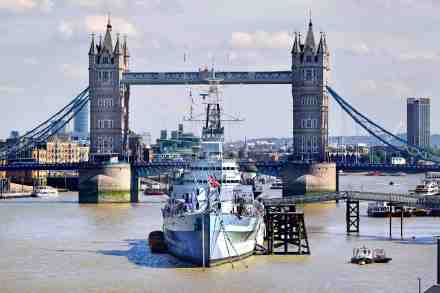
On Christmas Day 1942, the German battlecruiser Scharnhorst, along with five destroyers, left its Norwegian base and headed for a series of Arctic convoys, the British fleets transporting material and support to the Soviets. The townclass cruiser HMS Belfast, used to escort the convoys through some of the most dangerous seas in the world, played a vital role in the Royal Navy’s clever game of bait-and-blast that resulted in the destruction of the Scharnhorst, a monster that had already sunk a British carrier and two destroyers. Belfast, the most powerful cruiser in the Navy at her relaunch in 1942 (she hit a mine in 1939 and needed three years of repairs), now sits in the Thames by City Hall, a visitor attraction operated by Imperial War Museums.

The power of the royal Christmas message

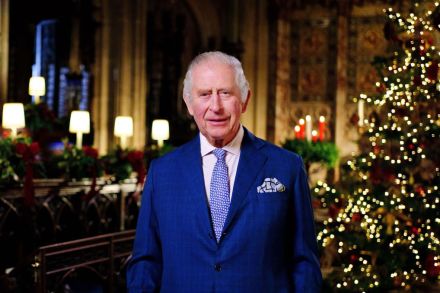
Today, shortly before 3 p.m., there will be a collective heave as backsides – weighed down from turkey and roast potatoes – are prised from dining chairs and plonked on to sofas to tune into the King’s speech. So I very much hope. For the royal Christmas broadcast is important, and this year’s of course marks a new era. This afternoon our televisions will bring us not only the first Christmas message from the new King, but indeed the first from any King. For while the tradition of the Christmas message began in 1932 under King George V, the first Christmas broadcast to be televised was not until 1957, and that of course was by Queen Elizabeth II.

The King’s speech

Why it’s time to go back to church

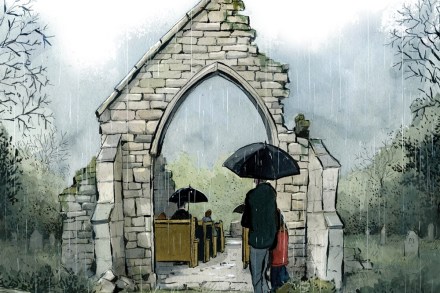
Somewhere in the midst of the hurly-burly antics and preoccupations of life, I think maybe, I’m probably a Christian. Not the type who sings in church with his eyes shut, but an extremely moderate, unthinking Anglican for whom the prospect of the existence of nothing is too painful for words. That makes me the sort of Anglican who starts to pray once the 747 has been in freefall for six seconds or more over the Atlantic, or the type that looks heavenward when Harry Kane is about to take the most important penalty in the recent history of English football. As a result, the Great Being plays precious little part in my day-to-day life; I fear I’m essentially Godless.

Forget Love Actually: the best alternative Christmas films

It's become one of the traditions of the modern festive period: arguing about whether Die Hard is a Christmas movie. The explosive 1988 film features, you may recall, a vest-clad Bruce Willis confounding Alan Rickman and his terrorist cohorts’ evil plans in a Los Angeles skyscraper on Christmas Eve – and it’s peppered throughout with fir trees and tinsel.   Some claim this means it should take its place as a festive staple alongside more conventional classics of the season, It’s a Wonderful Life et al. Opponents furiously insist that a proper Christmas film shouldn’t feature machine guns and explosions, but instead depict rather more heartwarming scenes.

The problem with Jeremys

Why is Jeremy Clarkson in trouble so often? Is it because he often appears arrogant, entitled or untouchable? Or is it for a much simpler reason: he’s called Jeremy? This week, in a column for the Sun, he suggested a rather unsavoury Game of Thrones-style punishment for the Duchess of Sussex. The article prompted 20,000 complaints to Ipso – more than the press regulator received in the whole of last year – and led to 64 MPs signing a letter of complaint to the paper’s editor. Clarkson has made a grudging non-apology and persuaded the paper to remove the article from its website, but unsurprisingly this is unlikely to satisfy the lynch mob already digging out those pitchforks ready to march on his well-publicised farm.

Peace on Earth? 10 films about Christmas on the front line

Christmas may ostensibly be a time of goodwill to all men, but war rarely takes a break for the festive season – as events in Ukraine sadly demonstrate. Here are ten films set during Yuletide where the front line is front and centre: Castle Keep (1968) – Amazon Rent/Buy https://www.youtube.com/watch?v=8uALKeb0C6U&t=1s Sydney Pollack’s (Three Days of the Condor) Castle Keep is set during the Germans’ failed Ardennes offensive of December 1944 and stars Burt Lancaster as one-eyed US Major Abraham Falconer. But if from that description you expect a meat-and-potatoes world war two actioner, think again.

Beyond Dickens: the best Christmas short fiction

Claire Keegan’s Booker-shortlisted Small Things Like These this year revived the tradition of Christmas short fiction. It’s a deftly done parable about cruelty and kindness in the run-up to Christmas, with actual snow – and tears.   Although Keegan’s novella eventually lost out to Shehan Karunatilaka for the Booker, it perhaps served a greater purpose than prizes: it was a reminder of the value of stories that connect us with our humanity, particularly around this time of year.  It was also a reminder that cultural consumption at Christmas needn’t merely be about overloading on films.

The pick of this year’s Christmas TV

Has a certain media mogul had a visit from three ghosts recently? I only ask as this year’s Sky Christmas schedule is so packed with treats and big-hitters that it can't possibly be explained by hard-nosed commercialism. An outbreak of sudden seasonal generosity seems to be the only explanation. Whatever has triggered Sky's largesse, the result is a little something for everyone – including those of us best described as jaded anti-Christmas types. I was particularly pleased to see the return of Billie Piper in the deliciously sardonic I Hate Suzie. From Succession writer Lucy Prebble, it's the chaos comedy that makes Fleabag feel like Emily in Paris. If you need an outlet from seasonal niceties, this is it.

Stop harassing me to review everything I buy

The email landed in my inbox one afternoon, as I frantically sandwiched work in between feeding the dog and doing the school run, its subject saying: ‘A quick reminder for you, Antonia Hoyle.’ Oh God, what now? Had I forgotten to pay a bill? Missed a deadline? It was worse. I hadn’t left a review for a company I’d purchased skincare supplements from – and six days after their initial request, they sounded disappointed, adding reproachfully: ‘We would like to remind you that writing a review of your experience will help us improve our customer satisfaction.

His Dark Materials is the perfect Christmas viewing

When you’re sitting on the sofa in the week ahead, stupefied into submission by food and alcohol and relatives and God knows what else, you’ll be tempted to watch something that will divert you from the gluttony. And, yes, the likes of Elf, It’s A Wonderful Life and Love Actually are all available, as they were last year. But maybe you’ll want to watch something that is not just entertaining but that makes the viewer think. Something that also has a provocative religious theme that is, if not quite the three wise men and the star of Bethlehem, as relevant this time of year as it ever is. Step forward the third series of His Dark Materials, all eight episodes of which became available on BBC iPlayer last night.

How to get the most from your wood-burner

Recently, Sadie Nicholas shared ten lessons she’s learnt from ten years of having a wood-burner. In response, Spectator readers offered their own advice for getting the most from your wood-burner – from maximising the heat and minimising the mess to fire-lighting tricks and cooking tips… Join the fan club ‘Combine wood-burners with small fans. The problem with heating a room in winter (or cooling it in summer is air circulation). A small fan or a large fan set on low speed quickly circulates the air, warming the entire room faster. It actually does cut down the cost of heating a room.’ ‘We highly recommend a free-standing fan on top of the wood-burner, which has vastly improved how heat is distributed.

Cheryl Tweedy’s West End debut is one to watch

For an industry so dependent on glitz and glamour, the West End has never quite mastered the celebrity debut. While big names might be a surefire way of shifting tickets, they have an unfortunate knack for ending up in mediocre plays – even when they’re as famous as Madonna. The problem is partly structural. A-listers aren’t exactly cheap, and their schedules are notoriously tight. Faced with those constraints, theatreland has developed an unfortunate habit of putting box office names – John Malkovich, Damian Lewis, even Lindsay Lohan – into derivative three-handers by David Mamet. They might be easy to make, but they rarely deliver. But are the days of celebrity mediocrity finally over?