Spectator Life

Spectator Life

An intelligent mix of culture, style, travel, food and property, as well as where to go and what to see.

It’s official: modern music is bad

It’s one of the hoariest cliches in popular culture: that every fading generation must, in flailing anger at its own imminent irrelevance, turn on the next generation and say, ‘your music is dire’. From the crusty judge contemptuously asking ‘who are these Beatles’, to the middle-aged outrage surrounding the spitting and pogoing Sex Pistols, to the Tory MP who expressed his horror at the Beastie Boys and Run DMC for ‘mocking disabled children in Montreux’, it is an established human tradition. And of course, it is always nonsense. It turns out the next generation has music of equal brilliance, passion, vivacity, excitement. Pop music once commonly expressed joy, love, energy, freedom, and happy sexuality Except, perhaps, this time.


Why we’ve come to love Camilla

Could it be that Queen Camilla has quietly, after all these years, been accepted by the British people? We’ve watched her navigate the past turbulent days with dignity and grit, just ploughing on with her public duties and keeping the drama low. I suspect that her steady-Eddy style is going down well, particularly since it’s now clear that the woman is a grafter, and we like a grafter. How admirable her low-key style seems when compared to the antics of the Sussexes Looking back, we could see that she was a first-class trooper at the end of January when she opened a new Maggie Centre at the Royal Free Hospital in London; elegant in turquoise and smiling her broad toothy smile. The public didn’t yet know about Charles’s cancer diagnosis, but surely Camilla did.

Why Trump loves The Smiths

Donald Trump and The Smiths make, you would think, very unlikely bedfellows. Recently a mini-kerfuffle broke out over a Smiths song – ‘Please Please Please Let Me Get What I Want’ – playing over the tannoy at a Trump rally as part of the warm-up. Saying the unsayable, saying what we wish we could say, is a very attractive quality Smiths guitarist Johnny Marr was certainly taken aback. ‘I never in a million years would’ve thought this could come to pass,’ he tweeted after seeing video footage of the song being piped from a South Dakota MAGA stage. ‘Consider this shit shut right down right now.’ (It’s unclear what he’s done to shut it down, or what power an artist has to stop this kind of use of their music.

The rise of the Thomas Hardy guy

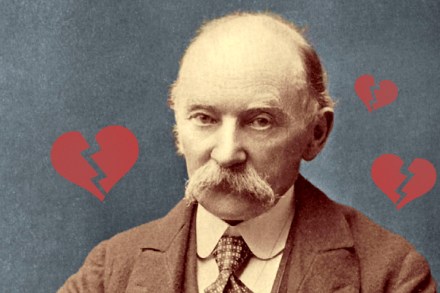
If I had to pick a king of women I’d call a draw between Vermeer, the 17th century painter, and Thomas Hardy, novelist and poet. Both had an outstanding capacity to take women’s interior lives seriously, to see individual women as distinct, intense and complex, and far from corresponding to any feminine stereotype. Whether it’s Vermeer’s young woman with a pearl necklace, Eustacia Venn in Hardy’s The Woodlanders or his mournful poems about his wife Emma’s death, these are moving, emotionally astute portraits. The pick-up artist movement, which began in the early 2000s, created its own breed of Hardys But while Vermeer seems to have been a decent husband, Hardy was not.

Is Marvel finished?

Martin Scorsese thinks Marvel films aren’t cinema. ‘The pictures are made to satisfy a specific set of demands, and they are designed as variations on a finite number of themes,’ he wrote in a New York Times article in 2019, written after a wave of backlash from superhero fans and directors alike. Earlier that year, Marvel’s three-hour blockbuster The Avengers: Endgame had garnered over $2.7 billion. For a while it was the highest-grossing film ever made. People turned up to see it in spandex catsuits. You couldn’t move for replica infinity stones. Some cinemas in America, eager to fill the demand, screened the film over and over for 72 straight hours.

Have I been cursed by a white deer?

It was standing completely still, about 40 yards away, partially obscured by a clump of hazel: a pure white deer. It looked almost iridescent in the gloom of an overcast winter day. My dogs were straining at the lead but otherwise all sense of movement ceased for half a minute, maybe longer. I managed to decapitate it with a twist and fastened the head and horns to my car roof with bungee cords Then something broke. The white deer twitched. It was only when it began to run that we realised it had been accompanied by half a dozen other, darker-skinned herdmates. In just a few seconds we were alone again. The straining dogs were the only sign that anything had happened at all.

Who doesn’t love a good catfight?

Was I the only person who felt a flash of disappointment when a source said of the imminent Girls Aloud re-union that ‘No one wants it to be a catfight’? Obvs I don’t just want a catfight – they’re the best girl group ever, so they are artists and women of substance. But just a bit of a catfight, maybe? I’ve had a soft spot for catfights since I was a child; I saw loads at the rough comprehensive school I attended between the older girls - they’d always take their earrings out first and hand them to their best friend to hold, which I found unspeakably glamorous. One of the few disappointments of having been so upwardly mobile during one’s long and lush life is that one never got to see such scraps at one’s watering holes of choice.

America has warped our minds

Churchill immortalised the phrase the ‘special relationship’ in his 1946 ‘Sinews of Peace’ address. He was talking about the UK and the US. And when we think of America and Britain’s relationship, we think of the wars we’ve fought together and the diplomatic camaraderie we’ve shared over the past hundred years. We think of Iraq and Afghanistan. We think of Reagan and Thatcher waxing lyrical over the phone. But there’s something else that’s special about our relationship, and that’s Britain’s fascination with American culture. I was indoctrinated into American culture from an early age in the form of television I’ve spent my whole life watching America. We all have.

The best place to see art? Twitter of course

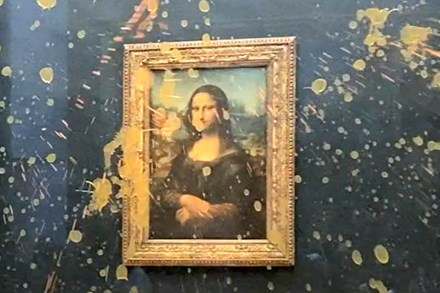
We hear a lot these days about how social media causes many of our ills. You may have heard some of that from me. And I was right. But I’ve recently realised that there’s one thing where the socials – in particular, Facebook and X (formerly Twitter) – score a positive triumph. They are the best medium for the appreciation of paintings. Like most of us, I was corralled around museums and galleries as a child I know, I know, that sounds loopy. I can hardly believe I’m saying it myself. But hear me out. The purely visual arts have always been a bit of a problem area for me. Until my revelation, I’d never been quite sure how to react to paintings. I thought that my own lack of artistic skill meant that I just couldn’t, at a very deep level, get a handle on art.

Is this the worst pop song ever recorded?

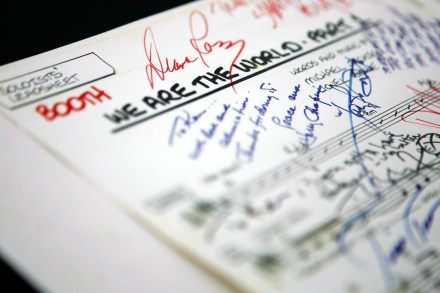
On a cold January night 39 years ago in Los Angeles, 46 of the world’s biggest egos gathered together to record a song that was, according to Netflix ‘The Greatest Night In Pop.’ The song was the grandly titled ‘We Are The World’, a hastily composed follow up to the monumentally successful British charity single ‘Do They Know It’s Christmas’? Just seven weeks earlier. At least those appearing in the British version came across as less wholesome and more honest Band Aid’s effort was hardly a great song but the occasion captured the UK’s imagination and wallets so soon after pictures of starving Ethiopians had sent shockwaves across the nation. But ‘USA For Africa’, as the American supergroup called themselves, was seen as a poor follow-up.

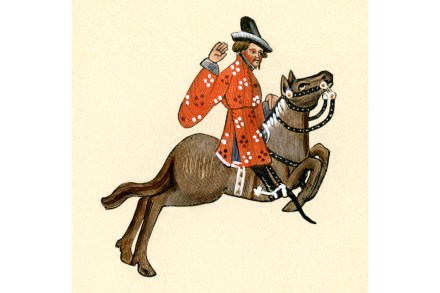
Historian’s notebook: Chaucer’s questionable fashion sense

I am chatting to Jon, an ex-tree surgeon from Derby, in one of the galleries of the British Museum. He became an amateur metal detectorist when his wife, Julie, gave him the kit on Valentine’s Day a few years ago. ‘Our honeymoon to Barbados was cancelled because of Covid’, he explains, ‘so this present was the trade-off’. It has proved a source of marital bliss: Jon adores his new hobby, and Julie enjoys ‘weekends of peace’.  How remarkable that these objects have spent centuries lying forgotten underground until – Beep! Beep! A few months ago, Jon pulled a strange, curved object from the sandy Staffordshire soil, which at first he thought was an aluminium drawer handle.

The rise of the sham actors

We’re all wise to those phoney rotters who hold ‘luxury beliefs’ – the excellent phrase coined by the social commentator Rob Henderson in 2019 to describe ‘the modern trend among affluent Americans to use their beliefs as a way to display their social status… a belief held or espoused in order to signal that a person belongs to an elite class’. I’ve recently noticed a new side-effect of extreme privilege; luxury self-deprecation, as seen principally in actors who diss their own vehicles (if old) or express dismay at becoming famous (if young). I call them the Slamming Hams – Shams for short.

Why do so many writers become dictators?

The list of writer-politicians goes back as far as Julius Caesar, who wrote a robust account of his campaigns. More recently, Boris Johnson has published fiction, as has former culture secretary Nadine Dorries, although neither to much acclaim. Inevitably, the names on this list tend to be either minor politicians or minor writers. Often both.  In fact, if you’re in search of a major literary figure, who also made a significant contribution to the politics of their country, and even rose to be a ruler in their own right, there’s only one answer. That is the Italian author, soldier, womaniser, coke-addict and career egomaniac, Gabriele d’Annunzio, who briefly became dictator of his own tinpot state on the Adriatic coast.

How to write the perfect aphorism

I love aphorisms. As a kid I used to pore over my parents’ book of quotations, relishing its gems and treasures like the defiant wit of Palmerston. ‘Die my dear doctor? That’s the last thing I shall do.’ ‘Sweater: garment worn by a child when its mother is feeling chilly’ The beauty of these sayings lies in their blend of adroitness, concision and wordplay. Here’s Tom Stoppard at his best: ‘what free love is free of is love.’ George Bernard Shaw’s remark, ‘we learn from history that we learn nothing from history’, contains a trivial insight: humans are doomed to repeat the mistakes of their ancestors. But he turns it into a timeless motto by using two related but subtly different meanings of ‘to learn.

Why we still love Kate Moss

‘She’s the kind of girl you wish lived next door, but she’s never going to,’ said the photographer David Bailey, speaking about the supermodel Kate Moss, who turned 50 this week. Moss has for three decades been a magnet for tabloid gossip and a muse to culturally influential people.Marc Quinn made sculptures out of her in 18-carat gold and she often sat for Lucian Freud. Even when flagrantly selling out – see for instance, her recent campaign for Diet Coke – she somehow manages to keep her cool Envied by some and lusted after by many, Moss was throughout her modelling career a rebel with a single cause: to have a good time. ‘I remember my mum telling me that you can’t have fun all the time, and I still hold my answer true today when I told her, “But, why not?”.

The weirdness of our new migrant god

Funny to think what our taxes go on. I wouldn’t have had ‘the invention of a deity’ on my 2024 government expenditure bingo card, but here we are. The National Maritime Museum, which last year received £20 million from the Department for Culture, Media and Sport, has unveiled a statue of a ‘god-like protector of all migrants’ to sit next to a bust of Horatio Nelson. The pair will engage in a pre-recorded conversation in which the gender-neutral god praises the ‘resilience’ of those ‘escaping war’ while moaning about our national hero’s ‘fancy medals and uniform’.  We find a sort of syncretic religion in the National Maritime Museum’s migrant god  There’s plenty to laugh at in this commission.

It’s time to shake up the Emmys (and the Grammys, Oscars and Tonys)

In our celebrity-obsessed culture, the EGOT establishes someone as an all-out legend. Achieving an Emmy, Grammy, Oscar, and a Tony is the Hollywood-Broadway equivalent of a quadrathlon. Only 19 people have ever won all four awards and the feat is usually accomplished over several decades. Articles run every award season advising punters of the stars who are ‘nearly there’ – Elton John has finally made it, receiving an Emmy for a streaming performance of his farewell concert. The most efficient route to an EGOT is to write a beloved stage musical which is then turned into a film There is some contrast, however, between the public perception of the EGOT and what it takes to actually win. For example, you might assume that the inclusion of the Grammy implies musical acumen.

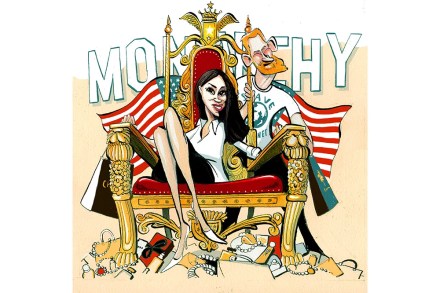
Harry, Meghan and the absurdity of the awards industry

Can I have a Legend of Aviation award please? I deserve it for the time I flew Aeroflot and lived to tell the tale. Then there was the time I flew from Denmark to Amsterdam, taking off from a snowbound runway in a twin-propped plane which looked like something out of Biggles; that was pretty hairy, too. But alas, I guess there wasn’t enough room on the list of this year’s honours, to be presented in a Beverley Hills ceremony compered by John Travolta. Prince Harry made the cut, along with Buzz Aldrin, but it seems I’ll have to wait until next year. Harry and Meghan have achieved something useful: they have exposed once and for all the sheer vacuity of the awards industry Yes, Prince Harry really is on the list – much to my puzzlement.

Why I self-publish my books

Trying to publish a book used to be straightforward. You came up with an idea, spent months, if not years, writing it, then sent it off to an agent or publisher who rejected it by return. Life was simpler back then. We all knew where we were. Rejection wasn’t necessarily based on the quality of the work. Literature is a subjective business. Lord of the Flies earned William Golding 20 rejections. James Joyce, Jack Kerouac and Joseph Heller suffered similar fates. Marcel Proust was rejected so many times that he decided to pay for publication himself. The much-repeated industry statistic is between 1 and 2 per cent of manuscripts are published. Those aren’t great odds. What do you do? I’ll tell you exactly what: publish it yourself.

Would you sign a relationship contract?

What makes a relationship work? I look at the happiest, most stable couples I know and wonder what the trick is. Did they spot problems early on and talk them through? Do they simply accept each other’s flaws? We all have foibles; a relationship is simply a matter of deciding which ones we can live with. I came across a couple recently who had their own approach: a relationship contract. Americans Simone and Malcolm Collins are big names in the pro-natalist movement. They have made it their mission to convince people to take relationships more seriously, ideally with a view to having children. They are now married, but prior to doing so, they had in place their own contract.

Ten novels about flooding

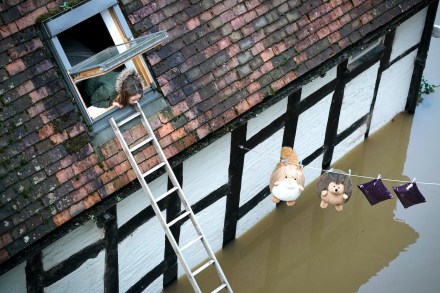
Shropshire was named this week as an unlikely entrant in the top ten global dream travel destinations for 2024 – alongside more predictable contenders like Mauritius. This news received extensive media coverage, most of which featured serene, summery images of Ironbridge, the Georgian engineering marvel that is the county’s most recognisable attraction. There was something wonderfully British about the fact that, at the very moment this story appeared, Ironbridge itself was at the centre of flood defence efforts to stop the swollen River Severn bursting its banks.

How am I supposed to remember what happened in The Tourist?

Hooray, I thought. There’s a new season of The Tourist. I remember liking that, I thought. It was that thing with the bloke in Australia, wasn’t it? And I was all set to settle down for a good binge, when I realised that I had almost literally no idea what had happened in the first season. This is a personal grumble, but I’d bet dollars to donuts I’m not the only one in this position.  One thing I knew is, it was confusing. There was a bloke in, yes, Australia, who had had a bump on the head and didn’t know who he was, except he was Jamie Dornan. I remember there was a bit with some LSD, and recalling the plot was quite like that too. Someone was trying to blow him up (or maybe he was trying to blow someone else up).

Have we just discovered aliens?

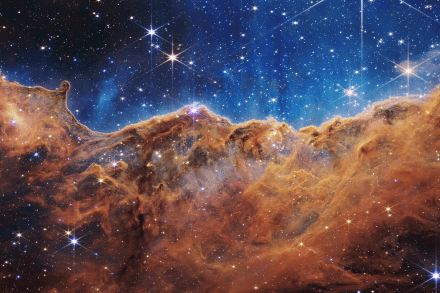
It’s one of the greatest puzzles of the universe, and one that has vexed humanity ever since we first gazed at the stars and thought of other worlds. Is our Earth the sole place that harbours life, or might it be found elsewhere, among the trillions of planets, star systems and galaxies? As Arthur C. Clarke put it: ‘Two possibilities exist: either we are alone in the universe or we are not. Both are equally terrifying.

In praise of Israeli women

I’ve always admired Israeli women. Though I didn’t see any in the flesh before my first trip to the Promised Land 20 years ago, at Sunday School I far preferred the complex women of the Old Testament – Deborah the judge, Yael the assassin, Ruth the first philo-Semite – to the repenting hookers and grieving mothers of the New. The book of Exodus revolves around the actions of five women; the Talmud teaches that ‘the Jewish people were redeemed from Egypt because of the merit of the righteous women of that generation’.

The strange return of Cilla Black

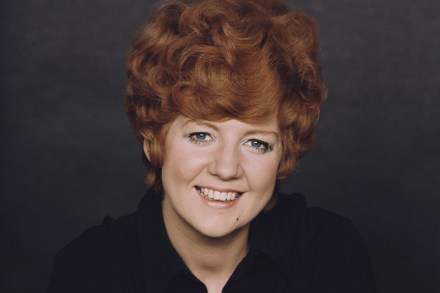
She was an unlikely contender for fame from the outset, with a pub singer voice and a nose so  prominent she would later have it surgically reduced. But, with her Scouser-next-door persona and trademark cropped hair, Cilla Black was in the right place at the right time: she rode the popular wave created by Beatlemania and its attendant appetite for all things Liverpudlian. This led to national stardom as a singer. Then, when her pop career waned, instead of disappearing into obscurity, Cilla managed to relaunch herself into a spectacular second career as one of the biggest names at the lighter end of TV light entertainment. Now, some nine years after her death, Cilla has achieved her most unlikely success yet – by becoming a household name among gen Z.

David Bowie: the man who fooled the world

In 1973, everyone loved David Bowie. Album buyers had put Ziggy Stardust, Aladdin Sane and Hunky Dory high in the charts, while singles buyers had bought similar success for ‘Drive In Saturday’, ‘Life on Mars’ and ‘Sorrow’. Then right in the middle of this, he released ‘The Laughing Gnome’. In truth, he probably didn’t. It was a twee little novelty song recorded six years earlier, featuring Bowie duetting with the eponymous gnome. Nobody could believe that Bowie had recorded it – less still that he’d written it – but the more you know about him, the less surprising it seems. In fact, ‘The Laughing Gnome’ says more about David Bowie than anything else he did. It was early evidence that he would do anything to be famous.

The joys of light verse

Coleridge defined poetry as the best words in the best order and at no stage did he ever suggest that being light-hearted in verse is any less worthy than the solemnest offerings of Milton or of his old pal Wordsworth. Nevertheless, there is a feeling among many who take their art seriously that anything in verse form liable to raise a good natured smile is somehow not the real thing, no matter how well it is executed and however perfectly it conforms with rhyme and metre. Since the earliest days of the quill pen, some our greatest poets have deliberately used humour to enlighten, inform and indeed entertain their readers And yet since the earliest days of the quill pen, some our greatest poets have deliberately used humour to enlighten, inform and indeed entertain their readers.

Will we worship the AI?

It’s hard to believe that only five years ago the word/acronym AI was barely seen outside the science pages, and even then solely in the most speculative way: as something that might happen, in a few decades, maybe, if you’re the dreamy type. But also maybe not. Now there literally isn’t a day that goes by without some new AI revelation/epiphany/scare story.

Christmas traditions and the lost practice of ‘mumming’

Christmas, we are often told, is rich in traditions invented by the Victorians (or even later), and it was a rather austere affair before Charles Dickens. But while it is true that the Victorians gave us many of our Christmas traditions in their current form, English Christmas traditions before the Victorian era were simply different, not non-existent – and they were every bit as exuberant as what came after, if not more so. One of those long-lost pre-Victorian traditions of Christmas is mumming; something which was as synonymous with Christmas 200 years ago as a fat man in a red suit with a proclivity for housebreaking is today.