Society

Invented claims of lynchings and racist violence are irresponsible — and dangerous

“Cases of Black people found hanged in the US South are a reminder of nation’s lynching history,” read an ABC News headline last month. That phrase – “lynching” – has been used again and again in reporting on the death of a woman in Mississippi. The Associated Press used the word, as did the British state broadcaster the BBC, the Los Angeles Times and the Washington Post. You may think, with such a loaded phrase, that the suspects are members of the KKK. In fact, all three are black men, charged with the murder of Tasia Fortune, a 29-year-old woman found dead on August 3 in Jackson. Fortune’s own mother has said that she doesn’t believe the killing was motivated by race. You would hardly know it from the media’s coverage.


lynchings

A Gator for a weekend

I’ve never cared about a football team larger than my high school’s. Even when my cousin walked out with the Alabama Crimson Tide a decade ago, the Southeastern Conference meant nothing to me. I saw photos of his championship ring on Instagram, shiny as a bride. Then I married a University of Texas graduate. My husband anticipated the Longhorns’ long-awaited entry into the SEC at least as much as our wedding. My family became Longhorn-in-laws, dutifully asking after Quinn Ewers at the holidays as though he were our son. “He’s lost weight,” I would say, echoing the television announcers I overheard from the kitchen, “And he’s going to church!

gator

The truth about Princess Diana’s brother

“Mr. Morgan,” said the faux-regal voice at the end of the line, “this is Earl Spencer. I’ve got you now, you bastard.” Suffice it to say, this call didn’t happen last week after the alleged “historian” was forced to publicly apologize for publishing a lie about me in his new book. (He accused me of being Mirror editor in 1993 when it published gym photos of Princess Diana in a notorious invasion of her privacy that cost £1 million in damages – but I didn’t join the Mirror until 1995.) However, the irony of what that call was about isn’t lost on me, 31 years later.

From Playboy pin-up to prohibitionist: the man taking on British gambling

The August 2004 cover of Playboy features a topless Eva Herzigova (“The supermodel is supernaked”) and promises a piece about “America’s 10 sexiest bartenders.” If that isn’t enough to excite you, another article is puffed, no less conspicuously: “Weird new casino games (and the men who invent them).” Turn to page 73 and a bald, bespectacled man, with “prominent ears on a frank, slightly frowning face,” stares out at you. This, we learn, is the “Bill Gates of card game inventors” and his name is Derek Webb. The Englishman made his money at the poker tables in Derby: “I could play three times a week with a £50 buy-in and make £8,000 a night.” From 1979 to 1994, Webb split his time between the East Midlands and Las Vegas.

gambling

Cornell brings back #MeToo

#MeToo is back – thanks, largely, to Cornell University. A former student, identified only as Jane Doe, alleged in a civil suit last month that seven members of the Chi Phi fraternity drugged and gang-raped her in October 2024. Most of the subsequent social media outrage blurs a few distinctions. Prosecutors looked at her initial 2024 police statement and decided not to file charges. Cornell ran its own Title IX process. The county DA says the new civil lawsuit is “dramatically different” from what she told police at the time – as her original statement suggested she consented, and that when she raised concerns, the men stopped.

cornell metoo
triple lock

How the triple lock became political kryptonite

It was early December 1973 and I remember my grandmother asking, “What would you most like for Christmas?” I knew in an instant: “One day, perhaps, it would be good if the weekly rates of my basic state pension were to increase by the greatest of three candidate measures, namely (a) the year-on-year growth in the average weekly earnings index; (b) the year-on-year change in the consumer prices index for the month of September; or (c) a fixed nominal floor of 2.5 percent – with the determination being a simple maximum function rather than an average, and the resulting uplift taking effect from the first Monday of the following tax year in April. Or, failing that, an Etch A Sketch.

Christa Pike should be allowed to live

Coincidentally with the sad passing of Esther Rantzen, who spent her last couple of years campaigning for assisted suicide in the UK, there’s just been an interesting case of an assisted dying going wrong. The state of Tennessee kills prisoners sentenced to death by means of an injection of pentobarbital, the same substance used by the Dignitas clinic in Switzerland (only not usually by injection) where Dame Esther had considered going after she was diagnosed with stage four lung cancer. Pike has been executed once; that, even supporters of the death penalty must agree, is enough Unfortunately, or fortunately, depending on your point of view, a prisoner sentenced to death, Christa Pike, survived a double injection of pentobarbital and is now in hospital being resuscitated.

ranulph fiennes

How long has Ranulph Fiennes been under some sort of control?

It is repeatedly pointed out – I have probably written it myself – that the triple lock on the state pension is ruinous. There is a genuine difficulty, though, political and moral, about getting rid of it. No one likes to lose a benefit they already possess. The abolition will annoy 99 percent of its recipients, of whom there are 13.2 million. Besides, we pensioners have retained a traditional skill almost entirely lost to younger generations, called voting. We know how to go to a polling station and put a cross on a ballot paper. We therefore have the power to slay any party we think is making us poorer. The Tories invented the triple lock.

What the CIA and MI6 really talk about

The Special Relationship has seen more special days. Earlier this year, President Trump delivered his verdict: “How is the relationship? It’s the relationship where, when we asked them for help, they were not there. When we needed them, they were not there. When we didn’t need them, they were not there. And they still aren’t there.” Trump was referring to divisions between the US and UK over the wisdom and conduct of the war in Iran. (Even amid a spat, though, he can dish out praise. Just this week, following the arrest of five men outside RAF Fairford, used by American bombers to strike Iran, the President said the UK authorities had done an “amazing job.”) But his remarks landed at a moment of divergence in the US-UK relationship that extends well beyond Iran.

The game you are not allowed to win

Some years ago I heard a moving story about Roy Jenkins. An unpromising start to any anecdote but stay with me. It involved a croquet match during the late period of his life – as Chancellor of the University of Oxford – when Jenkins had become one of the grander, not to say more pompous, figures in Britain's public life. According to someone playing with him, his Lordship had appalling luck. Although he wielded his mallet with all requisite skill, his ball would not go through the hoops. Eventually the grand old man stormed off the pitch in a great huff. Only after he had left did the other players discover that the ball Lord Jenkins had been working was from a different croquet set, and too big to fit through the hoops.

When will Meghan Markle bring ‘As Ever’ to Britain?

As controversy continues to rage about the “he said/he said” dynamic in Earl Spencer’s damning memoir – and whether Prince Harry knew (and, crucially approved) of the allegations in the book – there is, at least, the opportunity to draw light relief from something rather less consequential. It might seem strange to remember this, given the various other disasters in the world today, but Meghan Markle – now, of course, a resident in Britain once again – is continuing to run her As Ever brand. Even though she no longer has the backing of Netflix and her cursed With Love, Meghan television specials to promote it, it continues to be a going concern. Now, we have been treated to Meghan's dinner party hosting tips. They are neither profound nor revelatory.

meghan

Why did Britain give a Hamas chief’s bodyguard a passport?

The failure of the British state is long-term and corrosive. It emerged this weekend that Mr. X, a former bodyguard of Hamas leader Ismail Haniyeh, was allowed to settle in the UK and given British citizenship – before going on to allegedly coordinate a Hamas terror plot in Germany. He also faces separate terror charges in this country. The case of Mr. X was quickly followed by the news yesterday that Britain's Home Secretary plans to launch a new resettlement scheme which prioritizes Afghan women and girls, and Palestinians of both sexes. By the time Mr. X arrived, a succession of Hamas exiles had already made England their home The chronology as it has emerged so far is well worth examining. From 2006, Mr.

Is the West ready for the undersea war?

Last spring, a Chinese icebreaker turned up in the tropical waters of Palau. That was after Chinese research vessels arrived uninvited in the waters off Taiwan, Vietnam and the Philippines. In Europe, Russian research vessels and navy ships turn up uninvited too. The ships reveal nothing about the nature of their visits, but create fears of impending cable sabotage. These days, Russia and China are also building lots more submarines, and they’re impressive. Western countries, too, are building submarines, and all the while they’re trying to defend their cables and pipelines. Last week, the UK’s 12-meter Excalibur drone submarine used a testing range off the coast of Scotland to fire a torpedo.

The real reason kids are giving up reading

Another day, another dispiriting survey about the crisis in childhood reading. Parents who earn more than $130,000 a year are the least likely of all social groups surveyed to read aloud every night to their children. So much for the sharp-elbowed upper-middle classes. Even when we factor in the possibility that the cash-rich and time-poor are outsourcing bedtime stories to nanny, it’s a less than encouraging finding. It tells us something about the dwindling importance of reading to the most successful among us.

Should I be more like Bryan Johnson?

“Journaling” is now a good thing, which we know because it’s part of Bryan Johnson’s morning routine, sandwiched between eating algae and sauna-ing with a Bryan Johnson-trademarked ice pack on his crotch. It’s nice to check in with Johnson – the tech millionaire who wants to “defeat death” – every few hours. This week I embarked on my biggest ever stand-up tour, a tour whose scale makes it seem like a culmination of everything to this point. Venues you dream of playing, ones which seem so distant in the mud and piss of the UK’s comedy circuit. Twelve hundred people tonight, 1,500 the night before. “Only 680 tonight is it?” I shrug from the back seat of my tour manager’s Skoda, like a man used to four-figure wine rolling his eyes at a mere Château Lafite.

bryan johnson

I like a good hypocrite

I’ve always admired Diane Abbott, one of the most left-wing British MPs, though admittedly only for one thing. Many years ago she campaigned against private schools. As a good socialist this comes as part of the ideological package, and Abbott was more than happy to join in the class war against parents who are in a position to educate their children outside the state system. However, as some readers might remember, when it came to her own school choice Ms. Abbott looked around the local state schools and decided that none of them was good enough for her own progeny. So she sent her son to the City of London School, a private school for boys. Confronted with this hypocrisy, Abbott did the sole thing that I admire her for.

The rise of anti-migration direct action in Britain

On Monday and Tuesday, a so-called “mega dinghy” made its way across the English Channel from the coast of Normandy. Originating from the town of Vierville-sur-Mer, near Omaha Beach, the inflatable represented what many Brits would see as a direct reversal of Operation Overlord, which began on D-Day. The prospect of around 60 illegal migrants landing on England's shores, many of whom will likely come from countries with much higher rates of violent crime, was not exactly welcomed in the area. Hundreds of people poured out onto the streets of Gosport, where the Royal National Lifeboat Institution was expected to bring its passengers ashore after scooping them up in English waters.

Did AI write the French book of the year?

Many decades ago (or so it seems, it was actually January 2023, but things move fast in AI-world) I wrote a Spectator piece claiming that The End of Writing was coming, thanks to AI. In return for this favor, I got large amounts of angry and derisory scorn, mainly from writerly types, who banged on about the uniqueness of human creation, but also from techy people, who pointed out that as a mere hack I could not possibly know anything about AI, and anyway AI was just a glorified next-word-predictor. The French, being French, have responded with wise philosophy, or cowardly evasion, depending on your taste Now, I'm not the sort of cheap, mean-minded person who says “I told you so,” so I'll just say “I told you so.

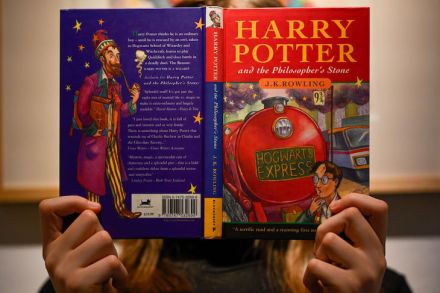
The Hobbit is not a great book

It was 1937, an age away, when JRR Tolkien's book The Hobbit was first released. There are people alive who remember that year, but not many. The Hobbit was published by George Allen & Unwin after Stanley Unwin commissioned a review of the typescript (standard fee, one shilling) from his ten-year-old son, Rayner. When he reviewed The Hobbit, CS Lewis said it was a children’s book “only in the sense that the first of many readings can be undertaken in the nursery.” “Bilbo Baggins was a hobbit,” it read, complete with a ten-year-old’s errors, “who lived in his hobbit-hole and never went for adventures, at last Gandalf the wizard and his dwarves perswaded him to go. He had a very exiting time fighting goblins...