Politics

Read about the latest political news, views and analysis

France’s support of Rushdie puts Britain to shame

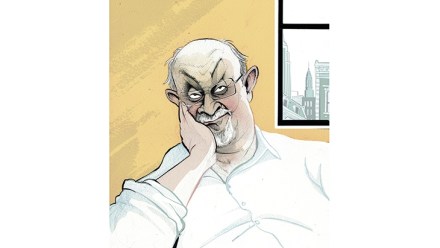
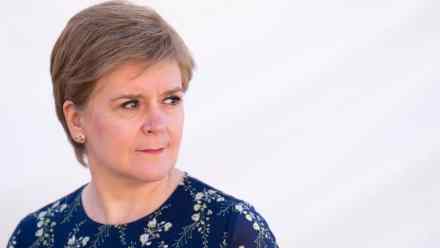
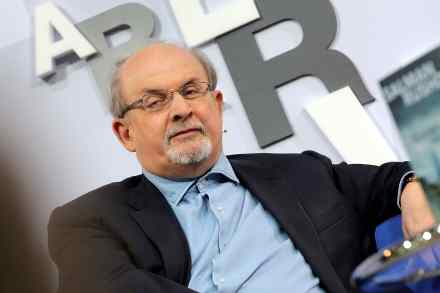
If any further evidence was needed of the moral cowardice of the British political class it has been provided in the wake of the appalling attack on Salman Rushdie at the Chautauqua Institution. There were of course messages condemning the atrocity in New York, although notably it took Sir Keir Starmer and Sir Ed Davey the best part of 24 hours to find the time to react. One might have expected the leaders of two of the three main political parties in Britain to consider such a sinister assault on Western values worthy of immediate comment. From Mark Drakeford, the first Minister of Wales, and Nicola Sturgeon there has been only silence, although Scotland’s leader did tweet a photo of herself with Basil Brush on Saturday afternoon.
Britain’s crippling lack of infrastructure

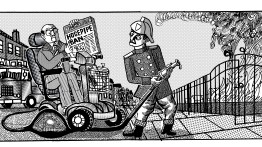
England is in the grip of its most widespread drought in 20 years. Water companies are implementing hosepipe bans. Half the country’s potato crop is expected to fail. Photographs of reservoirs show them drained, dry banks open to the sky. Another heatwave is here, bringing little prospect of imminent relief. Britain hasn’t built a reservoir since 1991. The population has grown. Hot weather has become more frequent. Water use has become more strained. The barriers to actually doing something about it remain in place. Take Layla Moran, Liberal Democrat MP for Oxford West. As late as March, she was doing the media rounds vigorously opposing the construction of a new reservoir in Abingdon; it would be unsightly, the population projections might be wrong, she said.

Catalonia’s leader’s plan to follow the SNP’s playbook

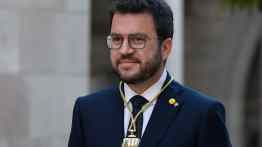
Catalonia's president Pere Aragones has wanted to win independence from Madrid ever since since joining the Republican Left of Catalonia (ERC) as a teenager. Despite the obstacles standing in his way, he now seeks inspiration from two votes held in the UK: the Scottish independence referendum and Brexit. Aragones resumed negotiations with Spain’s socialist prime minister Pedro Sanchez last month, almost five years after an illegal referendum on Catalan secession triggered a constitutional crisis. But despite Madrid's willingness to talk, he faces a Spanish establishment that is as pro-union now as it was in 2017.

What should Rishi Sunak do next?

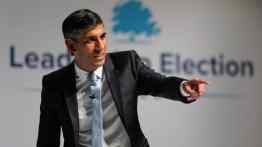
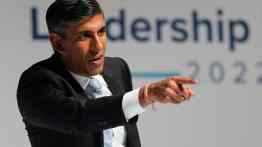
The old English nursery rhyme The North Wind Doth Blow asks 'what will poor robin do then, poor thing?' about the impending onset of cold conditions. As he faces up to the prospect of a heavy defeat in the Tory leadership contest, we are similarly entitled to wonder what will poor Rishi do then, poor thing? And Rishi Sunak is clearly already thinking about that because he has begun framing the most benign possible interpretation of the causation of his impending defeat, telling the BBC’s Nick Robinson that he would rather lose honestly than win by stoking up unrealistic expectations.

The West cannot do business with Iran

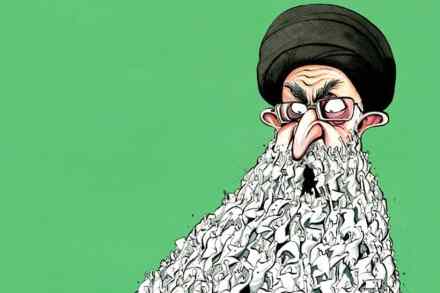
Salman Rushdie's would-be assassin might have been a lone wolf. He might have had no contact with military or intelligence figures. He might never even have set foot in Tehran. But be in no doubt: he acted, in effect, as an agent of the Islamic Republic of Iran. Under the terms of the fatwa issued by Ayatollah Khomeini in February 1989, Rushdie ‘and all those involved in its publication who were aware of its content, are sentenced to death’. Khomeini urged 'brave Muslims to quickly kill them wherever they find them so that no one ever again would dare to insult the sanctities of Muslims', adding: ‘Anyone killed while trying to execute Rushdie would, God willing, be a martyr.

Is Labour missing in action?

10 min listen

Katy Balls speaks to Isabel Hardman and James Forsyth about why Sir Keir Starmer and his frontbench have been seemingly missing in action during the Tory leadership race and the ongoing cost of living crisis.

Is Putin planning a September surprise?

Ukraine appears to be faring well in its fight against Russia. Explosions have rocked a Russian military base in Crimea and the country's president Volodymyr Zelensky is confidently stating that the war must end with the liberation of Crimea. Aid is also pouring in from the West. But Ukraine has been here before – and Putin's Russia could, once again, be preparing to up the ante. Any talk of Ukraine's triumph looks dangerously premature – particularly as we approach the month of September. In the summer of 2014, Ukraine was managing to fend off Russian advances and making significant gains. Then, at the end of August, everything changed.

There is no point nationalising the energy sector

Household energy bills are rising very rapidly, and are now expected to be over £4,000 per year by October and possibly over £5,000 per year by early 2023. Many commentators, including most notably Gordon Brown, are saying that we should now nationalise the energy companies and bring bills down. Would that help? It’s rather unclear what is being proposed by those that advocate nationalisation. We can think of the energy sector as having three layers. First, there are those that create or collect energy. These are firms that run wind farms, hydroelectric plants, solar panels or nuclear power stations, or mine coal or drill for oil or gas. At this layer there are many, many firms operating in a highly competitive international market.

Kim Jong-un declares victory over Covid

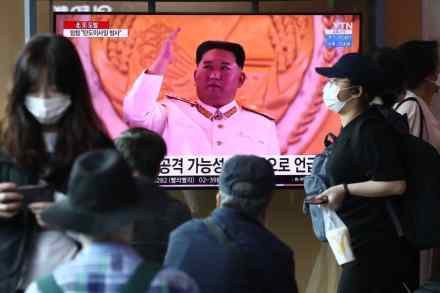
Kim Jong-un’s notorious sister is back in the limelight. Not only is Kim Yo Jong reiterating her hostile words against South Korea and the United States, but she is also seeking to reinforce the loyalty of the North Korean people to her brother. How better to combine the two than to infer that the Supreme Leader had, in fact, caught coronavirus. When North Korea first disclosed cases of a ‘fever’ in May this year, the world waited to see how the country’s rudimentary healthcare system and largely unvaccinated population would cope. Nearly three months after that revelation, Kim Jong-un has ‘declared victory’ over coronavirus.

Why does no one like Rishi?

Poor Rishi Sunak. Membership polls put him 30 point behind Liz Truss but there's still three-and-a-half weeks to go in the Tory leadership race. The former Chancellor is being forced to spend his summer traipsing around the country, trapped in some hideous purgatory, waiting for the sweet release of 5 September to halt the seemingly endless number of hustings, debates, interviews and meetings. But it seems the longtime heir apparent is having as much luck online as he is offline. Mr S has done some digging and Sunak has spent more than two-and-a-half times has much as Liz Truss on Facebook adverts, for all the good that it has done him. During the course of the campaign Sunak's two pages have spent a combined total of £15,800 compared to Truss's £6,000.

Landlords are exploiting generation rent

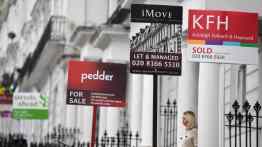
As interest rates hit nearly 2 per cent and inflation tops 9 per cent, many Brits are feeling the pinch. But once again it seems that generation rent is worst off. Last month, my landlord hiked my rent by £450, or nearly 30 per cent. I’m far from alone: rents across the UK have gone up by as much as 17 per cent. Renters in the UK have been overlooked since the cost of living crisis began to grip the country earlier this year. With inflation soaring and the cost of energy, water, food, petrol and other essentials also rocketing, life is suddenly, alarmingly, getting more expensive. The Bank of England’s decision to raise interest rates has got homeowners in a flap, with many understandably concerned about the impact this will have on their mortgage repayments.

Could Truss reverse the windfall tax?

13 min listen

'Profit is not a dirty word', Liz Truss said at last night's leadership hustings. The Foreign Secretary has made clear that she would prefer to cut taxes than take money from energy firms and give it directly to struggling Brits. But, if Truss makes it into No. 10, could she really reverse the windfall tax?Isabel Hardman speaks to James Forsyth and Katy Balls.Produced by Max Jeffery.

Truss resumes her war on Whitehall

Shalom from Manchester, where Liz Truss has visited a synagogue. This being the Tory leadership race though, every visit is a chance for a good bit of self-promotion, with team Truss firing off a press release to mark the occasion. But amid pledges to pursue a free trade deal with Israel and give more support for the British Jewish community, Mr S was struck by Truss's promise to 'change woke civil service culture that strays into anti-Semitism’. Such a claim, without any supporting evidence, has prompted bemusement and even anger from former and current civil servants.

Who is Gordon Brown to pose as the voice of fiscal sanity?

Gordon Brown is demanding Parliament be recalled for an emergency budget. By October, he says, quoting a study he commissioned from the University of Loughborough, half the population could be living in fuel poverty. ‘Not enough thinking is being done about the major social crisis,’ he told Radio Four’s The World at One on Monday. The former Chancellor and Prime Minister does, of course, have every right to make what representations he wishes to the government, and no-one can call him a hypocrite for wanting the Chancellor and MPs to sacrifice their summer holidays for an emergency budget. His first holiday as PM, in 2007, famously lasted half a day before he found an excuse – a minor outbreak of foot and mouth – to return to Downing Street.

Did the SAS inspire Ukraine’s Crimea raid?

If the reports are right and it was Ukrainian special forces who destroyed as many as 20 Russian aircraft at Saki air base in Novofedorivka, Crimea, on Tuesday, president Volodymyr Zelensky might be minded once more to raise a glass to the British. Earlier this year it was widely reported that British special forces were in Ukraine training local troops – but perhaps they also found time to pass on some of the regiment’s illustrious history. It was the Special Air Service (SAS) who pioneered the tactic in North Africa, destroying over 200 Italian and German aircraft in a series of devastating raids 80 years ago.

Are we already in recession?

The Bank of England recently raised hackles by predicting that the economy would shrink in the final quarter of 2022, with Britain spending the whole of next year in recession. Liz Truss was especially critical, saying that a recession was not inevitable. In last night’s Cheltenham debate she again referred to the subject, saying that it was important we did not ‘talk ourselves into a recession’. But could a recession arrive actually earlier than the Bank of England predicted? This morning’s figures from the Office for National Statistics (ONS) suggest that the economy shrank by 0.1 per cent in the second quarter of this year. If the figures for the third quarter, due in October, also show a fall then Britain could officially be in recession by then.

Five shadow ministers breach MPs’ rules in five months

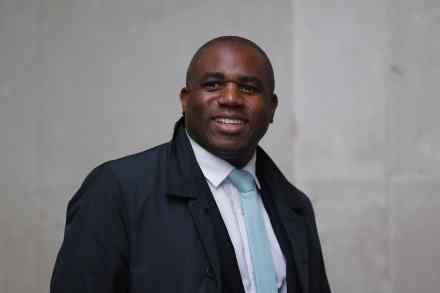
Oh dear. David Lammy is in hot water yet again. With six figures' worth of outside interests, it can be hard to keep track of all those extra payments. And now the Shadow Foreign Secretary's media outings have tripped him up once again, thanks to no less than 16 occasions in which he did not declare payments on time. They include a number of commercial radio shows and Black History Month speeches, with a total value of more than £35,000. Kathryn Stone, the parliamentary commissioner for standards, opened an investigation on 15 June. The rulebook states MPs must declare any interest that may reasonably be considered to influence their actions within 28 days.