Politics

Read about the latest political news, views and analysis

Will the interest rate hike be enough to tame inflation?

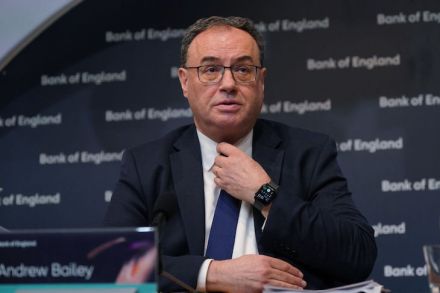
There was no easy option for the Bank of England's Monetary Policy Committee (MPC) this week. Raising interest rates, even by a small amount, could add to financial instability following the collapse of Silicon Valley Bank and takeover of Credit Suisse over the past few weeks. But holding the base rate at 4 per cent might lead to accusations of ignoring double-digit inflation, which rose on the year in February for the first time since the Consumer Prices Index (CPI) peaked last October. Today, the MPC opted for the latter – voting 7-2 in favour of raising the base rate by 0.25 percentage points, from 4 per cent to 4.25 per cent. It’s the eleventh consecutive hike since the UK emerged from a period of ultra-low interest rates during the pandemic.

The decline and fall of the DUP

Along with death and taxes, life has only one other certainty: the DUP will never miss an opportunity to miss an opportunity. Fresh from insulting Senate Majority Leader Chuck Schumer in the annual St Patrick's Day Washington jamboree as a man who needs to 'read a history book', the DUP leader Jeffrey Donaldson has now antagonised Downing Street, the EU, the Irish Government, of course, and President Joe Biden by his rejection of the Windsor Framework. Quite an achievement. The ugly Irish DUP cousins have ruined Biden's parade with their stone wall refusal to go along with the show In the American polity, Ireland, and St Patrick's Day, is a positive brand, not just the feast day of a small nation.

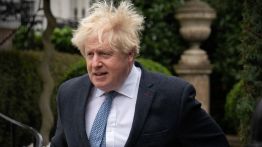
Tory MP: Boris’s hearing like OJ Simpson’s trial

Whether it was No. 10 parties or Chris Pincher's misconduct claims, Tory MPs grew used to having defend Boris Johnson in various scrapes and scandals in office. Now though he's gone but even six months on, some Conservatives seem unable (or unwilling) to kick the habit. A case in point is provided by Scott Benton, one of the more enthusiastic members of the 2019 intake. He has been a consistent supporter of Boris Johnson throughout his, er, challenges and has clearly taken umbrage at the Privileges Committee's ongoing investigation into whether the ex-premier lied to the House. So angered was Benton by yesterday's evidence session that he took to that great organ of Middle England opinion – the Daily Express – to vent his spleen at his fellow parliamentarians.

Starmer squirms over foreign criminals

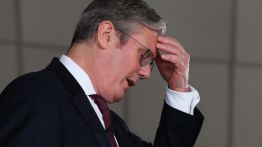
'Too clever by half' was the verdict of many pundits when it was revealed that Sir Keir had been tapping up Sue Gray as his chief of staff. And it seems that the Labour leader is at it again, holding a big press conference today to talk about his 'mission' to tackle crime – less than 24 days after Boris Johnson's evidence session in an all-too-obvious contrast. Unfortunately, while Sir Keir likes to talk tough on crime, his record is anything but. Straight after delivering his speech, the Labour leader refused to apologise for signing a letter in 2020 calling for 50 dangerous offenders not to be deported on a flight to Jamaica. Instead Starmer chose to boast; I stand proudly by my record...

Jonathan Portes – my part in his downfall

In 2018, the Equality and Human Rights Commission commissioned and promoted a report which predicted that an extra 1.5 million children would be plunged into (relative) child poverty by 2021/22 if the government implemented Universal Credit. The proportion of children living in (relative) poverty would, it said, rise from 29 per cent to the unprecedented figure of 41.3 per cent. Portes’ prediction was a totem for all economic forecasting, most of which is little better than guesswork and should not be taken seriously If you think such prognostication is beyond the remit of the Equality and Human Rights Commission, I can only concur. The report was written by Howard Reed and Jonathan Portes.

Rishi Sunak was wrong to publish his tax returns

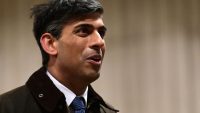
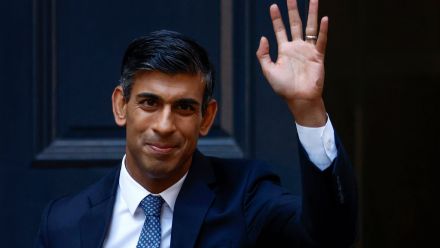
He has plenty of money. He earns a substantial amount from his investments. And he gets a City firm to prepare his returns rather than doing them himself at close to midnight after a couple of fines from HMRC like the rest of us. In truth, there were not a lot of surprises when the Prime Minister Rishi Sunak published his tax returns on Wednesday. We didn’t learn anything we didn’t already know. And yet, even if they didn’t provide any ammunition for his opponents to attack him with, it was still a mistake to publish them – because it puts us on a dangerously slippery slope.  There weren’t any hidden Russian gold mines, or Cayman Islands trusts linked to arms dealers It was perhaps always inevitable that Sunak would give in to pressure to publish his tax returns.

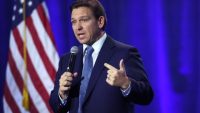
Ron DeSantis is coming for Trump

Donald Trump faces legal jeopardy about payments to porn star Stormy Daniels, but his Republican opponents face political jeopardy about how to handle the issue. Ron DeSantis’s powerful response shows why he’s such a formidable candidate and why Trump fears him.  Most Republicans have opted for the easy answer to the hush-money story: criticise Manhattan district attorney Alvin Bragg for pushing a politically driven agenda. That agenda centres on snagging the former president on a minor, long-forgotten misdemeanour and converting it into a larger, more serious crime. Bragg apparently hopes to use a novel legal theory to upgrade the minor charge to a felony. Since the case would be tried before a Manhattan jury that loathes Trump, that legal legerdemain might work.

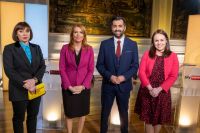
Should the SNP leadership contest be stopped?

Yesterday saw the final televised debate between the three contenders for leader of the SNP and First Minister of Scotland. Voting will end and the winner will be declared on 27 March.  Or will it? Those sick of this increasingly tawdry contest should prepare themselves: it may have a way to go yet. There are calls for the contest to be halted, restarted or at least reset. And if that doesn’t happen, there is a risk that the winner will not be recognised by certain sectors of the party. There is a talk of a legal challenge from pro-independence blog Wings Over Scotland (which is mulling crowdfunding such a move).  The reasons are simple. There are serious concerns about the integrity of the process and about who will actually be voting/has already voted.

The trial of Boris Johnson

20 min listen

Boris Johnson sat through a grueling four-hour hearing into whether the former Prime Minister deliberately misled parliament. Katy Balls and Fraser Nelson take a look at the key moments of the meeting; and whether Rishi Sunak should be worried about the Brexit vote rebels.

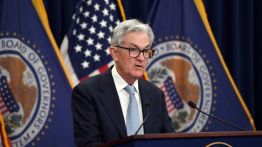
The Fed’s rate rise shows it is confident about the banks

So, things really are different this time. The US Federal Reserve has decided to raise its Federal Funds Rate (its main interest rate) by a quarter-point, to 4.75 per cent – 5 per cent, in spite of a banking crisis that has seen two large banks fail in the past fortnight. For the past two decades, this sort of thing didn’t happen. Under the unwritten laws of the ‘Greenspan put’, the Fed could be relied upon to provide some form of stimulus at the first sign of financial trouble. It began with the collapse of the hedge fund Long Term Capital Management in 1998, when the Fed put together a $3.6 billion bailout funded by a consortium of banks, and it carried on long after former Fed chair Alan Greenspan himself had departed the scene.

Five things we learned from Boris’s Privileges Committee grilling

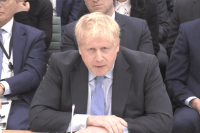
Boris Johnson has just finished a mammoth three hour evidence session in front of the Privileges Committee inquiry into whether he misled the House about Covid guidance being broken in No. 10. It was a combative affair at times with Johnson displaying flashes of anger and irritation – understandable given it was twice as long as the Liaison Committee grillings he was used to as PM. If this were a boxing match, it would appear to be decided on a points decision, with neither side being able to land a killer blow: Johnson looked on the ropes at times but the committee were unable to conclusively prove that the ex-premier had knowingly misled the House. Still despite all the heat, there was some light in the proceedings, ahead of the committee's forthcoming report.

It’s easy to become numb to the madness of Boris Johnson

What was Boris Johnson up to at the Privileges Committee? The former prime minister has just finished more than three hours of evidence on whether he deliberately misled the Commons over partygate. In his opening statement, he said ‘hand on heart, I did not lie to the House’. One of his repeated insistences was that he was just doing the ‘right thing’ when he was thanking staff who were leaving, despite MPs on the committee also repeatedly insisting that the guidance at the time clearly did not allow this. He also appeared to lose his cool at times. ‘People who say that we are partying in lockdown simply do not know what they are talking about!’ he snapped at one point. This appearance of emotion was probably calculated rather than genuine.

PMQs proved that we have too many politicians

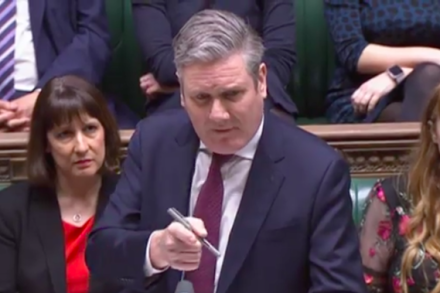
PMQs drove up a cul-de-sac today. Sir Keir’s team of researchers have discovered a crime blackspot where ten houses have been burgled in the last 18 months, but only one of these offences has ended up in court. This delighted Sir Keir as it gave him a chance to remind the world that he once worked as a prosecutor. Even better, the benighted cul-de-sac happens to be in Yorkshire where Rishi Sunak’s constituency is located. Crime dominated the session because Sir Keir brought up Baroness Casey’s end-of-term report on the London police force. The cops have fluffed it, according to the baroness, and their ranks are now overflowing with sexists, racists and homophobes.

Sunak avoids large Tory rebellion on Brexit deal

Rishi Sunak’s Windsor Framework has won support in the House of Commons at 515 ayes to 29 noes. As expected, DUP MPs voted against the deal – after the group's leader Jeffrey Donaldson announced early this week that the party would oppose it. As for the Conservative party, there were 22 Tory rebels, including three former Tory leaders in Boris Johnson, Liz Truss and Iain Duncan Smith. Other rebel MPs include Jacob Rees Mogg, Priti Patel, Jake Berry, Jonathan Gullis, Christopher Chope and William Cash. The rebellion is less severe than feared last month The number of abstentions looks to be sizeable - in the region of 48 Tory MPs. However, it's likely that several of those - such as cabinet minister Grant Shapps - have been agreed with the whips.

Ghost children: the pupils who never came back after lockdown

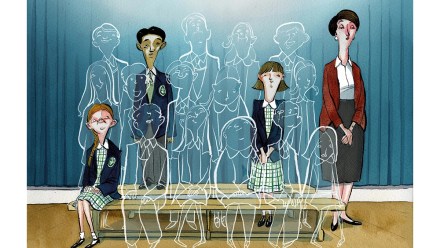
‘There was this guy in my year who never came back to school after lockdown,’ a 14-year-old girl at a comprehensive in the Midlands says. ‘Then one day my friends and I saw him by the shopping centre. He was, like, sitting on a piece of cardboard by the side of the road, looking a bit homeless. Other kids recognised him and bought him food and clothes. He’d always been popular. Then someone told a teacher and a couple of days later he came back to class. But he was so far behind, he grew frustrated and angry, and then one day he just upped and left for good.’ That boy is a ghost child – a victim of the disastrous policy of school closures during the Covid pandemic. On 8 March 2021, when schools reopened, everyone expected that it would be business as usual.

The trial of Boris Johnson – as it happened

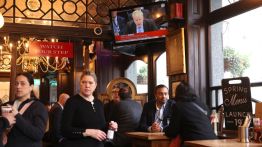
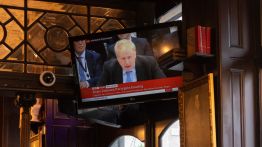
Boris Johnson has faced a three-hour grilling in front of the Privileges Committee, where he was quizzed about parties in Downing Street during the pandemic. The former PM is accused of lying to parliament when he told MPs that ‘the guidance was followed and the rules were followed at all times’. The cross-party committee, led by Labour's Harriet Harman, is looking at whether he inadvertently, recklessly or intentionally misled the House with this statement. Johnson yesterday admitted to misleading the Commons, but said it was not intentional and he made his remarks in good faith. Here’s how the session played out: Boris’s trial ends And that's a wrap, with the Privileges Committee finishing their questioning of the former PM.
Why No. 10 fears Boris’s banishment

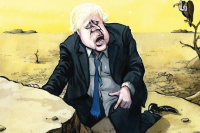
Even now, months after he was forced to resign, Boris Johnson has a potency that no other British politician can match. Everything he says still catches the attention of Westminster and the media. Like Donald Trump, he enrages his enemies so much that they can seem obsessed. And rumours of a Boris restoration will not go away. ‘If he was six feet under in a coffin,’ says one minister, ‘he’d still have ambitions of a comeback.’ Some MPs do want to see his return to Downing Street, of course. ‘They may be noisy,’ says a member of government. ‘But they’re also small in number.’ Some of Johnson’s critics believe he will only stop being a threat to the government once he is out of parliament.

Keir Starmer (Credit: Parliamentlive.tv)

PMQs: Starmer’s attacks on crime flop

Rishi Sunak isn't giving evidence to the Privileges Committee's inquiry today. Nevertheless, he got his defence on partygate in anyway when he took Prime Minister's Questions. In one of his answers to Keir Starmer, Sunak told the chamber that the fine he received was investigated by a 'senior civil servant'. He added: 'The findings of which confirmed that I had no advance knowledge about what had been planned, having arrived early for a meeting.' Then he joked that the Labour leader 'doesn't need me to tell him that: he's probably spoken to the report's author much more frequently than I have'. This, of course, was a reference to Sue Gray, whose name is likely to crop up a lot later today.