Politics

Read about the latest political news, views and analysis

Immigrants are Sunak’s only hope for growing the workforce

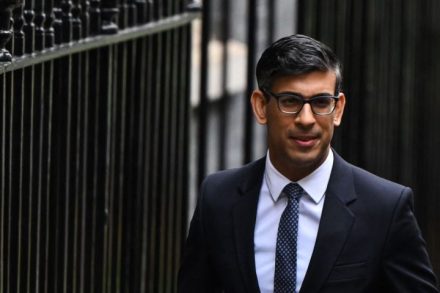
Just how does Rishi Sunak intend to grow the economy? It's the second of his five pledges; last week’s Budget was full of Tory talk about the virtues of getting people off benefits and into work. But the data shows a rather different picture: five million are on benefits while mass immigration – now running at record levels – is once again the only major factor expanding the workforce. The OBR envisages this problem continuing, with immigration running at near-record numbers while Brits claim sickness benefit at the rate of about 5,000 a day. An odd and expensive economic model – some data out today puts it into more perspective. The total on out-of-work benefits – 5.1 million or 13 per cent of the workforce – is not a figure the government likes to talk about.


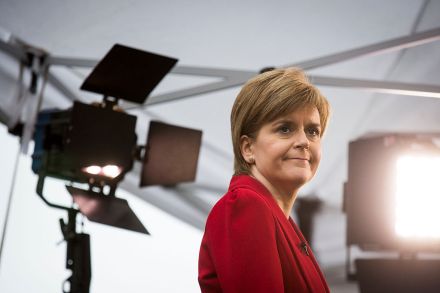
Nicola Sturgeon has destroyed her own reputation

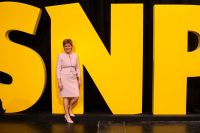
I don’t know about voter’s remorse but there was precious little remorse from Nicola Sturgeon on Loose Women on Monday for the chaos she inflicted on her party by resigning in pique without giving it a chance to organise an orderly transition. She showed all the insouciance of a teenager who had just wrecked the family car. Nothing to do with me – it’s really your fault for giving me the keys. It was fitting that Nicola Sturgeon should have decided to deliver her valedictory, not to a committee of her peers in parliament – she reportedly sidestepped an invitation from the Scottish Affairs Select Committee – but to a gaggle of D-list daytime celebs on Loose Women.

Johnson makes his partygate defence

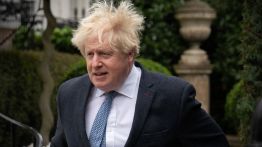
Boris Johnson has today published his long-awaited ‘partygate’ defence, ahead of his appearance before the Privileges Committee tomorrow afternoon. In the 52-page submission, Johnson accepts that he did mislead the House of Commons when he said that ‘the rules and guidance had been followed at all times’ during Covid. But he insists he made his statements ‘in good faith’ and that he ‘would never have dreamed’ of doing so intentionally. The committee claims that his submission ‘contains no new documentary evidence'; sources close to Johnson dispute this. Johnson’s defence broadly relies on three familiar arguments. The first is the absence of any smoking gun which proves that he definitely knew that the rules had been broken.

Has government borrowing really been brought under control?

To what extent have the public finances really been brought under control? This morning’s update from the Office for National Statistics reveals that public sector net borrowing reached £16.7 billion in February. This is more than double the figure from February 2022 of £7.1 billion, and also well above the consensus estimate of around £11 billion.    It is the highest February borrowing figure since records began, primarily driven upward by the Energy Price Guarantee, which continues to see the government cap the unit price of energy and subsidise the rest.

The Stormy Daniels case won’t stop Donald Trump

The 45th president of the United States of America — and the leading Republican contender to win back the White House in 2024 — may or may not be arrested today or tomorrow.  According to his former-lawyer-turned-legal-nemesis Michael Cohen, Donald Trump should escape the indignity of handcuffs but could well be ‘fingerprinted, swabbed [and] mugshotted.’ Cohen insists he doesn’t want to see images of Trump doing a ‘perp walk’ because, he says, ‘he respects the institution of the presidency.’  Trump may despise Stormy Daniels, but he would surely respect the hustle   Cohen, a convict himself, is hardly the most credible source.

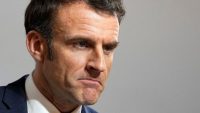
Has Emmanuel Macron become France’s ‘Caligula’? 

The government of Emmanuel Macron won a vote of no confidence in the National Assembly on Monday by a mere nine votes. The cross-party no-confidence motion, tabled by a Centrist coalition fell just short of the 287 votes it needed to bring down the government.  To succeed the no-confidence motion required the support of the centre-right Republican party, augmenting the votes of the left-wing NUPE coalition and Marine Le Pen’s National Rally party, both of whom are opposed to the government’s reform bill that was passed last Thursday without a parliamentary vote. Instead, on Macron’s orders, Prime Minister Élisabeth Borne used a controversial clause in the Constitution, Article 49.3, to pass the bill.

Were Ukrainians behind the Nord Stream bombings?

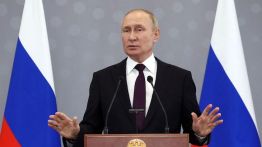
Vladimir Putin has his story, and he’s sticking to it: the destruction of three of the four Gazprom-owned Nord Stream pipelines on 26 September 2022 was the work of the American government. Speaking to reporters in Siberia last week, Putin insisted that the Nord Stream attacks had been carried out on a 'state level’ and dismissed as 'sheer nonsense' a slew of recent stories pointing the finger at a group of freelance, Ukrainian-backed divers operating off a small hired yacht. But reported facts have been stacking up against Putin’s version of events.

Don’t rush for tickets on Nicola Sturgeon’s farewell tour

Nicola Sturgeon’s valedictory address to the RSA was her ‘And now we turn to the liars…’ speech. The outgoing SNP leader’s remarks were nominally about inequality and climate change but she was really there to talk about the distorting impact of social media on democratic politics. Given her departure was possibly hastened by the pushback against her Gender Recognition Reform Bill, which saw women’s rights campaigners and others organise via social media, it’s understandable that the First Minister would feel a little irked by these disruptively democratic platforms.  The ‘nature of the discourse’, Sturgeon opined, was ‘undermining our ability… to address the big issues’.

How Russia’s neighbours are falling out of love with the Kremlin

Putin’s illegal war in Ukraine has united the West. Nato has been strengthened and there has been much support for the sanctions against the Kremlin and its supporters. Public opinion in the UK is firmly behind the Ukrainian people in their suffering, even if many remain wary of direct military entanglement. For the countries bordering Russia, however, the calculations are different, and nowhere can more ambivalence be seen than in Kazakhstan, the leading economy in Central Asia. Although it is the ninth largest country in the world, Kazakh foreign policy has long been dominated by the need to carefully manage relations with its two even bigger neighbours: Russia and China. Its border with Russia stretches for 4,750 miles – longer than the distance from London to Florida.

Why is bitcoin surging following SVB’s collapse?

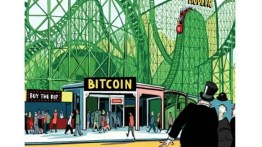
For more than a decade, bitcoin bores have been banging on about cryptocurrency as the future of money. The emergence and spectacular growth of digital currencies, according to these evangelists, prove that the financial system upon which we all depend is broken. Bitcoin was after all created in 2009, after the great meltdown of 2008, as a revolutionary concept to fight the corrosive global power of central banking. Bitcoin was pitched as the new digital gold. It was limited in supply and could not be centrally controlled – its value couldn’t be distorted by quantitative easing and morally bankrupt governments hooked on debt. Bitcoin wasn’t just for buying illegal stuff online.

Jason Leitch’s lockdown regrets

You may have been forgiven for thinking that the only story in town up here in Scotland is the election of the leader of the SNP, and Scotland’s next First Minister. However, for a day at least, some of the headlines have been stolen by a man who became almost as well-known to Scots as the outgoing First Minister: Professor Jason Leitch. 'Lockdown,' Leitch concluded, 'is an old fashioned approach to managing a disease that is going around the world in an aeroplane.' Scotland’s National Clinical Director, Professor Leitch was at the side of Nicola Sturgeon during the entirety of the Covid pandemic, the country's equivalent of Sir Patrick Vallance, the government's Chief Scientific Adviser, and Professor Chris Whitty, the Chief Medical Officer, all rolled into one.

Budget Poll: half of voters see Tories as a high tax party

It wasn't so long ago that the Conservatives won a landslide on Boris Johnson's pledge not to put up income tax, national insurance or VAT. But four years on, and after 13 years in office, it seems the Tories have lost their hard-won reputation for low taxes. Mr S has done some polling and last week's Budget only served to harden the increasingly common view of the Tories as a party of high taxers. A whopping 50 per cent of voters now associate the Tories with raising taxes, up from 42 per cent who thought so a week prior to the Budget. More than a third of voters – 38 per cent – associate 'advocating for lower taxes' with the Labour party (shock!) while just a fifth – 20 per cent – associate it with the Conservative party.

Sunak’s deal fails to get the DUP’s support

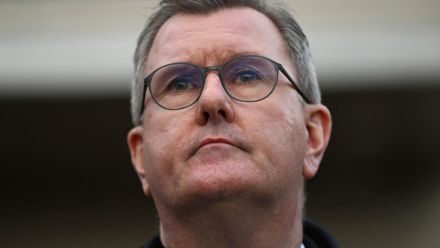
There was bad news for Rishi Sunak this lunchtime as Sir Jeffrey Donaldson confirmed that he and the seven other DUP MPs will vote on Wednesday against the Windsor Framework. Few in government were expecting the party to vote for the deal but some harboured hopes that the party might abstain or register a more muted protest. In a statement, Donaldson said there had been 'significant progress' but that 'there remain key areas of concern'. Chief among them is Sunak's much-vaunted 'Stormont brake' which would not apply to existing EU laws. The DUP Westminster leader said that 'whilst representing real progress the "brake" does not deal with the fundamental issue which is the imposition of EU law by the Protocol.

Is Putin struggling to maintain his strongman image?

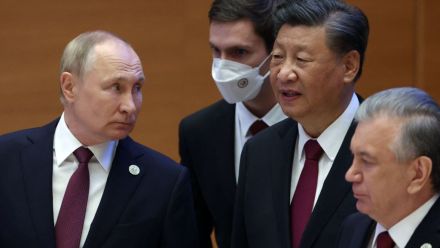
China’s president Xi Jinping has arrived in Russia for the start of a three day state visit. The aim of the trip, according to the Chinese, is to strengthen relations between the two countries in a world threatened by ‘acts of hegemony, despotism and bullying’.  Xi and Putin will meet in person this afternoon, before holding bilateral talks tomorrow. Their meeting comes just weeks after China published a twelve-point ‘peace plan’ for Ukraine calling for the ‘sovereignty of all countries’ to be respected. This morning, the Kremlin’s spokesperson Dmitry Peskov confirmed Ukraine would be discussed by the two leaders: ‘President Putin will give exhaustive explanations so that President Xi can get Russia’s view on current matters firsthand.

SNP MP attacks the press (again)

It seems to be all going to pot for the SNP. The party's chief executive and its top spinner are heading for the exit as the ongoing shambles of a leadership race continues to claim more scalps than a Scorsese flick. And it seems the pressure is getting to some of the SNP's grandees, judging by their touchy attitude towards the reinvigorated Scottish press. Today it was the turn of Alison Thewliss, the party's Home Affairs spokesman at Westminster, who threw a very public fit on Twitter after having her regular column spiked in the Daily Record last week. 'I had never been told what to write until this weekend,' she declared. 'I wrote a piece on the Asylum Ban Bill, because it is topical and important. I've been binned'. Poor lamb.

Can the Liberal Democrats become relevant again?

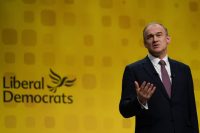
With neither the Conservatives nor the Labour party keen to talk publicly at least about softening Brexit, is there a gap in the market for an unashamedly pro-EU party? This is – once again – the hope of the Liberal Democrats. Speaking in York on Sunday at their first in-person party conference since the pandemic, Ed Davey played to the Europhile base – describing Brexit as 'the elephant in the room of British politics'. A best case scenario at the next election for Davey would be if Labour had to be propped up by Lib Dem votes ‘Let me shout it, yet again,’ Davey said, ‘if you want to boost our economy, you have to repair our broken relationship with Europe.

Rishi Sunak faces judgment day on his Brexit deal

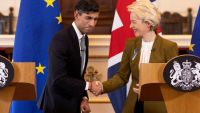
Rishi Sunak has received plaudits from MPs, foreign leaders and the media over the Windsor Framework. Yet the deal has not been voted on. This will change this week with MPs asked to vote on Wednesday on the Prime Minister's renegotiation of the Northern Ireland protocol. So far the mood music has been broadly good for Sunak. The deal went further than many in the party expected on issues such as the Stormont brake – which could allow the Northern Ireland assembly to stop new EU single market rules from applying in the region if activated. There have been no ministerial resignations and little sign that a mass rebellion is on the cards.

Credit Suisse has been bought out – but at what cost?

Another Sunday, another banking takeover swiftly arranged before markets open on Monday morning. This time Credit Suisse has agreed to be bought by fellow Swiss bank UBS for 0.5 Swiss Francs a share – less than a third of its closing price on Friday and less than a tenth of what the bank was worth a year ago. A banking collapse which was beginning to look inevitable in spite of a 50 billion Swiss Franc bailout by the Swiss central bank on Friday has been averted, market turmoil has been avoided, or postponed, jobs have been saved (although many are expected to be lost in London as Credit Suisse’s investment banking operations are shrunk). Shareholders have not been left empty-handed. But at what cost?