Politics

Read about the latest political news, views and analysis

What happens after the SNP leadership results are announced?

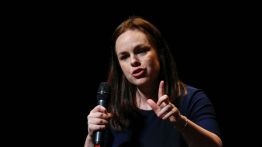
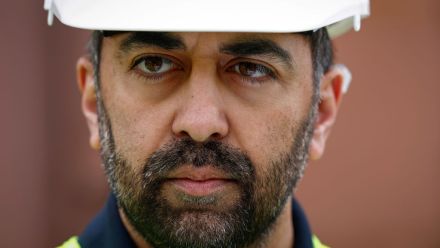
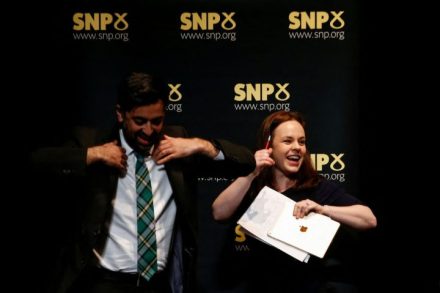
Shortly after 2 p.m., the results of the SNP leadership election will be announced at Edinburgh’s Murrayfield Stadium. Three candidates are vying to succeed First Minister Nicola Sturgeon, though it is widely accepted that the race is really only between the two frontrunners; the winner is expected to be Humza Yousaf or Kate Forbes. While it’s still uncertain which candidate will win, today’s announcement will come as a relief to many politicians and party members who have followed a contest that has, at many points, proved damaging to the SNP’s reputation.  Last week saw a heated exchange between the leaders of the opposition parties and the current First Minister during Sturgeon’s 286th – and final – First Minister’s Questions.
Is it time to ban second jobs for MPs? 

There are some genres of newspaper story that never die. Among them are sightings of Lord Lucan, public moralists discovered in adultery – and foolish MPs being caught out offering themselves for hire to undercover hacks. A fine example of the third of these broke yesterday thanks to the situationist campaigning group Led By Donkeys, who started out as Brexit-bashers but have expanded their remit to the broad-brush embarrassment of MPs. You’d think, by now, that senior MPs would be a bit more on the qui vive for this sort of thing. But no: they never learn.

What does today’s SNP leadership election mean for Scottish Labour?

Unionist politicians are warming up for what they hope will be one of the biggest opportunities of the past two decades to undermine the independence cause. Whoever wins the SNP leadership contest today is taking over a party that doesn't know its own kind any more - and a government that's struggling to blame its record entirely on Westminster.  That's one of the reasons Anas Sarwar has called for a snap Holyrood election. The Scottish Labour leader today argued that the new First Minister would have to seek their own mandate, saying: This is an SNP that screams about mandates: let's be honest, the next SNP First Minister will not have the mandate.

Steve Baker makes the case for compromise

To Buckingham, where a tribe of true believers met on Saturday to attend the Margaret Thatcher Freedom Festival. Suella Braverman was the star turn in the evening, with Sir Iain Duncan Smith amusing attendees with his tales of Eurocrat meetings. But it was Steve Baker – the onetime arch-rebel turned Northern Ireland minister – who most intrigued Mr S with his pitch to activists on the need for compromise. Speaking three days after the vote in the House of Commons on Rishi Sunak's Windsor Framework, Baker said that his decision to back the deal was based on his concerns about the government's fate if he did not support it: It would be too bashful of me to pretend that I wasn’t pivotal in this journey with the Windsor Framework, as anyone can see on the TV onwards.

Scotland is better off without the Greens in government

Just who do the Scottish Greens think they are? They provide a mere seven seats to the SNP’s 64 and they won 1.3 per cent of the vote in the constituency section of the Holyrood elections in 2021 (they had 8.1 per cent in the regional section). In return for that meagre offering they think they have the right to end economic growth in Scotland. No wonder at all then that Kate Forbes and Ash Regan are unbothered by the prospect of the Greens leaving government – maybe even pushing them out should they win the SNP leadership – and only Humza Yousaf has signed up to their ‘non-negotiable’ demands for ‘climate justice’ and trans rights. It ought to be pretty obvious to anyone in the SNP that the Greens are more trouble than they are worth.

Why Kate Forbes is still the SNP’s best hope

They have thrown everything at Kate Forbes. She has been subjected to a secular inquisition marked by triviality and partiality. Journalism is a trade neither teeming with religious believers nor one well-equipped for Biblical exegesis, and it shows.  ‘Gotcha’ interrogation has focused on scriptural provisions offensive to progressive attitudes pervasive among journalists (e.g. on homosexuality and fornication) and not other teachings with as much potential bearing on policymaking, such as the iniquities of the rich and powerful or the superior virtue of the poor and meek.

Facts, not fear, should shape our view of Europe’s banks

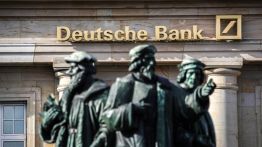
After the collapse of Silicon Valley Bank and Credit Suisse drama, some investors are understandably asking if we’re on the brink of another 2008-style banking crisis. I’ve had an entire career in politics and government since that crash. Hard lessons have been learned and there can be no complacency – so often, trouble comes from areas we don’t expect. But we should also be careful not to ignore some of the key differences and underlying strengths in the current situation. Unfounded panics can become self-fulfilling. If we allow that, everyone other than a few lucky speculators will stand to lose out. Credit Suisse was not typical: it had been an outlier for months.

Sunday shows round-up: MPs caught in sting operation

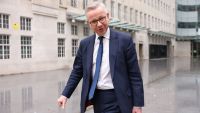
MPs caught in sting operation were acting ‘within the rules’ It was Levelling Up Secretary Michael Gove doing the rounds this morning. He was asked first to comment on the recent sting by the group Led By Donkeys, in which multiple members of parliament were seen to be asking for up to £10,000 a day to consult for a company which did not exist. A majority of the public believe MPs should not have second jobs, but Gove stressed that although there is a need for transparency regarding MPs and any external work, it was clear that the job being considered in the sting was not technically against the rules: https://www.youtube.com/watch?

Sadiq Khan’s green vision risks impoverishing Britain

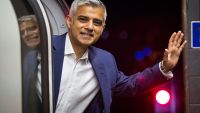
Earlier this week, Chris Skidmore and Sadiq Khan announced they were 'teaming up' to defeat the politicians they believe are attempting to thwart climate action. In an article for the Guardian, the duo has put aside political differences to 'set an example' of what is possible. Those differences could be disputed: the Conservative member for Kingswood is further to the left than many MPs on the Opposition benches. But it was by no means the most dubious claim in their piece. Consider, for instance, Khan’s assertions over Ulez, London’s Ultra Low Emission Zone.

What the conviction of Rahul Gandhi means for India

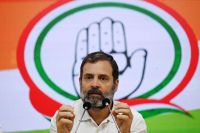
The conviction of Rahul Gandhi – an opposition politician and dynastic heir to three of India’s past prime ministers – has raised questions in India about both a colonial-era defamation law and Gandhi’s own political judgement. Rahul is currently an MP in the Indian parliament, but has taken on the role of crown-prince-in-waiting for the Congress party as a potential rival to Prime Minister Narendra Modi.  His conviction, by a court in Modi’s BJP-ruled Gujarat state, is for a public comment Rahul made some years ago, asking rhetorically why so many thieves had Modi as their surname. This was a jibe at the PM, Rahul’s bête noire. What might have been a harmless joke at a private dinner party has been treated as defamatory.

Sending uranium ammo to Ukraine isn’t an escalation

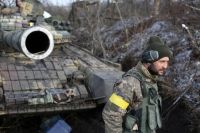
It didn’t take long for the Kremlin to exploit the news that Britain will be supplying depleted uranium armour-piercing anti-tank ammo to Ukraine. On Tuesday, Putin said that ‘Russia will have to respond accordingly, given that the West collectively is already beginning to use weapons with a nuclear component.’ While on Wednesday, Russia's Ambassador to the US said that the West had ‘irrevocably decided to bring humanity to a dangerous line, beyond which a nuclear Armageddon is looming ever more distinctly.'  Both remarks are part of a long-standing Russian attempt to suggest that the Ukraine conflict might lead to nuclear escalation. The aim is to disrupt international support for Ukraine.

I’m a junior doctor – here’s why I won’t be striking

The British Medical Association (BMA) has this week announced a new four-day strike for junior doctors, which will take place after the Easter bank holiday. The strike will lead to the NHS having a reduced service for ten days in a row, when you include the two bank holidays and weekends. I am a junior doctor, and have not and will not be striking.  Before explaining why, it is worth making clear who will be on strike this Easter. The term junior doctor encompasses the majority of doctors under consultant level, which for most doctors lasts around five to ten years after graduation.

Frankie Boyle isn’t a victim of cancel culture

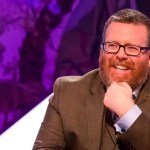
Has comedian Frankie Boyle become the latest victim of the BBC’s ‘right-wing purge’? Frankie Boyle seems to think so. Following news this week that his BBC Two show, Frankie Boyle’s New World Order, has not been renewed for a seventh series, he took to Twitter, where he implied the cancellation was down to the rightward turn of the corporation: ‘Ah well, there’s to be no more New World Order on the BBC. Not surprising in the current climate, I suppose.’ In a similar vein, UK comedy bible Chortle has warned that ‘the cancellation will also fuel fears that the corporation is avoiding shows that are critical of the government’.

Is Alex Salmond behind the SNP’s implosion?

Only six weeks ago the Scottish National Party seemed unchallengeable. Its leader, Nicola Sturgeon dominated Scottish politics at every level, was fêted by the metropolitan liberal elite and feared by Tory ministers in WhatsApp messages. Now she’s history, her party is in chaos and her key lieutenants including her husband, chief executive Peter Murrell, have fallen on their swords. One of Europe’s most successful political parties, which until recently threatened to break up Britain, has now broken itself in the most spectacular fashion. It’s hard to think of anything outside political fiction that equates to the self-inflicted misfortune that has engulfed the SNP since Sturgeon resigned, out of the blue, on Wednesday 15 February.

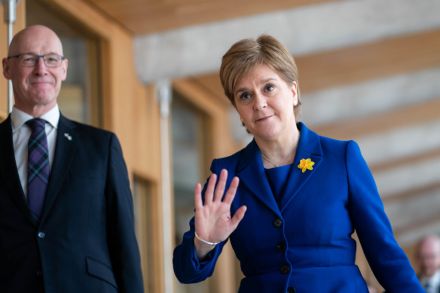
What is Nicola Sturgeon’s legacy?

Whatever your thoughts on the SNP, the Union or indeed Scotland, it cannot be denied that Nicola Sturgeon will leave a permanent mark on Britain’s political landscape. Whether that mark is good or bad will no doubt be the focus of intense debate for years to come. Making her 286th and final First Minister’s Questions closing speech this week, the usually immovable First Minister was close to tears. This resignation is to her likely bittersweet given she did not end up achieving Scottish independence. And this raises the question: after holding the first minister position for eight years, what actually changed in that time?

What’s wrong with the BBC? 

Being a senior BBC executive has never been a guaranteed route to national affection, but the past few weeks have been particularly bruising for director-general Tim Davie and his leadership team. The Gary Lineker affair didn’t please anyone – the presenter’s supporters railed against what they saw as a politically inspired move against him, while advocates of impartiality felt that the BBC caved in when they came to an interim settlement. Then choirs worldwide, and the classical music community in the UK, rose in protest at the decision to axe the BBC Singers just before their centenary; a decision now wisely ‘paused’. Around the country, the BBC’s local radio and regional television staff have been on strike in protest at cuts to their services.

The remarkable fall of the once-mighty ERG

After the crushing majority won by Rishi Sunak for the ‘Stormont brake’ element of his new deal on the terms of trade in Northern Ireland, a single question is on the lips of many MPs: whither the ERG? For the once-mighty European Research Group – the Tory party’s formidably well organised Praetorian Guard which shielded the Brexit flame from Remain – was able to field fewer than two dozen votes against this key element of the Windsor Framework this week. At one crucial juncture back in 2019, a mere sub-element of the European Research Group, the ‘Brexit Spartans’, played a decisive role in killing off Theresa May’s terrible proposed sovereignty giveaway. And there were 28 of them.

Ian Williams, Kara Kennedy and Oscar Edmondson

20 min listen

This week: Ian Williams asks how China will cope with the rise of AI chatbots (00:56), Kara Kennedy recounts her upbringing in the Welsh ‘murder capital’ of Pontypridd (08:11), and Oscar Edmondson makes the case for the BBC World Service (13:38).  Presented by Natasha Feroze.