Politics

Read about the latest political news, views and analysis

Humza Yousaf and the myth about Britain’s diversity problem

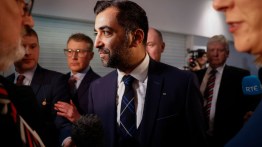
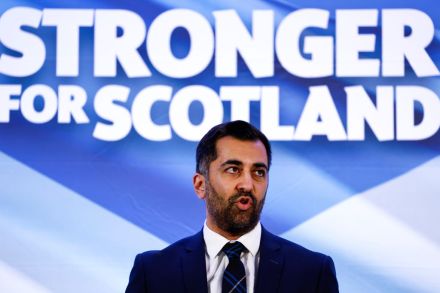
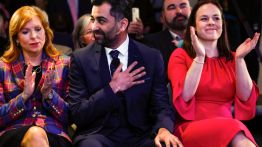
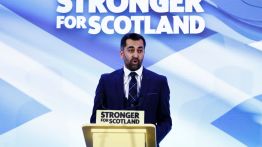
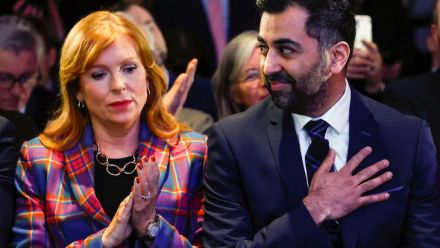
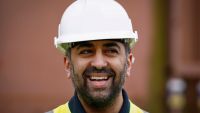
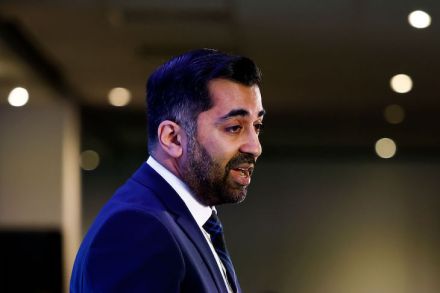
Humza Yousaf, the new First Minister of Scotland after his victory in the SNP leadership election, deserves his moment in the sun. Yousaf is Scotland’s first ethnic minority leader and the first Muslim leader of the governing party. Legitimate questions about whether he is up to the job must wait while credit is given for the scale of his achievement in reaching the top of Scottish politics at the tender age of 37. Yousaf’s triumph heralds another significant milestone in the rapidly changing political complexion of the United Kingdom: the barriers to progress for those from non-white backgrounds are disappearing, a remarkable development that would have been implausible just a generation ago.
Rishi Sunak is right to be concerned about laughing gas

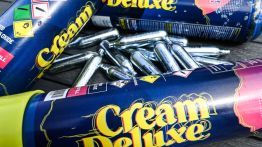
Laughing gas appears initially to be a fairly harmless drug. It doesn’t have a giveaway smell or any obvious adverse side effects – and it’s cheap. Post-pandemic there has been a huge rise in the number of teenagers and young adults taking it: today there are more than 600,000 regular users in the UK. After the Notting Hill Carnival, there were more than 3.5 tonnes of canisters left behind. Which is why, yesterday, Rishi Sunak has pledged to make laughing gas a class C drug by the end of the year in a move to ban the substance. The Prime Minister has come under some immediate criticism for choosing to focus efforts on a drug assumed to be benign, but the nitrous oxide's debilitating long-term consequences have received much less attention.

Humza Yousaf’s election should concern us all

Scotland has been deprived of the opportunity for a fresh start. Humza Yousaf has been elected leader of the Scottish National party, and he is set to be confirmed as first minister today in the Scottish parliament.  Yousaf defeated runner-up Kate Forbes by 52 to 48 per cent on second preference votes. The margin of victory is somewhat ironic, considering that, when the UK voted to leave the European Union by the same ratio, the SNP argued this was not a sufficient mandate and there should be another vote. Despite this, Scotland will now have to prepare for life under a new first minister. And Yousaf’s election should concern us all.  Yousaf has stated throughout the election campaign that he wants to push social justice and progressive values as first minister.

In defence of Rishi Sunak’s crackdown on beggars

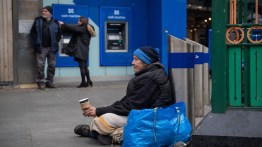
When Rishi Sunak presented the latest attempt by a prime minister to get tough on anti-social behaviour, it wasn’t the graffiti-cleaning or the ‘gotcha’ fly-tip cameras or the labelled jumpsuits that caught my eye. It was the inclusion of begging. Admittedly, you had to go pretty far down his pledge list before you found it. Perhaps someone with a longer institutional memory than the current Cabinet Secretary, Simon Case, had warned him of the drubbing John Major received from the great and the good – and many well-meaning liberals – when he launched his drive against ‘aggressive’ begging in 1994. It will be made an offence for criminal gangs to organise begging networks for extra cash, which is often used to facilitate illegal activities.

Can Humza Yousaf unite the SNP?

It was announced to a particularly tense room at 2 p.m. that Humza Yousaf had won the SNP leadership race. The contest was expected to be close and many people assumed that if second preferences were accounted for, Kate Forbes would most likely prevail. Ash Regan’s voters didn’t quite manage to swing it in Forbes’s favour and Yousaf won by just over 2,000 votes. He is set to become both the youngest first minister of Scotland, and the first Muslim leader in the UK.

Why Humza Yousaf should make Kate Forbes his deputy

Five weeks ago, Kate Forbes’ leadership campaign looked to be dead and buried. She had set her campaign on fire, Scottish political commentators said, by launching her socially conservative views on gay marriage on the nation. Today, despite the widespread opprobrium by her party colleagues, nearly half of the SNP membership voted for her to be their leader, and the country’s First Minister. Over half, though, voted for Humza Yousaf, and tomorrow he will be elected as Scotland’s First Minister. What then? Perhaps Yousaf can use the closeness of this result to his advantage. The so-called ‘best of both worlds’ is much sought after in politics and this may now be available to him.

Humza Yousaf won’t be celebrating for long

Humza Yousaf has a reputation for being a bit of a crowd-pleaser and, true to form, everyone seemed inordinately happy at his installation as SNP leader – especially the opposition parties. The Scottish Tory leader Douglas Ross purred like an overstuffed tabby cat. Yousaf had just scraped home by 52 to 48 per cent – a less than wholehearted endorsement from the SNP membership after a leadership election in which independence somehow got lost in the hustings. Sir Keir Starmer sounded over the moon too and the sigh of relief from No. 10 could be heard all the way from Murrayfield.

Coffee House Scots: Humza wins – what’s next?

11 min listen

Humza Yousaf has been announced as the new leader of the SNP after a narrow victory over second placed Kate Forbes. What will this mean for the cause of Scottish independence? Katy Balls speaks to Michael Simmons, Stephen Daisley and Fraser Nelson.  Produced by Oscar Edmondson.

Humza Yousaf wins the SNP leadership election

Humza Yousaf has won the race to become the next leader of the Scottish National party. Yousaf defeated his rival Kate Forbes by 52 per cent to 48 per cent after Ash Regan was eliminated in the first round of voting. Yousaf has been the SNP establishment’s preferred candidate from the outset; he received the backing of senior party politicians, including Westminster leader Stephen Flynn and outgoing deputy first minister John Swinney. While Yousaf is Sturgeon's continuity candidate, the former health secretary has a lot of work to do to convince the people of Scotland he is up to the job. The margin of his victory was much narrower than anticipated: his victory over Forbes in both the first and second round of voting was by only a few thousand votes.

Ten yardsticks to judge Humza Yousaf by as first minister

Humza Yousaf is the new leader of the SNP and in the coming days will be sworn in at the Court of Session in Edinburgh as the county’s sixth first minister. He inherits a bickering party and almost a decade of electoral stalemate over independence. It is far from clear what legacy his predecessor leaves in her wake. She took the SNP Alex Salmond built and cemented it as Scotland’s natural party of government, winning election after election with seemingly little effort. But many would argue she has left the country in no better shape than the day she took over in November 2014. For Yousaf to be a success he surely must look beyond maintaining that nationalist electoral dominance and drag the country forward.

Tearful Gary Lineker doubles down on Match of the Day row

How touching. Several weeks after Gary Lineker’s sporting colleagues boycotted the BBC in solidarity during a row over his tweets, the Match of the Day presenter has revealed the whole affair moved him to tears.  Lineker, who is, he says ‘still bewildered’ by the scandal, revealed his reaction in a cosy chat with former Labour spin doctor Alastair Campbell and ex-Tory MP Rory Stewart on their podcast The Rest is Politics: Leading. (The podcast is produced by Goalhanger Podcasts, owned by none other than Lineker himself – a story for another day perhaps.)  The row, which pushed the Beeb to the brink, saw Lineker suspended for three days after he made comments comparing the Tories’ language on immigration to that of 1930s Germany.

Netanyahu’s war on lawyers has thrown Israel into turmoil

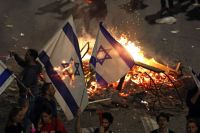
Chaos reigns in Israel, a country in the throes of an ad hoc general strike called by trade unions, university students, numerous industries across the country, and many military and civil defence reservists. Demonstrators are storming buildings and fighting the police. Some council leaders say they are beginning a hunger strike. If you wanted to fly into Ben Gurion airport today, as tens of thousands of people usually do of a weekday, I’m afraid you’re out of luck. It’s closed.  Why is all of this happening? In the immediate term, because Prime Minister Benjamin Netanyahu sacked his defence minister, Yoav Gallant. Gallant is a member of Netanyahu’s Likud party and is a loyalist.

How are Tories split on small boats?

9 min listen

Tory party divisions over the small boats policy are starting to appear. Although the bill sailed through its second reading in parliament, now Rishi Sunak is facing amendments to the legislation. Where are the dividing lines? Cindy Yu speaks to Katy Balls and James Heale.

Dan Snow is the ultimate midwit historian

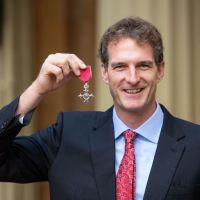
Dan Snow, the TV historian, is anxious about his 'privilege'. One of many 'nepo babies' in the British media, Snow's debut came when he was 23 years old, fresh out of Oxford, co-presenting with his father Peter. Having benefited from his well-heeled upbringing, Snow now excitedly foresees the end of 'inherited monarchy' and 'organised religion'. In an interview with the Times, Snow makes a confession: 'Yes, I myself am a privileged white guy who went to Oxford and read history. Once upon a time the world was made for English-speaking white guys like me — the challenge is how I act now.' Snow appears to express disappointment that Prince Harry, in Spare, didn’t try hard enough to expose the monarchy as 'racist' and 'dangerous to those within it as well as its subjects'.

What’s behind Sunak’s latest crime crackdown?

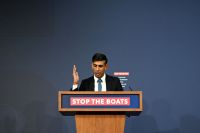
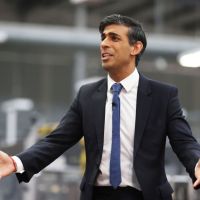
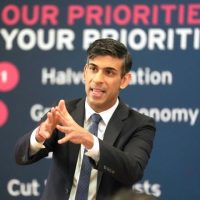
The Prime Minister was in Essex this morning, unveiling his much-briefed antisocial behaviour plan. In recent weeks he and Keir Starmer have been giving a foretaste of what is to come in next year's general election by trading blows on a range of policy areas. Last week Starmer gave a big speech on law and order; today it was Sunak's turn to respond. The Tory leader said his plan – with its headline-grabbing plan to ban nitrous oxide – can be summed up in three 'buckets': more policing powers, a zero-tolerance approach to drugs and a focus on urgency that will require offenders to repair the damage they have done more quicker.

The Posie Parker mob has embarassed New Zealand

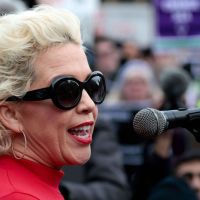
New Zealand has, until recently, dwelt in splendid isolation during the culture wars. Kiwis have typically been reluctant to discuss social issues, the raising of which usually causes a kind of social static and brings down the mood. The antipathy, tribalism and performative outrage of identity politics hasn't been much of a problem Down Under. But, in the last few years, things have changed. During the first Covid lockdown, when the country's prime minister Jacinda Ardern was, in the eyes of the global media, an almost ethereal entity visited benevolently upon these shores, the country was united and sincerely committed to leading the way in the response. By the second Covid wave, however, something never seen before here, at least at nothing like a comparable scale, began to develop.

The Tory rebellions brewing on small boats

When No. 10 first devised the Illegal Migration Bill, the hope was that Rishi Sunak's crackdown on asylum claims would have a unifying effect on the Tory party. The Bill – which aims to make it so those who arrive in the UK illegally cannot claim asylum – sailed through its second reading. But as it returns to the Commons this week, Sunak is facing demands from both sides of his party to amend the legislation. The most immediate problem numbers wise comes from the moderate wing of the party. Tim Loughton is leading a group of would-be Tory rebels calling for a new safe and legal route to be introduced as part of the Bill.

Prince Harry relaunches his anti-press crusade

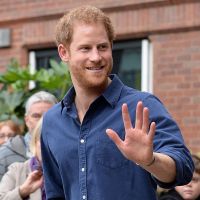
The renegade royal is back. Having spent the past few years endlessly invading the privacy of others for financial gain, Prince Harry has turned up in London to complain about newspapers, er, doing just that. The dilettante Duke of Sussex arrived at the High Court this morning as legal proceedings begin in the phone-tapping and privacy case in which he is involved. Harry is merely the most blue-blooded of a gaggle of 'slebs who are currently suing Associated Newspapers, publishers of the Daily Mail and Mail on Sunday alongside the likes of Sir Elton John, Sadie Frost and Liz Hurley who allege unlawful information gathering.