Politics

Read about the latest political news, views and analysis

Why China might attack Taiwan

China may well attack Taiwan. According to the CIA, President Xi Jinping has instructed his armed forces to be able to strike by 2027. Nothing is certain, and there are no signs of mobilisation for an imminent attack. But beyond that, Beijing’s behaviour is consistent with Xi’s orders. It builds up its assault forces. It strengthens its nuclear arsenal. It steps up its military drills. It increasingly molests Taiwan across the board. And it makes its economy more resilient to sanctions.   We can’t know Beijing’s intent for sure. We do know it covets reunification with Taiwan as the centrepiece of its declared project to restore full Chinese nationhood and create a Sino-Centric world order.

Scotland awaits the fate of the Third Woman

Scottish politics has never been more febrile. If we go a day without an arrest, a resignation, a revelation about financial mismanagement in the Scottish National Party we wonder what we've missed. It's probably a little like this after a coup or in a failing Latin American state. Okay, there are no tanks rumbling along Sauchiehall St., but the political and media worlds have been holding their collective breath waiting to see if the former First Minister, Nicola Sturgeon, will be arrested by police. Newspapers have their profiles ready to run. So far she has avoided the long hand of the law. Why is everyone expecting this hitherto blameless politician, this icon of progressive feminism, to be taken into police custody?

Pakistan has reached an inflection point

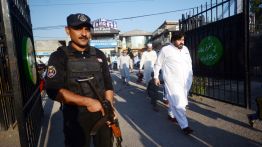
The holy festival of Eid-ul-Fitr has dawned in Pakistan, marking the end of Ramadan. Celebrations were unusually muted. The month of Ramadan has been harrowing for a large swathe of Pakistan’s populace. All through the month, through the day-long fasts, crowds thronged outside the free food distribution centres across the country, waiting for bags of flour. Sometimes they waited days. Fights were commonplace. Often, the very young or the elderly were injured or even killed in the stampedes. There are far too many of these cases to recount. Food inflation is at a record high of 47 per cent; overall inflation hovered around the 35 per cent mark through March and April. Earlier this month the country’s central bank raised interest rates to 21 per cent.

Diane Abbott loses the Labour whip

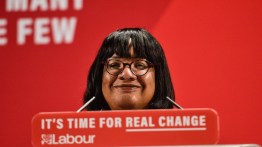
Oh dear. Just when Keir Starmer looked like convincing voters that Labour had changed, along came an unwelcome reminder of the party's not-so-distant Corbynite past. Diane Abbott, the onetime Shadow Home Secretary, has popped up in the Observer letter pages today to offer her (unsolicited) musings on the issue of, er, antisemitism. There's a first for a Labour politician... Abbott took issue with a column written in last week's newspaper headlined 'Racism in Britain is not a black and white issue. It's far more complicated' and wrote to set out her own view: Tomiwa Owolade claims that Irish, Jewish and Traveller people all suffer from 'racism'. They undoubtedly experience prejudice. This is similar to racism and the two words are often used as if they are interchangeable.

Should Italy’s killer bear be sentenced to death?

The female bear that mauled to death a male jogger in the Italian Alps on 5th April was captured this week. Twenty-six-year-old Andrea Papi’s ravaged corpse was naked when found. His shirt and shorts lay many yards away. The killer bear, known as JJ4, is a 17-year-old mother of three cubs and the off-spring of two of the ten brown bears brought from Slovenia to the Trentino region of north east Italy in 1999-2000 under an EU rewilding scheme called Life Ursus. JJ4 was identified as the killer from a DNA match. Two weeks later forestry police captured her after following her tracks in the snow and setting up a tubular bear trap baited with apples coated with honey. The tragedy prompts two essential questions: should this killer bear be put down?

The EU must tread carefully in its AI crackdown

Artificial Intelligence (AI) has surged in popularity in recent months. ChatGPT alone has swelled to more than 100 million users in a matter of weeks, capturing the imagination of the world for whom the technology had previously been consigned to the realm of science fiction. Scores of companies, from software businesses to manufacturers, are racing to find fresh ways to build its functionality into their operations.  But amidst the excitement, there is also a worry: are we going too far, too fast? Twitter's owner Elon Musk warned this week that AI could lead to 'civilisation destruction'. Regulators, alarmed at this explosion in activity, are scrambling to react.

Jacinda Ardern’s disappearing act

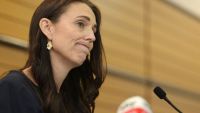
Former New Zealand prime minister Jacinda Ardern bade farewell to parliament a few weeks ago. Ardern had resigned as PM in January, saying she no longer had 'enough in the tank' to lead the country. After half-a-decade in charge, and regularly feted on the world stage, Ardern has all but vanished as a ubiquitous figure of the age; but more striking is the extent to which her political legacy has, too. So what has she been up to since? Ardern has been appointed a trustee of a Prince of Wales' environment award, named the Earthshot Prize. The prize was created by Prince William to fund projects that, in a not-unimpressive mission statement, 'aim to save the planet.

A split within the radical green movement was inevitable

Ever since Monty Python created their internecine, bickering and ridiculous groups of freedom fighters – the People’s Front of Judea and the Judean People’s Front – for their 1979 film The Life of Brian, it’s always been easy and tempting to mock and deride the fissiparous nature of ideologues and tin-pot revolutionaries. Those who believe in the purity of a cause tend to have a semi-religious mindset – and consequently one semi-divorced from reality – which brooks no heresy from orthodoxy. Thus extreme, quasi-cult movements are always prone to split into factions.

Why are the Troubles being glorified now?

As world leaders gathered to mark the 25th anniversary of the Good Friday Agreement, is violence glorified when it comes to remembering the Troubles? John Connolly speaks to Spectator columnist Douglas Murray and former DUP leader Arlene Foster. This episode can be watched in full on Spectator TV's Week in 60 Minutes.

Macron has left Marseille at the mercy of violent drug gangs

Five months and counting until France hosts the Rugby World Cup. For England supporters, the tournament kicks off at the stylish Stade Vélodrome in Marseille against Argentina on 9 September, one of six fixtures hosted by the Mediterranean city. Scotland take on South Africa the day after the England game, and two of the tournament’s quarter-finals will also be in Marseille, as they were in 2007 when France last hosted the World Cup.  That year was a peaceful one by Marseille’s standards, with only seven murders attributed to gangland wars. There was a new president, Nicolas Sarkozy, who had campaigned on a ‘tough on crime’ ticket, and that, plus the hosting of rugby’s showpiece event, might have had an effect.

The trouble with The Rest is Politics podcast

You have probably already heard of The Rest is Politics, which consistently tops the podcast charts. You have certainly already heard of its two hosts, and have a flavour of their temperaments as well as their political views. Alastair Campbell may once have been lost in the shadow of Malcolm Tucker, but every week on the podcast his real self fights its way through. He finds his perfect foil (so we are told) in his co-host, the awkward nerd Rory Stewart.  The Rest is Politics is a strange name. What does it mean? It isn’t a phrase. The pieces begin to fall together once you realise that the company behind it, Gary Lineker’s Goalhanger Podcasts, had already struck gold with the wonderful The Rest is History.

SNP rule has been disastrous for Scotland’s schools

This week was supposed to be Humza Yousaf’s big relaunch for the SNP. His speech on Tuesday was designed to show how he was combining his adopted role as the ‘son of Sturgeon’ with his ability to be his own man. Alas, it was not to be: the arrest of SNP treasurer Colin Beattie completely and utterly derailed the new First Minister’s best-laid plans. Yousaf had wanted to show he recognised that the relationship between the Scottish government and the business community had fallen into a ditch, to make clear it needed a ‘reset’. His willingness to compromise came in his announcement that the deposit return scheme would be delayed, and plans to ban alcohol advertising would return to the ‘drawing board’.

Sunak opts for loyalty first in reshuffle

What does Rishi Sunak’s mini-reshuffle reveal? When Nadhim Zahawi was sacked as party chairman, the Prime Minister took his time in deciding who would succeed him – eventually appointing Greg Hands. This time around Sunak has moved quickly in the wake of the report into bullying allegations that led to Dominic Raab’s resignation. Sunak hopes to move the news agenda on with a string of ministerial appointments. As James Heale reports on Coffee House, Alex Chalk – a one nation Tory who backed Sunak in the leadership contest – is the new Justice Secretary. On top of this, Oliver Dowden takes on Raab’s deputy prime minister brief – while keeping his current role in the Cabinet Office. This is an unsurprising appointment, with Dowden one of Sunak’s closest political allies.

Sunak names Alex Chalk as Justice Secretary

One man's loss is another's gain. Rishi Sunak has acted swiftly to fill the gap left by Dominic Raab's resignation, appointing 46-year old barrister Alex Chalk as his new Justice Secretary. Like Sunak, he is a Wykehamist who quit Boris Johnson's cabinet back in July, citing the Paterson, Partygate and Pincher scandals. The appointment flies in the face of reports which suggested that Sunak would appoint a woman to the post, with men occupying three times as many cabinet posts as women. Awaiting Chalk is an in-tray full of problems. He is the tenth Lord Chancellor in eleven years and inherits a ministry widely regarded as a troubled department, even by Whitehall standards.

BBC hires Corbynista political fact-checker

Can the BBC ever get it right? Just weeks after the Beeb was embroiled in an impartiality row over the rogue tweets of their star presenter Gary Lineker, another spat over bias has reared its ugly head. In September, the broadcaster hired a new political fact-checker, Oscar Bentley, to comb through political debates in the run up to the next general election. But the Daily Mail has now revealed that Bentley might not quite be the bastion of impartiality one would hope. According to the Mail, he is a ‘lifelong Labour supporter’ who canvassed for disgraced former Labour leader Jeremy Corbyn at the last general election and has in the past regularly taken to bashing Tories on social media.

Rishi Sunak distances himself from Raab’s resignation

Rishi Sunak seems keen to stand back from the row about Dominic Raab, offering more of a commentary on it being ‘right’ that the deputy prime minister and Justice Secretary has quit government, rather than accepting that Raab was a bully. His reply to Raab’s resignation letter suggests this, and this afternoon his official spokesman said the Prime Minister thought it was ‘right’ to make the commitment to resign if there was a finding of bullying and that the former Secretary of State had ‘kept his word’. ‘He thanks him for his work and it has allowed him to form a judgement and he will now be focused on the work of government,’ the spokesman said.