Politics

Read about the latest political news, views and analysis

BBC hires Corbynista political fact-checker

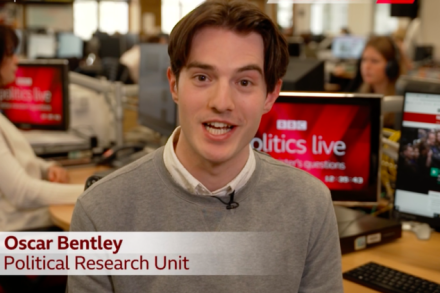
Can the BBC ever get it right? Just weeks after the Beeb was embroiled in an impartiality row over the rogue tweets of their star presenter Gary Lineker, another spat over bias has reared its ugly head. In September, the broadcaster hired a new political fact-checker, Oscar Bentley, to comb through political debates in the run up to the next general election. But the Daily Mail has now revealed that Bentley might not quite be the bastion of impartiality one would hope. According to the Mail, he is a ‘lifelong Labour supporter’ who canvassed for disgraced former Labour leader Jeremy Corbyn at the last general election and has in the past regularly taken to bashing Tories on social media.
Rishi Sunak distances himself from Raab’s resignation

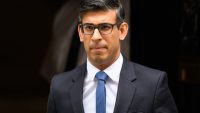
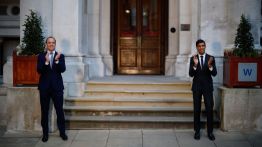
Rishi Sunak seems keen to stand back from the row about Dominic Raab, offering more of a commentary on it being ‘right’ that the deputy prime minister and Justice Secretary has quit government, rather than accepting that Raab was a bully. His reply to Raab’s resignation letter suggests this, and this afternoon his official spokesman said the Prime Minister thought it was ‘right’ to make the commitment to resign if there was a finding of bullying and that the former Secretary of State had ‘kept his word’. ‘He thanks him for his work and it has allowed him to form a judgement and he will now be focused on the work of government,’ the spokesman said.

Is Dominic Raab really a ‘bully’?

Who is the real victim in the Dominic Raab bullying saga? I know the story is that he was a monster in his various departments, allegedly barking instructions and wagging a finger at his stressed-out minions. But the anti-Raab revolt smacks far more of bullying to me. Civil servants clubbing together to drum an exacting minister out of his job? It definitely has a whiff of Mean Girls to it. Raab has resigned as deputy prime minister following the findings of an investigation into his alleged bullying. In his resignation letter he says the investigation dismissed all but two of the accusations against him. The findings are ‘flawed’, he says. They potentially set a ‘dangerous precedent’.

Tories attack the Raab report

Adam Tolley's report has finally been published, with Dominic Raab firing off an angry letter to mark his resignation. And that sense of anger has not been restricted to just the former Justice Secretary. A steady stream of Conservative MPs have been tweeting their disgust this morning, arguing that the claims in Tolley's report were not serious enough to merit Raab's resignation. Below is a list of Tories who have gone public with their criticisms: Paul Bristow, MP for Peterborough: 'We are not a serious country' Joy Morrissey, MP for Beaconsfield: 'Sadly, we now live in a country where the definition of bullying includes telling someone to do their job. Where the slightest upset or annoyance is indulged with endless reports and inquiries.

Dominic Raab resigns over bullying report

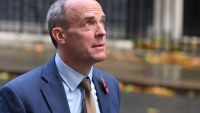
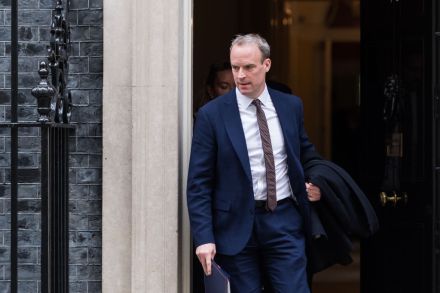
In the last few minutes Dominic Raab has announced that he has resigned from government following the findings of an investigation into allegations of bullying against him. Rishi Sunak received the report – by the barrister Adam Tolley KC – on Thursday morning and spent the evening consulting advisers on the best path forward as he pondered its contents. In the end, Raab made the decision for him. In his letter, the deputy prime minister says he called for the inquiry and 'undertook to resign, if it made any finding of bullying whatsoever'. Raab goes onto say that he believes it is important to 'keep my word' and the report has found against him on two counts.

Full text: Dominic Raab’s resignation letter

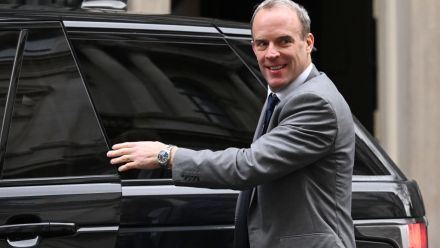
Dear Prime Minister, I am writing to resign from your government, following receipt of the report arising from the inquiry conducted by Adam Tolley KC. I called for the inquiry and undertook to resign, if it made any finding of bullying whatsoever. I believe it is important to keep my word. It has been a privilege to serve you as Deputy Prime Minister, Justice Secretary and Lord Chancellor. I am grateful to have had the opportunity to work as a minister in a range of roles and departments since 2015, and pay tribute to the many outstanding civil servants with whom I have worked. Whilst I feel duty bound to accept the outcome of the inquiry, it dismissed all but two of the claims levelled against me.

Rishi Sunak knows the Tory rebels are right about small boats

When the Rwanda migrant removals programme was torpedoed by a European judge at a hastily-convened hearing one evening last summer, the notion that Britain had 'taken back control' of its borders crawled away to die. The anonymous judge at the Strasbourg-based European Court of Human Rights issued a controversial 'Rule 39' instant order. This blocked the removal of the few failed asylum seekers who had not already been sprung from the proposed inaugural flight via appeals made to British courts in the preceding days. It is likely Sunak himself is genuinely convinced that the current global asylum regime is unsustainable One Tory MP on the cultural right of the party sought out the then-PM Boris Johnson.

Does Raab have to go?

11 min listen

Today was meant to be judgement day for Dominic Raab as we learnt the outcome of Adam Tolley's investigation into historic bullying claims made against the deputy PM. His fate now rests squarely in Rishi Sunak's hands. Will he resign?  Also on the podcast, there have been a couple of amendments tabled today on the Conservative's Illegal Migration Bill, will these changes placate the rebels? Oscar Edmondson speaks to Katy Balls and James Heale.  Produced by Oscar Edmondson.

Womb service: the politics of surrogacy

37 min listen

On this week's episode: In her cover piece for The Spectator, journalist Louise Perry questions whether it is moral to separate a newborn child from their surrogate. She is joined by Sarah Jones, head of SurrogacyUK and five time surrogate mother, to debate the ethics of surrogacy (01:07). Also this week: In the books section of the magazine Olivia Potts reviews several recent books all of which seem to warn against the dangers of our food system and what we are eating. She is joined by Henry Dimbleby, author of Ravenous: How to Get Ourselves and Our Planet Into Shape, to ask if anything is safe to eat these days (14:29).

Humza Yousaf’s track record remains the focus of FMQs

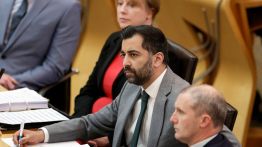
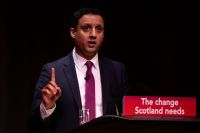
Does Humza Yousaf really want to be 'focusing relentlessly on the day job', as he claimed at First Minister's Questions today? It's not a fun day job to focus on. The First Minister naturally had to face questions on the crisis in his own party when he faced MSPs today, with both Douglas Ross and Anas Sarwar majoring on it. The Scottish Tory leader tried to suggest the investigation into the SNP's finances was distracting Yousaf from his day job, and moved onto one of the 'matters of substance' he felt needed more attention, which was sentencing policy. Yousaf, of course, previously served as justice secretary, and had to answer questions on prison sentences for under-25s after the shocking case of a convicted rapist who avoided jail because of his age.

Keir Starmer’s gender muddle is a disaster for the Labour party

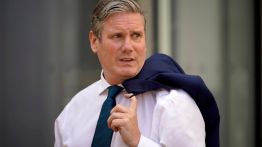
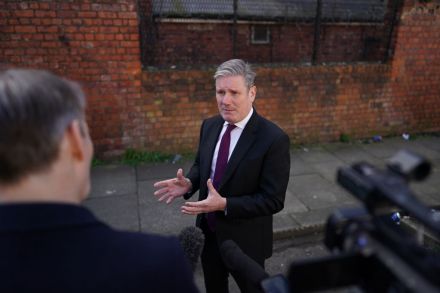
How committed is Keir Starmer to protecting women’s rights? Earlier this month, the Labour leader dismissed the sex and gender identity debate as trivial and irrelevant to the next election, only to backtrack following an intervention by the Prime Minister.   In an LBC interview earlier this month, Starmer stated: ‘I do sometimes just wonder why on earth we spend so much of our time discussing something which isn’t a feature of the dinner table or the kitchen table or the café table or the bar.’ The day before, a Sunday Times interview published statements he made on a train journey to Plymouth the previous Friday in which he tried to court women voters concerned about erasure of biological sex by saying: ‘For 99.

Russia’s spy ships are playing mind games in British waters

The news that Russian spy ships appear to be mapping British and other underwater cables and pipelines in the North Sea sounds very Cold War. But in fact it reflects the realities of modern conflict, and also the ways Moscow is playing psychological games with the West. In November, The Admiral Vladimirsky, an Akademik Krylov-class ship officially classified as an oceanographic research vessel but regarded by Western authorities to be an intelligence-gathering asset, entered the Moray Firth and loitered near the RAF's maritime patrol base at Lossiemouth. Since then, it has been on a tour around British and Nordic waters, on a route that took it past seven British and Dutch offshore wind farms and then a Swedish naval training ground.

Michael O’Leary’s Brexit jibe is a step too far

Ryanair boss Michael O’Leary never has exactly been the master of tact, but will his latest outburst make his customers finally ask themselves: do they really want to travel in his planes? Speaking at a Bloomberg event he asserted that Britain will one day rejoin the single market because 'in the next five to ten years, quite a number of the Brexiteers will die, as the average age of them is about over 70'.  What O’Leary forgets is that people’s attitudes tend to change with age Let’s leave aside, for a moment, whether it is wise to talk about your customers in this way; O'Leary’s remarks are wrong-headed. It is right that the proportion of people voting Brexit in 2016 rose with age. And, of course, humans being mortal, these voters will inevitably thin out.

The SNP has given Labour a golden opportunity

Humza Yousaf is not a leader with troubles to seek. In the three weeks since his election as First Minister, the SNP has been rocked by a series of arrests and accusations of mismanagement. Meanwhile, the Scottish Nationalists’ poll ratings have continued to slide as Yousaf’s attempts to regain the initiative have inevitably been overshadowed by more negative headlines about his party, government, or both. Rather than a honeymoon, Yousaf has so far endured a holiday from hell.  Arguably his most damaging misstep is his lurch to the left on policy. Under the influence of his political partners, the Scottish Green party, Yousaf is determined to squeeze an ever-shrinking tax base while paying mere lip service to economic growth.

The truth about Britain’s entitled strikers

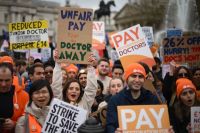
Striking was part of my childhood. One of my first memories is of walking through Middlesbrough town centre and seeing people with ‘Coal Not Dole’ badges, holding buckets and asking us to ‘Dig Deep for the Miners’. Long before I left primary school, I knew what it meant to be a ‘scab’ and why it was important never to cross a picket line. I backed the men who looked like my dad, men who worked hard but needed more money for their families, over the bosses that wanted to keep them poor. The world has moved on but the class divide continues and I have not changed sides. At the same time, I am not foolish enough to think that today’s strikes by junior doctors, teachers, nurses and university lecturers are of a piece with the mass walkouts of the 1980s.

Tory rebels win concessions on judges blocking flights

Ministers have agreed to back two amendments to its flagship Illegal Migration Bill as part of No. 10's attempt to ward off the latest Tory rebellion. The first is an agreement to change the law so that judges can no longer block migrant deportations. An amendment will give the Home Secretary the power to 'disregard' interim 'Rule 39' orders from the European Court of Human Rights – the so-called 'pyjama injunctions' suspended the first scheduled Rwanda deportation flight last June late at night. Previously, ministers were only willing to introduce this power to ignore last-minute injunctions if ministers failed to persuade the Strasbourg court to reform its Rule 39 orders.

We shouldn’t rest until all ‘smart’ motorways are axed

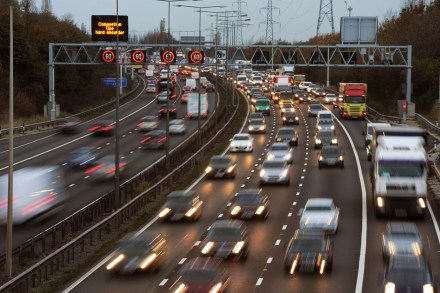
Six months after he became Prime Minister, Rishi Sunak has finally honoured one of the smaller, but more eye-catching, promises he made during his party leadership campaign. He has announced an end to the building of so-called ‘smart’ motorways, citing the economic cost and safety concerns. In doing so, Sunak has halted a near 20-year policy that has been increasingly distinguished not only by its unpopularity among the car-driving public, but by its toll in lives. Thirty-eight people died in the five years to 2020 on ‘smart’ motorways, even though they only make up a small proportion of the road network. If the cost of smart motorways has been judged to be too high, what makes those already built any different?

Is Keir Starmer soft on crime?

14 min listen

Prime Minister's Questions was a punchy affair today. Rishi Sunak fought back against accusations that the Conservatives have failed on tackling crime, calling Keir Starmer 'Sir Softy' to turn the attack back around on Starmer, for his track record as the Director of Public Prosecutions. But was it an effective attack? Cindy Yu talks to Katy Balls and Kate Andrews. Produced by Cindy Yu.