Politics

Read about the latest political news, views and analysis

Like Putin’s Russia, Bulgaria has become a mafia state

In a historic speech to the US Congress on 12 March 1947, President Truman addressed the menacing spread of Communism and the Soviet take-over of Eastern Europe. Known as the ‘Truman Doctrine’, he portrayed the battle lines for the Cold War as a struggle between autocracy and democracy – something which resonates uncannily today in Ukraine. The Soviet ‘way of life is based upon the will of a minority forcibly imposed upon the majority’, declared President Truman. ‘It relies upon terror and oppression, a controlled press and radio, fixed elections and the suppression of personal freedoms…The free peoples of the world look to us for support in maintaining their freedoms’.
The Guardian’s shameful double standards

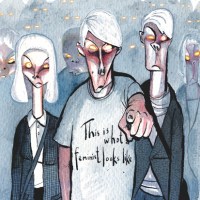
The Guardian thinks of itself as Britain’s fearless liberal conscience, trigger-sensitive to racist ‘dog whistles’ in the language and editorial judgements of everyone except itself. It takes a special interest in cartoons published by right-of-centre newspapers which are accused of bigotry.  When the Murdoch-owned Herald Sun ran a cartoon depicting Serena Williams throwing a tantrum, the Guardian reported that News Corp had ‘come under global condemnation for publishing a racist, sexist cartoon’, supplementing multiple news stories with several condemnatory op-eds.

Xi Jinping is acting like Stalin

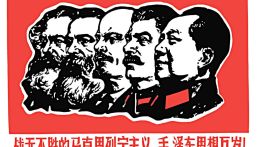
The General Secretary of China’s Communist Party is a different kind of leader. Now in his third five-year term, Xi Jinping believes that time is running out for him to secure his legacy as Mao Zedong’s true successor. He spent a decade dismantling the technocracy and politburo consensus government ushered in by Deng Xiaoping after Mao’s death, rolled back the authority of local party nomenklatura in favour of more centralised control from Beijing, and worked to subordinate China’s economy to the Communist Party’s (meaning Xi’s) political priorities. In abandoning the ‘to get rich is glorious’ social contract of the post-Tiananmen Square era, Xi has come to bury Deng and not to praise him.

Is Joe Biden really fit to run in 2024?

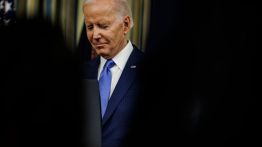
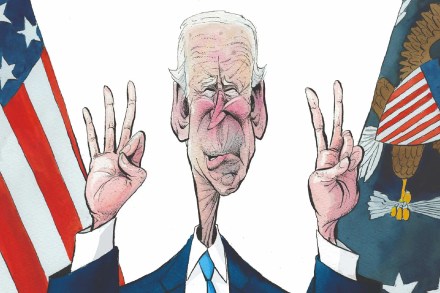
Kim yo-Jong, the powerful and influential sister of North Korea’s leader Kim Jong-un, has launched a savage personal attack on US President Joe Biden after he signed a new nuclear cooperation deal with America’s ally South Korea. The female Kim said that 80-year old Biden was ‘in his dotage’, calling him an ‘old man with no future’ who was unable to complete his term of office, and ridiculed his threat to destroy North Korea should it launch a nuclear strike against the US or its allies. Beyond the war of words over nukes, however, the question that must be raised is: why does it take a leader of a brutal dictatorship to tell a truth about the President that most of the ‘free’ Western media is reluctant to even mention?

Is the West preparing to sell out the Afghan people again?

While the Taliban continues to double down against women in Afghanistan, the UN appears to be wanting to normalise relations with them. Women in the country are already blocked from almost all jobs and all education. Yet a week after the extremist group barred females from working for the UN, the organisation’s deputy secretary general Amina Mohammed said it was now time to take ‘baby steps’ towards ‘recognition (of the Taliban)’.   As UN spokespeople tried to limit the damage, protests poured in from Afghan opposition groups. One statement from a wide group of Afghan artists and human rights activists slammed nearly two years of ‘futile regional and global diplomacy’ since the Taliban took Kabul in 2021.

Humza Yousaf’s illiberal campaign against juries

The leader of a governing party that seems to be spending most of its time helping police with their inquiries would, you might have thought, be a little wary of launching one of the most radical changes to the justice system in 800 years - but not Humza Yousaf. The politician who gave us the illiberal Hate Crime Act, which makes 'stirring up hatred' even in the privacy of one's home a criminal offence, is now threatening to abolish jury trials in Scotland. Since Magna Carta was issued in 1215, those accused of serious crimes in Scotland have had the right to be judged by a panel of their peers, but perhaps not for much longer. The SNP's Victims, Witnesses and Justice Reform (Scotland) Bill will pilot judge-only courts for sexual offences.

The troubling truth about ‘gender affirming’ mastectomies

When Sinead Watson had a double mastectomy in June 2017 at the age of 26, she was initially 'quite euphoric.' Although born female, she had been taking testosterone for two years and was using the name Sean. The mastectomy, or 'top surgery', was the last step on her transition. 'I was so glad that I’d finally got it done – no more binders, no more being paranoid that I was a man with boobs –  so I did feel really good about it,' she says. After the surgery, however, she discovered she had no sensation at all in her chest area, something that continues to this day. 'I realised after about five months my depression and self-hatred was still present, and that the surgery didn't ‘cure’ me like I thought,' she says.

Can Labour’s ‘no money’ note still work magic for the Tories?

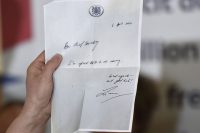
It’s back! The scrap of paper left in 2010 by Labour’s outgoing chief secretary to the Treasury Liam Byrne for his successor, that half-jokily, semi-sympathetically stated ‘I’m afraid there is no money’ is once more in the news. When the recipient of the note, Liberal Democrat David Laws, made its contents public it was widely taken to confirm the incoming coalition government’s claim that Labour had irresponsibly left the country’s finances in a mess. It was concrete, and apparently irrefutable, evidence of the need for the swingeing austerity later imposed by Chancellor George Osborne. The note also helped Osborne deflect responsibility for austerity onto Labour.

‘Calculated’ Sturgeon knows what she’s doing, says Scottish Tory leader

There's not a day that goes by in Scottish politics without the woes of the Sturgeon-Murrell empire being discussed in full. Scottish Conservative leader Douglas Ross didn’t hold back when asked about whether he felt sorry for Nicola Sturgeon during what feels like the SNP’s perpetual state of crisis. Mr S caught the slightest of smirks cross the politician’s face before he conceded: ‘No.’ Did he believe Sturgeon’s performance in Holyrood on Tuesday, on the afternoon of former treasurer Colin Beattie’s bombshell comments on Scotland’s most infamous motorhome, was sincere?

Can Ukraine afford to keep paying its soldiers a fighting salary?

What salary should a soldier receive in a war-torn country? Obviously, there is no number that can make up for the sacrifice Ukrainians make on the frontline. But a proper salary is still necessary. When Russia invaded last year, Volodymyr Zelensky increased the payment for the military to seven times of the average salary in Ukraine. ‘We will pay 100,000 hryvnias (£2,200) monthly to military personnel who hold weapons… so that they know that the country is grateful to them. And so it will be until this war ends,’ Zelensky said. The war, as it has turned out, is well into its second year – and the Ukrainian President is faced with the costs. In peacetime, Zelensky would have been called a populist by offering cash that he doesn’t really have.

Can under-25s be trusted?

The government’s proposal to overhaul and tighten betting laws, ostensibly to target problem gamblers, has understandably raised concerns about government interference and nanny-state overreach. Yet viewed from a wider perspective, we should welcome these initiatives and for the precedent they could set: they could be the final recognition that young adults do not reach maturity until the age of 25.  As part of its gambling curbs the government will place ‘enhanced’ checks on the finances of under-25s, amid concerns that they’re less able to ‘regulate’ their impulses and make rational decisions. For example, the under-25s will have stakes limited to a maximum of between £2 and £4 for online slot machines.

Fury at Rishi Sunak’s Scottish media snub

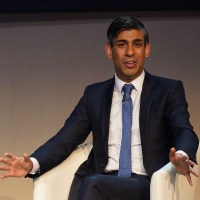
Could the Scottish Conservatives' party conference have been timed any better than bang in the middle of the SNP's implosion? Mr S can only imagine the glee with which Douglas Ross's party planned its 2023 Glasgow conference, the country’s ruling party having handed their opponents an entire dossier of material to orchestrate their ousting. And Prime Minister Rishi Sunak even managed to fly up from Westminster to help open the two-day affair. The PM didn’t disappoint the crowds: Sunak milked the nationalists’ downfall for all the comedic value it was worth. ‘Nicola Sturgeon quit Bute House to take up driving lessons!’ he called in faux bemusement at his 300-something audience. ‘Someone’s got to drive that motorhome, after all,’ he quipped.

BBC chairman Richard Sharp resigns – what next? 

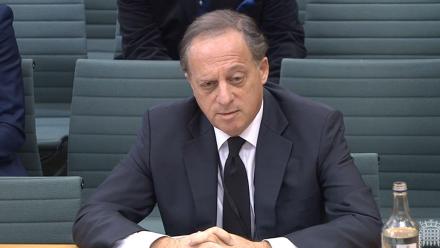
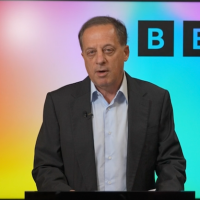
Richard Sharp has resigned as BBC chairman following a report into the circumstances of his appointment after claims that he had helped to facilitate a £800,000 loan for Boris Johnson while he was in 10 Downing Street. The report - by Adam Heppinstall KC - found that he had breached the code on public appointments by failing to declare his connection to the loan, which his acquaintance Sam Blyth (a distant cousin of Johnson’s) guaranteed for the former prime minister.  The whole affair is leading to questions over the role performed by Simon Case Announcing his resignation this morning, Sharp said that he accepted he had breached the ‘governance code’.

The oppressor of Hong Kong should be banned from the coronation

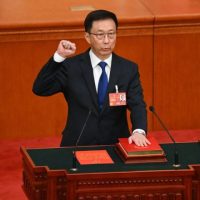
The government is making a mistake in turning a blind eye to China’s plans to send a high ranking politician responsible for crushing democratic freedoms in Hong Kong to the King’s coronation. Han Zheng, who was appointed President Xi’s deputy last month, is due to represent China at the historic event on 6 May. In choosing him, Beijing is guilty of a calculated display of contempt for the values of democracy and freedom. The move should have been rebuffed in the strongest terms; instead the government has adopted a softly-softly approach that is tantamount to appeasing the Chinese leadership.

Will the Fed torpedo Joe Biden’s re-election? 

Hollywood will be backing him en masse. The major newspapers will be rooting to put him back in the White House. And most of corporate America, in between filling in the forms for the next round of ‘green subsidies’, will be quietly hoping for another four years of lavish spending and protectionism to keep out all those irritating foreign competitors. As he launched his re-election campaign this week, President Joe Biden could count on plenty of mainstream support. There is just one problem: the Federal Reserve is about to torpedo his campaign – by tipping the American economy into recession.  GDP figures for the US released today showed an economy slowing down sharply. Over the first quarter of the year, output rose by 1.1 per cent , a sharp deceleration from the 2.

Could nurses still back Barclay’s pay offer?

11 min listen

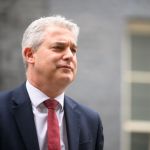
A judge has ruled that strikes by the Royal College of Nursing be cut short by a day, because the six-month mandate for strike action will have passed. Two more unions are still to vote on Health Secretary Steve Barclay’s pay offer. If they support it, could the RCN change their mind on the deal?  James Heale speaks to Katy Balls and Isabel Hardman. Produced by Max Jeffery.

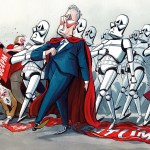
The Starmtroopers: Labour’s new recruits

43 min listen

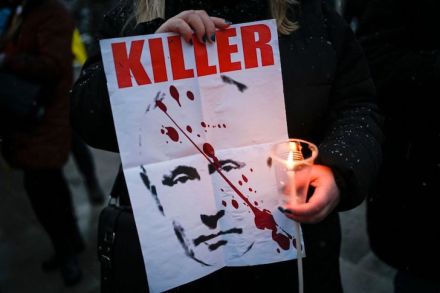
This week: In her cover piece for the magazine, The Spectator’s political editor Katy Balls writes that as Labour prepares for government, Keir Starmer is rooting out the far left sections of his party and replacing them with moderates. She is joined by John McTernan, former political secretary to Tony Blair, to discuss the return of the Blairites (01:06). Also this week: The Spectator’s Russia correspondent Owen Matthews writes about Putin's three most prominent political prisoners. He joins the podcast alongside The Spectator’s assistant online editor Lisa Haseldine to consider the cost of speaking up against the regime (17:50).