Politics

Read about the latest political news, views and analysis

How Spain’s politics succumbed to radicalism

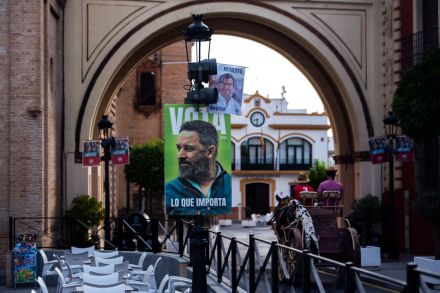
If Spain’s left-wing government loses tomorrow’s general election, thousands of people including many senior civil servants stand to lose their jobs. Their positions are discretionary; if the political masters change, so do the personnel. When the left took office in 2018, for example, an estimated 6,000 public servants were fired, including several hundred advisers. The incoming Prime Minister Pedro Sánchez also put trusted supporters in charge of the state-run broadcasting company, the Paradors (a chain of state-owned hotels) and the social research organisation that organises opinion polls. Not surprisingly, its polls have been biased to the left ever since. Both right and left suggest that their opponents are not merely wrong but
What can we learn from the Uxbridge by-election result?

13 min listen

The dust has settled after yesterday’s by-election results. Having narrowly avoided a triple by-election defeat there seems to be little sign of Conservative party in-fighting, despite their poor showing. There is however a war of words brewing between the London Labour Party and Kier Starmer who blames Sadiq Khan’s Ulez plan for the failure to snatch Uxbridge and South Ruislip. What lessons will each party take from the by-elections into next year’s general election?  James Heale speaks to Katy Balls and pollster James Johnson, co-founder of JL Partners. 

Freddy Gray, Mary Wakefield, Gareth Roberts and Rachel Johnson

28 min listen

This week (01.13) Freddy Gray, on why Ron De Santis is no longer ‘de future’ in the race for the Presidency, (09.50) Mary Wakefield recounts the train journey from hell,(16.10) we hear from Gareth Roberts about the screenwriters and actors striking over AI potentially taking their jobs and (22.24) Rachel Johnson shares her diary of SAS adventures and mishaps in New Zealand. Produced and presented by Linden Kemkaran

Falklanders won’t forgive the EU’s ‘Las Malvina’ blunder

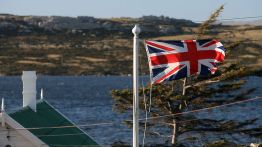
This week, the European Union, in its infinite wisdom, made pretty much the only blunder which, in the eyes of Falkland Islanders, there is no coming back from: referring to the Falklands as ‘Las Malvinas’.  The row was sparked after the EU chose to sign a declaration with Argentina and 32 other South American countries, referring to the UK overseas territory as both ‘Islas Malvinas’ and the ‘Falkland Islands’. Brussels might not – perhaps – quite realise the extent to which the M-word is no laughing matter in these latitudes. (Just ask a Spanish teaching friend of mine!) But Argentina’s government instantly hailed the usage as a ‘diplomatic triumph’ and their foreign minister declared openly they want to use this ‘to further expand dialogue with the EU regarding the question of the Malvinas Islands.’  To say that Islanders are not

The trouble with Keir Mather

Every time I cross paths – or swords – with a cranky student activist, I have the same thought: ‘Oh God, these people are going to be running the country one day.’ I have tormenting visions of these blue-haired censors, these giddy blacklisters of the un-PC, in parliament, drawing up laws, wagging a collective finger at the wrong-thinking throng. Those privileged fuming youths who once blocked my path to the Oxford Union; that offence-seeking mob that tried to prevent me from giving an after-dinner speech at Queen’s College, Oxford – they’re going to be in charge soon, I always fret, and then we’re screwed. We’ll all be under the thumb

Starmer turns on Sadiq over Ulez

You just hate to see it. Less than 12 hours after the Uxbridge result and already the Labour blame game is well underway. The chairman of the local party has quit in disgust, citing Starmer’s lack of principles. And now Starmer has decided that the solution to his problems is to, er, throw his party’s most senior elected politician in England under the bus. Let’s hope it was a carbon-friendly one… Sir Keir told broadcasters this morning that Uxbridge was always going to be a ‘tough’ seat, arguing that: We didn’t take it in 1997 when we had a landslide Labour victory. And Ulez was the reason we didn’t win

Labour’s Uxbridge chair quits and attacks Starmer

For all Keir Starmer’s eager spin, last night wasn’t the great Labour triumph it was supposed to be. While the party pulled off an impressive triumph in Selby, it was a different story down south after the Ulez issue cost Labour the chance of winning Boris Johnson’s seat in Uxbridge and Ruislip. Recriminations are already flying, with one party strategist briefing the Times that it was ‘an obvious lesson: tin eared operations which cling to policies that punish working families will cost Labour votes.’ David Williams, the chairman of the local Labour party, has now done his bit to pour fuel on the fire too. He has taken to Twitter

Ulez isn’t the election gift Sunak wishes it was

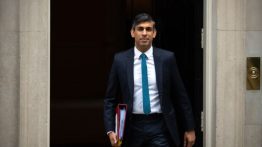
Given everyone has won a prize in this round of by-elections, the three main party leaders have been feasting on their respective wins. Rishi Sunak has arguably had the best day by holding one seat when his party had briefed it would lose all three. He has used the win in Uxbridge to say that the next election is still in play: ‘Westminster’s been acting like the next election is a done deal. The Labour party has been acting like it’s a done deal. The people of Uxbridge just told all of them that it’s not. No-one expected us to win here. But Steve’s [Tuckwell] victory demonstrates that, when confronted

The Ulez rebellion has started

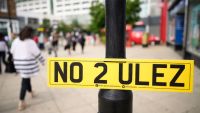
It was, to adapt the famous Sun headline from the 1992 general election, Ulez wot won it. The Conservatives’ narrow hold of Uxbridge and South Ruislip was, as Angela Rayner admitted this morning, down to London mayor Sadiq Khan’s dogged determination to inflict a £12.50 daily charge on the drivers of diesel cars more than seven years old and petrol cars more than 15 years old. It shouldn’t have taken much to work out that a highly-regressive tax on the relatively poor was not going to go down well among Labour voters – yet so blinded are many in the party on green issues that they just couldn’t see it. That

Seven graphs that show the challenge for the Tories at the election

The Tories have avoided total wipeout in last night’s triple by-election. Rishi Sunak dodged the embarrassment of becoming the first Prime Minister in 50 years to lose three by-elections in a single day. While the Lib Dems won Somerton and Frome and Labour secured victory in Selby and Ainsty, the Conservative candidate in Uxbridge, Steve Tuckwell, managed to hold onto Boris Johnson’s old seat with a much reduced majority of 495 votes. The result in Selby and Ainsty meanwhile, where Labour candidate Keir Mather took the seat, was the biggest majority the Labour party has ever overturned in a by-election: the Tories had previously held the seat with a majority of

Sunak narrowly avoids triple by-election defeat

12 min listen

There was something for everyone in the by-elections with each of the three big parties getting a seat. The Tories lost Somerton and Frome to the Lib Dems and Selby and Ainsty to Labour but did narrowly cling on in Boris Johnson’s former seat of Uxbridge and South Ruislip, albeit with a reduced majority of just 495 votes. James Heale unpacks the results with Fraser Nelson and Katy Balls.  Produced by Oscar Edmondson. 

A nagging doubt about Keir Starmer has been exposed

‘One out of three ain’t bad’ isn’t a saying you hear often. Yet avoiding a clean sweep of by-election defeats overnight will surely have Rishi Sunak breathing a sigh of relief. Holding on in Boris Johnson’s old seat of Uxbridge & South Ruislip not only means the Tories have exceeded the rock-bottom expectations of the pundit class, but there is an unmistakeable further intuition hanging in the air: had Johnson not lost his courage and instead decided he would trust his electors and stand in a by-election under the recall process, then he surely could this morning be the man who had pulled off an unlikely triumph. And imagine how

Has Britain avoided falling into recession?

Earlier in the week, the stock market responded very positively to news that inflation had come out a little lower than expected (even though, at 7.9 per cent, it is still far ahead of where most forecasters, from the vantage point of the beginning of 2023, would have expected it to be by now). Markets have been left largely unmoved, however, by two pieces of positive news this morning: lower than expected public borrowing in June, and higher retail sales, also in June.  The volume of sales was up 0.7 per cent in June compared with May. While that was, in part, due to the extra bank holiday in May, which

Tories shouldn’t deceive themselves over their Uxbridge win

Some Conservatives are going to take heart from the by-election results. They may have lost Somerset and Frome to the Liberal Democrats on a 29 per cent swing. Selby and Ainsty may have fallen to Labour, who overturned their biggest ever majority (20,137) at a by-election. But they held on in Boris Johnson’s former seat, Uxbridge and South Ruislip. By just 495 votes, mind you, but a win is a win. Labour is blaming its defeat on local opposition to Sadiq Khan’s Ulez policy.  The lesson some Tories will take from this is that they must pivot to champion ordinary people, particularly motorists, over policies to limit carbon emissions. Put

Watch: Johnny Mercer attacks Labour ‘Inbetweeners’ MP

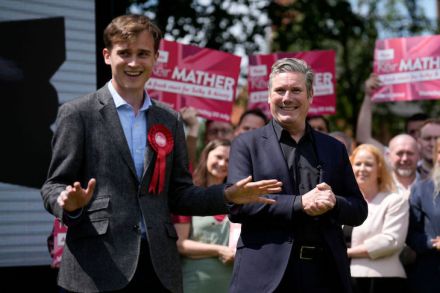
An enjoyable bit of by-election telly this morning. As political bigwigs trooped into the news studios to discuss last night’s results, Sky’s deputy political editor Sam Coates took the chance to ask Johnny Mercer what he made of Selby’s new MP Keir Mather. The ‘baby of the House’ is just 25 years old and is now the first MP born during the Blair government. Mercer though was not impressed by his new parliamentary colleague. ‘We don’t want parliament to become like the Inbetweeners‘ he claimed, pointing out that Mather had spent more time at Oxford University than in subsequent gainful employment. That argument found little favour with Labour’s Baroness Chapman

Starmer hails ‘historic’ moment after Selby by-election victory

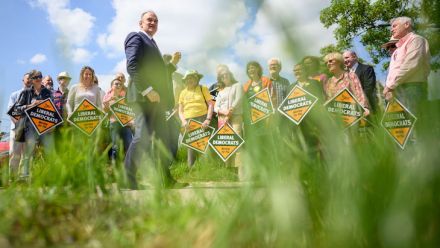
Labour has won the Selby and Ainsty by-election – overturning a majority of more than 20,000, the biggest it has ever overcome at a by-election. But in a surprise result, the Tories held on in Boris Johnson’s former Uxbridge and South Ruislip constituency by 495 votes following a recount. Elsewhere, Rishi Sunak’s party lost in the Somerton and Frome by-election. The Lib Dems reversed a Tory majority of 19,000 in a decisive victory which saw Ed Davey’s party secure a majority of more than 11,000 votes. Davey said the result shows the party is ‘firmly back’. While the results show the scale of the task ahead for Sunak, the Tory

Sunak avoids triple by-election defeat after Tories hold Uxbridge

Rishi Sunak has narrowly avoided three by-election losses. Overnight, the Conservatives lost Somerton and Frome to the Liberal Democrats, overturning a majority of 19,213 to lead by 11,008 votes, and Selby and Ainsty to Labour, with Keir Starmer’s party overturning its largest ever majority at a by-election in post-war history. However, the Tories managed to narrowly cling on in Boris Johnson’s former seat of Uxbridge and South Ruislip, with a reduced majority of just 495 votes. It means today’s results are a mixed bag for Starmer and Sunak. As is often the case with by-elections, it is Liberal Democrat leader Ed Davey who has the most to be happy about

Roll up, roll up for Ian Blackford’s farewell tour

Ian Blackford, the SNP MP, is to stand down at the next election. And last night he gave an interview to Anand Menon of the think-tank UK In a Changing Europe. The mood was cosy, the questions as soft as marshmallows. Menon opened with the issue of independence and he allowed Blackford to change the subject from ‘process’ to ‘the kind of country Scotland will be’. Blackford stated correctly that Scotland’s status as England’s poorer neighbour encourages the best and brightest Scots to move south. And he quoted a statistic suggesting that England has benefited from Scottish inward migration in every decade since the 1850s. He outlined a solution that