Politics

Read about the latest political news, views and analysis

Inside Team Kemi’s plan for power

In elections, as in wine, lesser years can still produce good vintages. Tony Blair and Gordon Brown first won their seats in 1983, the year of Labour’s ‘longest suicide note in history’; William Hague’s landslide defeat in 2001 gave us David Cameron, George Osborne and Boris Johnson. The 2017 election is not recalled fondly by many Conservatives. Yet it produced the cluster of ambitious Tories running the party today. Ahead of the party conference in October there will be a steady drumbeat of announcements Kemi Badenoch was marked for the top as soon as she entered parliament. ‘It was clear from the start she wasn’t there to make up the

‘Austerity is back’: Inside Labour’s emergency budget 

Dominic Cummings may have left Whitehall but his spirit lives on. Pat McFadden, the Chancellor of the Duchy of Lancaster, has repurposed Cummings’s call for ‘weirdos and misfits’ as a plea for ‘innovators and disruptors’. Downing Street this month launched an ‘AI Ideas’ competition in pursuit of bright sparks. A hackathon will follow. In No. 10 and 11, aides channel Cummings’s language as they talk of acting as an ‘insurgent’ government. ‘We’re all Dom now,’ says one government figure. In one area, Cummings’s influence on the new government is most apparent: the diagnosis of a failing state. Keir Starmer’s chief aide Morgan McSweeney has never met Cummings, but these days

Are the Scottish Tories becoming irrelevant?

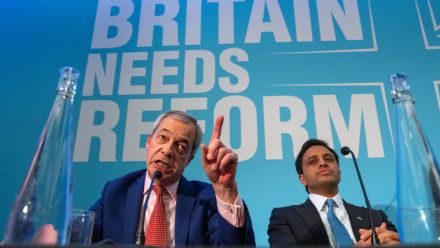
Another day, another poll that shows Reform could, from a standing start, pick up at least 14 seats at the 2026 Holyrood election. Nigel Farage’s party is attracting supporters from all of Scotland’s main parties – 5 per cent of SNP voters are backing Reform while only six in ten Labour voters would get behind the reds again next year – but the Scottish Tories have the most to lose. As Farage’s lot witness a further surge in support north of the border, the Scottish Tories appear set to lose almost 50 per cent of their seats. In short, Scottish voters are opting to support a group with no parliamentary

Spring Statement or ‘Emergency Budget’?

12 min listen

The question that everyone in Westminster wants answered is what will actually be included in next week’s Spring Statement. Previously, the Spring Statement wasn’t looking like much to write home about – little more than an update. But with the economy taking a turn for the worse and her fiscal headroom narrowing, it has taken on renewed importance for Rachel Reeves, with the opposition trying their best to brand it as an ‘Emergency Budget’. What does Reeves need to do to calm the markets? Also on the podcast, Pensions Minister Torsten Bell gave an interesting interview to Newsnight last night, defending the government’s welfare reforms. Where are we with the fallout from

Starmer looked scared of Badenoch at PMQs

At PMQs this week, Sir Keir Starmer got a proper grilling for a change. Kemi Badenoch used smarter tactics: short questions sharply focused; half-truths instantly rebutted. The Tory leader abandoned her normal habit of covering the entire spectrum of Labour’s shortcomings. She focused on their worst error: economic stagnation caused by the tax-grab Budget. Why, she asked, is the Chancellor holding ‘an emergency budget next week?’ A near fib from Starmer. She’d caught him out Sir Keir gave her a formulaic reply, crowing about his glorious achievements. ‘Record investment… three interest rate cuts…wages going up faster than prices.’ Kemi dismissed this as balderdash. She gave the true reason for the

Who are the contenders to be the next ‘C’?

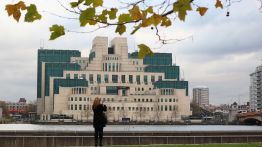
Somewhere in an office on the south bank of the Thames, a man is writing in green ink and signing himself simply ‘C’. He is doing these things because all of his 16 predecessors have done so since 1909. Sir Richard Moore is Chief of the Secret Intelligence Service (SIS), more popularly known as MI6, the only employee of the organisation whose name is made public, and he will soon step down after five years in the role. SIS is Britain’s foreign intelligence organisation, collecting and analysing human intelligence overseas to protect the United Kingdom’s national interests, inform the government’s strategic understanding of the global situation and support counter-terrorism, counter-proliferation

No one will thank Liz Kendall for doing her job

There are three thankless posts in a modern Labour government. There’s the Chancellor, who has to announce the tightening of belts and the hiking of taxes; the Home Secretary, who must busy themselves cracking down, banging up and throwing away the key; and the Work and Pensions Secretary, who is charged with Scroogeing every last penny out of the benefits system. These are the ministers Labour’s grassroots and its graduate liberal voters love to hate, but they likely do more to keep Labour in power than their more popular colleagues. Labour liberals have an outsized influence in policy debates, overrepresented as they are in the BBC, the NGOs and academia,

Badenoch caught Starmer out at PMQs

Keir Starmer didn’t have to defend his welfare cuts until later in the session at today’s Prime Minister’s Questions, because Kemi Badenoch decided to focus on the looming increase to employers’ national insurance contributions. She was right to do so ahead of the spring statement, and her attacks were, for the second week running, much better than they have been previously. Starmer and his whips had clearly anticipated that tax and welfare would be the two hot topics of the session, and they’d found a Labour backbencher sufficiently loyal and self-loathing to ask a totally pointless question just before Badenoch. Andrew Pakes praised Starmer for the ‘welcome boost in the

Why don’t we hear more about Israel’s stunning blow against Hamas’s fascists?

Imagine if, following an Allied raid on Nazi positions, the newspapers the next day told us about nothing but the civilian casualties. No mention of the fascists who were killed. No utterance of their names, no information about their ranks. Instead, just pained commentary on the suffering of the innocents who tragically found themselves swept up in this act of war. This is one of the most blistering assaults on Hamas’s terror army since 7 October We would think that strange, right? We would consider it a reneging on the journalist’s duty to tell the truth about war. Well, that’s how I feel perusing the coverage of Israel’s resumption of

A storm is brewing for Benjamin Netanyahu

Prime Minister Benjamin Netanyahu is once again plunging Israel into a deeply polarising legal and political crisis. Over the weekend, he announced his plan to dismiss Ronen Bar, the chief of Shin Bet, Israel’s domestic security service. This was followed on Tuesday by his decision to renew the war in Gaza, by violating the fragile ceasefire that had stayed in place for several months, showing disregard for the safety of the 59 remaining hostages in the process. Netanyahu, who is facing three criminal indictments for bribery, fraud, and breach of trust, justified his decision to dismiss Bar by stating that he had lost confidence in his security chief. However, there

Sturgeon unveils memoir cover

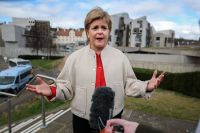
Nicola Sturgeon may be stepping down at the 2026 Scottish parliament election but fear not, the SNP’s Dear Leader won’t be out of the public eye for good. While many might have expected the former first minister to retire to the shadows after the rather tumultuous two years she has faced, it appears the Queen of the Nats is determined to stay in the spotlight. This summer, Sturgeon will release her memoir – which she promised last week would be a ‘candid’ read – and has even teased her fans and followers with a sneak preview of the cover. Taking to Instagram – where else? – the ex-SNP leader unveiled

How Conor McGregor humiliated the Irish government

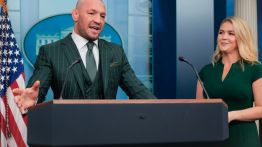
The Irish Taoiseach Micheal Martin will have felt some relief after his visit to the White House last week. While Trump criticised Ireland for poaching American pharmaceutical companies, the general consensus was that Martin had walked away pretty unscathed. In fact, the mood was so optimistic following the encounter that Tanaiste Simon Harris, also in America for the week, offered Trump a state visit to Ireland sometime next year.  But whatever warmth of feeling the Irish government may have had towards the American President will have plummeted into the freezing depths following Trump’s decision to invite Conor McGregor to the White House to mark St Patrick’s Day. It is perhaps

Scotland’s politicians must take the Reform threat seriously

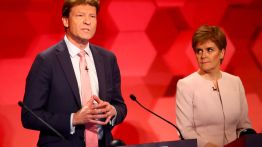
Support for Nigel Farage’s party in Scotland is surging. This is despite the fact the Scottish group has no party leader, no parliamentarians and next to no operation on the ground. On his recent trip to Glasgow, Reform UK’s deputy leader Richard Tice struggled to explain any devolved policies and even failed to remember the names of two councillors at an event set up to announce their defections. Meanwhile in Westminster internal battles have exploded in public with a bust-up between MPs Nigel Farage and Rupert Lowe, while Reform voters are starting to turn against their leader. But to Scottish voters, all this doesn’t appear to matter. Today, a new opinion poll by Survation, commissioned

Bristol’s low traffic bullies have gone too far

At 3am last Thursday morning, council contractors and police descended on a Bristol neighbourhood to install roadblocks under the cover of darkness. Fadumo Farah was one of the residents who got up that night to see what was going on. She was shocked to see dozens of police officers and security guards with drones. It ‘felt like a movie scene,’ Farah said. In a last-ditch attempt to prevent the work proceeding, she – and a group of other residents – lay down in the road. The operation was the latest episode in a long-running battle over Bristol’s first Low Traffic Neighbourhood (LTN) – known in the local lingo as ‘East Bristol Liveable Neighbourhood’

Trump was naive to think he could negotiate with Putin

President Donald Trump’s creative diplomacy in the Ukraine conflict – which entails bullying the victim and making unilateral concessions to the aggressor – has achieved its latest non-result. After a telephone conversation that lasted for an hour and a half, Trump failed to convince his Russian counterpart Vladimir Putin to accept the US proposal for an unconditional ceasefire. The war continues. Putin attempted to dampen expectations shortly before the call. Speaking to a gathering of Russian businessmen earlier in the day, he predicted that sanctions on Russia would not go away. ‘These are not temporary or targeted measures; this is a mechanism of systemic, strategic pressure on our country,’ he

China’s BYD could kill Tesla

Tesla and its hyper-active boss Elon Musk are having a bad month. On both sides of the Altantic, there have been protests against the ‘Nazi-mobile’ and the ‘Swasti-car’. The electric vehicle (EV) manufacturer’s sales are collapsing across Europe, and its stock is in freefall. On top of all that, its main rival, China’s BYD, has just announced a super-faster charger that allows you to ‘fill up’ your EV as quickly as you once could your petrol car. All companies go through bad patches, especially when they are leading a new industry. But Tesla is losing its technological lead to China. That could prove fatal. There is growing evidence that China’s

Trump’s call with Putin has bought Ukraine time

So who won from yesterday’s phone conversation between Donald Trump and Vladimir Putin? Arguably, no one did – but nor did anyone really lose. Efforts to end the fighting live, maybe to die, another day. Putin managed to find a third way between agreeing to an unconditional ceasefire – which the Russians believe would benefit Ukraine, and which would have infuriated the ultra-nationalists – and rejecting Trump’s proposals altogether. The moratorium he called on strikes against Ukraine’s energy infrastructure looks like a concession but actually has little real impact now that winter is past, and the drones and missiles which would have been hitting power stations are still targeting cities.

Could a headscarf row bring down France’s government?

Might a headscarf bring down France’s coalition government? The question of whether the Islamic garment should be permitted on the sports field has revealed the ideological differences within Prime Minister Francois Bayrou’s fragile government. On the one hand, there are left-leaning ministers such as Elisabeth Borne (Education) and Marie Barsacq (Sport and youth) who see nothing wrong with the headscarf. Others, principally, Gérald Darmanin (Justice) and Bruno Retailleau (Interior), are fiercely opposed. Retailleau recently took Barsacq to task over her stance, saying the headscarf ‘is not a form of freedom, but a form of submission for women’. The headscarf is just the latest attempt by Islamists to destabilise France On