Yossi Melman

Yossi Melman is an Israeli commentator on intelligence and security affairs and co-author of Spies against Armageddon. 

Is there a growing rift between the US and Israel?

Denials, contradictions, inflammatory statements and exaggerations have for years characterised the conduct of Prime Minister Benjamin Netanyahu and US President Donald Trump. It is therefore difficult to determine who, this time, is closer to the truth in the dispute that has developed between the two countries regarding attacks on Iran’s energy facilities. It appears that Israel’s political and military leadership believe that Trump was angry, but is playing a double game – and using Israel as part of his good cop, bad cop routine Twice during the war, the Israeli Air Force (IAF) has attacked Iran’s energy infrastructure. The first time was on the night of 6 March when about 30 fuel storage facilities in and around Tehran were struck.

Could the Kurds rise up against Iran?

From our UK edition

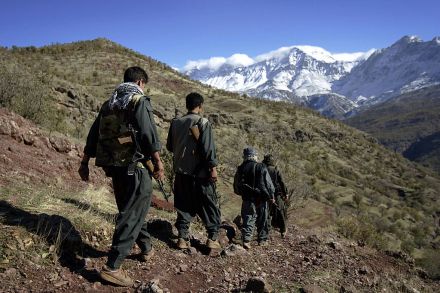
The hopes of the United States and Israel to bring about quick regime change in Tehran – whether through millions of Iranians taking to the streets or through an internal coup by moderate elements within the Revolutionary Guards – have been disappointed. Attention therefore has increasingly turned to another possibility: organising an uprising of Iran’s ethnic minorities, led by the Kurds, against the rule of the ayatollahs. According to various reports, these groups have received training and logistical support from intelligence agencies including the CIA and Mossad Although more than half of Iran’s population consists of Persian Shiites, the country is a mosaic of roughly ten ethnic minorities.

Could Israel bring back the death penalty for terrorists?

For years, there was a broad consensus in Israel that there was no benefit to reintroducing the death penalty. But now, Prime Minister Benjamin Netanyahu’s government is reportedly considering supporting a bill which would bring back capital punishment for convicted terrorists. The bill, which has passed its first reading in the Knesset, would introduce the death penalty for those who murder Jews – specifically, Palestinian terrorists. It would not apply to Jews who commit acts of terrorism and murder Palestinians. And it would not apply if Israeli Arabs, who are full citizens, are murdered.

The assassination that changed Israel forever

From our UK edition

Few political assassinations of a political leader have fundamentally and dramatically altered the course of a nation. American democracy, for instance, endured the assassination of Abraham Lincoln in 1865, and black Americans continued to enjoy their hard-won freedom. About a century later, the murder of President John F. Kennedy did not halt the legislative process that secured civil rights for African Americans. The most consequential political assassination in modern history was that of the Austro-Hungarian heir to the throne, Archduke Franz Ferdinand, in Sarajevo in June 1914. His death at the hands of Serbian nationalist revolutionaries served as the spark that ignited the first world war.

Netanyahu has let a key opportunity slip through his fingers

From our UK edition

The refusal of Israeli Prime Minister Benjamin Netanyahu to attend the Sharm el-Sheikh peace summit this week has cast a long shadow over his future – both at home and abroad. After President Donald Trump landed earlier that day at Ben Gurion Airport – at the very moment Israeli hostages began to be released – he invited Netanyahu to ride with him in ‘the Beast’, the US presidential limousine, on the way to address the Knesset, Israel’s parliament. During the 30-minute drive, Trump personally urged Netanyahu to accompany him to the summit. Netanyahu, seeking formal protocol, requested an official invitation. Within minutes, Egyptian President Abdel Fattah el-Sisi telephoned the Israeli prime minister. On the spot, Netanyahu accepted the invitation.

Why Trump wants Blair to run Gaza

From our UK edition

Tony Blair is a man for all seasons, a political operator who knows precisely on which side his bread is buttered, the side of the super-rich oil and gas sheikhs and the well-connected elites of the Middle East. It is no coincidence, then, that his name has emerged as a potential candidate for a role envisioned by President Donald Trump’s administration: effectively serving as governor of Gaza if, and when, the ongoing war there comes to an end. Driving his candidacy is Jared Kushner, Trump’s son-in-law, who continues to accumulate vast wealth from investments backed by Saudi, Qatari, and Emirati funds.

Do not dismiss Trump’s Gaza plan

From our UK edition

The recent moves by Donald Trump to promote a plan to end the two-year war between Hamas and Israel in Gaza appear this time to be more serious and promising than in the past. The American administration, led by Steve Witkoff, the President’s special envoy for international conflicts, has been formulating for several weeks a detailed outline, whose main points are: The release of 47 remaining Israeli hostages held by Hamas in Gaza. Twenty are believed to be still alive – among them one woman – But Israeli intelligence and the families know that they are in bad health and starving and in miserable condition. Israel will release from its jails a few thousand Palestinian terrorists. Hundreds of them are murderers who were sentenced to life in jail. A permanent ceasefire.

Israel is waging war for war’s sake

From our UK edition

The Israel Defense Forces (IDF) has begun the most senseless battle in the history of Israel. Two conscript divisions with Merkava tanks, APCs and artillery, supported in the skies by the Israeli Air Force, are now engaged in a battle to conquer Gaza City. As they go, they are seizing what remains of the asphalt roads in Gaza. Artillery and air force planes are bombing and destroying more houses – about 70 per cent of the buildings in Gaza have already been destroyed by the IDF. This is now the most political war in Israel’s history. The country fought three wars against regular armies out of necessity: the War of Independence in 1948, the Six-Day War in 1967 and the Yom Kippur War in 1973. All the others were wars and operations of choice.

Benjamin Netanyahu is getting desperate

From our UK edition

As the IDF announced the imminent mobilisation of some 80,000 reservists in preparation for the decisive battle to seize Gaza City, the prospect of a negotiated deal with Hamas – one that could secure the release of the 20 hostages believed to still be alive, along with the remains of 30 others presumed dead – appears to be slipping further out of reach. Prime Minister Benjamin Netanyahu, according to political and diplomatic sources within the far-right coalition that has dominated Israel’s government for nearly three years, is ‘resolute in pursuing the war, even at the grave cost such a course is expected to exact.’ For him, the campaign has become not merely a matter of policy but of survival. Yet even within the military’s top brass, doubts run deep.

Is Israel ready for a long war with Iran?

From our UK edition

The spectacular Israeli attack on Iran’s nuclear, missile and military sites and their commanders and scientists astonished the Israeli public as well as the world. It was a combination of accurate intelligence and brilliant execution by the Israeli Air Force and Mossad operatives. The intelligence preparations for this operation, codenamed‘ Rising Lion’, lasted more than a year. Mossad agents infiltrated Iran and created a network of agents, assistants, safe houses, workshops, vehicles, forged documents and cover stories – alongside advanced technologies. They also smuggled drone components into Iran, before assembling and hiding them there. These drones took part in the attack.

Israel is at risk of becoming a global pariah

From our UK edition

For years, Israel has been compared – sometimes unjustly – to South Africa. This comparison stems from the concept of apartheid. In South Africa, racial segregation was between whites and blacks; in Israel, it's the discrimination against Palestinians in the West Bank and Gaza. Today, however, the validity of the comparison between Israel and South Africa is even more relevant in another aspect: the international isolation and economic sanctions that were imposed on the white minority regime in Pretoria, which ultimately brought about its downfall, are a warning of the future Israel could face. A mix of stubbornness, rigidity, and dogmatism is at the root of Trump’s fatigue with Netanyahu Israel is steadily heading down this path.

Netanyahu is facing a brewing military rebellion in Israel

From our UK edition

On Monday this week, Ronen Bar, head of Israel's security service Shin Bet, challenged Israeli Prime Minister Benjamin Netanyahu's decision to fire him in the country's Supreme Court, blocking it – at least temporarily. He was supported in his claim by a number of civic groups and former military generals, including the former senior air commander Nimrod Sheffer, stating that Netanyahu wanted to get rid of him after suspecting that Bar was not loyal to him. The Shin Bet chief provided the court with classified documents showing that Netanyahu wished to turn the agency into his private secret police, like those in some dictatorial regimes.

A storm is brewing for Benjamin Netanyahu

From our UK edition

Prime Minister Benjamin Netanyahu is once again plunging Israel into a deeply polarising legal and political crisis. Over the weekend, he announced his plan to dismiss Ronen Bar, the chief of Shin Bet, Israel's domestic security service. This was followed on Tuesday by his decision to renew the war in Gaza, by violating the fragile ceasefire that had stayed in place for several months, showing disregard for the safety of the 59 remaining hostages in the process. Netanyahu, who is facing three criminal indictments for bribery, fraud, and breach of trust, justified his decision to dismiss Bar by stating that he had lost confidence in his security chief.

Why Netanyahu won’t let the Gaza hostage deal fall through

From our UK edition

President-elect Donald Trump is poised to claim his first major foreign policy achievement just days before his inauguration on Monday. If no last-minute obstacles arise, a long-anticipated hostage deal between Israel and Hamas in Gaza could take effect as soon as this Sunday. But while Trump will emerge victorious from this situation, Israeli Prime Minister Benjamin Netanyahu, on the other hand, will find himself humiliated and defeated. For nearly a year, fearing the collapse of his right-wing coalition, Netanyahu has worked hard to prevent the deal from concluding, using all sorts of excuses and hoping that Hamas would eventually derail it and be blamed for it. This has not happened. Hamas said on Thursday that they are committed to the deal brokered by the US, Egypt and Qatar.

The humiliation of Iran

From our UK edition

Tel Aviv In attacking Iranian military sites this weekend, Israel broke through its fear barrier. For years, the Israel Defence Forces (IDF) have planned to strike Iran using aircraft but they have always backed out at the last minute. IDF war planners feared the worst-case scenario: downed planes, pilots captured and Israeli citizens hung as spies in Tehran's central squares. Yet at two a.m. on Saturday morning more than 60 US made F-35, F-16, and F-15s, accompanied by Boeing mid-air fuelling planes and early warning air intelligence aircraft, took off from several Israeli air bases. Aboard were 150 air crew. They flew 1,600 kilometres for two hours, passing over Syria and Iraq, and entered Iranian air space.

Invading Gaza will cost Israel more than just lives

From our UK edition

In an address to soldiers on Saturday, Israel's chief of staff Lieutenant General Herzi Halevi outlined the aims of the country's looming ground incursion into Gaza. ‘Our task is to destroy Hamas activists and their infrastructure’. But, he added, this will not be ‘an easy task’.  That’s an understatement, to say the least. Despite the bravado and masochism expressed by Israeli generals, the war has so far caused the death of more than 1,400 Israeli civilians and troops and the kidnapping of 222 hostages (among them 30 children). Another 200 are missing. The ground invasion of Gaza will likely be even more costly in terms of lives lost.