Politics

Read about the latest political news, views and analysis

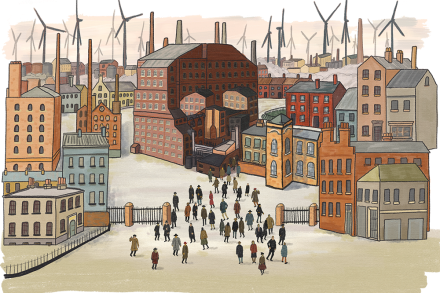
Britain needs to reindustrialise

In recent years, governments looking for good news on growth have sounded increasingly desperate, like a doctor looking for signs of an improvement in a terminally ill patient.  In the first quarter of this year Britain’s economy grew by 0.7 per cent, slightly higher than expected – a fact seized upon by this already beleaguered government. Both Rishi Sunak and Sir Keir Starmer have clung furiously to the belief that we are ‘the fastest growing economy in the G7’, a fact only true on the most selective of snapshots. Our industrial energy costs – among the highest in the world – are killing off what’s left of UK production Both statements mask
Can Scotland learn to love Farage?

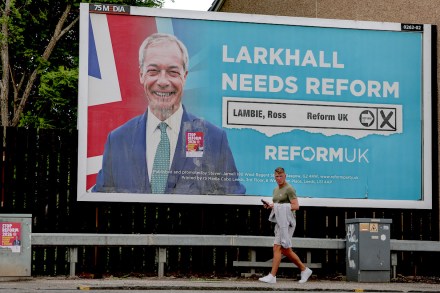
There’s not much that’s green in Larkhall, Scotland. So staunchly Protestant unionist is the ex-mining town in South Lanarkshire that it has scrubbed itself of anything associated with Irish Catholicism. The local Subway franchise has grey panelling on its front, and local pharmacies have opted for blue signage. The 15,000-strong area has one football team: Rangers FC. Go deeper into Larkhall’s suburbia and you’ll find Union Jacks on flagpoles interspersed with those bearing the Red Hand of Ulster. Kerbstones have been painted in the colours of the British flag while rumours abound of youths trying to set fire to the grass. ‘In our schools, the wains aren’t taught that traffic

Did No. 10 clear Lord Hermer's 'Nazi jibe' speech?

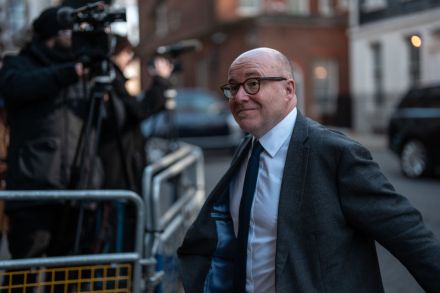
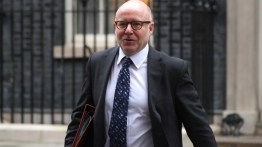
Another day, another bit of bad press for the Labour party. Attorney General Lord Hermer sparked outrage when he compared political threats to leave the ECHR to the Nazis during a speech to the Royal Institute for International Affairs (RUSI) defence think tank on Thursday – and has since acknowledged, rather begrudgingly, that his ‘choice of words was clumsy’. You don’t say! Mr S is rather curious about who exactly gave the controversial phraseology the green light – if it was approved at all. The speech appeared on the official government website after it was delivered, with the Attorney General’s baffling comparison retained in black and white. The questionable passage reads:

Why do police accept criminal drug use?

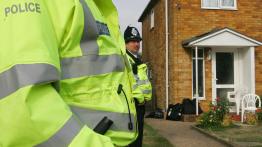
Another day, another sign of the British state’s acceptance of criminality. This time it’s the news that almost half of people caught in possession of Class A drugs avoid criminal sanction, with the police either issuing a ‘community resolution’, which does not create a criminal record, or avoid any action at all ‘in the public interest’. This represents a dramatic change since 2016, when only 7.5 per cent of those caught in possession of hard drugs avoided prosecution. Why has this happened? And what does it mean for the drugs trade in Britain? In some cases, those avoiding prosecution will be asked to participate in ‘diversion schemes’, described by the College of

It’s the last chance for levelling up

‘The policymakers that live in London and stuff, they don’t really care about a small town like Rochdale. I just feel as though, for many years it’s been one of those forgotten things, we live under the shadow of Manchester.’  This quote, from a teaching assistant in his 30s with young children, is from a recent focus group we ran in Rochdale. But in truth it could easily be from any focus group in any town across provincial Britain over the past ten years, such is the national feeling of malaise. The government is right to revive levelling up. Why it ever went away is baffling People in these communities

Lord Hermer is preposterously wrong about international law

Lord Hermer KC has done it again. Delivering RUSI’s annual security lecture this week, the Attorney General set out to ‘depolarise’ the debate about international law, before promptly comparing those who are open to withdrawal from the European Convention on Human Rights (ECHR) with Carl Schmitt, the notorious German jurist who joined the Nazi party in 1933. If Lord Hermer’s intention truly was to lower the political temperature, and to help to broaden the base of support for the government’s approach to international law, his speech must be judged a failure. Perhaps his choice of words was simply clumsy, as he has since said, although the text as a whole

Has Serbia really fallen foul of Moscow?

Is it getting harder for Serbian president Aleksandar Vučić to maintain his balancing act between Moscow and the West? Why else, after all, would Russia’s Foreign Intelligence Service (SVR) suddenly revive a year-old story about covert arms supplies to Ukraine? Back in June of last year, the Financial Times splashed the story that Serbia had exported around €800 million (£673 million) worth of ammunition to third parties that then ended up being transferred to Ukraine. At the time, Vučić did not try to deny this, but said that it had nothing to do with Serbia. ‘We have had many contracts with Americans, Spaniards, Czechs, others,’ he said. ‘What they do

Hermer admits Nazi comments were 'clumsy'

As if the Attorney General hadn’t proven his ability for conjuring up negative headlines enough, Lord Hermer took it upon himself on Thursday to compare political threats to leave the ECHR to the Nazis. Speaking to the Royal Institute for International Affairs (RUSI) defence think tank, Hermer earnestly told his audience: ‘The claim that international law is fine as far as it goes, but can be put aside when conditions change, is a claim that was made in the early 1930s by “realist” jurists in Germany.’ But today, after a momentous backlash, Hermer has finally apologised for his, er, ‘clumsy’ language. You can say that again! Now Hermer’s spokesperson has issued

Britain's Gulf trade deal is not the place for virtue signalling

Rachel Reeves announced that a trade deal with the Gulf Co-operation Council (GCC) – in other words, Saudi Arabia and the Gulf states – was imminent last week. It was then leaked that, even though the deal was with unashamed petrostates with no time for net zero and, in some cases, a distinctly doubtful record on rights, the text imposed no legal duties in respect of human rights, modern slavery or the environment. The trade unions and human rights groups are unhappy. The TUC wants any deal to be conditional on workers’ rights protection; the Trade Justice Movement and other earnest humanitarian activists are demanding binding commitments on human rights

What will save the Tories? The economy, or Robert Jenrick?

16 min listen

Lots to discuss today: Robert Jenrick takes on TfL, a Nazi jibe from the attorney general and allegations of shoplifting made against our own Michael Simmons. But we start with Keir Starmer’s big speech yesterday, where the theme was ‘get Nigel’, after polling from More in Common showed that framing the election as a two-horse race could be beneficial to Labour. They are attempting to cut the Tories out altogether but, in response, the Conservatives plan to use fiscal credibility as the battleground to crawl back up the polls. Will the economy save the Tories? Elsewhere, Robert Jenrick is the star of the week after a video of him reprimanding

Lord Hermer’s ‘Nazi jibe’ at Reform won't work

It is an axiom of political debate that once you compare your opponents to Hitler’s Nazis you have definitely lost the argument. That golden rule seems to have escaped the notice of the Attorney General Lord Hermer, who, in a speech to the Royal Institute for International Affairs (RUSI) defence think tank did just that. Hermer, a close friend and fellow human rights lawyer colleague of Sir Keir Starmer, told RUSI that both Nigel Farage’s Reform UK and Kemi Badenoch’s Tories were echoing Nazi ideology that placed national law above international agreements with their threats to withdraw Britain from the European Court of Human Rights (ECHR): But does Lord Hermer really have

Starmer's welfare cuts are nothing like 'Tory austerity'

Keir Starmer has already folded on the winter fuel payment, promising a partial reversal of the policy by reinstating it for pensioners in receipt of pension credit. How much longer before the proposed £4.8 billion cuts to welfare benefits go the same way? This morning, the Health Foundation think tank has issued a pronouncement that will be a red rag to critics of Labour’s welfare cuts: that the effect of Starmer’s reform of disability benefits will be four times as great as changes proposed by the Conservatives before the election and on a similar scale to George Osborne’s benefits cuts of 2015. Those cuts, announced in Osborne’s July budget of

Labour ministers averaging a union meeting a day

Whatever happened to that £22bn black hole, eh? As yet more pay rises are dolled out to workers across the country this month, Mr S has been scouring the government’s transparency data to take a closer look at just how many times ministers have met with union barons. The conclusion? Quite a lot. In fact, in just six months, ministers tabled over 220 meetings with their trade union representatives – working out at just under 40 meetings a month and 1.3 a day. Talk about up the workers… Between July and December 2024, some 222 meetings were held between union representatives and Labour ministers. The Department for Business and Trade was kept busiest,

Lord Hermer's 'Nazi jibe' shows his naivety

Amid talk of a summer reshuffle, I recently asked a senior member of the Labour party if he thought the Attorney-General was likely for the chop. He paused and reflected. ‘No’, he eventually replied. ‘But he’s going the right way about it.’ Similar sentiments will no doubt be expressed in Downing Street today as they pore over the morning papers. ‘Law chief in Nazi jibe at Tories and Reform’, screams the splash headline of today’s Times: Richard Hermer KC has done it again. Hermer showed a naivety of how his remarks would be interpreted The cause of the headline is a speech which Hermer made to the RUSI think tank

America is coming for Britain’s social media censors

In 2021, after the barbaric Islamist murder of Sir David Amess MP, the response of Britain’s political class was as baffling as it was shameful: it decided to ramp up censorship of the internet. Somehow, MPs’ vital personal safety came to be equated with the nebulous concept of ‘safety’ online, along with the protection of ‘democracy’ from hurty words and unapproved opinions. The Online Safety Act (OSA) was born, handing vast new powers to Ofcom to ‘regulate’ what could be said online. If Washington is now looking to apply the thumbscrews to senior British officials pushing social media censorship, it has plenty to choose from Well, that was then, and

Scotland’s Ecocide Bill is pure moral posturing

Here we go again. The Scottish parliament risks embarking on yet another exercise in legislative virtue signalling: the Labour MSP Monica Lennon’s emotively titled Ecocide Bill. The Scottish government is reportedly looking favourably on this legislation, which would make destroying the environment a criminal offence punishable by up to 20 years in prison. Does this Bill open the door to criminal proceedings against operators in the North Sea? Needless to say, destroying the environment – intentionally or recklessly – is already illegal under numerous statutes: the Environmental Protection Act, the Wildlife and Countryside Act, and the Climate Change Act, to name but three. But, like the ill-fated Named Person Act, the Gender

Will the economy save the Tories?

This week Dominic Cummings said the Tories may have ‘crossed the event horizon’. He was trying to find a tech bro way of saying the game is up: they’re finished as an electoral force and it’s only Labour, Reform and the Lib Dems still in play. But might the Tories have one last chance? If they do, that chance will come from the economy. Next week the shadow chancellor, Mel Stride, will try to make the case for the Tories being the party of economic responsibility in a keynote speech to the Royal Society for Arts, Manufactures and Commerce. ‘Our country faces significant and increasing challenges both at home and

Senior Tories plan candidate overhaul

There are many justifiable criticisms of how the Tories ran candidate selection for the last election. On the day that Rishi Sunak headed to the Palace, scores of nominees were still to be chosen, prompting a mad scramble to find 160 candidates in 12 days. Some seats faced accusations of ‘stitch-ups’, including Basildon and Billericay, where the-then party chairman was controversially selected from a shortlist of one. Scores of unknown names had to be parachuted in elsewhere. The good news for long-suffering members is that this message appears to have been heard by senior Tory figures. An eight-page paper on candidate selection has now been drawn up as part of the