Politics

Read about the latest political news, views and analysis

The Limitless Pendant is an uncool trip into the tech nerd future

The problem with the future is it is very obviously no longer being created by cool people. Instead, it belongs to autistic nerds who want nothing more than to be a computer. Cool people invent things like surfboards, Ray-Bans and Triumph Spitfires. Nerds make profoundly uncool things like cars that drive themselves and the absurd Limitless Pendant device that I have been attempting to wear. The Pendant records everything you say, and everything anyone near you says Let me start this review by stating I hope the Pendant – yours for $199 – fails very hard. It is an awful and life-negating device that subjugates any human stupid enough to


Reeves could leave farmers with Diddly Squat

The powers that be at Amazon seem to have an uncanny talent for releasing each new series of Clarkson’s Farm just as British politics descends into fresh farming chaos. The new series is no different. At the exact moment that I am watching Jeremy Clarkson and the cast of Diddly Squat farm get their government-funded agri-environment schemes in order for the year, over in Whitehall, Rachel Reeves is plotting how to cut the budget that pays for them.  A recurring theme so far in the show’s fourth series has been the jibes directed at the government for paying farmers for seemingly non-food things, like establishing wildflower meadows. Initially, this does seem strange.

Paris Saint-Germain’s win was a triumph for sportswashing

Paris Saint-Germain (PSG) are champions of Europe for the first time in their history. They demolished Inter Milan 5-0 in the Champions League Final in Munich. Football clubs have become the playthings of autocratic nation states with bottomless pockets Forget the Premier League and the sporting abomination that is the revamped Fifa Club World Cup. The Champions League is the pinnacle of club football -the competition that every top team wants to win. The final was billed as a mouth-watering clash of opposites: youth and free-flowing football (PSG) versus experience and the nous to always find a way to win (Inter). But the final was a huge anticlimax: PSG dominated the match

Is the ‘woke’ movement really over?

‘I was with some doctors last week who said there is no such thing as biological sex.’ It sounds like the rambling of a madman or a drunk, but these words were uttered last week at the Charleston literary festival in East Sussex by Lady Brenda Hale, former president of the Supreme Court. Personally, I would avoid doctors who lack this rudimentary knowledge of the human body. They might start asking me about the regularity of my menstrual cycle. Wokeness has destroyed lives. Children who are gender nonconforming have been persuaded that they are ‘born in the wrong body’ The ubiquity of wokeness has meant that we have grown accustomed

Why is your pension fund so obsessed with net zero?

Legal & General is Britain’s largest asset manager, with over £1 trillion on its books. Every pound it manages should be dedicated to achieving the highest possible returns. This matters a lot: L&G manages over five million pensions in the UK. But in recent years, the asset manager has been particularly concerned with fashionable causes, instead of being entirely focused on making sure your retirement is secure. Individuals already fund net zero schemes via their taxes. They should not be forced to pay an effective additional tax, via lower returns, to fund net zero with their retirement savings That is why I recently attended their AGM. I wanted to learn

Is God an Englishman?

32 min listen

Bijan Omrani joins Damian Thompson to talk about his new book God is an Englishman: Christianity and the Creation of England. They discuss the spiritual and cultural debt the country owes to Christianity. The central question of Bijan’s book is ‘does it matter that Christianity is dying in England?’. The faith has historically played a disproportionate role in many areas of English life that we take for granted now – for example, by shaping both charity and the welfare state. Yet this is influence is often ignored as congregations shrink and the UK slides into secularism. But are there unexpected grounds for hope? The publication of God is an Englishman has coincided with a modest but surprising

Disposable vapes are fantastic. Naturally, they’re demonised

Forty a day for forty years – that’s a hell of a lot of cigarettes – but je ne regret rien. I loved smoking. But note the past tense because, eventually, for all the clichéd health reasons you can imagine, I had to give up. Despite always knowing it was a matter of life or death, I dreaded packing it in. Smoking has been so much part of my persona for decades; I just couldn’t imagine life without puffing away. All the usual smoking cessation options didn’t work, from gum to patches, Alan Carr to NHS counselling. Until eventually, on the recommendation of no less than two NHS doctors, I tried disposable vapes.

No, Zoomers: life wasn’t better before the internet

Almost half of 16 to 21-year-olds wish they had grown up without the internet. A similar portion are even calling for a social media curfew, with a quarter wanting phones banned in schools, according to research from the British Standards Institution. Really? The truth is that Zoomers – those born between 1997 and 2012 – don’t know how lucky they are to have come of age during an era in which they had access to the web. The truth is that Zoomers don’t know how lucky they are While my own generation of Millennials were early guinea pigs for Facebook, Twitter and – for the connoisseurs out there – MSN Messenger,

Israel faces a brutal choice

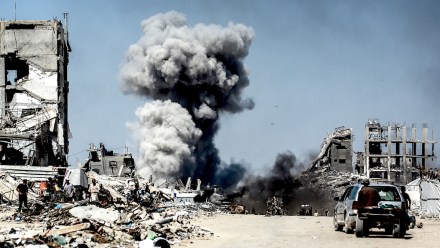
For months, Israel has faced a relentless barrage of criticism over its conduct in Gaza – from western governments, UN agencies, and media outlets that once claimed to be her allies. Central to the condemnation are the humanitarian circumstances: civilian suffering, limited aid access, and Israel’s temporary obstruction of some relief efforts. What has gone largely unreported, however, is that the bold new strategy in place may now be altering that equation entirely – a direct aid delivery mechanism, led by American contractors, that is not only reaching civilians more effectively but also weakening Hamas from within. You would never have guessed from the way some world leaders have condemned

Zelensky is in an impossible position

The Ukrainian president said this week he hopes the war will end by next June. Not this summer. Not this year. But in 12 months’ time. Sanctions, he believes, and four years of gruesome war will finally hit the Russian economy, pushing it into a deep budget deficit. The IMF’s latest forecast sort of backs this up. Russia’s GDP growth is set to slow to 0.9 per cent next year, down from over 4 per cent in 2024. Most of Russia’s workforce is already employed and its central bank’s key interest rate is at 21 per cent. Still, for many Ukrainians, Russia’s downfall feels like yet another fairy tale. They’ve

Should cannabis be decriminalised?

21 min listen

London Mayor Sir Sadiq Khan has called for possession of small amounts of cannabis to be decriminalised following a report by the London Drugs Commission. The report has made 42 recommendations, which include removing natural cannabis from the Misuse of Drugs Act. Former cabinet minister, now Labour peer, Charlie Falconer and Tory MP Dr Neil Shastri-Hurst join Lucy Dunn to discuss whether now is the time to decriminalise cannabis. For Lord Falconer, who chaired the Commission, the present law doesn’t work and he explains the principles behind the review; Neil, however, believes that the proposals send the wrong message that cannabis is harmless. He argues that a balance needs to

Tommy Robinson and the truth about jail beards

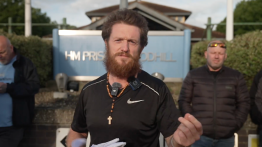
When Tommy Robinson walked out of prison this week, he was unrecognisable. The far-right activist, who was jailed for contempt of court, was sporting a huge bushy beard as he emerged from HMP Woodhill. Robinson looked more like a man who had been marooned on a desert island, or lost in the mountains, than someone who had spent a few months in a Category B prison in Milton Keynes. Robinson’s prison beard made me think of my own. When I was locked up at HMP Wandsworth, I grew a beard even wilder than Robinson’s. For the first six months in prison, I didn’t touch my facial hair, letting it grow

Why shouldn’t vegans be catered for in an apocalypse?

You know you’ve arrived when professors start thinking about how to look after you during a major emergency. As a vegan, I was thrilled to read in the Times this week that Professor Tim Lang, a professor of food policy, has told the government that us meat-dodgers must be catered for in any ‘food apocalypse’. Speaking at the Hay Festival, Lang said that if a cyber attack or military strike from Russia destroyed Britain’s ‘vulnerable’ food chain, the contents of ration packs would need to bring comfort to a shaken public. We’d all be ‘in psychological shock’, he explained, so we’d need to have food that we’re ‘familiar and comfortable with’. In

Britain needs to reindustrialise

In recent years, governments looking for good news on growth have sounded increasingly desperate, like a doctor looking for signs of an improvement in a terminally ill patient.  In the first quarter of this year Britain’s economy grew by 0.7 per cent, slightly higher than expected – a fact seized upon by this already beleaguered government. Both Rishi Sunak and Sir Keir Starmer have clung furiously to the belief that we are ‘the fastest growing economy in the G7’, a fact only true on the most selective of snapshots. Our industrial energy costs – among the highest in the world – are killing off what’s left of UK production Both statements mask

Can Scotland learn to love Farage?

There’s not much that’s green in Larkhall, Scotland. So staunchly Protestant unionist is the ex-mining town in South Lanarkshire that it has scrubbed itself of anything associated with Irish Catholicism. The local Subway franchise has grey panelling on its front, and local pharmacies have opted for blue signage. The 15,000-strong area has one football team: Rangers FC. Go deeper into Larkhall’s suburbia and you’ll find Union Jacks on flagpoles interspersed with those bearing the Red Hand of Ulster. Kerbstones have been painted in the colours of the British flag while rumours abound of youths trying to set fire to the grass. ‘In our schools, the wains aren’t taught that traffic

Did No. 10 clear Lord Hermer’s ‘Nazi jibe’ speech?

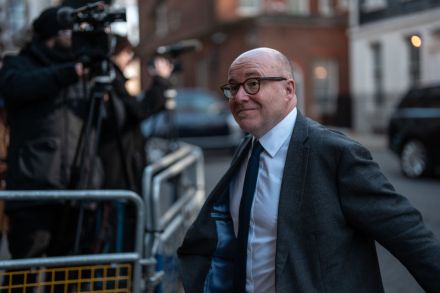
Another day, another bit of bad press for the Labour party. Attorney General Lord Hermer sparked outrage when he compared political threats to leave the ECHR to the Nazis during a speech to the Royal Institute for International Affairs (RUSI) defence think tank on Thursday – and has since acknowledged, rather begrudgingly, that his ‘choice of words was clumsy’. You don’t say! Mr S is rather curious about who exactly gave the controversial phraseology the green light – if it was approved at all. The speech appeared on the official government website after it was delivered, with the Attorney General’s baffling comparison retained in black and white. The questionable passage reads:

Why do police accept criminal drug use?

Another day, another sign of the British state’s acceptance of criminality. This time it’s the news that almost half of people caught in possession of Class A drugs avoid criminal sanction, with the police either issuing a ‘community resolution’, which does not create a criminal record, or avoid any action at all ‘in the public interest’. This represents a dramatic change since 2016, when only 7.5 per cent of those caught in possession of hard drugs avoided prosecution. Why has this happened? And what does it mean for the drugs trade in Britain? In some cases, those avoiding prosecution will be asked to participate in ‘diversion schemes’, described by the College of

It’s the last chance for levelling up

‘The policymakers that live in London and stuff, they don’t really care about a small town like Rochdale. I just feel as though, for many years it’s been one of those forgotten things, we live under the shadow of Manchester.’  This quote, from a teaching assistant in his 30s with young children, is from a recent focus group we ran in Rochdale. But in truth it could easily be from any focus group in any town across provincial Britain over the past ten years, such is the national feeling of malaise. The government is right to revive levelling up. Why it ever went away is baffling People in these communities