Politics

Read about the latest political news, views and analysis

Books Podcast: How the 2008 crash changed the world

In this week’s Books Podcast, I’m joined by the economic historian Adam Tooze, author of the new book Crashed: How A Decade of Financial Crises Changed The World. How are the subprime collapse in the US and the Eurozone crisis that came after linked? Why did a cartel of mega-wealthy businessmen do a good job at rescuing the US from disaster, and a group of well-intentioned political technocrats make such a hash of it in Europe? And how is the Balance of Financial Terror between the US and China holding up these days?

The government’s no-deal Brexit plans aren’t scary enough to satisfy Remainers

The government was always onto a loser whether or not it published the 24 technical notices laying out what would happen in the event of a no-deal Brexit. If it didn’t publish them it would be accused of a cover up. If it did and they were terrifying it would provide ammunition for the Remain brigade. And if it published them and they weren’t terribly frightening? Then Remainers would accuse ministers of having their heads in the sand. The latter scenario is pretty much where we are today. There are few stand-out headlines from the 24 documents for anti-Brexit commentators to get their teeth into.

Jeremy Corbyn’s plan for the media: make it more boring

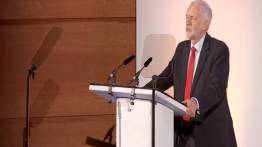
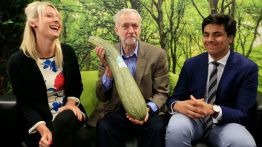
It should be said that Jeremy Corbyn’s ideas for shaking up the media aren’t all bad. The Labour leader is right for instance to focus on the need to help out local media; the death of regional newspapers in recent years means that local government is almost entirely unaccountable nowadays. It’s only when things go badly wrong that people actually sit up and pay attention. Corbyn is also right on the need to reform freedom of information laws, which have now been rendered virtually redundant by those in authority who know exactly how to prevaricate and obstruct requests at every turn. But too many of the Labour leader’s other ideas are half-baked and reveal a simple truth: Jeremy Corbyn simply doesn’t understand the media.

‘Social class’ check: Jeremy Corbyn’s top team

This summer, Jeremy Corbyn has struggled to get much coverage of his plans for domestic policy thanks to the fact Labour's anti-Semitism crisis has dominated the headlines. So the Labour leader can take heart that one of his policy ideas has finally started to make waves. In a speech on the UK press on Thursday, Corbyn will call on the BBC to declare the 'social class' of all its presenters and journalists as part of a bid to improve its diversity – including whether they went to private school and their parent's occupation and education. Mr S has no doubt that Corbyn plans to lead by example and do the same with his office.

The plot to stop Brexit

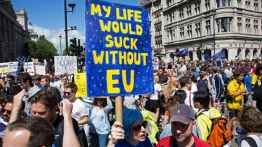
Every Wednesday morning in the House of Commons, about a dozen people can be seen making their way along the committee-room corridor to attend a ‘grassroots co-ordination committee meeting’. Before they get down to business, the group, a mix of MPs and campaigners, are treated to a monologue from their meeting chair, Labour’s Chuka Umunna. This speech varies but the agenda is the same: how to bring about a second referendum and stop Brexit. The ‘Stop Brexit’ campaign has taken many forms since the referendum result two years ago. There have been legal challenges, a surge of anti-Brexit campaign groups and plans for a new party — not to mention the one-man nationwide tour from Lord Adonis. He didn’t say that much on Europe before the referendum.

It’s not science I don’t trust – it’s the scientists

Everyone knows the real reason people like Donald Trump are sceptical of climate change is that conservatives are fundamentally anti-science. Some doubt science because it conflicts with their religious beliefs; others because its implications might mean radically shifting the global economy in an anti-growth or heavily statist direction, which goes against their free-market ideology; others because, being conservative, they are prisoners of their dogmatism, need closure and fear uncertainty. I hear this all the time from lefties on social media. And there seems to be some evidence to support it.

Britain, their Britain

Here’s a bracing lesson from Victorian history that might possibly help to slice some impossible Brexit knots. In the 19th century, there was complete freedom of movement of people from Europe to Britain. And that was all anyone needed. Europhiles might find it difficult to conceive of a time when the folk of continental Europe ached to get to Britain because it was only here that they could find stability, peace, and freedom from oppression. Remainers might find it impossible to imagine that this wholly independent nation — rather than being xenophobic — welcomed the newcomers, and revelled in the cultural riches that they brought. Not just the brilliant music and exhilarating art and exciting restaurants and delicious wine, but even the light entertainment.

Conservatives’ warning from beyond the grave

The Conservatives were given a reality check today in the form of new Electoral Commission data on the financial health of political parties in 2017. Under Jeremy Corbyn, Labour managed to break previous records and raise just under £56m in a single year – beating the Conservatives by nearly £10m. Adding insult to injury, the Tories received more money from the dead (in the form of bequests) than from the (living) Tory grassroots, with income from membership fees nearly halved. Where Labour received £16.2m in membership fees last year, the Tories managed a paltry £835,000. This touches on a wider issue for the Conservative party: its relationship with the grassroots.

It’s easy for MPs to miss the humiliating treatment of their own constituents

If you wanted an easy illustration of the importance of a Parliament that looks vaguely like the country it works for, look no further than a tiny consultation issued this week by the Home Office. In it, ministers suggest new guidelines on the treatment of women in custody who are on their periods. This sounds like quite small fry - and the sort of subject that makes at least 50 per cent of readers recoil from going any further. But it’s important, not just in itself, but also because it shows what happens when more women join the House of Commons.

Labour’s noise problem

Political parties rarely have good summers. If you’re in government, something normally goes wrong just as you’re settling into a deckchair. If you’re in Opposition, a good summer is when something has gone wrong in the government. A disappointing summer is when no-one notices your carefully-planned announcements. A bad summer is when you get plenty of attention, but for all the wrong reasons. Labour has had a bad summer. It has spent much of it making rather wan attempts to calm the row on anti-semitism.

The true cost of the Carillion wreckage

“We’re not doing a very good job of selling the private sector, are we?” So said an old friend of mine, among the Conservative party’s most senior advisors, as we discussed my upcoming Channel 4 Dispatches documentary on Carillion. Back in January, Jeremy Corbyn declared the implosion of the UK’s second-largest construction firm “a watershed moment” – and, in some ways, he was right. I don’t accept Carillion’s demise seven months ago means private companies should be kept away from providing public services, as the Labour leader has argued, or that Britain now needs wide-ranging nationalisation. The state already employs a fifth of the workforce, accounting for over two-fifths of GDP – which is quite enough.

Michel Barnier promises to stay put

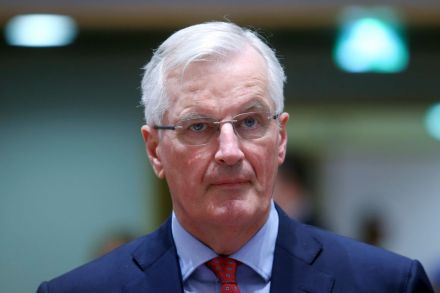
Michel Barnier’s press conference had good news and bad news for the UK government. On the bright side, the EU’s chief negotiator promised to stay put and hold continuous – expected to be weekly – negotiations with Brexit Secretary Dominic Raab to try and bridge the differences between the two sides. However, he also promised not to budge when it comes to his negotiating position. Responding to accusations that the EU has proved inflexible, Barnier said: ‘We haven't changed our principles over two years — but why would we? Why would we change the principles on which the EU is based? The UK is leaving the EU, not the other way around.

Washington Post: Theresa May could be one of the greatest prime ministers of our time

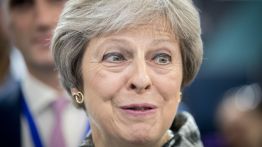
There’s something going on across the pond. Less than twenty-four hours after Mr S informed readers of the New York Times’s struggle with the London foodie scene, Steerpike has come across another incident of an American journo who seems divorced from reality. The American Enterprise Institute's Dalibor Rohac has waded into the debate over where Theresa May, by the time she hangs up her heels and looks back on her legacy, will find herself in the pantheon of great British Prime Ministers. In the UK, that debate has been pretty much limited to three from bottom, two from bottom, or bottom. But across the pond, a more optimistic view is being taken.

The fury of the stop Brexit mob has finally been explained | 21 August 2018

At last they’ve found a name for it. A name for the meltdown that has occurred in certain political circles since June 2016. A name for the daily Twitter-rage against That Referendum. A name for the clearly potty belief that we are heading for the End of Days and that it is all the fault of dumb voters who don’t like the EU. A name for the non-stop fuming about Britain’s ‘inferior’ people and the almighty mess they have apparently landed the nation in. It’s called Brexit Anxiety Disorder. At least that is how Tom McTague at Politico sums up the findings of two psychological experts who have looked into post-referendum craziness. And we know how much Remainers love experts, so no doubt they will fully take on board this expert diagnosis of their malady.

Why are some Tories worried about an influx of new members?

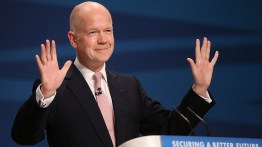
William Hague’s warning today that the Conservative Party mustn’t change the rules by which its leader is elected shows quite how much has changed in British politics over the past few years. Ideas that were very much in vogue in 2015 are now widely trashed. Where once it was considered a no-brainer that parties should make it easier and cheaper for members to join and even give them more say over policy making, now parliamentarians and commentators are running scared of just that. Why?

Greece’s economic misery is far from over

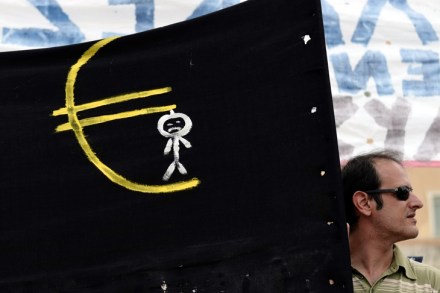
A couple of years ago, I was driving from Athens airport to the Peloponnese along the sparkling new highway that connects the two. I had never driven in Greece before, and was slightly nervous of how the Greeks might be on the road. As it turned out, there was nothing to worry about. Not only are they courteous behind the wheel, and far more so than most of their Mediterranean neighbours, but more importantly the road was completely empty. The reason? There is a toll. It is only about six euros to drive the length of the country, but hardly anyone, even the truckers, can afford that. They take the old roads instead. There are lots of different ways of illustrating the scale of the economic catastrophe that has unfolded in Greece over the last decade.

Wanted: a Head of Disputes for Labour

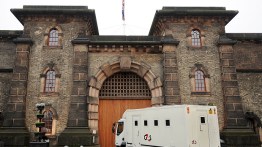
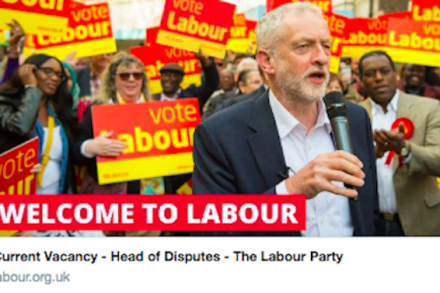
Have you ever looked at a job advert with a temptingly high salary, and thought to yourself… you’d have to be mad to apply to that. Mr Steerpike suspects many Labour staffers had a similar reaction this week to a job posted on the Labour website. Labour HQ are on the lookout for a new ‘Head of Disputes,’ and they’re willing to pay over £50,000 to the person mad enough to take it. The new job holder will be responsible for internal disputes, disciplinary affairs and, rather ominously, ‘undertaking investigations as necessary’ within the party.

The Boris burka row exposes Theresa May’s lack of political nous

The Spectator's editorial ‘Bravo Boris’ (11 August) suggests that the treatment meted out to Boris Johnson by the Prime Minister and the party chairman makes a leadership challenge more likely. That is correct. This duo have demonstrated a breathtaking lack of political sophistication. Not only have they promoted Boris Johnson’s chances of the leadership, but they have also diverted the media spotlight from the Labour party’s very real anti-Semitism to a fictitious Tory party Islamophobia. Mr Johnson plainly argues a position that is more liberal than those of many European governments, including those of Denmark, France, Belgium and Germany.

Revealed: the Scottish uni courses for (feepaying) English students only

When Alex Salmond stepped down as First Minister, he famously unveiled a commemorative stone engraved with the message ‘The rocks will melt with the sun before I allow tuition fees to be imposed on Scottish students.’ If he wants to see melting, he should go to the UCAS website and look at the courses up for grabs in the clearing system – then change the settings to say you’re Scottish. The courses melt away. (For example, here is the English version of Glasgow University clearing courses: law, history, all sorts of gems. And here is the Scottish version). Why the difference? Because England’s students bring fees. As a direct result opportunities are created for them – even in Scotland.