Politics

Read about the latest political news, views and analysis

Westminster votes to stay in… at the Kennington Tandoori referendum

Ever since the Brexit referendum, it’s been a fact of British political life that the most important decisions, that will have the profoundest impact on society, will not be decided by politicians, but by the people. Therefore it made perfect sense when politicians questioned Westminster’s favourite curry house’s decision to update its menu, that the proposed menu change be put to a referendum. Sparks flew at the Kennington Tandoori – famous for delivering David Cameron's final meal at No 10 – earlier this month after the restaurant updated its classics in the name of a street food revolution. Was this still a safe space for Parliamentarians?


Do ministers understand how financial abuse works?

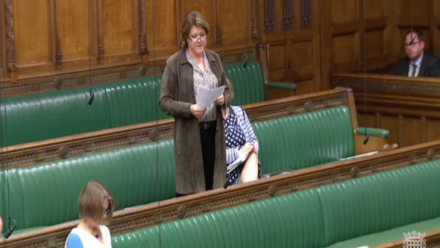
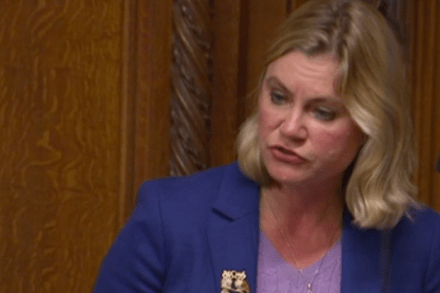
Another question to the Prime Minister today that's worth noting came from Labour MP Danielle Rowley on Universal Credit. She was asking not about the well-known problems with the roll-out of the benefit, but about a flaw with its very design: 'The Work and Pensions Committee heard evidence that the lack of automatic split payments for universal credit means that women are being trapped in abusive relationships. That absolutely disgusts me, but how does it make the Prime Minister feel?' Currently, Universal Credit is paid to the household as a whole. The problem with this is when one member of a couple is abusing the other, and controlling all their finances.

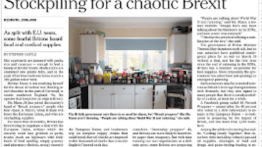
NYT doom-mongers strike again: ‘Stockpiling for a chaotic Brexit’

Here we go again. It's no big secret that these days the New York Times isn't so fond of Blighty. The American paper frequently publishes gloomy articles about what's gone wrong in the UK – whether it's mistaking a newspaper sketch writer’s joke about the French for Brexit bias, factually incorrect articles about London's once 'mutton-filled' culinary scene or questionable claims about 'Austerity Britain'. But the latest issue of the NYT may just take the biscuit. The front page carries a story on the many Brits who have apparently started to 'stockpile for Brexit'. Apparently Brits are already getting rationing underway with one interviewee comparing the situation to WW2: https://twitter.

John McDonnell attempts to reinvent himself

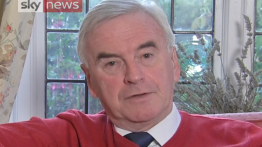
In recent months, there has been speculation that John McDonnell has leadership ambitions – and a rift has formed between the shadow chancellor and his one-time comrade Jeremy Corbyn. So, it won't have gone unnoticed by the Leader's Office that McDonnell today embarked on a charm offensive of the MSM – also know as the Parliamentary Press Gallery. Speaking at a Press Gallery lunch, the socialist politician told hacks that he had decided to address lunch after his local priest suggested he needed to 'soften' his image: 'He persuaded me to do this. He said you need to soften your image. So do Mumsnet and do this…. I’m trying to soften my image.' The republican shadow chancellor even joined in on a toast to the Queen at the start of the lunch.

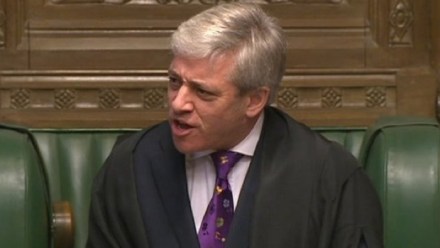
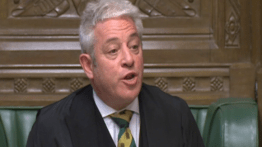
John Bercow finally delivered a Speaker’s masterclass at PMQs

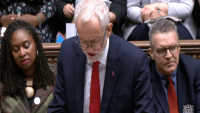
A strange PMQs. Usually the session is dominated by honking throats and empurpled faces. Today there were interesting facts and useful opinions. Amazing! An expertly briefed Jeremy Corbyn put Theresa May on the spot by noting that she’d omitted to say ‘Chequers’ in her conference speech or during recent performances in parliament. So is it dead? No, she said. And the question forced her to mention her orphaned love-child by its baptismal name – ‘the Chequers plan’ – for the first time in weeks. Next, a financial shock. Corbyn asked her to confirm Philip Hammond's warning that quitting without a deal will still land us with a divorce bill of 36 billion smackers. May hedged, but didn’t deny it. Two strikes against her.

Corbyn pinpoints May’s Brexit weak spot

The most testing half an hour of Theresa May’s day won’t be PMQs. Instead it’ll come this evening when she addresses EU leaders on Brexit. Jeremy Corbyn did, though, go on Brexit. The Labour leader rightly identified the December joint report, which Theresa May agreed to, as her biggest area of weakness. Much of what May now says is unacceptable when it comes to Northern Ireland flows from that document. But, as is so often the case, his questioning wasn’t forensic enough. He didn’t pin the Prime Minister down or follow up on her answers. This was a fairly low-key session of PMQs. John Bercow spoke less than usual, perhaps a product of the controversy following the Cox report.

Theresa May’s Mufasa becomes a problem for Downing Street

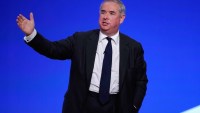
Has Theresa May's Mufasa just transformed into No 10's most troublesome minister? Geoffrey Cox – the Attorney General – shot to the public consciousness this month thanks to his star turn as the warm up act for May at Conservative party conference. The seasoned QC gave a barn-storming speech (which drew Lion King comparisons) calling for his fellow Brexiteers to get behind May and prepare to compromise in their quest for a good deal for the UK. As regular Coffee House readers will be aware, this was the second time Cox had thrown May a lifeline. Prior to his appointment to the Cabinet, the Conservative MP demonstrated his loyalty to Theresa May at a difficult 1922 committee after Boris Johnson had resigned over Chequers by defending the Prime Minister’s plans.

Roll call of shame: the Labour MPs backing Bercow

Labour MPs like to see themselves on the front line when it comes to protecting women's rights and creating safe workplaces for everyone. In fact, the slightest sign of impropriety in the Conservative Party or society at large is usually enough for them to call for sackings and public apologies. So you would expect after an impartial report said that Speaker John Bercow would not be able to tackle the House's huge bullying and harassment problem - and hinted that he should be removed, the Labour benches would be the first to call for him to go. Apparently not. It appears that when you have a Speaker who is popular with (and helpful to) the Opposition, the usual rules do not apply. Instead, Labour MPs seem to have come out in favour of Bercow.

How will Theresa May solve her backstop conundrum?

I've been asking officials and ministers for the prime minister's cunning plan to solve the seemingly impossible Brexit puzzle - of proving to her Brexiters that the Northern Ireland backstop plan would be temporary while avoiding any specified fixed termination date (because a backstop with a fixed termination date cannot, by definition, be a backstop; to mix metaphors, it would be a cliff edge). Here is what I've been told: 'The backstop cannot be limited by a fixed date' said a member of the government (telling you and me what the EU insists upon, but what Tory Brexiter MPs see as heresy). 'But it might be capable of limitation by reference to a formula or a test to establish redundancy.' Hmmm. A formula. Intriguing.

Margaret Beckett puts her foot in it

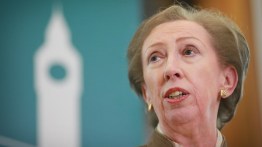
It's been a curious day in Parliament after Labour MPs en masse came to John Bercow's defence amid a damning report into bullying in Parliament. Despite the report concluding that the Speaker is among those who should consider their position, numerous Labour MPs have said that he should stay in place. It seems that treating employees well pales in comparison to having a chair sympathetic to your party's Brexit opposition. The majority of Labour MPs (see Steerpike's full roll call of shame) have been vague when it comes to their real intentions. However, in an interview with the BBC, Margaret Beckett has broken rank and offered an honest explanation as to why she and her colleagues want Bercow to stay in place: Brexit – which apparently 'trumps' bullying.

John Bercow is avoiding taking responsibility with his ‘resignation’ plan

John Bercow has told friends he is to step down as Speaker, according to the BBC. This follows Dame Laura Cox’s report into bullying and sexual harassment of House of Commons staff which says the existing senior leadership team in the Commons - including the Speaker - are probably incapable of changing the current ‘toxic culture’. But this is not Bercow taking responsibility. In fact, he isn’t even announcing anything new. He will retire next June, which has been the plan since May of this year. James reported this in the Sun at the time, and it seems similar ‘friends of the Speaker’ have been speaking to the BBC again.

The problem with hate crime | 16 October 2018

It always amazes me that people think it is normal and acceptable to have hate-crime legislation. To have laws which allow for the harsher punishment of people who entertain prejudiced thoughts while committing an offence. To have it written into the actual statute books that the man who punches a Buddhist because he hates Buddhism can be punished more severely than the man who punches a Buddhist because he hates that individual Buddhist for some reason. When are we going to twig that this represents the punishment of thought, of ideology, of belief (warped belief, but still)? I don’t like that Britain has become a country in which people, especially the political class, think it is okay for the state to punish individuals for what they think.

Labour chooses party political interest over tackling Commons bullying

Why has Labour decided to give John Bercow at least a stay of execution as Speaker? Emily Thornberry was asked about whether Bercow should go following Dame Laura Cox's damning report on bullying and harassment in the House of Commons, and argued that she shouldn't go. She told Sky News: 'I think this is absolutely not the time to be changing Speaker. We don't know for example with regard to Brexit as to what is going to happen, whether there's going to be technically an amendable motion or not, whether it'll be the Speaker's discretion as to whether it is. We do need to have all hands to the deck at the moment.' You have to give Thornberry some credit for being totally honest about Labour's motivation here.

Philip Hammond must not use rising wages as an excuse for hiking taxes

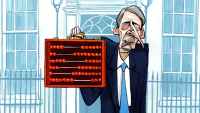
In two weeks’ time, Philip Hammond is expected to declare an ‘end to austerity’. Today’s figures on wage growth are a reminder of why he needs to tread extremely carefully on this. What he will mean is that austerity is over for the public finances – he is confident enough to start increasing government spending again. Many individuals and families, on the other hand, remain deep in personal austerity. There is very little room for tax rises without making people feel poorer. News that wages are growing at their highest rate – 3.1 per cent – since the economic crash of 2008/09 is, on the face of it, a cause for celebration.

The euro is the source of Macron’s troubles

A new interior minister. A new agriculture and culture minister. There wasn’t, despite some speculation, a new prime minister, but there will be lots of new fresh faces around the cabinet table. France’s dynamic young president Emmanuel Macron has finally re-launched his government after a wave of resignations in a bid to kick-start phase two of his term of office, restore some order to an increasingly chaotic administration, and, probably not co-incidentally, to rescue his tumbling poll ratings. The trouble is, his real problem is not the team around him. Nor is it his style, or resistance to his reforms, although both might cause controversy. In fact, it is becoming painfully obvious that France’s real problem is the euro.

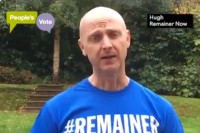
Revealed: the truth about the People’s Vote’s Leave voter

Last week, Mr S pointed out that many (possibly all) of the celebrities who featured on a People’s Vote video pushing for a second Brexit referendum, had in fact not changed their minds’ about Brexit, but voted Remain all along. And it seems as though Mr Steerpike’s article has touched a nerve. In order to prove that they are not solely made up of malcontent Remainers, the People’s Vote released another video this morning, casting a light on those who had voted Leave in 2016 and have now switched sides.

MPs from across the House turn on Theresa May

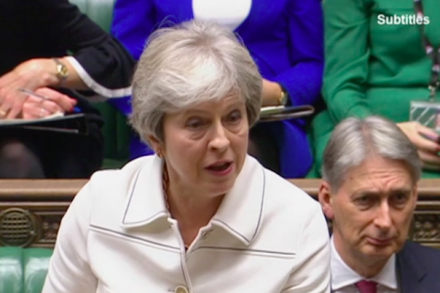
In the Prime Minister's statement to the House, Theresa May did her best to insist that despite an impasse in the Brexit negotiations it was business as normal. However, for all May's claims that the differences between the UK and the EU were solvable, the hostile questions that followed from MPs showed just how hard it would be to get any deal through Parliament. Jeremy Corbyn's attempts to say that the government's 'Groundhog Day' Brexit plans would fail Labour's six Brexit tests were met with laughter and derision. The Leader of the Opposition's shouty performance gave the beleaguered Prime Minister little reason for worry. However, the questions from the backbenchers did.

Crisis, what crisis? Theresa May keeps calm and carries on

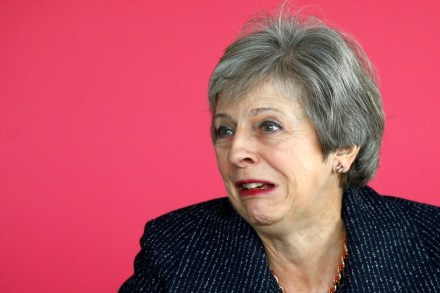
With the government on the brink of a full blown crisis, there was speculation that Theresa May would use today's Brexit statement to the House to turn her ire on Brussels. In the end it wasn't to be and the Prime Minister adopted a conciliatory tone – praising both sides – as she did her best to insist that it was business as normal. After Dominic Raab's fruitless trip to Brussels marked an impasse in the Brexit negotiations, the Prime Minister insisted that she did not believe the UK and the EU were actually so 'far apart' on the remaining issues.