Politics

Read about the latest political news, views and analysis

European Research Group descends into hugging fiesta as members insist they won’t back May’s deal

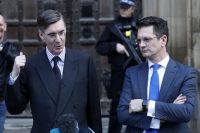
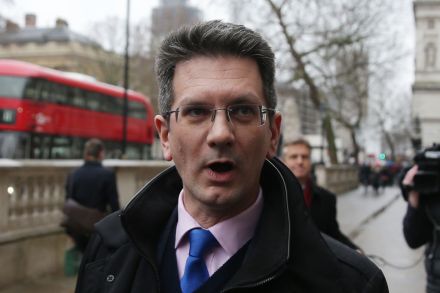
Despite a number of MPs announcing that they will back Theresa May's Brexit now that she has said she will leave within weeks of it passing, senior members of the European Research Group have come out fighting this evening to insist the deal still doesn't have the votes. Steve Baker received what one source described as an 'enormous standing ovation'. The source said: 'His voice was cracking with emotion, so much so that at the end he was hugged by Jacob [Rees-Mogg] and others at the top table. We are not a hugging group.' Baker's speech included the following lines: 'What is our liberty for if not to govern ourselves?' 'Like all of you I have wrestled with my conscience about what to do.' 'I could tear this place down and bulldoze it into the river.
Boris backs May’s deal – who is next?

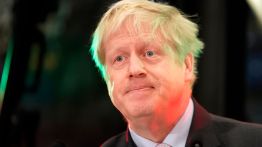
Theresa May’s pledge to go before the second stage of the Brexit negotiation if her deal passes, is already reaping some rewards. Boris Johnson has told a meeting of the ERG that he is now backing the deal. His argument is that what is going on in Parliament means there is a real chance of losing Brexit and that a change of personnel will lead to a change of policy in stage two. This addresses his concern that Theresa May would interpret the withdrawal agreement passing as a license to go and negotiate a Chequers-style agreement. Boris Johnson isn’t the only big beast shifting tonight. Iain Duncan Smith, who played a crucial role in persuading May to make this offer, has also said he will now back it. Charlie Elphicke, the secretary of the ERG, has also swung in.

Theresa May has played her last card: if her deal passes, she’ll go

Theresa May has played her last card in her attempt to get her Brexit deal through. She has told Tory MPs that if it passes, she’ll go and let someone else do phase two of the negotiations. In this scenario, a new Prime Minister would be in place by the autumn. I’m told that no Tory MP in the room asked May for more specificity about her departure date. Some might have preferred a named date, but after the meeting I bumped into a couple of ERG members who voted against the deal last time who said they would now back it. Their logic is that a change in personnel will lead to a change in policy ahead of the trade talks and so makes the deal more acceptable. Number 10 desperately needs this pledge to bring over most of the Brexit rebels.

Theresa May: I’ll quit when Brexit is delivered

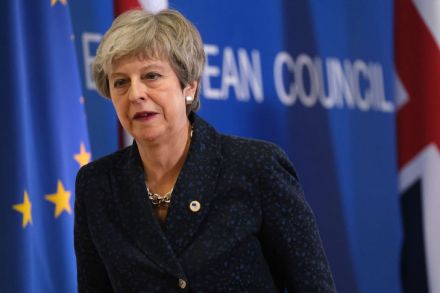
Theresa May has said she will step down once Brexit has happened. Speaking to Tory MPs, the Prime Minister said she would not remain in post for the next phase of negotiations with the European Union. May told a meeting of the 1922 committee this evening: 'I am prepared to leave this job earlier than I intended in order to secure a smooth and orderly Brexit'. But the PM stopped short of naming a date for her departure. May had previously said that she would not lead the party into the next general election. The latest announcement on her future is an attempt to win over rebel Tory MPs into backing her Brexit deal. Here is what May told MPs: “This has been a testing time for our country and our party. We’re nearly there.

If May promises to go, will it be enough to win over Tory rebels?

Theresa May goes to see the 1922 Committee of Tory MPs at 5pm this evening. Speculation is rife that she will use the meeting to announce a timetable for her departure, though there’s no official line from Number 10 on this. I understand that Tory switchers are being told that Theresa May will go if the withdrawal agreement bill gets Royal assent, which would have to be by May 22nd. This would, obviously, require meaningful vote 3 to pass – though, as Katy says, John Bercow is not keen on the vote happening at all. If May does set out a timetable, then I suspect a good number of Tory Brexit rebels will move into the government column. Even without it, there are already some coming over.

A second referendum is a big risk but it’s the only solution

You would need a heart of stone not to laugh at the predicament in which Jacob Rees-Mogg and his fellow travellers in the European Research Group now find themselves. Happily I am not so encumbered. Having spent months decrying the withdrawal agreement negotiated with the European Union the Moggists now find themselves forced to think about backing it for fear nanny may otherwise bring something worse to the table.  Well, other than anyone capable of observing the facts of Brexit life, who could have predicted this? Who could have recognised that, from the perspective of the Brexiteers themselves, half a loaf is better than no bread at all?

John Bercow makes life difficult for the government, again

Are we looking at a case of déjà vu for Meaningful Vote 3 this week? It's not just that Theresa May is currently on course for defeat (even with a string of Eurosceptics switching to back the deal the Prime Minister is short of votes). It also looks as though the government may not even be allowed to put the deal to a vote this week. Last week, John Bercow threw a spanner in the works by announcing that he would not permit a Meaningful Vote 3 unless the deal underwent a substantial change. No. 10 hoped to bring back the deal this Friday for a third vote – with a paving motion being mooted as a way around the problem. However, this afternoon the House of Commons speaker issued a warning to those behind such a move.

Watch: Jacob Rees-Mogg lays into Nick Boles

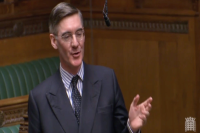
For the first time in living memory, MPs seized control of the parliamentary timetable today, in order to hold a series of indicative votes to work out parliament's preferred Brexit outcome. As expected, the constitutional upheaval precipitated by Oliver Letwin has provoked a fair amount of controversy in the House of Commons, with MPs opposing the move pointing out that if the Letwinites were not happy with the way the government was handling Brexit, they ought to  trigger a no-confidence vote in the Prime Minister. But the debate turned into something resembling a public school squabble this afternoon when Tory MPs Jacob Rees-Mogg and Nick Boles squared off in the Chamber.

Don’t call Corbynistas ‘cultural Marxists’

Suella Braverman, the Conservative MP for Fareham, said yesterday that the radical left is increasingly hostile to open debate and is now obsessed with ‘snuffing out’ freedom of speech. And how did the radical left respond to her comments? By trying to snuff out her freedom of speech. It was almost too perfect: a politician says lefties are easily offended and determined to shut down opinions they don’t like, and lefties respond by stamping their feet and saying, ‘I’m offended! Shut her down!’ Self-awareness isn’t the new left’s strong suit.

Theresa May’s Brexit deal is heading for a third defeat

Here is the measure of today's events in Parliament: probably the least important question is whether the PM names her own departure date when she sees a rowdy meeting of Tory MPs at 5pm under the umbrella of the 1922 Committee. This is not to trivialise whether or not she confirms she would stand down on May 22nd or shortly afterwards, subject to her Brexit deal being ratified later this week. If she conveys in any way when she's going, and her colleagues have no idea whether or not she will, that's huge. But every Tory MP knows she is a short-dated Prime Minister. Whatever Theresa May says today, none of her MPs expect the leadership election that would select her successor to be held later than the summer.

The shame of Jacob Rees-Mogg | 27 March 2019

Until this morning Jacob Rees-Mogg had had a remarkable Brexit. From being an obscure backbencher he had risen, without any formal position, to being just about the most powerful figure in the Conservative party after the Prime Minister. He controlled a party within a party, influencing the votes of seventy or so MPs. He became the most lucid of all MPs on Brexit, speaking with a logic and clarity which disarmed his opponents. He introduced a term to the debate – vassalage – which identified perfectly the weakness of Theresa May’s deal, and emphasised how the EU had successfully driven the Prime Minister into a corner. But this morning, all that has gone.

This is MPs’ chance to reinvigorate democracy. Will they take it?

MPs are rather bewildered today. It's not just that some of them are trying to understand the intricacies of the Labour Party whipping operation, with frontbenchers saying one thing in broadcast interviews, and the whips saying quite another in private conversations. It's also that parliamentarians are having to decide what it is they actually want from Brexit. This is a significant shift for all of them, whether they were elected two decades ago or in the most recent general election: MPs' job is to decide whether or not to let legislation written by the government of the day pass unamended. Now, rather than simply rejecting a bill, or making changes to its detail rather than the overarching principle, they are having to choose from a long list of options.

The ERG are Remain’s useful idiots

Watching SW1 these days reminds me of that scene in Citizen Kane when Boss Jim Gettys confronts Orson Welles (Kane): Gettys: ‘You’re making a bigger fool of yourself than I thought you would Mr Kane…With anybody else I’d say what’s going to happen to you would be a lesson to you, only you’re gonna need more than one lesson — and you’re gonna get more than one lesson.’ Kane: ‘… I’m gonna send you to Sing Sing Gettys, Siiinngg Siiiiinnnnngggggg…’ These guys didn’t learn from the 2004 referendum (on a North East regional assembly) before 2016.

Why Theresa May can’t ignore the result of the indicative votes

This matters. I am told that the cabinet secretary Mark Sedwill and the attorney general Geoffrey Cox informed Cabinet that if at the end of the Letwin process MPs pass a motion mandating the PM to pursue a new route through the Brexit mess - perhaps a referendum, or membership of the customs union, or some other softer future relationship with the EU - the PM and government would be in breach of the ministerial code and the law if they fail to follow MP's instructions. Or to put it another way, the PM would be obliged to endeavour to negotiate with the EU the revealed will of MPs, even if that revealed will involved a Brexit delay that requires the UK to participate in May's European parliamentary elections, or is at odds with the Tories' manifesto.

Jacob Rees-Mogg reluctantly backs May’s deal – who will follow?

After the government suffered another defeat last night, MPs will seize control of the Commons and hold votes on various Brexit options on Wednesday. This means that by mid-week there could – in theory – be a majority for a different form of Brexit than May's deal. The two options seen as likely to attract the most support involve a permanent customs union or a Norway-style relationship with the EU. Government ministers have been out on the airwaves today suggesting that this is further proof Brexit will only be softened further if May's deal is voted down for a third time. It's a warning we've heard before but there are signs that it is beginning to yield results.

A snap election simply cannot happen – and yet it might | 26 March 2019

Here are the reasons why there must be and cannot be a general election. First, the drivers of a general election: 1) Tomorrow, MPs will start the process of identifying, via so-called indicative votes, a route through the Brexit mess that a majority of them can back. 2) This process is likely to continue next Monday, when a range of Brexit or no-Brexit options should be whittled down to one. 3) There will then be a vote, maybe the following day, compelling the prime minister to negotiate with Brussels whatever MPs have decided. It is too early to say what option MPs will coalesce around. And maybe they are too fractious and divided to coalesce around any practical solution.

Ed Vaizey splits the vote on Letwin’s amendment

After the chaos in the voting lobbies two weeks ago, when ministers claimed to not know they’d rebelled against the government, the Conservative whips were taking no chances ahead of yesterday’s crunch vote. MPs were warned early on which motions they should support, and as soon as Oliver Letwin’s amendment was passed, a quick-fire email whipped round reminding Tories of their responsibilities. But even if the whips were on top of things this time, it appears that some MPs were still struggling to keep up. When it came to the vote on Letwin's amendment, it seems that backbencher Ed Vaizey intended to rebel against the government, but accidentally went through the wrong voting lobby and ended up supporting their motion anyway.