Politics

Read about the latest political news, views and analysis

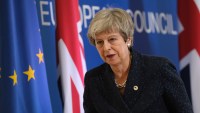
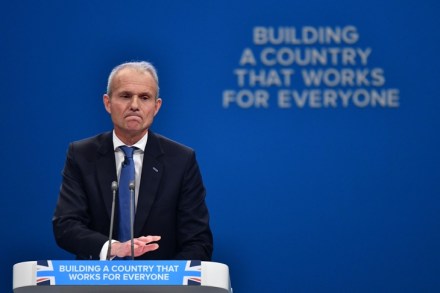
Cabinet coup? Tory MPs look to Gove and Lidington to replace May

Will Theresa May make it to the end of the week? It's a question that's been asked before of the Prime Minister but this time the situation is more serious. After a disastrous few days in which May lost the support of her whips, Remain MPs and Brexiteers, the Sunday papers report that a Cabinet coup is underway. Backbench MPs are publicly taking to Twitter to say the Prime Minister's time is up – while a number of ministers are preparing to confront her on Monday. Given that ministers have a tendency to exhibit more bravery in anonymous Sunday paper briefings than real life meetings, it's not a definite that they will follow through on their threats. However, it's increasingly difficult to see a way through for the Prime Minister.
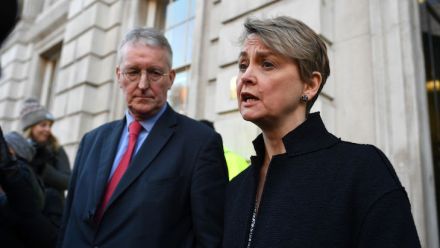
Revealed: No. 10 leak shows how May could delay Brexit without Parliament’s approval

Ever since MPs first voted to trigger Article 50 everyone has been told that Britain, by law, will be leaving the EU on 29 March. And if that date was ever to change, then Parliament would have to vote for it to change. That's the British constitution which can be summed up in eight words: 'What the Queen-in-Parliament enacts is law.' As the Supreme Court debacle reminded us, only Parliament can change laws that Parliament makes.  So unless Parliament can approve a new Brexit plan, then we leave on Friday next week. Only this week it all got a bit complicated. After the Prime Minister sought an Article 50 extension in Brussels this week, EU leaders offered her two options: 1. For Article 50 to be extended until May 22 on the condition May passes her deal 2.

The one way to give MV3 a chance of passing

At the moment, the Brexit deal isn’t going to pass. As I say in The Sun this morning, getting it through was always going to be tough, but the errors that Mrs May has made this week have made it even more difficult. As one Secretary of State puts it, ‘She would have been much better off spending three days in bed.’ By putting no deal back on the table, she encouraged the ERG—the Brexit hardliners in her own party—to believe that voting against her deal would get them what they want. Her speech on Wednesday night criticising MPs was also ill-judged, given that they are who she needs to win over. It was particularly mistaken given that May had turned down an invitation to address her own MPs that evening.

The Tories have squandered Brexit – they must not waste the extension too

For many people, next Friday was supposed to be a celebration. Boris Johnson spoke about an ‘independence day’ marking the beginning of a new era of national self-confidence. But as we approach 29 March, not even ardent Brexiteers can claim that there is anything to celebrate. Theresa May has been reduced to asking, or rather begging, the EU for an extension to Article 50 — something that the EU has said it will grant only if Britain can provide a good reason for needing the extra time. So far, the Prime Minister has not provided one, apart from the prolonging of every-one’s agony. When parliament voted to enact Article 50 two years ago, the challenge seemed daunting but perfectly possible.

The problem with Westminster is that politicians don’t do their jobs

The trouble with Mr Speaker, even when he makes the right decision, is his motives. Fame is the spur and so is his love of hurting the Conservative party which nurtured him. However natural these feelings, they are completely wrong for the Speakership. The occupant of the chair is supposed to be a pillar of the constitution, not its talking gargoyle. A sad feature of the Brexit story has been how so many people with important official roles have not seemed to understand or, in some cases, even to care, what those roles entail. The Chancellor of the Exchequer and the Governor of the Bank of England are supposed to assist the British economy, not invest in its collapse.

The Spectator Podcast: is Brexit a national humiliation?

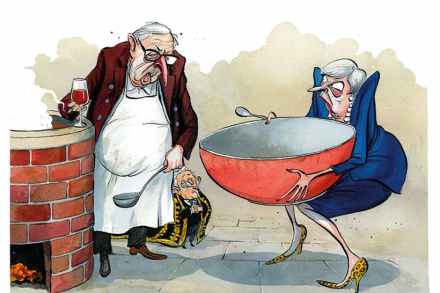
This week opened with the cautious optimism of a third meaningful vote passing, and ends, as our cover depicts, with Theresa May begging the EU for an extension. After John Bercow’s ruling that May’s Brexit deal cannot be voted on a third time, unless with ‘substantive changes’, the chances of May passing her deal before March 29 seemed further than ever. Now, this week has shown that Brexit is dictated at home by warring factions in the Commons, and dictated abroad by the EU. Even though the EU has given May a third chance at her deal, these past weeks lay bare the government’s inability to run the government, and Brexit is on the verge of being taken over by the Commons. Has May been reduced to nothing more than the semblance of a leader?

Theresa May’s third meaningful vote might now be cancelled

All the talk among Cabinet ministers - who as usual in Theresa May’s government know next-to-nothing about what the PM is actually going to do - is that the bloomin’ meaningful vote won’t be held next week after all. "The DUP don’t look as though they are coming on board," said one. "It looks as though she’ll lose by a bit more than last time," said another. "Why would she do that to herself?" If they are right and she does not bring her Brexit deal back for ratification by MPs, then dead too (probably) is the idea she’ll imminently announce the date of her resignation as PM.

The Renew party fails to build bridges in Newport, Wales

In these divided times the politics of centrist parties is all about building connections and crossing divides, so what better flyer design for a by-election in Newport, Wales than a local bridge? Unfortunately for the anti-Brexit Renew party, the bridge they chose for their election flyer was the Claiborne Pell Bridge in Newport... Rhode Island, USA: Realising their mistake, the flyer was quickly corrected by Renew, but it's hardly a great look for a party trying to shake off its middle-class, London-centric image. The party are trying to win a seat in Newport West, which voted leave, and is holding a by-election following the death of Paul Flynn.

The EU has no appetite for another Brexit delay

Now that I've had the opportunity to review the extraordinary and historic events that took place here in Brussels and talk to people involved in the talks, I have a new take on what happened and why. The big drivers for why the EU 27 leaders came up with their new formula for determining when and whether we Brexit are: EU leaders had - and have - zero confidence that the Prime Minister will win her meaningful vote next week, and they quite rationally decided it was unreasonable for them to determine in conditions of extreme pressure in seven days whether we we are falling out at 11pm on the Friday.

Not even God knows what happens to Brexit now

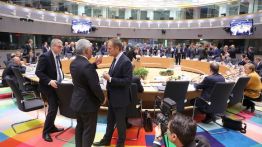
After yesterday’s historic negotiations between EU leaders here in Brussels – while Theresa May was out of the room – here is what we now know about Brexit. We are not leaving the EU on 29 March 2019, the Brexit day that was supposedly set in stone. We may yet leave on 22 May this year, but only if next week MPs finally – at a third time of asking, and probably on Tuesday – vote for Theresa May’s widely derided Brexit plan. We could leave without a Brexit deal on the new Brexit day, 12 April – if the PM’s vote is lost.

It’s getting harder for Theresa May to pass her deal next week

After eight hours of talks between EU leaders, Theresa May has been granted an Article 50 extension. If the Prime Minister can pass her deal next week, there will be technical extension until 22 May. If the deal fails to pass, Article 50 will be extended only until 12 April so that the UK can set out its next steps – and potentially apply for a longer extension. This offer appears to give backbenchers time to try and – once again – seize control of the process if May fails to pass her deal. The Prime Minister's problem is when it comes to meeting the first condition of the 22 May offer, she is going backwards rather than forwards.

The EU has just given parliament more time to take control of Brexit

Last night, the EU27 unanimously rejected Theresa May's request for a June Brexit extension and told her 22 May at the latest - or 12 April if she couldn't pass her deal). This pushes the cliff edge back by just a little, and makes nothing easier for her. If her deal doesn't pass, she would have to choose a no deal, or a long extension and agree to hold European parliament elections. But that's assuming that she will still be in control of the process at that point. Crucially, the extension gives time for MPs to take control of Brexit in the next three weeks. If her deal is rejected (as still looks likely) then parliament will have plenty opportunity to state its terms: for example, the Customs Union that Labour seeks.

The Kay Burley Edition

18 min listen

Kay Burley is a Sky News founding member, host of The Kay Burley Show, and holds the record for hosting more hours of live television than any other news presenter. Kay tells Katy about how she 'knocked the rough edges' off her accent, her love for Jane Fonda, and why the BBC couldn't afford her these days. Presented by Katy Balls.

Agony prolonged

For many people, next Friday was supposed to be a celebration. Boris Johnson spoke about an ‘independence day’ marking the beginning of a new era of national self-confidence. But as we approach 29 March, not even ardent Brexiteers can claim that there is anything to celebrate. Theresa May has been reduced to asking, or rather begging, the EU for an extension to Article 50 — something that the EU has said it will grant only if Britain can provide a good reason for needing the extra time. So far, the Prime Minister has not provided one, apart from the prolonging of every-one’s agony. When parliament voted to enact Article 50 two years ago, the challenge seemed daunting but perfectly possible.

The Spectator’s Notes | 21 March 2019

Angela Merkel says disdainfully, ‘I admit I was not on top of the British parliament’s 17th-century procedural rules.’ Her implication is that they are absurdly out of date. Yet the old rule invoked by Mr Speaker Bercow is surely one that can hold up its head in the 21st century. It is that the executive should not keep putting the same question to parliament until it gets its way. Therefore Mrs May cannot just keep reheating her terrible withdrawal deal. If there were no such rule, there would be no end to the bullying. Isn’t there something quite impressive about the fact that we have an elected assembly which had already thought of this more than 400 years ago? Habeas corpus is a pretty old idea too, and jury trial is even older. Does Mrs Merkel mock them?

Speaker-speak

Much has recently been written about the incumbent Commons Speaker, from (vigorously denied) allegations of bullying to (less vigorously denied) suggestions of Brexit-foxing chicanery. And to call John Bercow a ‘Marmite politician’ is to state the obvious. A little less obvious is his idiosyncratic style of address — the bizarre collision of a Dickensian clerk with aspirations to eloquence, a stern headmaster out of P. G. Wodehouse, and a contestant on Just a Minute desperate not to hesitate, deviate or repeat. Some of the Speaker’s vocal fireworks are plain to hear.

Boris Johnson’s fox-hunting enthusiast donor

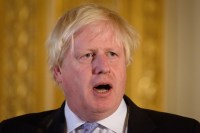
With Theresa May's premiership on the ropes, there's an expectation of a Tory leadership contest later this year. It follows that Conservative heavyweights are currently working their hardest to lay the groundwork for a future campaign. In that vein, the latest register of interests shows that rivals Boris Johnson, Dominic Raab, Amber Rudd and Michael Gove are among the Tories to get recent donations which could prove helpful in the months to come. However, there is one donation that Mr S suspects could come back to haunt its recipient. Boris Johnson has been given a donation of £16,000 by Johan Christofferson. Christofferson is a hedge fund manager with a history of fox hunting – as a one time master of a fox hunt in the Isle of Wight.