Politics

Read about the latest political news, views and analysis

Is breaking the Conservative party the way to save it?

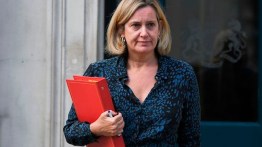
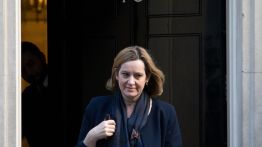
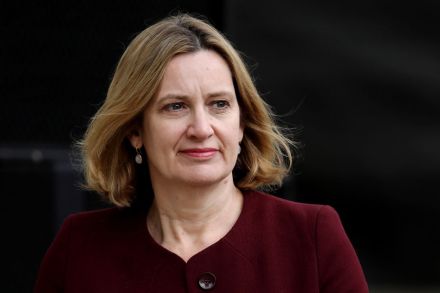
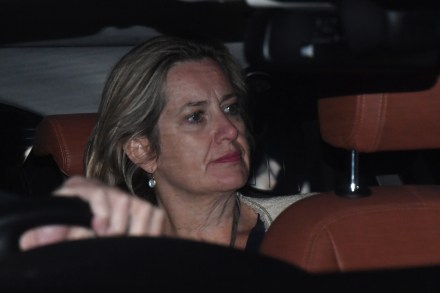
Here is the measure of the madness. An influential Cabinet minister Amber Rudd has resigned in a blaze of recriminations, citing the 'assault on democracy and decency' of Johnson’s expulsion last week of 21 Tories who oppose a no-deal Brexit. But it will change nothing. A lamed government without a majority won’t fall because the opposition does not want it to fall yet - not till after the EU summit of 17-18 October, such that their new law, that seeks to delay Brexit, has a chance to work its magic or its evil (up to you whether you think it’s white or black). Rudd has been replaced at Work and Pensions by Therese Coffey, a personable minister apparently less frightened by a no-deal withdrawal from the EU.
James O’Brien and the Carl Beech witch-hunt

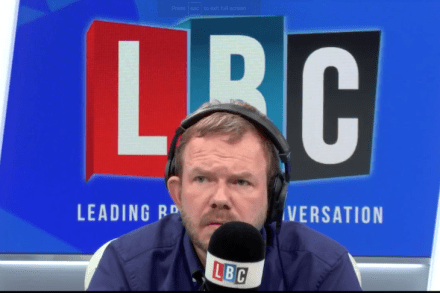
There is an awful lot going on at present. But there is something that happened recently that I should like to return to. Not least because I get the sense that so many people involved would like everyone else to forget about it. I refer to the appalling case of Carl Beech – the convicted liar, fraudster and paedophile who made unfounded claims against numerous public figures and was sentenced in July to 18 years in prison. Beech’s crimes were not harmless. They included the most disgusting lies made against two D-Day veterans. Heroes of this country. The wife of one of those men – Lord Bramall – went to her grave without knowing that her husband would be fully vindicated and his accuser imprisoned.

Amber Rudd: why I quit

From her resignation letter This has been a difficult decision. I joined your Cabinet in good faith; accepting that ‘no deal’ had to be on the table, because it was the means by which we would have the best chance of achieving a new deal to leave on October 31. However, I no longer believe leaving with a deal is the Government’s main objective. The Government is expending a lot of energy to prepare for ‘no deal’ but I have not seen the same level of intensity go into our talks with the European Union who have asked us to present alternative arrangements to the Irish backstop. The updates I have been grateful to receive from your office have not, regretfully, provided me with the reassurances I sought.

Amber Rudd quits Cabinet – and the Tory party

Amber Rudd has quit the Cabinet and resigned the Tory whip. Rudd’s departure deepens the split in the Tory party and will be a particular blow to Boris Johnson; the pair have always got on well personally despite their very different views on Brexit. What will worry Number 10 is that Rudd might start something of a domino effect. There are, as I said in the Sun this morning, several Cabinet Ministers who are worried about the government’s direction and irritated at not being more involved in Number 10’s decision making. I hear that others might follow her out of the door in the next 48 hours, as we discuss in the latest podcast (below) Rudd backed Remain in the referendum and Jeremy Hunt for the Tory leadership.

Tories pushing for Boris Johnson v Jeremy Corbyn TV debates

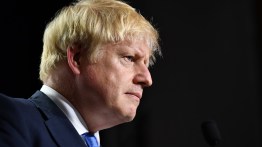
Boris Johnson’s best route to a majority is turning the election into a question of whether you want him or Jeremy Corbyn as Prime Minister, I say in The Sun this morning. Polling shows that 43% of voters regard a Corbyn premiership as the worst outcome to the current crisis, compared to 35% for no deal. If Boris Johnson can get the vast majority of that 43% to vote Tory, then he’ll get the majority he so desperately needs. This desire to frame the election as a choice between Boris Johnson and Theresa May means that he is taking a very different approach to TV debates than Theresa May did. I understand that negotiations have already begun with the broadcasters and the Tories have made clear that they’ll do as many head to heads with Jeremy Corbyn as possible.

The Amber Rudd Edition

33 min listen

Katy talks to Amber Rudd, Secretary of State for Work and Pensions, about walking in Theresa May's shoes, No 10's SpAd jihad, and the government's whip withdrawal for the 21 Tory rebels this week.Presented by Katy Balls.

Will Italy’s new coalition last?

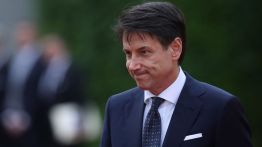
Italian politics is like a game of musical chairs. One government resigns or collapses, another takes its place, until that government is either rendered irrelevant a year later or voted out during the next election. Italy has had 68 governments in the last 74 years and 10 prime ministers in the last 20. Italians will get another prime minister sworn in relatively soon, and the new one is the same as the old. Guissspe Conte, a quiet law professor only 15 months ago, will stay on as Italy’s premier after surviving an attempt by his hardline interior minister Matteo Salvini to force an early election.

Labour needs to toughen up on violent crime

In January 1993 Labour’s Shadow Home Secretary Tony Blair announced a key pillar of the opposition’s future election policy in a New Statesman op-ed. He wrote that a Labour government would be ‘tough on crime and tough on the underlying causes of crime’ – a phrase that would be often repeated after he ascended to the Labour leadership in 1994. This policy was symbolic of New Labour’s third-way centrism. It focused on personal responsibility and punishing offenders, while also implementing grassroots programmes to stop the root causes of violent crime. With an election likely around the corner, the current Labour leader would do well to take a page out of Blair’s book and focus on law and order as a winnable battleground issue.

Why No. 10 should be polling ‘culture war’ issues

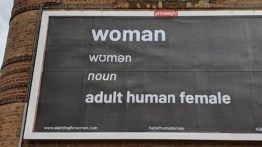
Notwithstanding this week’s excitement, millions of Brits are fed up discussing Brexit, Brexit and nothing but Brexit. They want to know when we’re going to address some other important issues. Issues like identity politics. And transgenderism. So-called 'culture war' issues. If reports are to be believed, No. 10 have been trying to find out what yer-man-on-the-street thinks about these issues ahead of an impending general election. (No. 10 denies this, of course.

We’re heading for a November election

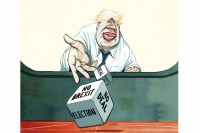
Opposition parties will again vote against a general election on Monday. The debate between leaders of Labour, SNP, Liberal Democrats, Plaid and Greens is whether to vote for an election a day or two after Queen’s Speech on October 14 or day or three after EU summit on October 17-18. Either way, it is all about making sure Boris Johnson either goes to Brussels to beg for a Brexit delay or resigns to allow a temporary government of national unity and means the general election would be in (mid to late) November. How does Johnson escape this trap?

Remainers may regret not backing an October general election

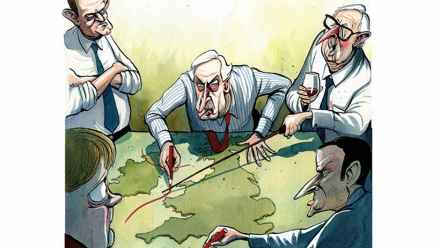
So there goes the reputation of Boris Johnson’s henchmen as cunning operators. It has been a bad week for Dominic Cummings and others in the Downing Street bunker who were widely assumed to have gamed every possibility and to have some genius strategy for delivering Brexit by 31 October, in spite of the assembled forces of Remain who are determined to stop them. Clearly, not everything has gone to plan. The Remainers have enjoyed their Battle of Marston Moor. It is Parliamentarians 1, Cavaliers 0. On Monday, a bill seeking to prevent a no-deal Brexit on 31 October will become law – and Boris has been denied his fallback: a general election. But not so fast.

Watch: Emily Thornberry’s Brexit confusion

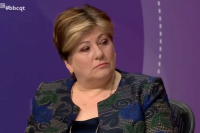
As the Labour party currently decides whether it wants to fight a general election, many observers are still trying to work out (three years after the referendum) what the party's actual Brexit policy is. Does Labour want to Remain? Does it want to fight a second referendum? And if there is a second referendum, what will the party campaign for? Happily, Labour's Shadow Foreign Secretary, Emily Thornberry was on Question Time last night to clear up any misunderstandings. Presenter Fiona Bruce began proceedings by making a valiant attempt to outline what she understood was Labour's current, official Brexit policy, before asking: 'You would go back to Europe, try and get a better deal. Have a referendum, where Remain is an option.

Will Boris Johnson be impeached?

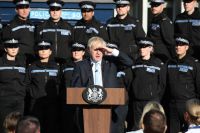
A conspicuously rattled and tired Boris Johnson – flanked surreally by the police in Wakefield – said yesterday he would 'rather be dead in a ditch' than obey the expected new law that would force him to ask the EU for a Brexit delay. Which carries only two implications. Johnson could quit as Prime Minister before the EU summit on October 17 and bequeath to some other temporary prime minister the gift of suing the EU for a Brexit delay. That could happen, but honestly I don't believe Johnson will ever voluntarily quit Downing Street. He’s waited for this moment too long.

What the opposition pact means for Boris Johnson’s path to an early election

Although Downing Street heralded Thursday the 'first day of the election campaign', Boris Johnson is yet to be able to call an election. Today Labour and other UK opposition parties have agreed not to back the Prime Minister's call for general election before the October EU summit. Explaining the decision, the SNP's Ian Blackford said they wanted to make sure the UK did not crash out in a no-deal Brexit. Ahead of the meeting, Corbyn had been under pressure from figures including Keir Starmer to hold off on an early election until after an extension has been requested on 19 October. Johnson had hoped to have an election October 15 - before the crucial EU summit meeting and thereby run a campaign about who should go to that meeting and represent the UK. In response to the news, a No.

Rory Stewart: the picture perfect politician

On Tuesday, the former Conservative MP Rory Stewart won GQ’s Politician of the Year award. It was probably the best part of the week for Stewart, who has had the Conservative whip removed and been roundly mocked after posting a series of photographs on Twitter, in which his typical grinning selfie smile disappeared when he was next to one particular individual: https://twitter.com/RoryStewartUK/status/1167046610167181312 It was then revealed that Rory shares the modern affliction of caring deeply about his online presence, clearly liking one image on his website so much that he named it ‘best-pic.jpg’.

The political pact that could save Brexit

If there is to be an election before we leave the European Union, some kind of non-aggression pact between the Tories and the Brexit party is essential. Without it, the risk is all too obvious: that pro-Brexit voters will be divided, allowing pro-Remain candidates to win, even in some constituencies where a clear majority are in favour of leaving. A case in point is Boris Johnson’s constituency. Uxbridge and South Ruislip is in the London borough of Hillingdon, where 56.37 per cent of votes cast in the 2016 referendum were for Leave. But his majority in 2017 was only 5,034, and if the Brexit party fields a candidate against him — particularly if some of the pro-Remain parties decide to stand down in favour of Labour — there’s a chance he’ll lose.

The next election will be a referendum – on Corbynism

The next general election will have been precipitated by, and will inevitably be fought over, Brexit. Yet it will also be the fiercest battle of ideas for more than a generation. Britain must choose between economic liberalism and a command economy, between a smallish state and a domineering one. This would be a crucial choice at any time, but the implications of Brexit make it more so. Jeremy Corbyn supported leaving the EU in 1975 for the same reason he can’t quite denounce Brexit now: a parliament that takes back control can be far more radical. And his Labour party has plenty of radicalism in mind. Even though Labour occupies a lowly position in the polls, Corbyn remains overwhelmingly the main challenger to Boris Johnson and his warring Conservatives.

How to deal with Brexit anger, according to the ancients

Sir Philip Pullman, tweeting that thoughts of hanging the PM came to mind after the decision to prorogue parliament, later drew back: ‘I don’t apologise for the anger I feel; only for its intemperate expression.’ The ancients were well aware that rage usually removed a man’s judgment and made him look an idiot. In his lengthy treatise on anger, defined as ‘a desire to avenge a wrong’, the Roman stoic philosopher Seneca argued against it on three grounds: it was unnecessary, learned behaviour; it did not lead to desirable conduct; and it made a man prone to violence. Take, for example, one’s reaction to wrongdoing.