Politics

Read about the latest political news, views and analysis

How to deal with Brexit anger, according to the ancients

Sir Philip Pullman, tweeting that thoughts of hanging the PM came to mind after the decision to prorogue parliament, later drew back: ‘I don’t apologise for the anger I feel; only for its intemperate expression.’ The ancients were well aware that rage usually removed a man’s judgment and made him look an idiot. In his lengthy treatise on anger, defined as ‘a desire to avenge a wrong’, the Roman stoic philosopher Seneca argued against it on three grounds: it was unnecessary, learned behaviour; it did not lead to desirable conduct; and it made a man prone to violence. Take, for example, one’s reaction to wrongdoing.
There’s nothing wrong with Jacob Rees-Mogg lying down in the Commons

If you are a journalist covering politics this year, every moment is a bad moment to take a holiday. I took a short one last week in search of grouse and arrived at Hunthill, the proud Scottish fastness of our host Henry Keswick, to find that Boris Johnson had promised to prorogue parliament. Since the party included a cabinet minister, another Member of Parliament etc, it all felt a bit like a John Buchan novel. As I watched the beaters approach us across the moor, I imagined it as the sort of scene Buchan describes so well in which the appearance of seemingly innocent sport on the hill is in fact the approach of something dangerous to the safety of the realm. The MP who, though of impeccable lineage, has unsound views on Brexit, had quietly slipped away. Was foul play afoot?

How often has a general election been held on a Monday?

A Monday poll? The government was considering a general election on 14 October — a Monday. This raised eyebrows because general elections have been held on Thursdays since 1935. There are various theories about why — that it gives an incoming PM a weekend to form a new government, that it was market day in many towns, that fewer voters would be drunk than at the weekend, that by Thursday churchgoers would have forgotten the previous Sunday’s sermon at parish communion. But there is no single reason — each PM has been free to decide. — Until 1918, general elections were held over a period of four weeks. Elections were then held on Saturday (1918), Tuesday (1931), Wednesday (1922 and 1924), and Thursday (1923 and 1929).

Parliament wants to destroy the UK’s negotiating position

For onlookers it is astonishing to see the British establishment, commentators and a majority of MPs try to scuttle the negotiating position of their own country in its most important negotiations in living memory. Admittedly Iceland, my small country, has had its own share of fifth column interventions in times of crises. Still, it is heart-breaking for a Britophile to watch a country that has been a world leader in diplomatic strategy for centuries – a country that has persevered through existential challenges and achieved incredible things – turn against its fundamental interests. How can anyone imagine, or try to convince others, that negotiating, while stating that not accepting a deal would be illegal, can result in an acceptable outcome for the UK?

Boris Johnson could be about to lose everything – or redefine British politics

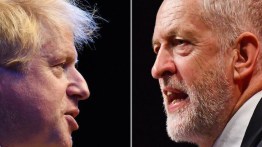
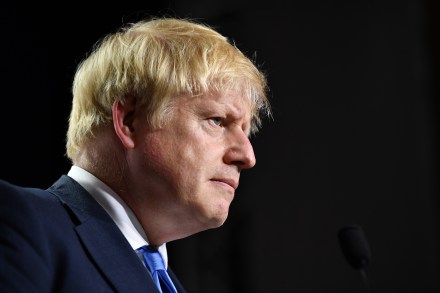
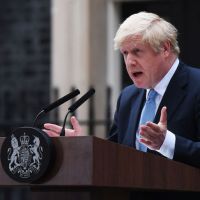
Boris Johnson has already decided on his election message: vote for me and get Brexit, vote for anyone else and get Jeremy Corbyn. He will ask voters: who can you imagine negotiating best with Brussels? Me, or Corbyn? Clear as the message may be, the Prime Minister is risking everything in this contest. He could lose it all: Brexit, his premiership, the party, the works. He could go down in history as the shortest-lived occupant of No. 10. Or he could win, take this country out of the EU, then realign and reshape British politics. As one of those intimately involved in the decision to go for an election puts it: ‘It is a massive gamble. Nobody knows how it will pan out.’ One secretary of state admits that the outcome of the election is ‘totally unknowable.

Jo Johnson takes inspiration from the Milibands

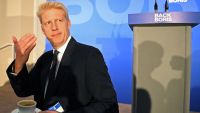
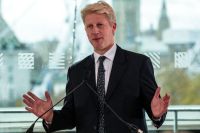
Boris Johnson was dealt a bitter blow this morning. Not only did the Prime Minister suffer his first ministerial resignation, a mere 43 days in to his premiership, but it was his own brother Jo who wielded the dagger. The former universities minister, who signed up to Boris's government in July, dramatically announced his resignation on Twitter, saying that: 'In recent weeks I’ve been torn between family loyalty and the national interest – it’s an unresolvable tension and time for others to take on my roles as MP and Minister. #overandout' But was the writing always on the wall? It certainly seems that Boris was tempting fate when he was interviewed by the Telegraph back in 2013.

What happened to the Conservative Party?

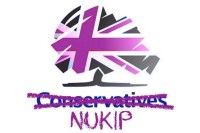
So now we know. There is no point in denying it and no advantage in wishing away plainly observable reality. The Conservative and Unionist party that exists today is not the Conservative and Unionist party of old. In spirit, and increasingly in personnel, it is now closer to Nigel Farage and the Brexit party than the traditions of the strain of One Nation Toryism Boris Johnson professes to embody. That is the obvious lesson to be drawn from the expulsion of Ken Clarke, Philip Hammond, David Gauke, Rory Stewart, Greg Clark, Nicholas Soames and the rest of the 21 Tory ‘rebels’ who voted against this already-rickety government this week. A Tory party that not only has no room for them but actively pushes them away is not a broad church, it’s closer to a cult.

Luciana Berger joins the Lib Dems

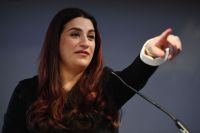
The former Labour MP Luciana Berger has announced today that she is no longer an independent in parliament and has joined the Liberal Democrats. Berger becomes the party's sixteenth MP in parliament, and is the second former Labour defector to join the Lib Dems, after Chuka Umunna made the jump this summer. In an interview with the Evening Standard revealing her decision to join the party, the Wavertree MP said that she was committed to stopping a 'catastrophic' no-deal Brexit and later said she had joined 'the strongest party to stop Brexit, fight for equality and a fairer country.

Boris Johnson suffers his first resignation from around the Cabinet table – from his brother

Boris Johnson has suffered his first resignation from around the Cabinet table – and it's from his brother Jo. Jo Johnson has announced via social media that he will be stepping down both as a minister and an MP. The Minister of State for universities and science said that in recent weeks, he had felt 'torn between family loyalty and the national interest'. 'It’s been an honour to represent Orpington for 9 years & to serve as a minister under three PMs. In recent weeks I’ve been torn between family loyalty and the national interest - it’s an unresolvable tension & time for others to take on my roles as MP & Minister.' In some ways, Johnson's appointment as a minister was surprising.

Extremists have taken over the two main parties

Both main British parties are now characterised by intolerance of dissent, leader worship and racism. You can take a historical view and see the rise of extremism as a reaction to the great crash of 2008 and the longest period of wage stagnation since the Napoleonic wars – a country that suffers the economics of the 1930s, cannot expect to escape thirties’ politics. But the peculiar hypocrisies of British public life are as much to blame as great shifts in the world economy. Britain was meant to be immune from the fanaticism that excited foreigners.

The Queen can handle coups – she’s been on the receiving end of one

Supplies of Brexit invective are now almost exhausted. While the Prime Minister is denounced for denouncing Remainers as ‘collaborators’, his denouncers denounce him as a ‘tin pot dictator’ in need of a ‘rope’ and ‘lamp-post’. Of all the bellicose hyperbole, however, it is the battle cry of ‘Stop the coup’ which is the loudest this week. There are plenty of charges which can be levelled at this government. But to apply the term ‘coup d’état’ to a trio of genuflecting members of the Privy Council asking the Queen for the umpteenth prorogation of her reign is risible.

When it comes to Brexit, everything that can be tried will always fail

It is all beginning to feel like the closing scenes of the 1980 spoof comedy film Airplane! In particular the bit where, as the stricken jet is coming in to land, someone in the control tower suggests putting on the runway lights to help a little. ‘No,’ says Captain Rex Kramer, ‘that’s just what they’ll be expecting us to do.’ The most basic explanation for the chaos in parliament is that the political divide in the House of Commons does not remotely match the political divide in the country, on Brexit or indeed on most issues, surely. But that shouldn’t stop us revelling in the multifarious paradoxes which have come as a consequence. (And don’t call me Shirley.) Take Magic Grandpa.

Boris Johnson denied election request – but snap poll remains likely

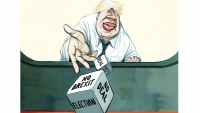
Boris Johnson has lost his third government vote – and his first bid for an early election. MPs voted against his call for an early election under the Fixed Term Parliaments Act, with Johnson failing to get two thirds of the Commons to vote for it – 298 MPs voted in favour with 56 against. On hearing the news, the Prime Minister said that Jeremy Corbyn was the first opposition leader in history to refuse a general election. Ahead of the vote, Johnson had vented that it was ‘completely impossible’ for government to function when MPs won’t back any government legislation. He said the choice the public needs to make is who should go to the EU council summit and sort out Brexit. So, is an election off the cards? Not at all. No.

Theresa May’s Brexit deal is accidentally revived

As an illustration of how chaotic things are in Parliament right now, the Commons has just accidentally revived Theresa May’s Brexit deal. An administrative problem meant the amendment tabled by Stephen Kinnock and others to bring the deal back to the Commons, in order to prevent a no-deal exit, went through. The Tories didn’t put in tellers to count the votes, which means the division was cancelled. There is, though, a chance that the government whips may have done this deliberately in order to make the bill itself toxic to MPs and therefore try to kill it off. In which case they are having to rely on chaos to get their way. Those behind the bill though say the amendment is merely an irritant that doesn’t change the bill's substance.

Ex-Tory rebels threaten to stand as Conservatives in election

Rebel ex-Tory MPs are complaining of 'unconstitutional' treatment by their party and are planning to stand at the next election as Conservatives, I have learned. The MPs who lost the whip last night when they backed a motion to take control of the Order Paper were this morning told all their constituency data had been taken away from them, and that they must remove the Conservative logo from their websites, correspondence and so on. But despite this, a number of them want to say that they are Conservatives at the election, and are preparing for a dramatic legal battle with the party.

Caroline Spelman joins the Tory rebels on anti-no-deal bill

The government’s majority this evening fell just a little more, as Caroline Spelman joined the rebels to vote in favour of legislation forcing an extension to the Brexit deadline. This latest defeat, 329 in favour of the bill and 300 against, was not a surprise in itself. But it is interesting that Spelman, who backed the government last night, has decided that she should turn against it today. However, government sources are saying that she will not lose the party whip like her colleagues who rebelled yesterday. The vote on taking control of the Order Paper last night was treated as a confidence issue, hence the round of expulsions.

The decisive battle over the date of the next election

With MPs arguing and agonising about when the general election should be, we may have hit peak parliamentary insanity. The PM wants a general election on 15 October. Tory rebels, led by Sir Oliver Letwin, and many Labour MPs, including frontbenchers, want polling day to be any time after 31 October. What is this dispute all about? It is not about whether an election is coming. After yesterday's Tory defection and mass expulsions – what one of those exiled, Sir Alistair Burt, calls a purge – Boris Johnson no longer has the numbers to govern in any meaningful sense. Paying the wages of Johnson and his team in these circumstances would be the very height of fiscal waste.

Oodles of synthetic outrage at Boris’s PMQs debut

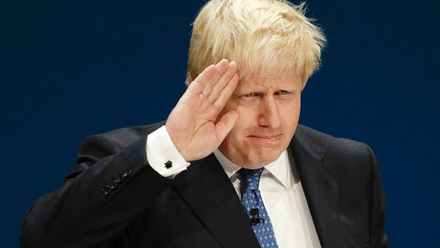
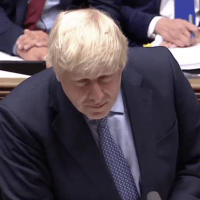
That was fun. Boris Johnson’s debut at PMQs had a bit of everything. Comedy, passion, swearing, name-calling, and oodles of synthetic outrage. Several parliamentary conventions were tested to breaking point. The PM instantly took the fight to his opponents who are conspiring to halt Brexit by passing a delaying measure later today. ‘The Surrender Bill’, he called it. He labelled Jeremy Corbyn ‘a chlorinated chicken’ who believes that Britain’s closest allies reside in Teheran and Caracas, and not in Berlin or the White House. ‘I think he’s Caracas.’ He accused Labour of inciting ‘mobs of Momentum activists to paralyse the traffic.’ He imagined hordes of black-clad rebels blocking bridges, chanting contradictory slogans.