Politics

Read about the latest political news, views and analysis

Why is everyone on Facebook so paranoid about their privacy?

There’s a line in Desperately Seeking Susan where Madonna (Susan) reads aloud the diary of Roberta, the bored housewife she has swapped places with: ‘Couldn’t sleep. Went into kitchen. Gary came in, turn off light. Gary left. Finished birthday cake.’ Then she exclaims: ‘Pages of it; it’s got to be a cover — nobody’s life could be this boring!’ A related naughty thought often comes to mind when I see my chums worrying on Facebook about The Man stealing photos of their cat wearing rabbit ears or their own preferences in caffeinated beverages. If there is a stealthy cabal of shadowy figures seeking to make puppets out of us — mere paper dolls capering powerlessly at the whim of our faceless masters!
Pericles for PM: Boris should forget Augustus and stay focused on his hero

Boris Johnson is a gung-ho classicist. He has supported the subject throughout his journalistic and political career, is a generous donor to the charity Classics for All, and has a bust of his hero Pericles in his study. Indeed, he says his reading of Pericles’s famous funeral speech (431 bc) when he was 12 or 13 had a powerful effect on him, especially Pericles’s statement that ‘Athens is called a demokratia because it runs its house in the interests not of the few but of the majority’. Last week, however, he turned into the Roman emperor Augustus to explain his sacking of 21 rebel MPs. Augustus, emerging as victor in 31 bc in the civil war against Antony and Cleopatra,  did just this, killing potential rivals and ushering in a long and peaceful reign.

Theresa May’s honours list makes me sick

The BBC featured a gay wedding on Songs of Praise recently. Of course it did. The thinking was, I assume: ‘We hate this programme and wish we could get rid of it, but there would be the usual moaning from the near-dead reactionaries. So let’s rub their noses in it, instead.’ The broadcast attracted 1,200 complaints, including one from God himself, my sources tell me. God also complained, I’m told, about the programme’s failure to include the hymn ‘Onward, Christian Soldiers’, of which He is rather fond. The BBC will not take any notice of the complaints — certainly not from God, whom the producers believe they easily outrank these days.

Britain’s political system is broken. America’s isn’t

American liberals perceive it as a jarring inconsistency: my opposition to Trump and support for Brexit. Especially outside the UK, these two phenomena are perceived as identical twin expressions of an alarming ‘populism’, whereby the animals take over the zoo. I’m one of the curiously few political voyeurs who think the American electorate’s preference for an incompetent president and the British electorate’s preference for leaving a power-hungry erstwhile trading bloc have little in common. Dizzying events in the UK this month bring out one vital distinction in relief.

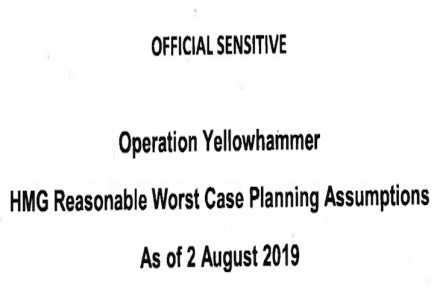
Full text: Operation Yellowhammer

On Wednesday evening, the government was forced to publish details of 'Operation Yellowhammer', the government project which is preparing the UK for a no-deal Brexit. Below is the full text of the government's 'worst case' planning assumptions in the event of no deal: When the UK ceases to be a member of the EU in October 2019 all rights and reciprocal arrangements with the EU end. The UK reverts fully to 'third country' status. The relationship between the UK and the EU as a whole is unsympathetic, with many MS [Member States] (under pressure from the Commission) unwilling to engage bilaterally and implementing protections unilaterally, though some MS may be more understanding.

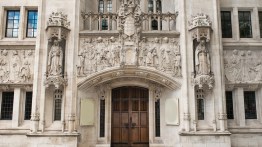
Why the Supreme Court should reverse the Scottish Court’s prorogation ruling

The Court of Session has ruled today that the Prime Minister’s advice to the Queen to prorogue Parliament, and the prorogation that followed, was unlawful and so is null and of no effect. This is a startling – and misconceived – judgment. It does not though seem itself to recall Parliament into session, if that were even possible for a court to rule. Only a summary of the Scottish Court’s reasoning has been released, with the full judgment to follow on Friday. Meanwhile the High Court in London has today released its reasons for rejecting Gina Miller and John Major’s legal challenge to prorogation.

The Court of Session: why Boris Johnson’s prorogation is unlawful

Scotland's Court of Session has ruled this morning that Boris Johnson's decision to suspend parliament for over four weeks is unlawful. The case will now be appealed in the Supreme Court on Tuesday. Those who brought the case, including the SNP's Joanna Cherry, now argue that parliament should be recalled. Below is a summary of the Court of Session's judgement: The Court of Session has ruled that the Prime Minister's advice to HM the Queen that the United Kingdom parliament should be prorogued from a day between 9 and 12 September until 14 October was unlawful because it had the purpose of stymying Parliament.

The electoral headaches facing Labour and the Tories

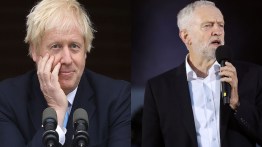
The Conservatives want the next election to be about Brexit and Boris Johnson in Number 10. Labour want the election to be about stopping no deal and issues other than Brexit like the NHS, education and the climate change crisis. In terms of how this plays out in marginal seats, both sides have headaches. So let’s look at each of these points in turn. Firstly, Boris Johnson wants a gladiatorial contest against Jeremy Corbyn for control of Number 10. Johnson leads Corbyn by 40 to 20 per cent for best Prime Minister. In response Corbyn's allies cite the revival of his leadership numbers in the 2017 election; but hoping for an improvement in the numbers isn’t as good as having a strong position to begin with.

Why Tom Watson is battling to change Labour’s Brexit policy

Why has Tom Watson given a speech about what his party leadership should do on Brexit? The party's deputy leader has urged Labour to 'unambiguously and unequivocally back Remain' and to campaign for a referendum ahead of an election. This is contrary to the current frontbench position that a referendum should contain a 'credible Leave option'. So why, given Watson sits with Jeremy Corbyn in private shadow cabinet meetings each week, has he gone public with this? The speech is a symptom of how bad relations are between Watson and the leader's office. As I wrote in the Spectator recently, the two men at the top of the party have only had two private meetings together since 2016, and memos from the deputy leader to the leader have gone without reply.

Has the Cabinet seen Boris Johnson’s legal advice on prorogation?

Has any member of Cabinet seen the full legal advice given to the Prime Minister, which persuaded Johnson proroguing or suspending parliament is lawful? Julian Smith asked for it, on the day Cabinet was bounced into agreeing prorogation. Amber Rudd asked for it subsequently. I am not aware that either got it. Instead they received a 'trust me' from Boris Johnson. This could be a problem for him and ministers because the ministerial code, amended after Chilcott Enquiry into the legality of going to war in Iraq, says all ministers have right to see full legal advice – not just summaries – on all contentious issues. Will Cabinet now get the advice after today’s Court of Session judgement?

Blow for Boris as parliament may return early

The Court of Session’s verdict that prorogation is unlawful is a major headache for Boris Johnson. It makes the Supreme Court’s decision on the matter, and the court will hear the case on Tuesday, much more unpredictable. There is now a significant chance that parliament will have to be recalled. The Supreme Court will hear all the various cases on prorogation at the same time on Tuesday, remember the government won in the High Court in London. But it will adjudicate these cases in line with the law of the court from which they came. So, it will decide the case from the Court of Session according to Scottish Law and the one from the High Court according to English law. This raises the possibility of them deciding it is legal under English law but not Scots.

The legal war of attrition against Brexit

Another week, another step along the road to Britain’s transformation into a kritarchy – rule by judges. Last week, the Court of Session in Edinburgh and the High Court in London both ruled that Boris Johnson’s decision to prorogue Parliament for five weeks had been lawful. But if you thought it was all over you haven’t read Bleak House. Just as Dickens’s fictional family, the Jarndyces, were torn apart by an endless legal dispute, Joanna Cherry and her lawyers are going to take this to the wire. It turns out that the Court of Session has an Inner House, to which you can appeal if you don’t like its first decision. This morning, three judges reversed last week’s decision and decided that it was, after all, illegal.

Brexit is already changing the British economy – for the better

The government has lost its majority. The constitution has fallen apart. The country no longer has any idea whether it is leaving the European Union or not. Historians and political commentators are queuing up to tell us this is the lowest point in the country's history since the Suez Crisis/Civil War/Dissolution of the Monasteries (delete as applicable). And yet, amid all this chaos and confusion, something else is happening. The economy, slightly surprisingly, is purring along quite smoothly. The explanation? In truth, the EU doesn't make much difference to the economy anymore. And insofar as it does, leaving is a marginal improvement. The City expected the economic data released this week to make grim reading.

Britain’s failure to speak out for Hong Kong

Today in Westminster Abbey, Britain will remember the life of one of our most inspirational, colourful and remarkable political leaders: Paddy Ashdown. As we do, I know he would want us to remember our responsibilities to Hong Kong, a cause close to his heart. Paddy lived in Hong Kong from 1967 to 1970 while in the special forces, returned in 1989 to march in protest at the Tiananmen massacre, and campaigned for the right of abode for Hong Kong holders of British National Overseas (BNO) passports, prior to the handover. When I helped found Hong Kong Watch just under two years ago, Paddy agreed to be one of our patrons, and was a steadfast ally in speaking out against the increasing erosion of Hong Kong’s freedoms.

Will Boris Johnson betray the DUP and ERG?

Don’t laugh, but Boris Johnson would genuinely prefer a Brexit deal to no deal. And that should make Northern Ireland’s DUP and the Brexiter purists in the Tories’ European Research Group very nervous indeed. Because the EU has made it clear that it thinks a deal could be done if the backstop arrangement, designed to keep open the border in the island of Ireland, was remade as a Northern-Ireland only backstop rather than a hybrid of customs union for the whole UK and some NI-only arrangements. There is evidence of Johnson moving in that direction, with his initial concession that there could be a single market for agriculture for the Republic and Northern Ireland that would be bossed by Brussels.

The three numbers that measure Britain’s constitutional crisis

Here in a few numbers is the measure of the catastrophic mess we are in; caused by failing to resolve how, when and whether we are leaving the EU some 1,174 days after British people voted for Brexit. MPs are being locked out of the Commons chamber for 34 days and nights, because the prime minister does not trust them not to thwart his plans to extract the UK from the EU 'do or die' on October 31. That is an insult to our parliamentary democracy, some would say. Former Prime Minister Theresa May has rewarded 31 of her officials, fellow ministers and MPs. Gongs rank from MBEs to peerages. Almost all have been given to those implicated in various ways in May's failure to achieve the one task she had - to execute the referendum result.

Boris tells Cabinet, ‘I’m the most liberal Conservative PM in decades’

Anyone expecting today’s Cabinet to have been a bust-up following Amber Rudd’s resignation will have been disappointed. From what I’m hearing, it was a strikingly harmonious meeting. Perhaps this was because most of the meeting was focused on the government’s domestic agenda. On Brexit, I’m told that Boris Johnson said his policy remains unchanged—that he still wanted the UK to leave on October 31st with a deal if possible, but without one if needs be. He said that what he’ll do on 19 October, the day on which the Prime Minister is required by the Benn Bill to request an extension if there’s no deal, will only become clearer nearer the time.

The temptation of Lord Mann

It was announced last night that the government's recently appointed 'anti-Semitism tsar' John Mann would be given a seat in the House of Lords. Mann resigned the Labour whip over the weekend after 18 years as an MP, blasting his former leader as unfit to govern following the party's risible attempts to remove anti-Jewish members. The move will see the recently appointed Lord, who probably would have lost his seat of Bassetlaw at the next election, continue to hound the opposition over the party's anti-Semitism problem. However, his elevation to the Lords – and the £305 daily allowance that comes with it – will no doubt have caused Lord Mann much heartache and soul-searching.