Politics

Read about the latest political news, views and analysis

Meet Dominic Slack-Oxley: the biggest source of fake news in Britain

Allow me to introduce Dominic Slack-Oxley. Never heard of him, I hear you cry. Oh but you have. You hear from him every time you pick up a newspaper or turn on the TV news. Slack-Oxley is everywhere. More than Facebook or Vladimir Putin, he is the most reliable source of fake news in Britain. When you read about ‘Downing Street sources’ saying with absolute authority that Boris Johnson would never send a letter to Brussels to extend the Article 50 deadline, only for him to do just that, Slack-Oxley is to blame.

Let’s be honest about what a second referendum means

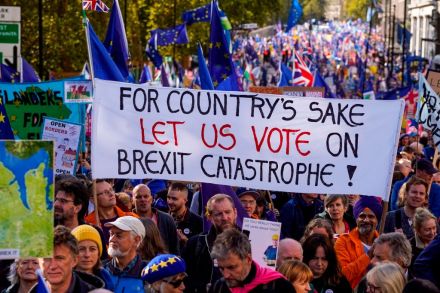
A second referendum would be a political abomination. And it’s about time more of us said so. We need to get real about what a second referendum would mean. If we have another referendum in which Remain is an option on the ballot paper, it will be one of the few times in the history of British democracy that the British people voted for something and it didn’t happen. It will be the first time we made a clear, mass democratic choice and the political class turned around to us and said: ‘Sorry, you can’t have that. You have to vote again.’ The precedent this would set would be dreadful. It would rip up the democratic contract itself.

Why the EU should listen to Boris Johnson – not Parliament

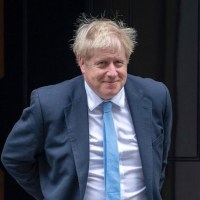
Boris Johnson has been criticised for sending the European Union a letter conveying his real opinion about a Brexit extension along with a photocopy of the letter Parliament dictated and forced him to send. Yet the Prime Minister was entirely justified – and right – in doing so. Parliament certainly can – and should – decide what a Government is allowed to do. But no parliament can tell a prime minister what to think, what to feel or what to believe. And the consequences of MPs attempting to do that could quickly backfire.  Take the European Union. Dealing with the EU is the role of the executive. When my government decided to withdraw Iceland’s application for EU membership, it was an executive decision. Parliamentary approval was not sought.

This will be the make-or-break day for Boris Johnson’s Brexit

The important vote today will be on the timetable, or programme motion, for the Withdrawal Agreement Bill, the law that must pass before Brexit. The government wants it on the statute book by 31 October. Labour will try to humiliate the PM by forcing a delay. One minister tells me that the programme motion is therefore the ‘real meaningful vote’. Tory rebels say they will probably back Boris Johnson’s timetable if he enshrines the protection of environmental standards and workers’ rights in the bill and if the bill transfers to parliament power to decide whether transition to full Brexit is to last 14 months, 26 months or 38 months. But if Johnson gives in to the Tory rebels he risks alienating the Brexit Spartans of the ERG.

Will MPs block the government’s mad dash to get the Withdrawal Agreement Bill through?

Appropriately, given the length of time it has taken politicians of all colours to continue putting off taking any sort of decision on Brexit, the government has decided to try to break the legislative speed record this week by rushing through the Withdrawal Agreement Bill in just a few days. Leader of the House Jacob Rees-Mogg announced the timetable for the legislation in a business statement to the Commons this afternoon, telling MPs that they will be rattling through the second reading tomorrow, as well as starting the committee stage, which will continue the following day, with all Commons stages wrapping up by Thursday. There are threats to make MPs sit until midnight in order to meet this timetable, which is extraordinarily brisk for such a landmark piece of legislation.

Why everyone benefitted from Bercow’s refusal to allow today’s meaningful vote

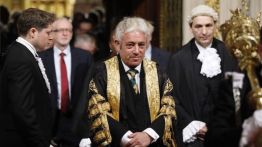
It was hardly a surprise that this afternoon John Bercow ruled out allowing the government to bring back its meaningful vote on Brexit. Still less of a surprise that this ruling took up nearly an hour in the Commons of points of order from MPs on all sides making points which changed the minds of no-one, and certainly not the Speaker. The Speaker's argument was as the one the Tories had been preparing for over the weekend: he ruled that it would be 'repetitive and disorderly' to hold a second vote on the same motion. What they perhaps hadn't prepared for was the Speaker doing a series of impersonations of former parliamentary greats such as Tony Benn and Willie Whitelaw. Nevertheless, the session went well for almost everyone there.

Tories buoyed by response to Boris Johnson’s Brexit deal

Is this the week Boris Johnson passes his Brexit deal? As ever with Brexit, there is a chance that what is meant to be a decisive week in terms of the UK's exit from the European Union ends up leading to more delay and confusion. However, whatever happens in the coming days, senior Tories are increasingly relaxed. It's not that ministers are confident they will be able to pass the Withdrawal Agreement Bill unscathed. Instead they believe Johnson's deal puts the party in a good position for whatever comes next. The risk to Johnson agreeing a deal before a general election was that senior Brexiteers in his own party would reject it – and decry it as Brino (Brexit in name only).

A customs union amendment is a wrecking amendment

The purpose of the Withdrawal Agreement Bill is to put the Withdrawal Agreement into UK domestic law. Nothing that MPs add to it can change the text of what the UK and the EU agreed last week. For this reason it is wrong, whatever the merits of it, to try and add a customs union to this bill. Its function is not to determine the future relationship but to put the exit deal into UK law. If MPs feel strongly that a customs union is the right choice for the UK – I don’t, but there is a significant group of parliamentarians who believe this – then they will have an opportunity to express that view very soon. Boris Johnson has accepted the so-called Nandy / Snell amendments which mean that parliament will get to vote on the negotiating mandate for the trade talks.

Full list: the MPs backing Boris Johnson’s deal

After a remarkable turnaround, Boris Johnson succeeded in brokering a Brexit deal with the European Union last week. Now, he has the difficult task of navigating it through the House of Commons. On Saturday, Boris Johnson pulled a vote on his deal, after MPs backed Oliver Letwin's amendment, which forced the government to ask for an extension, even if a Brexit deal had been backed by the House of Commons. On Monday, the government will therefore hold a new meaningful vote on the deal to begin the ratification process. To win the vote, Boris needs the backing of 320 MPs – a majority in Parliament. There are currently 288 Tory MPs in the Commons which means the PM needs the support of 32 non-Tories if he wants to hit that magic target of 320.

Why the DUP should reconsider their opposition to Boris Johnson’s Brexit deal

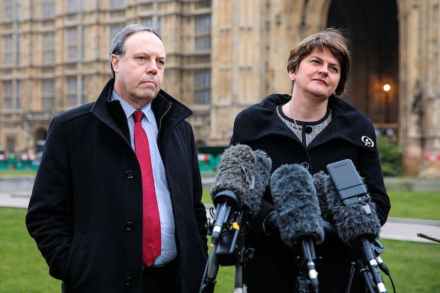
For the third time, the UK government finds itself at odds with its allies, Northern Ireland’s Democratic Unionist Party. The DUP chose to vote against Boris Johnson’s deal on Saturday by supporting the Letwin amendment. They will surely do so again when the meaningful vote is finally taken this week. But this time there is less DUP animus against the government because relations between the DUP parliamentary group and the PM have been generally good. The Prime Minister spoke at last year’s DUP annual conference and was well received. Even though his promises at that conference are regarded by the DUP as having been broken, there can be no doubt of the strength of Boris’s Johnson’s sincere unionism.

Ignore the spin. Boris surrendered to the Surrender Act

What happened in Brexit this weekend? Here is the story in one sentence. Boris Johnson asked the EU to extend UK membership, something he said he would never do. The rest is spin. How many times did Boris Johnson promise not to seek an extension of the UK membership of the EU? More than I can count. Yet that is what he has now done. By sending a letter to the European Council requesting an extension, the Prime Minister has done something he said he would not do. He talked a good fight, then caved. There are perfectly good reasons for that; I suspect many of the voters he needs will accept them. There is also a debate about whether any of this matters: he may well get a majority for his deal next week anyway. But those things are secondary elements of this story.

Sunday shows round-up: Michael Gove – We are going to leave by October 31st

Michael Gove - We are going to leave by October 31st The so-called 'Super Saturday' session of Parliament yesterday did not quite go as the government had hoped. After an amendment tabled by the now independent MP Oliver Letwin was passed, the government delayed a vote on its new withdrawal deal until it could be backed up with legislation. Boris Johnson has now sent a request for the EU to extend negotiations, alongside another letter arguing the opposite course of action. The Chancellor of the Duchy of Lancaster joined Sophy Ridge to discuss the government's predicament: https://twitter.com/RidgeOnSunday/status/1185841367525838850?ref_src=twsrc%5Etfw MG: We are going to leave the EU by October 31st. We have the means and the ability to do so...

Text of Boris’s letter to EU: ‘an extension would be damaging to us all’

Boris Johnson has written a (signed) letter to the EU saying that a Brexit delay 'would damage the interests of the UK and our EU partners'. To comply with the Benn Act, the Prime Minister has also sent an (unsigned) letter formally requesting a Brexit extension. Here is the full text of both letters: 10 DOWNING STREET LONDON SW1A 2AA THE PRIME MINISTER Dear Donald, It was good to see you again at the European Council this week where we agreed the historic new deal to permit the orderly withdrawal of the United Kingdom from the European Union on 31 October. I am deeply grateful to you, President Juncker and to all my fellow European leaders for the statesmanship and statecraft which enabled us to achieve this historic milestone.

Twelve Brexit lessons from today’s drama in the Commons

Here are the important points about today's emergency vote on Boris Johnson's Brexit deal – which turned into a vote on whether the Prime Minister should write to the EU requesting a three-month Brexit delay. First, Johnson would have won if Northern Ireland's ten DUP, his supposed partners in government, had not voted against him. Johnson has paid a price for agreeing a Brexit settlement for Northern Ireland which the DUP sees as betraying the union of Northern Ireland and Great Britain. Second, the narrowness of the defeat for Johnson implies that there is a route for him to secure Brexit by October 31 or shortly after that – because he needs just nine MPs to change their votes to take him across the line.

Boris Johnson has 72 hours to win over a dozen MPs

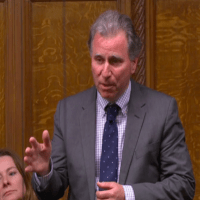
Today was meant to be the day that parliament decided on Brexit. But this parliament will always choose to postpone that moment. By voting for the Letwin amendment by 322 to 306, the Commons chose to avoid stating whether it backs the new Brexit deal or not.  The next key moment will come on Monday when there will be a meaningful vote on the deal. Judging from the vote on the Letwin amendment, Boris Johnson has 306 solid votes both for his deal and a programme motion that would get the legislation through by the 31 October. So he needs to find 14 more votes between now and then. Oliver Letwin and Nick Boles have both indicated that they would back both the deal and the programme motion. This means the whips have 72 hours to find the other dozen votes they need.

Boris Johnson defeated in crunch Commons vote on Letwin amendment

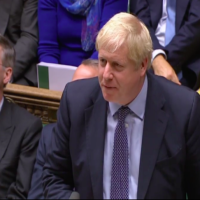
The government has been defeated in the Commons after MPs backed the Letwin amendment by 322 to 306. The vote means Brexit could be delayed until the withdrawal bill and all relevant legislation has come into force. Ten ex-Tory rebels, including Philip Hammond, Dominic Grieve and Amber Rudd, voted against the government. The Prime Minister responded to the defeat by saying the 'opportunity to have a meaningful vote has been passed up'. Boris Johnson also insisted he would not negotiate a delay to Brexit with the European Union. The PM told the Commons: 'I will not negotiate a delay with the EU and neither does the law require me to do so,' Oliver Letwin reacted to the vote by insisting that he still wanted Britain to leave the EU on 31 October.

Watch: Theresa May delivers her verdict on Boris Johnson’s deal

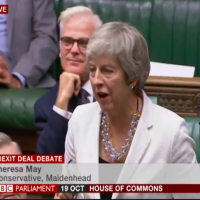
Boris Johnson can be forgiven for feeling worried when Theresa May took to her feet in the Commons just now. The former prime minister started with the words: 'I intend to rebel...'. Fortunately for her successor, she then added: '...against all of those who don't want to deliver Brexit.' https://twitter.com/SkyNews/status/1185532961183227905?ref_src=twsrc%5Etfw May said she intended to back the deal because it came down to a simple question: 'when we voted to trigger Article 50, did we really mean it? When the two main parties...stood on manifestos to deliver Brexit, did we really mean it? I think there can only be one answer to that: yes, we did mean it...because if this parliament did not mean it it is guilty of the most egregious con trick on the British people.

The question for wavering MPs: do they really trust Boris Johnson?

Boris Johnson is still pursuing today's vote as a decisive moment for the Brexit deal, rather than the start of yet another delay, with the Letwin amendment meaning the real meaningful vote could be moved to Tuesday. His opponents are speaking in a similar vein, framing the choice facing those MPs yet to make up their minds as being one concerning how trustworthy the Prime Minister is. Perhaps the most powerful argument against trusting Johnson came from DUP Westminster leader Nigel Dodds, who told the Chamber that: 'It was once said that no British prime minister could ever agree to such terms and indeed those who sought the leadership of the Tory party said so at our conference'.