Politics

Read about the latest political news, views and analysis

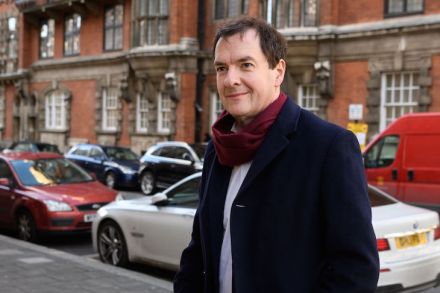
George Osborne declares war on CCHQ

George Osborne may have stepped away from the front-line of politics when he become editor of the Evening Standard, but the former Chancellor still clearly hasn't lost his reputation for political ruthlessness. Osborne's knives were out this morning, after CCHQ's press office criticised his paper's coverage of Boris Johnson's Brexit deal. The Standard had accused the government of peddling 'fake news', when it claimed that Boris's Brexit bill had been 'passed' by parliament. In fact, the bill had only passed its second reading, suggesting in principle that it had the Commons' support.
The question a second referendum must ask

Mostly I stay confident the Prime Minister’s team are playing a weak hand badly, but my confidence does occasionally falter. Then Downing Street does something really stupid (like expelling 21 of its own parliamentary party) and I’m reassured that these people aren’t clever at all. This happened last weekend when I opened my Sunday Times to find there a personal attack on Sir Oliver Letwin by ‘senior sources’. These sources had scoffed to journalists that when, before the Commons vote on his amendment, Letwin was at Downing Street to discuss it, he was taking ‘conspiratorial phone calls’ on his mobile phone, giving him ‘instructions’ from David Pannick.

An ‘I’ for a ‘my’: why we’re terrified of getting our grammar wrong

Jonathan Agnew recently described off-the-record interviews as those where you agree that it’s ‘between you and I’. Last month, Jess Phillips tweeted that she had ‘read a few wild accounts of Boris Johnson and I in the lobby’. And a Times journalist wrote about someone who had ‘made Jenny and I feel so welcome’. All three are articulate, intelligent people. And yet all three wrote ‘I’ where they meant ‘me’. It’s happening more and more. The only explanation can be self-doubt. Give any of these people a second to think about it, and they’ll reply that yes, of course they should have said ‘me’. It’s easy to work out: just remove the other person from the sentence.

For Remainers, Brexit is really about power

At the New Yorker Festival party in mid-October, my astute colleague hardly needed the caution. But you know how at a discombobulating bash you seize gratefully on something to talk about. So as Matthew Goodwin and I rubbed elbows with the East Coast elite at the Old Town Bar in Manhattan (‘Look! It’s Ronan Farrow!’), I warned him about the following afternoon’s audience for our panel on Brexit. They’ll be Democrats, I explained, and they’re hardwired to associate both the referendum and Boris personally with Trump. They’ve all been brainwashed by the New York Times, which portrays Brexiteers as a cross between the extras on The Walking Dead and the pitchfork-waving villagers in Frankenstein.

Why the Brexit Party are needed more than ever

About a year ago, over a pint with Nigel Farage, it became clear that our little attempt to get on with our lives was over. He had been sounding out a few people and the bald reality had struck home. The Prime Minister, despite her repeated mantra of leaving by 29th March was going to let us down. Farage had always said that 'if they made a Horlicks of it I would have to return'. They had, so we would have to. Wearily at first, but with gathering purpose, people across the country started rummaging in their cupboards, sheds and under the stairs. We weren't looking for greaves and breastplates, nor rusty halberds, but pulling out notebooks and files of addresses and contacts. By 29th March we were ready. The Brexit Party was born.

Boris Johnson is dodging scrutiny – but so are MPs

Boris Johnson has cancelled his appearance before the Commons Liaison Committee tomorrow morning, arguing that he feels he should devote himself to trying to secure a Brexit deal. In a rather last-minute cancellation, the Prime Minister has written a personal note to the Committee's chair Dr Sarah Wollaston in which he argues that it would be much better for the MPs to question him when he has been in the job for five to six months, as it did with his predecessors. This is a valid argument, but it would carry more weight if Johnson had made it from the outset, rather than at the sort of time that students start trying to come up with slightly daft-sounding excuses for not handing in an essay that was set months ago.

Boris Johnson’s half lap of honour

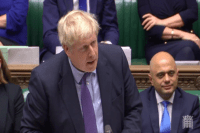
It was a semi-victory. A partial triumph. A success with many strings attached. Yesterday the House finally approved a Brexit deal but prevented itself from passing it into law. Today Boris took half a lap of honour at PMQs. He was keen to trumpet his achievement. ‘It’s remarkable that so many Members were able to come together and approve the Second Reading.’ ‘Alas,' he went on, ‘the House willed the end but not the means’. Jeremy Corbyn quoted a statement made by Boris a year ago that customs checks might ‘damage the fabric of the Union.’ Boris called Corbyn a terrorist-hugging hypocrite.

The Tory push for an early election

As EU leaders mull over what length of extension to grant the UK, talk in Westminster is focused on whether an election is imminent. The line from No. 10 is that Boris Johnson will push for a general election if the EU agrees to delay Brexit until January. Earlier today Johnson met with Jeremy Corbyn to discuss a new programme motion – this opens the possibility of Johnson trying to pass the Withdrawal Agreement Bill before any election. Even though the government's original programme motion (which would have allowed the UK to leave by 31st October) failed, the bill did pass its second reading. That means there could be the votes to pass it into law – depending on amendments. However, the meeting proved a mixed bag.

MPs have plenty of time to read Boris’s Brexit bill

The Withdrawal Bill that has been published is pretty dull stuff – even by my standards. There are nonetheless rather frantic efforts to pretend it is in any way terrible. It isn’t. For one reason and one reason only. Like the 1972 Act, all the Bill does is bring the Withdrawal Agreement into UK law. I find that conceptually interesting. The way these treaties are only international law. The way that international law is irrelevant and pointless, unless and until it gets enacted into domestic law. These things comfort me as a reminder that nation states, democracy and the people still matter. It rather penetrates the confected pomp of those who pretend EU law is a real thing and not merely international law in a moustache and dark glasses.

The Brexit party crack-up

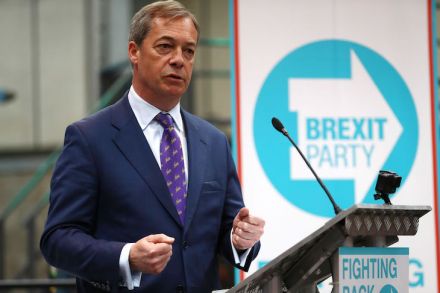
At the start of the year, the Brexit party didn't exist. When it roared to success a few months later in the European parliamentary elections, much was made of how unlike a normal party it was. Nigel Farage was fond of telling audiences that his MEPs included Tories and former members of the Revolutionary Communist party. What else could unite them, he would ask, but the need to leave the European Union? Yet that common cause is now proving to be the party's undoing in the wake of Boris Johnson's Brexit deal. While Theresa May's agreement was panned almost instantly, reaction to Boris Johnson's Brexit deal has been mostly positive. Tory Brexiteers queued up on the airwaves and in studios to condemn what amounted to 'vassalage' under May.

Voters are likely to turn their frustration on Parliament’s Brexit-blockers

Rumours of the Prime Minister’s death in a ditch have been greatly exaggerated. Parliament’s rejection of the Government’s programme motion for its withdrawal agreement bill makes it all but impossible for Boris Johnson to extricate the UK from the EU by 31 October as promised. It is an obvious defeat for a PM who got the job by swearing to Tory members that he would have us out by Halloween, no tricks, no treats, no last-minute scares. It is also, however, probably the optimal way for Johnson to break his oath. To the uninvested voter with only a passing interest in the goings-on at Westminster, tonight was not about the PM’s new withdrawal agreement or the programme motion or which Labour MPs trotted through the Aye lobby.

Boris Johnson defeated in key Brexit vote in the Commons

Boris Johnson has suffered defeat in a key Commons vote after MPs voted down his bid to fast track his Brexit bill through Parliament. MPs voted 322 to 308 not to push the legislation through Parliament in three days. The Prime Minister's bill initially cleared its first hurdle in the Commons after MPs backed the withdrawal bill. MPs voted for a second reading of the European Union (Withdrawal Agreement) Bill by 329 votes to 299, a majority of 30. But the victory was reversed in a subsequent vote to approve the PM's programme motion. Defeat means that the UK is now highly unlikely to leave the EU on 31 October.

Watch: John Mann heckles Anna Soubry: ‘It’ll get rid of you’

'A general election will solve nothing,' Anna Soubry has just told the Commons. But it seems not all of her parliamentary colleagues agree. Labour MP John Mann responded to Soubry by repeatedly yelling out: 'It will get rid of you' It's safe to say Soubry was not impressed: 'Can I just say actually, I don't mind losing my job but I do care about the jobs of my constituents...and that's why this matter must now go back for that people's vote now we have the clarity on Brexit and we see what a disaster it is.

Watch: David Lammy checks his phone during Brexit debate

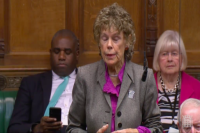
David Lammy has said Boris Johnson's bid to fast track his Brexit bill through Parliament means MPs won't have enough time to scrutinise it properly. Lammy said 'giving MPs so little time to scrutinise one of the most consequential pieces of legislation we'll vote on is as transparent as it is cynical'. But while fellow Labour MP Kate Hoey was quizzing the Prime Minister on what reassurances he could give to the people of Northern Ireland, Mr S couldn't help but notice a certain MP busily tapping away on his phone. Mr S hopes that the MP for Tottenham was making notes on the withdrawal bill... Update: David Lammy has just confirmed that he wasn't reading the withdrawal bill... https://publish.twitter.com/?url=https://twitter.

Boris Johnson’s election threat to wavering Labour MPs

The key Brexit vote tonight is on the programme motion. The sense is that the government has the votes to carry the second reading. But that wouldn’t guarantee the UK leaving on 31 October, as the committee and report stages could take weeks and see a slew of amendment added to the bill. If Boris Johnson is to meet his 31 October deadline, he’ll need to carry the programme motion which would see all the Commons stages of the bill done in the next 60 hours or so. Right now this vote is, as us nervous journalists like to say, ‘too close to call’.

The clumsy whipping operation playing out in parliament

The debate on the Withdrawal Agreement Bill is as noisy as you might expect, given how high emotions are on both sides. What is less predictable is whether MPs will be debating the legislation tomorrow, or whether the government will pull the bill after losing its programme motion vote tonight.  It’s not clear where the numbers are for this vote on the timetable for scrutinising the legislation. But the Tories have made the threat of pulling the legislation after a defeat and moving to an election. Behind the scenes, whips and No. 10 aides are working feverishly to try to shore up their support, not just from Tory MPs but also those on the opposition benches.

What Caroline Flint’s Brexit critics fail to understand

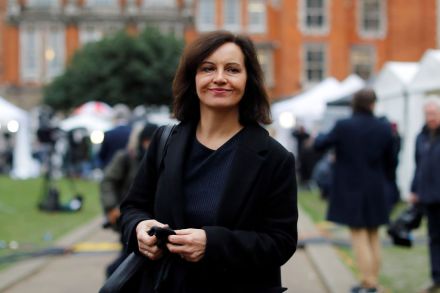
It must feel pretty lonely being Caroline Flint right now. The Labour MP has made herself unpopular with her comrades by backing Boris Johnson’s deal to leave the EU. Flint campaigned for Remain but accepts that her Don Valley constituency voted 68 per cent Leave. In the former mining towns of her South Yorkshire seat, Flint points out, the figure was closer to 80 per cent. ‘The voices in our mining villages remain unheard, despite their support for Labour over many decades,’ she records in her Labour case for respecting the outcome of the 2016 referendum.  Both Flint and her case have now felt the ire of the progressive Brexitariat, the analysts, academics and activists who frame elite debate on EU withdrawal.