Politics

Read about the latest political news, views and analysis

Jeremy Corbyn is wrong to claim the EU is a guardian of workers’ rights

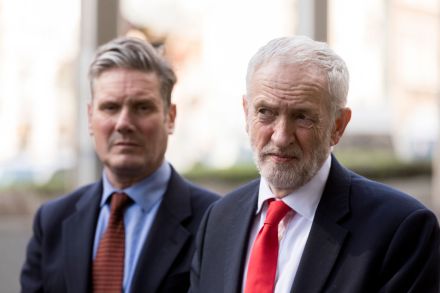
Jeremy Corbyn and Keir Starmer are pretending to believe that the EU is the guardian of workplace rights and that the Brexit deal will lead to wholesale dismantling of workplace protections. But Jeremy Corbyn is well aware that the European Court of Justice (ECJ) is no friend of trade unions. In two landmark cases in 2007, Viking and Laval, it put the interests of employers above those of workers. It used its powers to enforce one of the leading dogmas of globalisation, namely that nothing should obstruct  businesses that want to relocate or provide a service in another country, even if their intention is to drive down pay and conditions.  Viking was a Finnish passenger ferry company that operated a vessel between Helsinki and Tallin, in Estonia.
Letwin amendment threatens to derail ‘Super Saturday’

Those expecting MPs to finally make a decision on Brexit today may be left disappointed. This afternoon MPs are due to vote on a government motion – on what has been dubbed 'Super Saturday' – to signal their approval of the Prime Minister's deal. The numbers are tight but there is optimism on the government benches that they could do it. This morning Steve Baker told his European Research Group colleagues that they ought to back the deal (for further updates see The Spectator's list of MPs backing the deal). However, MPs may not even get to this vote. John Bercow has this morning accepted Oliver Letwin's amendment to the government motion. The Letwin amendment seeks to withhold approval for Johnson’s deal until the legislation implementing it becomes law.

Will the Brexit deal get a majority?

The numbers will be tight today. As I say in The Sun this morning, one minister believes that things are so close that there is a real chance that the Speaker John Bercow may end up having to break a tied vote. Though if the Letwin amendment passes, the vote this afternoon will lose some of its clarity. It is remarkable that Boris Johnson is so close to getting a majority for his deal despite having lost the support of the DUP. Cabinet Ministers are increasingly optimistic that the government might just pull this off. When Cabinet met yesterday afternoon, the Chief Whip Spencer ‘scrupulously avoided giving any numbers’, according to one of those present.

The world wants MPs to get Brexit done

Today is a historic moment for our country. After 85 days of hard graft, the Prime Minister has brought home a new Brexit deal – and I believe MPs should vote for it. Despite being told it was impossible, we have successfully re-opened the old Withdrawal Agreement and removed the Irish border backstop. In its place is a new agreement that maintains the open border all sides wanted while ensuring the United Kingdom takes back control of its money, borders, trade and laws. As MPs gather today – the first time the Commons has sat on a Saturday since the Falklands – they should know the world is watching.

Donald Trump is key to Boris Johnson’s survival | 19 October 2019

There are so many problems confronting our polity this week that it is almost impossible to write about any of them. Between the time of writing and the time you read this, we could have agreed Brexit, destroyed Brexit, called an election, called a referendum, or achieved nothing at all. Here, perhaps, is one thing which can safely be pointed out. In almost any scenario, Boris Johnson has to worry about the Brexit party. In practice, this means worrying about Nigel Farage. Who, if so minded, could persuade Mr Farage to be amenable? Surely the answer is his friend Donald Trump. If President Trump is serious in his desire for Brexit, his most useful contribution at this moment would be to induce Mr Farage to help Boris, not hinder him.

I’d vote for Boris Johnson’s Brexit deal in a heartbeat

As the only person ever to have been elected for Ukip in a General Election, if I was in the House of Commons today I would not just vote in favour of Boris Johnson's deal. I would do so cheerfully in the knowledge that this is pretty much what I have spent much of my adult life campaigning for. Firstly, UK law will become supreme in the UK. No longer will we be under the jurisdiction of the EU courts.  Nor will we be bound by EU regulation. There’s none of Theresa May’s nonsense about a ‘common rule book’. We will be free to determine our own standards. Who knows, we might even start to use elections to decide such things, restoring purpose to our derelict democracy in the process?

Brexiteers are making a mistake backing Boris Johnson’s deal

There is an understandable desire among some Brexiteers to accept Boris Johnson’s deal. Everyone is battle weary. But it is precisely at this point that Brexiteers must, at the very least, be wary of what is presented to them – and vote down the deal. Why? First, the Withdrawal Agreement has been altered, but only in one substantive way, with respect to Northern Ireland. The backstop is gone and has been replaced with a protocol which theoretically brings NI into the UK’s new customs area but, in all practical aspects, leaves it within the EU’s customs union. The result is that NI would be subject to swathes of EU laws, including full regulatory alignment and with the ECJ as its supreme court. There would, in effect, be a border down the Irish sea.

Watch: protestor scales the Elizabeth Tower

It's been a hard couple of days for the Extinction Rebellion protestors. First, the group's disastrous attempt to block the underground yesterday spectacularly backfired, turning the public against them. And today, the ongoing drama in Westminster over Boris's Brexit deal has overshadowed their protests. Which may explain why one intrepid protestor resorted to more extreme measures this afternoon in a bid to grab the headlines. The activist, who appeared to be dressed as Boris Johnson, scaled the scaffolding of the Elizabeth Tower, which holds Big Ben, before unfurling a banner on climate change and a citizens' assembly. Watch here: https://youtu.be/pCmB0T3RdGw     https://twitter.

Boris has compromised, not conquered on Brexit

Reflecting on Boris Johnson’s Brexit deal, I have many questions. Why are people who rejected the possibility of Northern Ireland being subject to EU rules and regulation via a contingent backstop now embracing the certainty of that happening? How could anyone reasonably expect the DUP to sign up to something that really does make Northern Ireland a very, very different part of the Union? Something they were repeatedly promised would never be conceded. Why are none of the people who used to be furious about the '£39 billion' (actually less now but never mind) objecting to paying it now? Why shouldn’t MPs have at least a superficial analysis of the economic trade-offs made in this deal?

Come on Arlene: Why the DUP should back Boris’s deal

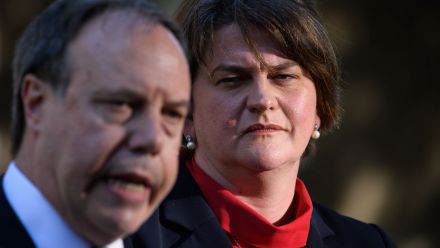
That the DUP was going to prove pivotal in Brexit negotiations was inevitable from the early hours of 9 June 2017, when it became clear that Theresa May had failed to secure an overall majority and that no other opposition party would countenance an electoral pact with the Conservatives. In many ways, the DUP’s powerful position has not been a bad thing. With Irish Taoiseach Leo Varadkar intent on using Brexit as a means of drawing Northern Ireland closer to the republic – and the EU prepared to throw its whole weight behind him – the involvement of the DUP has ensured that the interests of unionists have not been trampled upon. Until Wednesday morning it seemed that the DUP would support Boris Johnson’s Brexit deal, which was still in the process of negotiation.

Nobel Peace Prize winner David Trimble backs Boris’s Brexit deal

The former First Minister of Northern Ireland David Trimble, who shared the Nobel Peace Prize for his work on the Good Friday Agreement, was highly critical of Theresa May’s backstop. Trimble, who now sits as a Tory peer, wrote a paper for Policy Exchange on how ‘The Backstop Would Wreck the Good Friday Agreement’ In a sign of how much better the new deal is in terms of consent, Trimble has this morning issued a statement saying that the new Brexit deal is ‘fully in accordance with the spirit of the Good Friday Agreement’ and that now ‘is not the time to be looking for excuses not to implement either the Good Friday Agreement or the new deal.’ Here’s his statement in full: 'Yesterday’s agreement is a great step forward.

The Spectator Podcast: can Boris do it?

As Boris Johnson agrees a Brexit deal with the EU, it seems that we really may be leaving the EU on the 31st October. So what does this mean for a general election, and is it imminent? Is the Brexit party still a threat, and would the Tories be able to win over Labour voters? Rod Liddle is not convinced in our cover article this week, and on the podcast Katy Balls speaks to author and journalist Paul Mason, and Theresa May's polling guru at No 10 - James Johnson. On the podcast, they wargame the best scenarios for the two main parties; and James argues that Boris should actually be hoping for the deal not to go through - in order to campaign on a Brexit deal platform. Plus, who are the biggest beneficiaries from the Turkish incursion into Syria?

It’s time for every Brexiteer to back Boris Johnson’s deal

During my years campaigning for Brexit, I’ve bounced around quite a few different organisations in support of the great cause; starting by launching the Daily Express crusade to get Britain out back in 2010, then becoming part of the Ukip insurgency under Nigel Farage which led to that historic 2014 European elections win, before being the only Ukip MEP to back Vote Leave rather than its Faragist rival to be the designated Leave campaign in the 2016 referendum. At each turn, I’ve tried my best to put country before party, asking myself what would be the best thing for the attainment of Brexit rather than the most comfortable thing for me.

How violent are our jails?

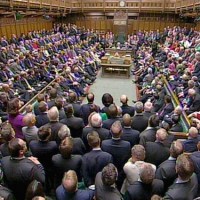
Parliamentary days Could one of parliament’s longest sessions be followed by one of its shortest? — The shortest was between 14 September and 25 October 1948, when Clement Attlee’s government prorogued parliament in order to forestall efforts by the House of Lords to frustrate the Parliament Bill. The ruse was successful and the bill, which limited the ability of the House of Lords to delay legislation, became law the following year. While it lasted six weeks, there were only ten sitting days in that parliament. — This week we may have six days, including the highly unusual Saturday sitting. So, unless parliament is prorogued for a general election before next Friday, this session will have sat as long as that of 1948.

Donald Trump is key to Boris Johnson’s survival

There are so many problems confronting our polity this week that it is almost impossible to write about any of them. Between the time of writing and the time you read this, we could have agreed Brexit, destroyed Brexit, called an election, called a referendum, or achieved nothing at all. Here, perhaps, is one thing which can safely be pointed out. In almost any scenario, Boris Johnson has to worry about the Brexit party. In practice, this means worrying about Nigel Farage. Who, if so minded, could persuade Mr Farage to be amenable? Surely the answer is his friend Donald Trump. If President Trump is serious in his desire for Brexit, his most useful contribution at this moment would be to induce Mr Farage to help Boris, not hinder him.

The vindication of Boris Johnson’s Brexit strategy

The Brexit deal agreed with the EU is a spectacular vindication of the Prime Minister’s approach: to go back to Brussels with the genuine prospect that Britain would leave with no deal on 31 October. The EU started off by saying it would never reopen the withdrawal agreement, but with a no-deal Brexit back in prospect, compromise — and thus a deal — has been possible. And yes, parliament has said it would force the Prime Minister to ask for an extension of EU membership; but No. 10 said it would find a way to not do so. It seems that this was enough to focus minds in Brussels. Boris Johnson's deal is the opposite to that struck by Theresa May in that the more you look at it, the better it seems.

Boris Johnson’s biggest Brexit deal victory

In order to get anywhere in life, you have to compromise. Redrafting a deal foisted on you with no time and no majority has been Herculean. In doing so, the UK have made serious concessions so we can maintain good relationships with the EU. That must not get forgotten in the understandable (and shared) joy in getting a deal agreed in Brussels. Those who weakened our negotiating hand have a lot to answer for. What remains fundamental now is that all of us, whichever side we were once on, realise two things. That this dance has two stages and that the UK has made all its concessions in the first half. If we had our time again, perhaps those concessions may not have been necessary. Or perhaps instead, they should never have been even asked of us.