Politics

Read about the latest political news, views and analysis

The Katharine Birbalsingh Edition

26 min listen

Katharine is the headmistress of Michaela Community School, dubbed by some as 'Britain's strictest school'. She talks to Katy about why she regrets speaking at Conservative Party Conference, her school's 'tiger teacher' philosophy, and why she would ban smartphones for everyone under the age of 18.Presented by Katy Balls.

Number 10 drops its threat to go ‘on strike’

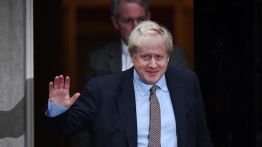
One of the defining themes of this week has been the government threatening to do something dramatic, before manifestly not carrying out that threat. We’ve had No. 10 sources claiming Boris Johnson would pull his Withdrawal Agreement Bill if MPs voted down the programme motion, only for the Prime Minister to announce he is 'pausing' it, before then making a bid to the Labour Party to resurrect the legislation with a longer timetable. We’ve also seen the demise of Johnson’s claim that he would rather be found 'dead in a ditch' than delay Brexit beyond 31 October. Though the Prime Minister hasn’t openly acknowledged that he’s missing the deadline, his 12 December election bid was an attempt to move the conversation straight past an awkward admission.

The pestilence of Brexit and the failure of the political class

The latest confirmation of the sickness evident in British politics these days comes courtesy of political scientists at the universities of Edinburgh and Cardiff whose latest research reveals, once again, the risks voters from across the great Brexit divide are willing to accommodate in pursuit of their preferred political objectives. Fully 71 per cent of Leave voters in England (and 60 per cent in Scotland) think the risk of violence against MPs is a 'price worth paying' for Brexit. It is important to note that the research, conducted as part of the long-running 'Future of England' project led by researchers at the two universities does not ask if voters would approve of violence directed against Members of Parliament.

The Brexit extension waiting game

The UK and Brussels are currently engaged in a waiting game – only no one is sure who is waiting for whom. EU leaders had been expected to announce the terms and length of an Article 50 extension this Friday. However, that decision has been put on hold in light of Boris Johnson's call for a general election – with MPs voting on a motion on Monday. Speaking in Brussels following a meeting of ambassadors, Michel Barnier – the EU’s chief negotiator – said 'no decision' had been made on a way forward. A decision is likely to be made on Monday or Tuesday. EU leaders want to wait and see what happens with the election vote.

The winners and losers of a Christmas general election

Who will you feel most sorry for in the event of a December election? Election officials who will find many of the venues they normally use for polling stations already booked up for Christmas parties and school plays? Or party activists, who will have to go door-knocking in the cold and dark, maybe through horizontal sleet or snow? Perhaps it is the humble voter, who will find an election campaign impinges on their festivities? Or maybe you have a hard heart and don’t much sympathise with any of them. You just want to know if holding an election in winter will make much of a difference to the outcome. If you are, I regret to have to tell you that the evidence isn’t terribly conclusive.

The myth of the Brexit business exodus

We are, of course, on the cusp of an exodus of UK businesses as they leave to set up home in other EU countries. We know this because Remainers keep telling us so. Banking jobs are going to disappear to Frankfurt, manufacturing jobs to France or the Czech Republic. Or maybe not. It is not quite how the World Bank sees it. Its latest survey of the world’s best countries in which to do business – which takes into account such things as tax and regulatory barriers as well as access to energy and other services – ranks Britain as eighth out of 190 countries, one place higher than last year and higher than any other EU country except Denmark. Most EU countries do not score highly. Germany is at 22, France 32, Belgium 46 and Italy 58.

My Brexit nightmare

Last night I took a short nap and had the strangest dream. In it, the Tory prime minister made clear that unless the opposition allows him to have a general election on 12 December his government would go on strike. The legislation to implement the Brexit deal he cherishes would be put on hold. The budget that his Chancellor told me on my show less than 24 hours ago would definitely take place on 6 November would be cancelled. And Johnson would work day and night to try and force an election. Naturally these were all the wild imaginings of my sleeping brain. A Conservative PM would never contemplate such officially sanctioned anarchy.

Letters: David Cameron’s real referendum mistake

Cameron’s fatal error Sir: Jo Johnson’s otherwise informative review of David Cameron’s For the Record (Books, 12 October) suggests Cameron’s ‘mistake’ was to not call the referendum earlier, and his ‘fatal error’ was his failure to nail down the Leave campaign on how they ‘would actually deliver Brexit’. Not so. Cameron’s mistake was to assume the referendum would produce a Remain result. Cameron’s fatal error was to have taken sides in the referendum.

Nigel Farage had better hurry up and settle for a peerage

Last week, an angry Telegraph reader asked me why I had got through a whole column on Brexit without mentioning Nigel Farage. My exact answer is that the column was about MPs in relation to Brexit and Mr Farage and his Brexit party have no MPs. But there is a more general answer too. It is that the Brexit party’s irreducible core is now clearly shown to be small. The rest of its vote is entirely dependent on the behaviour of whoever is the Conservative leader. Mrs May’s behaviour swelled its ranks; Boris Johnson’s has reduced them. It really is as simple as that.

The rise of democrophobia

It has become perceived wisdom that we are heading for a ‘people vs parliament’ election. But that is a false construct. Who gets to sit in parliament is the one matter in our political system over which the people have almost total control. The battle currently underway is to limit the powers that parliament has - putting certain issues beyond the reach of democratically-elected politicians. At its heart lies a fear of democracy, a fear of the decisions that people might make when more of UK life is under the control of those sent to parliament by UK voters. It is worth looking at this democrophobia in some detail, as it is an ailment that afflicts both Labour and Tory MPs and lies behind much of current political debate.

Boris Johnson may not have to resign if he loses a no confidence vote

Constitutional government relies on a series of shared understandings, and those with differing political objectives being willing to act in accordance with agreed practice. The high tempers of the Brexit process have certainly put pressure on these understandings and on that willingness. From the Cooper-Letwin episode to the Benn Act, too many parliamentarians have, unfortunately, proved themselves willing – with help from the Speaker – to override constitutional norms. And so we find ourselves in an extraordinary state of affairs in which the House of Commons does not in substance have confidence in the government and yet is unwilling to formally withdraw confidence or bring about an early election.

Caroline Flint: why I’m backing this Brexit deal

Nothing in Caroline Flint’s CV would have marked her out as someone who would end up marshalling 19 of her fellow Labour MPs through the ‘aye’ lobby to vote for Boris Johnson’s deal. One of the original ‘Blair babes’, she went on to become Gordon Brown’s minister for Europe. She campaigned for Remain in the referendum but this week she ended up telling MPs that ‘the EU is not God’ while fending off accusations that she is the devil. One commentator called her ‘a heroine for those seeking to turbo-charge Thatcherism’. He didn’t mean it kindly. When we meet in her office, on another one of the supposed Brexit make-or-break days, she is preparing for further battle.

Labour is set to deny Boris Johnson a December election

Word tonight is that Labour will whip its MPs to abstain on Monday's general election vote. Officially, Labour won’t formally declare its position until tomorrow. But if its MPs do abstain this means that the government won’t secure the necessary two-thirds support to dissolve parliament under the Fixed Term Parliaments Act. So no general election on 12 December. The government will respond to its failure to secure an election by doing the minimum necessary in parliament, effectively daring the opposition to bring the government down in a confidence vote. It is looking increasingly likely that the opposition will have to go down this route. If the EU grants an extension to January 31st, something will have to happen on Brexit before then.

Coffee House Shots: Boris’s cake-and-eat-it-too election strategy

Boris Johnson wants an election this side of Christmas - the Conservative party is doing well in the polls, he has secured a deal with the EU, and Labour's Brexit message is simply not cutting through, if the polls are anything to go by. But an election is not within his gift. On Monday, MPs will vote again on whether or not to trigger one, but the vital two-thirds majority isn't necessarily there. So why is he trying again? On this evening's Coffee House Shots, James Forsyth explains Boris's cakeism - tonight's announcement means that Boris can be seen to try to get his Brexit deal through the Commons once more, while at the same time potentially paving the way to an early general election.

Labour MP: turkeys don’t vote for a Christmas election

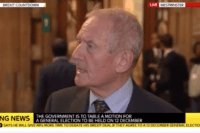
Boris Johnson has announced that MPs in the House of Commons will vote next week on holding an election on 12 December, in an attempt to break the Brexit impasse. And as expected, plenty of Labour MPs are already lining up to think of reasons to avoid being accountable to the electorate. Mr S wonders though if Labour HQ will be less than pleased with one MP's excuse for avoiding an election this Christmas. Speaking to Sky News in the Palace of Westminster, the veteran MP Barry Sheerman was asked whether his party should back an election next week, and what Jeremy Corbyn will recommend to his party. But in his reply the MP rather underplayed his own party's chances of winning, when he noted that: 'I think Jim Callaghan used to say, "Turkeys don't vote Christmas".

Full text: Boris Johnson’s election offer to Jeremy Corbyn

Boris Johnson has announced that MPs will vote next week on whether or not to hold an election on 12 December. Below is the letter he has written to Labour leader Jeremy Corbyn, calling for him to back an election. Dear Jeremy, Last week, I agreed a new Withdrawal Agreement with the European Union. This is a great new deal which Parliament could have ratified and allowed us to honour our promises and leave by 31 October. Sadly you succeeded in persuading Parliament to ask the EU to delay Brexit until 31 January 2020. On Tuesday, the Commons voted for our new deal but again voted for delay and, even worse, handed over control of what happens next to the other EU member states.

Boris Johnson calls for December 12 election – will he succeed?

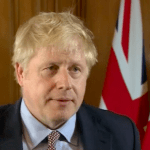
Boris Johnson will make his third attempt to call a general election. In an interview with the BBC, the Prime Minister unveiled his new offer to opposition MPs: he will bring the Withdrawal Agreement Bill back to the Commons on the condition that there is a general election on 12 December. Explaining his decision, Johnson said that he believed the UK was heading for an extension – something he regretted. He said he was willing to bring his Withdrawal Agreement Bill back to the Commons so long as MPs agree that a general election will follow. The reason? 'In order to create a deadline that is credible in everybody's mind then there must be that hard stop of a general election.' But is it in Johnson's control when an election happens?

Why David Lammy should join the Brexit camp

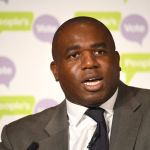
For three-and-a-half years Brexiteers have been told that we didn’t know what we were voting for. I think that might be truer of hardcore Remainer MPs like David Lammy. Today Mr Lammy is bemoaning the fact that the French President has more say over the length of a Brexit extension than our own Prime Minister does. Yes, David, we know — and it’s because people like you voted for precisely this scenario! Does Mr Lammy even understand what he’s voting for? It seems not. He’s forgotten that he and the other 326 MPs who voted though the European Union (Withdrawal) (No. 2) Act — commonly known as the Benn Act — are responsible for this outrageous state of affairs.