Politics

Read about the latest political news, views and analysis

Boris Johnson’s Brexit deal: eight key changes

The UK Government and the European Commission today published the text of a revised Protocol on Northern Ireland, coming just in time for the start of today’s European Council Summit. The Government also released a unilateral declaration concerning the operation of the ‘consent mechanism’ contained in the new Protocol on Ireland and Northern Ireland. The new deal is different in both concept and substance to Theresa May’s deal - and to the EU’s original proposal for a Northern Ireland-only backstop.
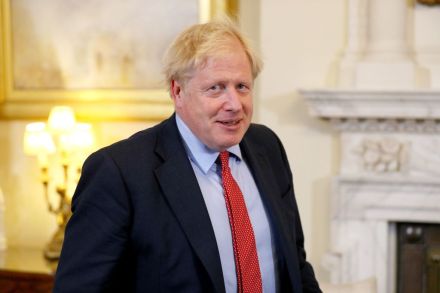
For the EU, it’s this deal or no deal

Having reached a deal with the EU, Boris Johnson's task is now to find a majority in the House of Commons. This is complicated by the rejection of the deal by the DUP. There is also a serious question whether the Prime Minister can convince not only the MPs supporting his government but also the Conservative rebels and a sufficient number of the opposition. One of the issues is the Benn Act. Having the possibility to avoid a no-deal situation by another extension might tempt many MPs to vote against a deal that will contain a range of difficult provisions, as well as providing a tempting opportunity to defeat Johnson yet again. What is the rational response from an EU27 perspective?

The key changes in Boris Johnson’s Brexit deal

Boris Johnson has agreed a new Brexit deal with the EU. Here are the key differences between the old and new protocols for Ireland and Northern Ireland. Strikethrough = text removed; Red = new text - Green = moved to a different place ARTICLE 1 Objectives and relationship to subsequent agreement This Protocol is without prejudice to the provisions of the 1998 Agreement regarding the constitutional status of Northern Ireland and the principle of consent, which provides that any change in that status can only be made with the consent of a majority of its people. This Protocol respects the essential State functions and territorial integrity of the United Kingdom.

Full text: Jean-Claude Juncker confirms a Brexit deal has been reached

Bellow is the full text of a letter sent by Jean-Claude Juncker to Donald Tusk, confirming that a Brexit deal has been struck between the EU and UK.  The full text of the negotiated Brexit deal on Northern Ireland is here.  And the full text of the revised Political Declaration is here. While I deeply regret the outcome of the referendum of 23 June 2016, I continue to believe that the European Union is best served by an orderly and amicable withdrawal of the United Kingdom from our Union. Our hand should always remain outstretched as the United Kingdom will remain a key partner of the European Union in the future. However, the ratification of the Withdrawal Agreement has proven difficult in the United Kingdom.

Boris Johnson’s path to victory

The Saturday vote on Boris Johnson's deal will be closer than people think. Around 18 or 19 of the Tory rebel exiles will vote for it, subject to a Letwin-ish amendment that the Benn Act applies until the whole of the Withdrawal Agreement Bill is law. Boris Johnson will see that amendment as holding the feet to the flame of the Brexit Spartans. He won’t hate it, whatever his public position. Because the ERG Spartans will fear if they vote against the deal and the Withdrawal Agreement Bill, that a Brexit delay and no Brexit will follow. Now, the DUP’s opposition to Johnson’s deal is a challenge for Johnson.

Boris Johnson ‘very confident’ MPs will back his deal

Boris Johnson has just given a very upbeat press conference about his Brexit deal, despite the DUP being clear that they will not back it. The Prime Minister hinted that he would be seeking the support of MPs across the Commons instead, saying: 'I'm very confident that when MPs of all parties look at the deal, they will see the merit of supporting it, getting Brexit done on October 31st, honouring the promises that were made repeatedly and giving us all the chance to move on'. Downing Street is working hard on Labour, independent and ex-Tory MPs to try to garner their support, and Johnson tried to address some of the concerns set out by Jeremy Corbyn about protections for workers and the environment. He told journalists that the government had made 'commitments gladly' on these issues.

The shifting Tory dynamics behind the party’s Brexit deal dilemma

It is not currently looking hopeful that Boris Johnson's Brexit deal will pass in the Commons. The Prime Minister will need to convince a good number of Labour MPs and independents in order to get over his lack of a majority and the DUP's current refusal to support the government. There are also a number of internal Tory dynamics at play here. The European Research Group has not yet announced its official position on Boris Johnson's Brexit deal, but already there is a strong chance it could diverge from the DUP. The Brexiteer group was split at the third vote on Theresa May's deal, with dozens of its members voting with the government rather than following the DUP into the 'No' lobbies.

Jean-Claude Juncker has helped Boris immeasurably

As of this afternoon, we really are getting close to the endgame. Jean-Claude Juncker told reporters today: 'If we have a deal we have a deal and there is no need for prolongation. That is the British view and that is my view too.' According to the BBC's Laura Kuenssberg, when asked what would happen if Boris's deal didn't pass, Juncker replied: 'I hope it will. I am convinced it will. If it doesn’t there will be no prolongation.' How untypical of the European Commission President to do the UK government a favour, but he has helped Boris immeasurably by suggesting a Commons vote on the latest withdrawal bill is a binary option, without Remain on the order paper.

Jean-Claude Juncker: ‘There is no need for a prolongation’

How can Boris Johnson pass a deal without the support of the DUP? The answer could lie in comments this afternoon made by Jean-Claude Juncker. The EU Commission president appeared to rule out an extension being offered to the UK if no deal is agreed. Speaking to the BBC, Juncker said there ‘must be no prolongation – it has to happen now'. He made similar comments to Sky News – suggesting that Boris Johnson's deal was the only option they would be putting forward: Sky News: Will you rule out an extension? Juncker: If we have a deal. We have a deal. There is no need for a prolongation. That’s not only the British view it is my view as well As James revealed earlier today, No. 10's hope has been that the EU simply refuse to offer an extension.

The New IRA will be thrilled with its Channel 4 interview

Twitter is a useful safety valve. I’ve been enjoying some reactions to a bizarre performance last night on Channel 4 News by a beefy chap in a balaclava – whose identity was protected by a weird voice-over, more Scottish than Irish. He claimed to speak for the New IRA, the few hundred supporting the most recent manifestation of those criminals of the violent-republican persuasion who fight for what they call Irish freedom. They do so by the traditional methods perfected by the Provisional IRA: murdering, mutilating, torturing, intimidating, administering community discipline by kneecapping and beating – all of which they blame on the Brits.

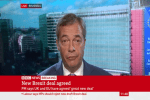
Watch: Nigel Farage’s withering verdict on Boris’s Brexit deal

'Well, it's just not Brexit'. That's Nigel Farage's withering verdict on Boris Johnson's revised deal with the EU. The Brexit party leader waited all of an hour before telling the BBC that the new agreement was not up to scratch: 'It should be rejected. The best way out of this would simply (be) to have a clean break'. This doesn't look good for Boris but Farage's reaction is, of course, predictable. The real test now will be whether Brexit party voters stick with Farage or decide to give Boris Johnson the benefit of the doubt...

Six MPs who doubted Boris Johnson would do a Brexit deal

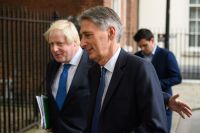
Boris Johnson has got a new Brexit deal. It's true that the Prime Minister has some way to go if he is to get the agreement over the line, not least in trying to persuade the DUP to back it. But Mr S remembers a time not too long ago when plenty were claiming the PM wouldn't – and didn't even want to – get this far. Here are six MPs who claimed Boris Johnson was never serious about reaching a new agreement with the EU: Philip Hammond The former chancellor claimed last month that Boris Johnson was surrounded by ‘radicals’ who had no intention of doing a deal.

The EU might tell MPs: it’s this deal or no deal

Both the UK government and the EU are now saying that a Brexit deal has been done. There is both a revised withdrawal agreement and political declaration.  However, the DUP are not yet on board. This makes it very hard to see how this deal can pass the Commons. At Cabinet yesterday, Chief Whip Mark Spencer went through the numbers and his calculations suggested a majority of one. His assumption was that every Tory MP who still has the whip would back it, as would 15 of the 21 Tory rebels and the DUP. The government could also rely on the support of the nine Labour or independent MPs who had previously voted for a withdrawal agreement.

Will Labour MPs do anything now Louise Ellman has quit?

Another female Jewish MP has left the Labour party, apparently bullied out of the movement she has worked in for decades. Louise Ellman, MP for Liverpool Riverside, announced in a letter last night that she 'cannot advocate a government led by Jeremy Corbyn' because he 'is not fit to be Prime Minister'. She complains that 'anti-Semitism has become mainstream in the Labour Party' and that the leader 'has attracted the support of too many anti-Semites'. It is a damning letter, and one that has widely been tweeted by the colleagues Ellman has left behind as proof that something needs to change in the party. The problem is that we've seen this before: the same MPs made the same sort of comments when Luciana Berger quit earlier this year.

DUP rejects Boris Johnson’s Brexit deal – what next?

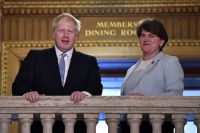
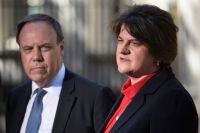
Here we go. As Boris Johnson heads to Brussels today for the EU council summit, hope inside government that Johnson will be able to pass a provisional deal in the Commons this Saturday is fading. Despite progress in talks between the UK, Brussels and Ireland, the Prime Minister is yet to successfully convince his confidence and supply partner – the DUP – to back what is being proposed. In a statement released this morning, Arlene Foster and Nigel Dodds said: 'As things stand, we could not support what is being suggested on customs and consent issues, and there is a lack of clarity on VAT.

A Brexit deal will completely change the electoral landscape

Expect the unexpected has been the rule in British politics these last few years. But even so, few would have predicted the events of the past week. Last Tuesday evening the Brexit talks seemed dead. Even the most mild-mannered figures in Downing Street held out little hope of a deal this side of an election. That all began to shift, though, after Boris Johnson and Leo Varadkar met last Thursday. What changed was that they both realised that the other was serious about a deal. They stopped seeing each other’s proposals as a trap and began engaging with them. This doesn’t guarantee a deal, though. Boris Johnson and Leo Varadkar’s desire to get this done is a necessary but not sufficient condition for an agreement.

John McDonnell is taking back control

Over the past few weeks, rumours have swirled in Westminster that the Labour party has acquired a new leader — that John McDonnell, the shadow chancellor, has almost completed a long, stealthy campaign having stolen more and more power from his beleaguered and exhausted boss. While there has been no announcement, plenty in the party believe that there certainly has been regime change: Corbyn in office, but McDonnell in power. While Corbyn has always seemed like an eccentric grandad who potters about in his allotment, there is something steely and not altogether comforting about McDonnell.

Why I welcome the collapse of Facebook’s currency

When Facebook announced details earlier this year of a global digital currency called Libra — backed by a roll call of other corporate giants — I declared myself a sceptic on the grounds that behind its libertarian sales pitch, the concept was really ‘a power-grab for cash balances and personal data out of the conventional banking system’. Furthermore, ‘since when did any project originated by Mark Zuckerberg and his pals have the good of the world as its prime objective?