Politics

Read about the latest political news, views and analysis

What on earth are the Lib Dems up to?

Jo Swinson is right. Most of the gains that it’s worth her party aiming for would be made at the expense of the Conservatives. There are three reasons. First, glance at the 29 seats where the Liberal Democrats came second in 2017. Some 22 produced a ‘close’ result. Sixteen of these are held by the Tories, and only four by Labour. As my Times colleague Oliver Wright explains: ‘Even quite a dramatic swing from any of the other parties towards the Lib Dems could still reap very little reward.’ Secondly, Conservative and Lib Dem ideologies are not diametrically opposed. Anyone who’d even consider voting Tory would be fiercely resistant to Jeremy Corbyn. Lib Dems strike us, the Conservative--inclined, as comparatively harmless.
Labour’s real 2019 manifesto

In 2019, Labour’s strategy is about delivering a fairer, more prosperous society, in adherence to our motto: for the zany, not the shrewd. Because Labour voters have short attention spans (and therefore do not remember how deeply we got the nation in debt the last time our party was in power), we would like to frontload this manifesto with the vast piles of Free Stuff that will inundate British households if you award our party a majority. You will notice lower down on your ballot a space to tick ‘milk’ or ‘dark’ for your 750g M&S chocolate assortment.

Disruptor

For the grand finale of the second year of our Economic Disruptor Awards, sponsored by Julius Baer, we returned to the same atmospheric science-fiction venue: London’s Postal Museum at Mountpleasant, with its still-working Mail Rail miniature underground train that, until 2003, shuttled sacks of letters between the capital’s major sorting offices.   Imagine it as a scale model of HS2 and tell us what you think of that whole blighted project, said Spectator chairman Andrew Neil in his prize-giving speech.

What’s going wrong for the Lib Dems?

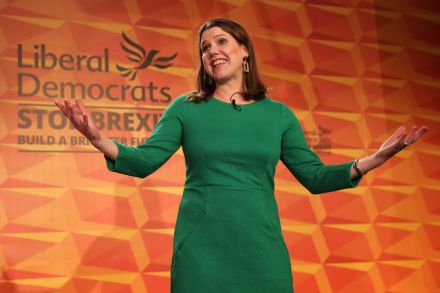
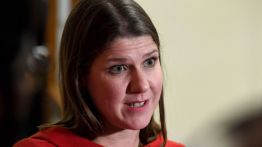
The Liberal Democrats may have brought confetti canons to their manifesto launch, but they have still struggled to get as much attention today as they hoped, given Boris Johnson's loose lips on the National Insurance threshold cut. They are also - by leader Jo Swinson's own admission - suffering a squeeze in the polls. The latest YouGov poll has the party on 15 per cent, trailing Labour which is on 30 per cent and the Tories on 42 per cent. Perhaps more worryingly, given the focus on Swinson herself, voters don't seem to warm to her the more they find out about her. What's going wrong? One of the main problems might be that the party has miscalculated what its strongest selling points are. The campaign is heavily focused on two things: Swinson and the stop Brexit pledge.

Jo Swinson’s Lib Dems risk falling into Theresa May’s trap

Voters dislike Jo Swinson the more they see her. That was the verdict of a poll this week revealing that even Remain voters are turning away from the Lib Dem leader, despite the party's fervent anti-Brexit pitch. In the summer, those asked about Swinson were apathetic: they didn’t know who she was. Now that she is more familiar, people are not impressed. For those who want Britain to stay in the EU – and even for the public generally – Swinson is not as popular as her party. It’s a brave move then for the Lib Dems to put Swinson front and centre of their general election campaign. The party’s battle bus is emblazoned with a big picture of Swinson alongside the caption: ‘Jo Swinson’s Liberal Democrats’.

Whatever happened to the Lib Dems’ smart approach to tax?

I have already decided how I am going to vote in the general election: for whichever party produces a manifesto with the fewest uses of the phrase ‘green jobs’. Was there ever such a numb-skulled phrase? It has become the fallback for any politician who hasn’t the faintest idea of how we are going to meet these self-imposed targets to eliminate all carbon emissions by 2050, 2030, 2025, next Tuesday or whatever. Are you worried that we might end up with no heavy industry, that you won’t be able to fly or drive anywhere, that the gas grid will be turned off and your house left freezing? Never mind, we’re going to have lots of ‘green jobs’ – which sounds like what Martians do when they crouch down for a crap in some dusty crater.

Boris spills the beans on Tories’ big manifesto tax cut

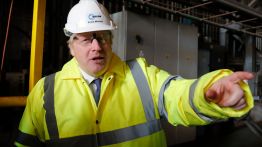
Boris Johnson has just revealed the biggest policy offer in the Tory manifesto. He told workers on Teesside today that the Tories want to raise the National Insurance threshold to £12,000. https://www.youtube.com/watch?v=BD8rF2Ds7o8 Now, I understand that this would not all be done at once. But it is telling that the Tories have chosen to prioritise this tax cut over raising the threshold for the 40p rate. But Boris Johnson’s loose lips have created a problem for the Tories. There was already concern in CCHQ that they don’t have that many new stories to come out of the manifesto. After today, they have one less. The Tories don’t want the manifesto to blow up in their faces; it is—I am told—a very cautious document.

Watch: Dawn Butler mistakenly endorses Boris Johnson

Dawn Butler is no fan of Boris Johnson. But Mr S couldn't help but notice the Labour MP's apparent approval for the Prime Minister in the aftermath of last night's ITV debate. Butler attacked Boris as 'full of bluster' but then added: 'Boris Johnson talked about the NHS with compassion, he talked about nurses and doctors. He talked about schools. He talked about all the policies that's going to make the difference in real peoples' lives.' Butler later appeared to realise her mistake by saying Boris Johnson 'isn't even in touch with his own feelings'. Mr S, for one, is confused...

Boris and Corbyn aren’t telling the truth about Brexit

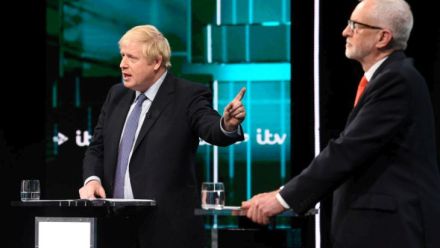
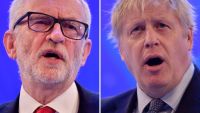
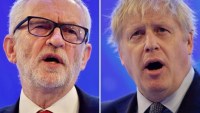
An attack line that both Corbyn and Johnson shied away from last night in ITV's debate best characterises the rotten core of this election. I had half expected Corbyn to make a big thing of the risk that even if Johnson gets his self-styled microwaveable Brexit deal zapped and approved by MPs, such that the UK leaves the EU on 31 January, there remains a significant residual risk we'll tumble into something very like a no-deal Brexit by the end of 2020 – since it is stretching credibility that a useful trade deal with the EU could be negotiated and approved by then, for all that Johnson claims the contrary.

Watch: Boris vs Corbyn. The head-to-head in three minutes

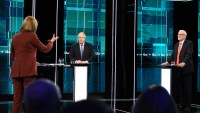
Boris Johnson and Jeremy Corbyn's clash last night during the ITV debate was notable for its lack of standout performance from either candidate. The audience, however, provided a much-needed dose of reality for both leaders. Corbyn and Boris's campaign soundbites were interspersed with bursts of laughter. Whether that was the result of amusement or frustration remains to be seen. For those fortunate souls who didn't catch the debate, Mr S.

What the BBC doesn’t understand about gay voters

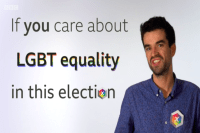
In my latest book, ‘The Madness of Crowds’ (copies of which can be found in all remaining [not remainder] bookstores, etc) I mentioned in passing that I sometimes wondered how it feels to be a heterosexual reading the news these days. That feeling wafted past me again over the weekend as I went to the front page of the BBC News website and came across a video titled ‘General Election 2019: What to look out for on LGBT issues’.  The video is presented with positively boastful impartiality by a BBC journalist called Tobias Chapple who wears a charming form of blue nail polish. The camera often lingers on this, as though to prove to us that what we are watching is a truly queer production.

Why I’m cynical about politicians ‘doing God’

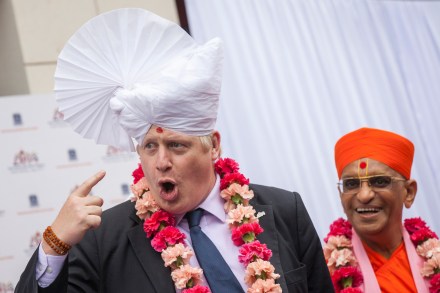
Alastair Campbell famously declared that ‘We don’t do God', yet it is customary that part of an election campaign includes wooing Britain’s minority faith communities – be they Sikhs, Hindus or Muslims. Boris and Corbyn are no exception. In recent weeks, both party leaders have donned saffron headscarves while visiting Sikh temples (gurdwara). Both have published congratulatory tweets on the 550th birthday of Sikhism’s founder, Guru Nanak, and participated in the langar or free kitchen (always a good photo op). Boris even had a go at making the notoriously elusive round chapati with worshippers in Milton Keynes and Southall.

Why the Tories will be happier than Labour with last night’s debate

Last night’s leaders debate was a scrappy affair. The format meant that neither leader was able to get going properly and that there was little back and forth between Boris Johnson and Jeremy Corbyn. It is hard to imagine that it will have changed many voters’ minds. Indeed, a snap YouGov poll suggested that it had effectively been a draw, with 51 percent saying that Johnson had performed better and 49 percent saying Corbyn had. https://audioboom.com/posts/7428847-verdict-how-did-the-first-leaders-tv-debate-go The debate made clear how the Tories intend to attack Corbyn for the rest of the campaign.

Are Boris and Corbyn both playing us all for fools?

A question I don't expect my colleague Julie Etchingham to put to the two party leaders in ITV's debate is the one that has been nagging away at me for days: why is the policy-making that will underpin the election manifestos we'll get from the parties over the next few days so lacking in intellectual rigour? What we have from both parties are big ambitions – 'free broadband for everyone' from Labour, 'Brexit totally done and dusted by the end of 2020' from Boris Johnson – based either on a highly selective use of second-hand research (Labour's analysis of the costs and practicability of nationalising full-fibre broadband roll-out) or predicated on the challenging notion that Johnson has near magical negotiating skills.

John McDonnell wasn’t joking when he vowed to overthrow capitalism

John McDonnell this morning invited Phones4U entrepreneur John Caudwell around for a cup of tea. If I were Caudwell I would treat it a bit like an invitation to afternoon tea in Miss Marple’s village – and keep a keen nose out for the smell of bitter almonds. No good will come of the invitation, that is for sure. Day by day, it is becoming clear McDonnell really is engaged in what he has described in his Who’s Who entry as ‘fermenting the overthrow of capitalism’. Today’s offering is to impose a maximum 20:1 ratio of the highest-earning employee to the lowest-earning in any company which bids for government contracts – and to threaten to delist any company which fails to reach decarbonisation targets.

Nicola Sturgeon’s ‘two referendums’ ploy is nonsense

Nicola Sturgeon has not hitherto often been considered a humorist but she is busy revealing a new side to her character in this general election. This is pleasing for many reasons but not least because this election already needs some levity.  Consider the article written by – or, rather, for – Sturgeon and published at the weekend in the pro-independence rag The National. In it, the first minister does her best to extricate herself from a predicament entirely of her own making. The SNP, you see, are running an election campaign predicated on the suggestion there should be two new referendums next year.

Why the Tories have to talk about fox hunting

At what point did the Conservatives' 2017 campaign start to go off the rails? A lot of Conservative MPs point to the manifesto launch and the creation of the so-called dementia tax. However, many view comments Theresa May made during a stump speech on fox hunting as just as damaging. The then prime minister said she had 'always supported fox hunting' and vowed to give parliament a free vote on the issue. This was quickly weaponised by Labour and the story spread online. May’s proposal to reintroduce fox hunting with a free vote was the single most viral topic of the election. Since then, the Tories have had an unwritten rule: don't talk about fox-hunting.