Politics

Read about the latest political news, views and analysis

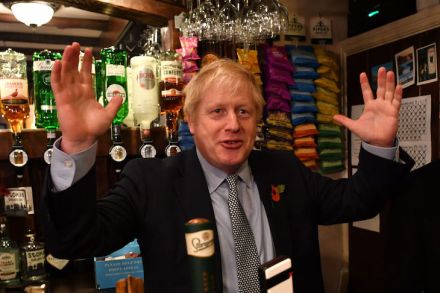
Does CCHQ think Boris will lose his seat?

One of the strange things about this election is that the Conservatives could quite conceivably wake up on 13 December to find they have won a majority, but their prime minister has lost his job. In 2017 Boris Johnson only won his seat of Uxbridge and Ruislip with just over 5,000 votes, placing his constituency squarely in the sights of Labour, who will be hoping to claim his scalp this election. But is it likely that Boris will be felled? Well it seems as though CCHQ take the approach of prepare for the worst. The Tories have reportedly placed Boris's seat on a watchlist. Yesterday, the deadline passed for parliamentary candidates to submit their applications to stand, putting to bed rumours that Boris Johnson would abandon Uxbridge to fight a safer seat.

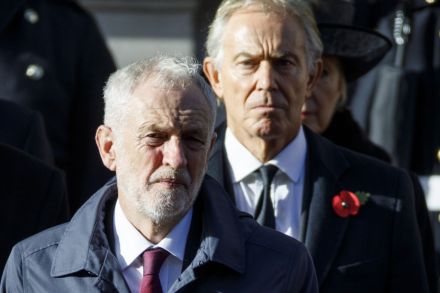
Corbyn’s ruthless party leadership shows he is an heir to Blair

Is Jeremy Corbyn a democrat? With Labour now promising a ‘democratic revolution’ this has become a critical question. We can only judge Corbyn on his record as Labour leader and that suggests his rhetoric of radical empowerment conceals a traditional politician’s desire to hold on to the levers of power. Corbyn won't like it, but in many ways he is an heir to Blair. Sally Gimson's deselection certainly calls into question Corbyn’s democratic credentials. Selected by members of Bassetlaw constituency Labour party, the Corbynite-dominated National Executive Committee refused to endorse her, claiming Gimson was the subject of numerous complaints relating to her time as a Camden councillor.

How many countries have been ruled by a Boris?

Leaders called Boris How many countries have been ruled by a Boris? — Russia has had two Borises in charge. Boris Godunov was tsar between 1598 and 1605, during the Time of Troubles, and was credited with improving education in the country, importing foreign teachers and sending Russian children abroad for schooling. Boris Yeltsin was president of Russia from July 1991 to December 1999, becoming the first post-communist leader of the country. — Bulgaria had three King Borises. Boris I, ruler between 852 and 889, introduced the country to Christianity. Boris II (969-977) fought the Byzantine Wars and was accidentally shot by one of his own border guards. Boris III (1918-43) has been praised for resisting the rounding-up of Bulgarian Jews demanded by Hitler.

It would be a big mistake to underestimate Corbyn

Thud. It’s my advance copy of Dorothy Byrne’s new book, Trust Me, I’m Not a Politician, landing on the doormat. I’ve known Dorothy, Channel 4’s head of news and current affairs, since we were in the newsroom together at Granada Television in Manchester almost 40 years ago. Then as now, she took no prisoners. I remember her curtailing her research conversation with a regional politician with the words: ‘No, I’m afraid I’m not inviting you to appear on tonight’s Granada Reports, councillor. You’re simply not coherent.’ Dorothy’s book reflects on the startling fact that more Britons believe in aliens than trust politicians, and asks what’s gone so badly wrong.

Labour’s women-friendly work policies are anything but

Labour has pledged to close the gender pay gap by 2030 and the party has chosen today – 'Equal Pay Day' – to launch its supposedly women-friendly work policies. The party plans to force small and medium-sized companies to perform gender pay gap audits, just as bigger companies of 250 are required to do already. This sounds all very feminist if you are one of the women for whom career is a priority. No ambitious, career-oriented woman wants to be underpaid relative to male colleagues for equal work. According to sociologist Catherine Hakim, though, this only comprises some 20 per cent of working women. The vast majority – some 60 per cent in the UK and US – prefer to balance work and family life more equally.

Let’s bring back hereditary peers

There is a new law of politics: if it happened under Tony Blair, it’s almost certainly bad. Brexit has certainly shown up the fallacies of New Labour's constitutional reforms, in particular the creation of the Supreme Court, whose might was mistakenly thought to be symbolic. But one Blair era reform, which took place twenty years ago this week, has been largely overlooked: the decision to eject the majority of the hereditary peers from the House of Lords. It's time to bring them back. The key problem with the post-1999 Lords is that it introduced a system of unfettered patronage – the overwhelming majority of its members are there for life at the gift of the prime minister of the day.

Trevor Rene’s battle to stay in Britain

When Boris Johnson edited this magazine, it proposed an amnesty for illegal immigrants — a controversial notion, but an idea he has stuck to. As London Mayor he suggested an ‘earned amnesty’: if bureaucracy had failed over many years to catch up with the 400,000 undocumented migrants in the capital, he reasoned, why not regularise their status so that they could start paying taxes and contributing to the country in other ways? When this magazine reprised the issue last week, the usual objections were recycled: why reward criminality? But the actual cases are more complicated. Trevor Rene is one such case. He was born in Dominica in 1969 when it was still a British colony, so as a child he had a British passport.

Exclusive: Dominic Cummings’s secret links to Russia

This week, a malign foreign actor invaded the British media, spreading disinformation and seeking to meddle in the general election. A malevolent force exploiting our democracy to advance its own interests. That’s right, Hillary Clinton has been in London. She has another book to promote, The Book of Gutsy Women, and she’s again talking about male authoritarian-ism, why Britain needs to be ‘forward-looking’ (i.e. not leave the European Union), and the menace of Russia. It doesn’t take an intelligence expert to decode her message: ‘I didn’t win in 2016 and I’m still livid.

The five groups of voters the Tories are targeting

Tory MPs used to think they could rely on telltale signs while out on the campaign trail — a detached house or a neatly kept lawn — to help them find their target voters. These days, things are more complicated. The Tories’ electoral strategy now rests on persuading voters who have never voted Conservative in their lives to go blue. To help candidates and activists in their efforts, the party has sent them a handbook setting out who they need to win over. It identifies the following groups as being pivotal to Tory success: Labour Leave voters Top of the list are the Labour Leave voters who backed Brexit but probably voted Labour in both 2017 and 2015.

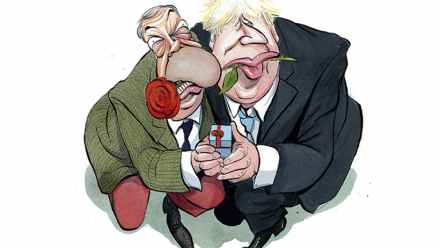
Brexit party’s Dudley bust-up

Oh dear. It's been a difficult week for Nigel Farage. The Brexit party leader announced on Monday that he would not be standing candidates in Tory-held seats. He had hoped that in return the Conservatives would consider standing down candidates in a number of Labour heartlands where he believed the Brexit party would fare better. The Tories, however, were having none of it. To make matters worse a number of Brexit party candidates have got cold feet about Farage's strategy. All election candidates had to submit their documents by 4pm to stand. Dudley North was seen as a key target seat of the Brexit party. However, the candidate for that seat announced at 3.59pm they would not be seeking election. https://twitter.com/RupertLowe10/status/1195008427778596867?

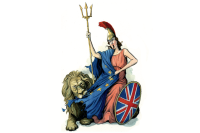
The EU is the true successor of the British Empire

Donald Tusk has been ridiculed for suggesting that Brexit marks the end of the British Empire. But he has a point. The 31 January 2020 – assuming the date doesn’t move again – should finally bring to a close Britain’s involvement in colonial delusion. And that is exactly why we are right to leave. Like the British Empire, the European Union is an exercise in patrician rule and one which is sustained by an unshakeable sense of moral and cultural superiority.

How an NHS crisis could lose the election for Boris Johnson

The poor performance of the NHS relative to government targets is turning into a major headache for the PM. The point is that Johnson and the Vote Leave team won the EU referendum largely on the basis of their controversial promise to invest £350m a week into the health service. They were acutely aware that money for a public health service matters hugely to poorer people and matters disproportionately more than for those on higher incomes – who have the double benefit of being able to afford both private healthcare and healthier lifestyles. Johnson’s consigliere and Vote Leave campaign supremo Cummings has often said it was the £350m promise wot won it for Brexit.

The chances of a Tory majority have increased this week

Four weeks from now, voters will be heading to their polling station, and the result of this election remains unpredictable. Today’s NHS stats and the recent flooding are reminders of the particular dangers of a winter election to the governing party. But a week into the campaign, the chances of a Tory majority have increased, I say in the magazine this week. When parliament voted for an election on 29 October, Tory strategists were still worried about how the public would react to Boris Johnson's failure to meet his ‘do or die’ deadline of 31 October for getting the UK out of the EU. Two weeks on, it’s clear there’s been no great public backlash.

Why China is planting its flag on what’s left of British Steel

It cannot be other than good news that a rescuer has been found for the bankrupt remains of British Steel, and in particular for its ‘long products’ plant at Scunthorpe — even if the buyer, at a token £50 million but with a promise of £1.2 billion of investment, is a little-known Chinese group, Jingye, owned by a former communist party official, Li Ganpo. Jingye has stepped in after potential offers from the Anglo--Indian tycoon Sanjeev Gupta and a Turkish steelmaker, Ataer, failed to firm up. Some 4,000 British Steel jobs, and many more in its supply chains, will be saved if this deal goes through. But still we might wonder at Jingye’s motivation.

A Remain electoral pact shouldn’t stop a Tory majority

Whatever the outcome, the 2019 general election will be one of the most decisive polls in British history. Like the Liberal landslide of 1906 which led to the foundation of the welfare state, the Labour victory of 1945 or the 1979 election which introduced free-market Thatcherism, the 2019 election is likely to determine the nature of the UK for decades to come. The 2019 election is also highly uncertain, and few pollsters are confident of the likely outcome. There are several reasons for this. Although Boris Johnson’s Conservatives are well ahead in the polls, the memory of Theresa May's melting majority in the 2017 election looms large. A second important reason for the uncertain outcome is the presence of three or more parties with a substantial share of the vote.

Boris Johnson’s election pitch is a flashback to 2015

Boris Johnson’s speech today was an attempt to set this election up as a choice between a Tory majority government and a hung parliament. He argued that if the Tories got the nine extra seats they need from their 2017 performance, then Brexit would ‘get done’ and the country would be able to move on to other priorities. By contrast, he claimed that a hung parliament would lead to a Corbyn/ Sturgeon coalition and two referendums. (Both Labour and the SNP have ruled out a formal coalition). What was striking about today was how many of the Tories’ 2015 campaign themes, Boris Johnson was trying to revive. We had the warnings about a ‘coalition of chaos’ if you don’t vote Tories and the attacks on how the SNP would be pulling Labour’s strings.

Watch: Corbyn says it was right to arrest Isis leader, not kill him

After being heckled and called a 'terrorist sympathiser' when he was out campaigning in Glasgow today, Jeremy Corbyn was presumably hoping for an easier time once he escaped the crowds outside. Unfortunately though, the Labour leader proved this afternoon that he is more than capable of causing his own gaffes. In a later interview with LBC, Corbyn was reminded of the time he said it was a 'tragedy' that Osama bin Laden had been killed by US special forces in 2011, rather than arrested and tried. Corbyn was then asked if he believed the same about the Isis leader, Abu Bakr al-Baghdadi, who was assassinated by the US last month. In response, Corbyn reaffirmed his belief and said that if it was possible to arrest the Isis leader, that would have been the 'right thing to do'.

Coffee House Shots Live: what will happen in this election?

In this volatile election, not much is certain about what will happen. But what you can be sure of is that the Spectator will be releasing one - if not more - Coffee House Shots podcast every day. Last night, the Coffee House Shots team took the podcast on the road - not very far, admittedly - down to the Emmanuel Centre in Westminster for a live recording. Fraser Nelson, Katy Balls, and James Forsyth were joined by Matthew Goodwin, Professor of Politics at the University of Kent and author of National Populism: The Revolt Against Liberal Democracy. Tune in here to catch up with the discussion; and if you don't already, listen to our daily politics podcast here. On the podcast, Fraser begins with a series of graphs to contextualise how close this election is.