Politics

Read about the latest political news, views and analysis

Sturgeon struggles on the currency question

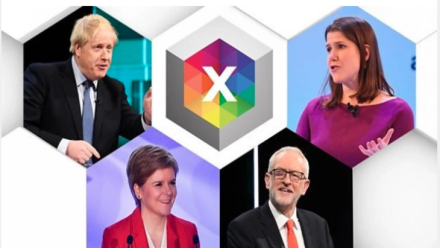
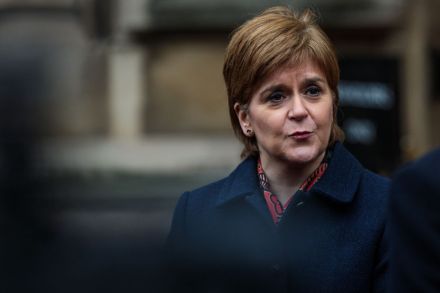
It was one of the defining moments of the 2014 Scottish referendum campaign. In that early August TV debate, Alistair Darling said any 8 year old could tell you what a country’s flag, capital and currency were but that Alex Salmond couldn’t say what currency an independent Scotland would use. Salmond’s floundering that night badly hurt the ‘Yes’ cause. This evening, when Andrew Neil pressed Nicola Sturgeon on what currency an independent Scotland would use, she replied the pound but without a monetary union. She indicated that this would be the case even if Brexit had happened. So, Sturgeon is saying that Scotland would be applying to join the EU while using a third country’s currency without a monetary union.
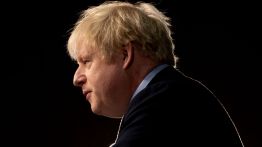
Talk of a Tory majority could spell trouble for Boris Johnson

In their attempt to avoid a repeat of 2017, the Tories have cleared another hurdle. A day on from the launch of their manifesto, there are no policies that are alienating core voters (the dementia tax) or target voters (means testing the winter fuel allowances). Instead, the biggest row is over whether using a net figure for the number of new nurses, rather than a gross one, is acceptable.   So with their manifesto safely launched and the Labour one appearing not to have had the seismic impact that the 2017 one did, are the Tories now on course for a majority? The current trajectory is favourable to them. That seat projection at the weekend which had the Tories on course of a forty-odd seat majority seems about right.

Is the Labour party a bad landlord?

Labour's Jeremy Corbyn had a tough message for rogue, profiteering property owners this morning. In an announcement calling for a 'charter of renters' rights' – designed to protect tenants from landlords who rack up charges on properties in a state of disrepair – the Labour leader promised to 'be on the side of tenants and take on dodgy landlords who have been given free rein for too long.' All's fair in class war. But Mr Steerpike was curious to see if the Labour party's own conduct would match its professed claim to be on the side of downtrodden tenants. The Labour party has its own portfolio of properties (worth over £6 million), which are managed by a separate company, called Labour Party Properties Limited.

Can the Tories really underpromise in their manifesto and overdeliver in government?

Boris Johnson is today launching the Welsh Conservatives' manifesto. For the Tories, this event comes with a trigger warning: it was where Theresa May defended her party's social care U-turn in 2017 after its disastrous manifesto launch. The clip of her insisting that 'nothing has changed' became one of the defining moments of the election campaign. So far, it seems that today's Welsh event won't be quite so dramatic, which is just what the Conservatives wanted. They have devoted an entire page of their 2019 manifesto to social care, but what it amounts to is little more than thin air. It even promises to search for a 'cross-party consensus', which is something politicians of all hues have spent the past two decades trying and failing to reach.

Boris Johnson has gambled big by pledging to spend small

Boris Johnson just took a very big political risk, by not making any serious attempt to compete with Labour on bunging cash at public services and the fabric of the UK. Where Corbyn is pledging £83 billion a year of increased spending on students, the elderly, health, schools, public-sector pay and so on by 2023, the Tories offer £3 billion. For Labour’s £80 billion plus per year on new housing, pension compensation for women born in the 1950s, nationalisations, greening businesses and multiple other projects, Johnson is committing to £8 billion by the end of the next parliament.

Five things we’ve learnt from the 2019 Tory manifesto

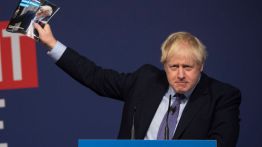
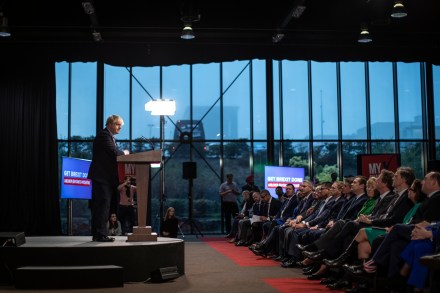
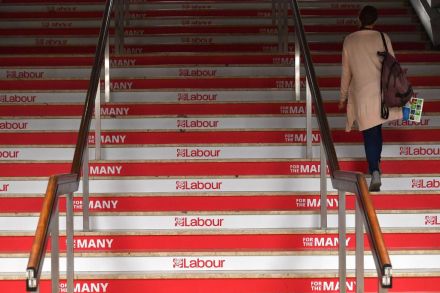
Boris Johnson has unveiled the Conservative manifesto in Telford this afternoon. The 59-page document – titled 'Get Brexit Done: Unleash Britain’s Potential' – is a far cry from the 2017 Conservative manifesto. That document still haunts Tory MPs to this day and is widely blamed for the Conservatives losing their majority in 2017. Today's offering is much more risk-averse when it comes to contentious issues and policy areas. A lot of the big spending announcements were made at the beginning of Johnson's premiership.

Tory manifesto launch: Where’s Jacob Rees-Mogg?

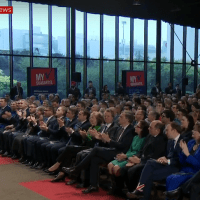
Boris Johnson has launched his party's manifesto in Telford this afternoon, joined by his Cabinet who were all confidently clapping away in the front row. All of them, that is, except for one Jacob Rees-Mogg. Eagle-eyed viewers will have spotted the conspicuous absence of the Leader of the Commons. Mr Rees-Mogg has been keeping a low profile after committing the first major blunder of the election campaign. During a discussion with LBC's Nick Ferarri, the MP for North Somerset said that he thought that it would have been 'the common sense thing to do' for Grenfell residents to have ignored the fire brigade's advice and leave the burning building. So is Mr Rees-Mogg currently grounded back in his native Somerset or was he simply watching from backstage? https://twitter.

Sunday shows round-up: ‘Businesses are not scared of Labour’ claims McDonnell

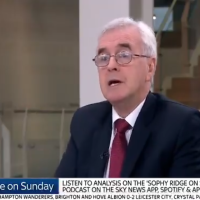
John McDonnell - Businesses are not scared of Labour Sophy Ridge began the day with an interview with the Shadow Chancellor. Ridge asked McDonnell about last week's comments from the CBI's director general Carolyn Fairbairn that Labour's plans for businesses would 'crack the foundations' of the economy. McDonnell did not refer to concerns about nationalisation, but insisted that businesses were ready to back his prospectus: SR: Do you think they are a bit scared of you? JM: No, I don't think they are... [Fairbairn is] representing some of her member organisations... but when I meet with asset managers, with pension fund managers and business leaders, I talk them through our investment plans... and they are up for this. They are really up for it.

Watch: Angela Rayner continues Labour’s Brexit confusion

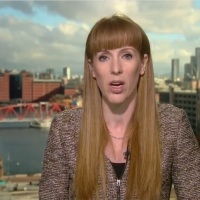
Labour's Shadow Education Secretary Angela Rayner took to the Andrew Marr Show this morning to discuss her party's Brexit position. The veteran BBC interviewer questioned Ms Rayner on whether her party would campaign for their newly renegotiated Brexit deal if a future Labour government was to put it to the people. The Labour frontbencher decided to dodge the question, calling it a 'hypothetical'. Is the party now rowing back on Jeremy Corbyn's commitment to stay neutral during any future referendum?

Boris Johnson won’t blow it like Theresa May

So what is going to happen? There appear to be grounds for quiet confidence about the result. Almost all the polls are showing the same outcome: a twelve-point Tory lead. The data suggests that most voters have made up their minds about Jeremy Corbyn and Boris Johnson and that is not good news for Corbyn. Equally, there is a lot of evidence from previous elections that the campaign itself has little effect on polling day. That was not the case in 1992, while 2010 and 2015 require more analysis. But I believe that it was true in 1979, 1983, 1987, 1997, 2001 and 2005. Yet all those examples are inevitably overshadowed by 2017, probably the most transformative election campaign in the whole of political history and – for Tories – nearly as traumatic as 1945.

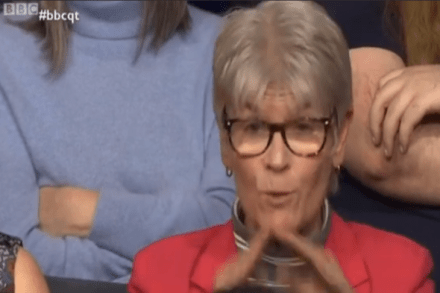
Watch: Jo Swinson berated by frustrated Remain voter

The Liberal Democrat leader had an awful time on Friday night's Question Time special. The audience was, at best, uninterested in her pitch. A notable moment was when a Remain voter criticised the Lib Dems for their policy of revoking Article 50, calling it 'undemocratic'.

Tory manifesto will shift the party to a more blue collar conservatism

What happened last time means that the Tories are extremely nervous about their manifesto launch tomorrow. As I say in The Sun this morning, the Tories have had teams poring over it to see what might blow up in it. One of the many problems with the 2017 document was that it failed to understand the shift in the public’s mood when it came to austerity. This manifesto gets that change. I understand that it will bring back a version of the nurses’ bursary, which helped with the costs of training to be a nurse, that George Osborne abolished in 2015. This was widely regarded by the public as a cut too far.

What I miss about general elections

One thing I miss about taking part in a general election is the travel. Really. I loved it. In 2015, I criss-crossed the country every day for a month in a helicopter, getting an amazing view of our islands as we descended on the marginals. That included a visit to Chorley in Lancashire, to buy its famous black pudding in the market there. The sitting Labour MP, Lindsay Hoyle, wasn’t the least bit worried. As the future Speaker said to me a couple of weeks later, when we were both safely back in the Commons: ‘George, the moment I heard your chopper land I knew I was safe.

Chaos and capital controls: the first 100 days of PM Corbyn

The morning of 13 December. A series of salacious revelations about his private life have sunk Boris Johnson’s campaign. A re-energised Nigel Farage has led a Brexit party surge in the north, splitting the Leave vote. The ousting of Jo Swinson in a coup organised by refugees from the People’s Vote campaign led to Remainers flocking back to Labour. The SNP has swept Scotland. Plaid Cymru and the Greens have picked up a dozen seats where they co-operated. And a couple of Tory rebels have managed to hang on as independents. After the dust settled on the most chaotic election campaign in memory, Jeremy Corbyn had just enough votes to lead a Labour/SNP/Green/Plaid/Independent coalition. The first 100 days of the Corbyn government were to prove a challenge, however.

Women are the losers in Labour’s trans equality fight

I was pleasantly surprised when I read Labour's manifesto. Not only did the party promise to end ‘mixed-sex wards’ in hospitals but they also vowed to “ensure that the single-sex-based exemptions contained in the Equality Act 2010 are understood and fully enforced in service provision.” Soon after the manifesto was published yesterday, a number of feminists tweeted relief and praise about the pledge.

The flaws in Nigel Farage’s Brexit party manifesto

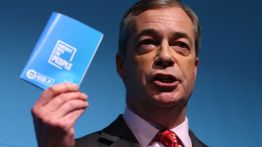
Nigel Farage has never been particularly sold on manifestos or the hard slog of policy formulation in general. His aversion dates back at least to the Ukip manifesto of 2010 which was accompanied by detailed policy documents that ran to the length of an old telephone directory and proved a rich source of material for the many commentators seeking to mock the party. He later derided it as “drivel”. So it is unsurprising to see him release a slim, 24-page booklet printed in large type on A6 pages, several with full-page photographs (rather than text) and to market it not as a manifesto at all, but as a “contract” with the British people.

The Edition: can Remainers unite against Boris?

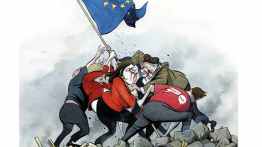
This week, as the Tories continue to lead in the polls, Lara Prendergast speaks to Alastair Campbell about what Remainers can do to turn things around. James Forsyth writes in this issue's cover article that the Remain side's inability to unite may well cost them this election and, if Boris Johnson wins, put the last nail in the coffin for Remain. On the podcast, Alastair Campbell also explains why the People's Vote campaign seems to have imploded in recent weeks. Plus, Venice is holding an independence referendum on December 1 – but will that help with the city’s problems?