Politics

Read about the latest political news, views and analysis

The death of populism has been greatly exaggerated

Have we reached peak populism? This is the question being asked after a recent regional election in Italy delivered a setback to Matteo Salvini, the de facto head of Europe’s populist family. In the affluent and historically left-wing region of Emilia Romagna, Salvini’s right-wing alliance finished more than seven points behind the Left. It wasn’t even close. It is not a surprise that some have breathed a sigh of relief. For much of the past three years, Salvini has seemed unstoppable. While the 46-year-old has miscalculated – like last summer when he tried but failed to bring down the government – he has transformed his 'Lega' movement from a small northern separatist party into a serious national force. He has swept south and into first place in the polls.
The real reason Glasgow’s UN climate summit will be a nightmare

Regardless of one’s views on climate change, one should welcome the fact that Boris Johnson removed Claire Perry O’Neill from her post as president of this year’s Conference of the Parties (COP 26), which will be held in Glasgow. He is at last trying to exercise the power of patronage. Ms Perry O’Neill is a George Osborne protegée, anti-Boris and anti-Brexit. She stood down at the end of the last parliament. She is also a keen self-publicist. Given that international climate conferences are chiefly forums in which governments strike attitudes, it was highly unwise to let her strike the Glasgow ones. She was almost bound to be disobliging to the government. With the election out of the way, the government recognised its mistake and acted just in time.

Portrait of the week: Britain leaves the EU, coronavirus evacuations and a great day for Trump

Home The United Kingdom quietly left the European Union at 11 p.m. GMT on 31 January. Boris Johnson, the Prime Minister, said in a speech about trade negotiations: ‘We have made our choice — we want a free trade agreement, similar to Canada’s but in the very unlikely event that we do not succeed, then our trade will have to be based on our existing withdrawal agreement with the EU.’ Britain would also pursue trade deals with other countries. The government brought forward from 2040 to 2035 a ban on selling new petrol, diesel or hybrid cars. David Cameron, the former prime minister, declined an offer from Boris Johnson to head the UN climate change summit in Glasgow in November.

Boris must have the courage to spell out the true cost of ‘net zero’

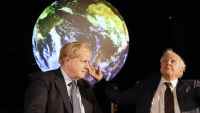
After being sacked as the chairman of the COP26, the UN climate conference which is to take place in Glasgow later this year, Claire Perry O’Neill did not lose any time in settling scores. Boris Johnson, she said, does not ‘get’ climate change. In a sense she is right — but not in the way she thinks. The once-sceptical Prime Minister has been acting with the zeal of the converted on climate change and is all set to achieve ‘net zero’ UK climate emissions by 2050. Whether he ‘gets’ what this promise will require is another matter. This week, for example, he posed with Sir David Attenborough in the Science Museum to announce plans for the coming COP26 summit, pledging that Britain will take global ‘leadership’ in cutting carbon.

The ancients would have thought Boris was deluded

The gloom that envelopes the Labour party stands in strong contrast to the confidence and hope that the Prime Minister exudes. But is he wise so to exude? Most ancients regarded hope as a delusion. Achilles in the Iliad argued that the best man could hope for was a life of mixed good and evil. The farmer-poet Hesiod described how all the world’s evils flew out of Pandora’s jar (not box), leaving only hope inside. But did that mean hope was available to mankind, or kept from him? Hesiod went on to emphasise its double-edged nature — it could energise the active man or delude the idle. Greek tragedy usually emphasised the huge gap that lay between men’s hopes and the actual outcomes.

Terror is the toughest issue facing the Tories

A prisoner is released early and just days later attacks people. It then emerges that he was known to still be a danger to the public before he was let out. Normally at this point in the story one would be expecting ministerial resignations. But in the case of Sudesh Amman, the Streatham attacker, we are not. Why? Because the law meant that there was no alternative to him being released. The government is now in a mad scramble to prevent this from happening again. Emergency legislation is being rushed through parliament to stop terrorists from being automatically freed from prison halfway through their sentence. Historically, one of the Tories’ electoral strengths has been their reputation as the party of law and order.

Boris has fallen into a trap by sucking up to David Attenborough

Regardless of one’s views on climate change, one should welcome the fact that Boris Johnson removed Claire Perry O’Neill from her post as president of this year’s Conference of the Parties (COP 26), which will be held in Glasgow. He is at last trying to exercise the power of patronage. Ms Perry O’Neill is a George Osborne protegée, anti-Boris and anti-Brexit. She stood down at the end of the last parliament. She is also a keen self-publicist. Given that international climate conferences are chiefly forums in which governments strike attitudes, it was highly unwise to let her strike the Glasgow ones. She was almost bound to be disobliging to the government. With the election out of the way, the government recognised its mistake and acted just in time.

Let’s not forget the unintentional heroes of Brexit

A week on from Brexit day, it is worth stopping and reflecting on just how Britain's departure from the EU actually came about. We're familiar of course with those from the Leave side who contributed to Brexit. But what about the unintentional heroes of Brexit, those who ensured accidentally that Britain really did leave the EU? On the day we were supposed to leave the EU last March, I bumped into an important member of Tony Blair’s social and political circle in the lobby of a St James’s club. “Are the Tory Spartans holding firm? Are they going to stop May's deal going through?” he asked. “Yes, quite comfortably I think,” I replied. “Good,” he said, “that’s what we need.

Has George Osborne hit ‘peak job’?

Ever since leaving parliament, George Osborne has been piling up jobs almost as fast as he piled up the national debt when in office (nine, at the last count) But he might soon have an easier balancing act, with his editorship of the Evening Standard in question. The rumour from Derry Street is that the typically chummy relationship between Osborne and Evgeny Lebedev has been strained since Christmas. What could have led to a cold spell? Disagreement over Putin? Boris? London’s upcoming mayoral election? Mr S hears that a rather more mundane incident could be to blame.

Five things to know about the new UK ambassador to the US

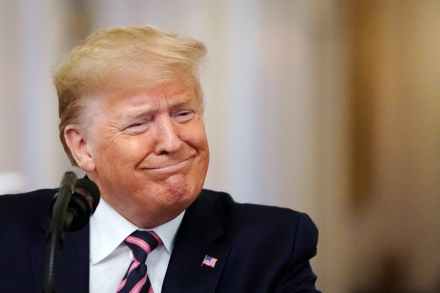
When diplomatic cables leaked to the Mail on Sunday last year revealing that the UK's man in Washington Sir Kim Darroch had described the Trump administration as 'inept' and 'incompetent', the ambassador was forced to resign. Since then there has been much speculation over who would succeed him and work to rebuild UK/US diplomatic relations. While everyone from Nigel Farage to Sir Mark Sedwill had been tipped for the job, today the government announced that Karen Pierce – the ambassador to the UN in New York and Permanent Representative at the UN Security Council – has been appointed to the role. At the UN, Pierce developed a good working relationship with Boris Johnson while he was Foreign Secretary, and is also known to have impressed President Trump.

Are all the Labour leadership candidates Corbynites now?

This week every contender for the Labour leadership and deputy leadership signed up to a series of pledges issued by the pressure group We Own It, an organisation established in 2013 to campaign against privatisation and in favour of what it calls ‘21st century public ownership’. The pledges repeat many of the promises made in Labour’s 2019 manifesto. They include nationalising various public utilities, introducing a publicly-owned broadband infrastructure provider, ending NHS ‘privatisation’, returning all schools to local government control, allowing bus services to again be run by councils, opposing profit-making in the justice system and ending the outsourcing of municipal services. Some of these pledges are less clear than others.

In defence of Laura Pidcock

Oh, Laura Pidcock. The former Labour MP for North West Durham, former shadow cabinet member, and former leadership hope of the Corbynite left may be gone from parliament but she has not left the political stage. Pidcock, it seems to fair to say, is on the left of politics. A proud socialist who said she could never be friends with a Tory, she was seen by some as the future of the left. Even in defeat, she has been feted: the Canary recently ran a column saying she 'captures the spirit left-wingers need to have' after the election loss. I rehearse Pidcock’s left-wing credentials here because they’re important to understand what follows. Pidcock has been writing about the election defeat and its lessons for the left in Tribune magazine.

The Ayesha Hazarika Edition

36 min listen

Ayesha Hazarika is a journalist and comedian, and a former Labour advisor to Harriet Harman and Ed Miliband. On the podcast, she talks about growing up in Glasgow, vetting Ed Miliband for Prime Minister's Questions, and the stand-up jokes that bombed the most.

Britain’s bid to attract the ‘brightest and the best’ after Brexit could backfire

In the week after the UK formally left the European Union, we are still no closer to understanding how the British government will meet the Prime Minister’s goal of attracting “the brightest and the best” to these shores. Ensuring a continued flow of workers from anywhere in the world, as part of the new immigration system following the end of free movement of people to and from EU nations, will be vital for meeting any target for stronger economic growth. Skills and talent have long dominated the migration debate, reinforced by various slogans of controlling migration. During the election campaign, the Conservatives indicated they would follow an Australian-style point based system to attract the ‘brightest and the best’.

Why is this French MEP pretending the country’s crippling strikes are over?

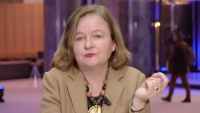
Watch Nathalie Loiseau, Emmanuel Macron’s Europe sherpa, simultaneously mislead and patronise Andrew Neil on his show last night. I assumed Neil would chew her up and spit her out. But on the night, it was even more bizarre: https://twitter.com/BBCPolitics/status/1225140630013272064?ref_src=twsrc%5Etfw Asked by Neil if it was the time to take a hard line on Brexit negotiations, when Europe’s economy is already fragile after continuing labour unrest, Loiseau opted for brazen contempt for reality seasoned with special arrogance sauce. This is well known to those used to dealing with the high echelons of the French state. There are no more strikes in France, she declared, adding for good measure she was 'surprised' a journalist wouldn’t know that.

A night with Bernie Sanders’s brother

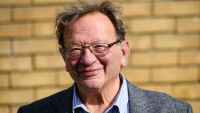
Larry Sanders, Bernie’s literal bro, moved to England in the late 1960s and settled in picture postcard Oxford. I was told that Bernie visited Larry there some time ago and was taken to historic Blenheim Palace. Bernie walked around the galleries, he viewed the state apartments, he breezed around Hawksmoor’s library and strolled through Vanbrugh’s colonnades. We do not know if he stopped at the room where Winston Churchill was born. But we do know that Bernie, according to Larry, was not impressed by Blenheim. It didn’t do much for him. He had other questions. He pointed at the great lake in the grounds and asked who dug it, what tools they used and whether they were treated well.

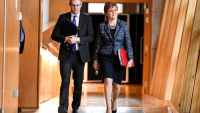
Scottish finance secretary resigns over messages to 16-year-old boy

It's budget day in the Scottish parliament and the Scottish finance secretary has just resigned. Derek Mackay has quit his role as finance secretary hours before he was due to deliver his budget following a story published in the Scottish Sun alleging he sent inappropriate messages to a 16-year-old boy on social media. The paper published a list of messages Mackay had allegedly sent to the boy since contacting the individual 'out of the blue' in August of last year. The messages published include Mackay, 42, seemingly telling the teenager he was 'cute', that he was 'looking good with new haircut' and inviting him to a dinner.