Politics

Read about the latest political news, views and analysis

Why we should welcome a Sinn Fein government

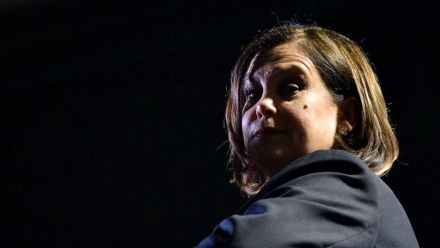
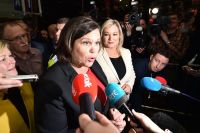
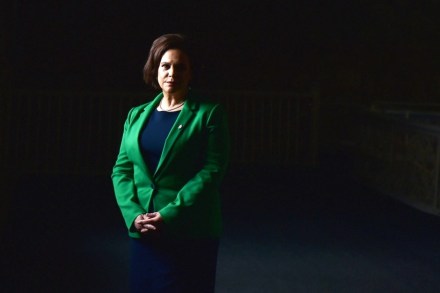
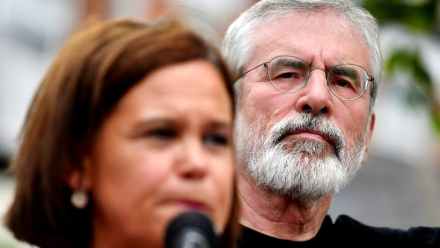
There are those – most of my acquaintance in Ireland, frankly - who can think of nothing worse than Sinn Fein’s Mary Lou McDonald as leader of the next Irish government. She’s embracing the prospect; in a walkabout in Dublin’s fruit and veg market in Moore Street, she said, as you’d expect, 'I may well be the next Taoiseach, yes'. And yep, it would be a disaster for Britain when it comes to the Brexit negotiations. But I think that, actually, it might be the best outcome from this election which has resulted in Sinn Fein effectively level pegging with Fianna Fail in terms of seats (one FF representative is Speaker, and so out of active duty). It would have done even better if it had run candidates in every seat.
HS2 won’t win the next election for Boris

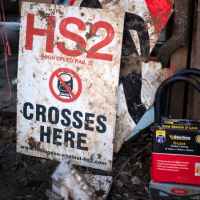
Since the election, few issues have divided opinion among Tory MPs more than HS2. Boris Johnson’s decision to press ahead with the scheme to Crewe will have its detractors. The reason so many smaller, local infrastructure schemes are also being announced today is to try and reassure Tory MPs that this is not an either or choice. The very act of taking a decision should calm some of the blue-on-blue action we have seen over HS2. I suspect that those MPs whose constituencies are most negatively affected by it will continue to campaign against it, as will several Tory MPs who are no longer interested in climbing the greasy pole. But the bulk of the parliamentary party will accept the decision, whatever their misgivings about it.

Is George Osborne to blame for HS2’s ballooning price tag?

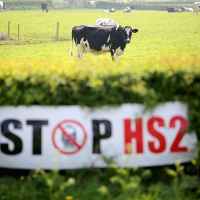
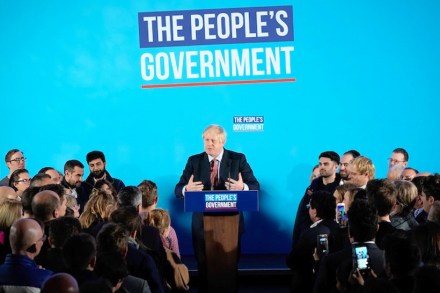
The politics of HS2 are difficult for Boris Johnson, especially since so many Tory MPs hate the £100 billion-plus cost, the destruction of ancient pasture and woodland and the perceived harm to their rural constituents. But the bigger political consideration for Boris 'another-blue-brick-in-the-red-wall' Johnson is the perception of whether today's modified version of HS2 is seen as an upgrading or downgrading of the portion north of Birmingham. His colleagues insist the new plan will be central to his promises to transform both the infrastructure and the prospects of the North. They claim what will happen is that HS2 to Manchester and Leeds – what is known as HS2b – will be much more closely integrated into the so-called Northern Powerhouse.

Three better ways to spend £200bn than HS2

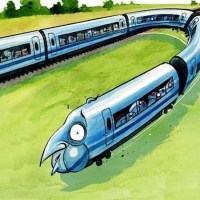
It will be big, shiny and it will make a difference. Even with its astronomical and rising cost and its wobbly economics, it is possible to see the gut appeal of HS2, especially to a big spending government such as this one which can borrow freely at virtually zero cost. After all, it needs to do something to close the gap between the regions. It also needs to improve the country’s transport infrastructure and this project is, at least, almost ready to start. The trouble is, there are far better ways of spending what is likely to be £200 billion by the time the final bill is due. After all, high-speed trains are a 40-year old technology. There is nothing especially modern about them anymore.

The minister who politely refused to play the trans language game

This is an article about the power of language in the transgender debate, about how the trans agenda has been advanced by the skilful capture of language, and about a government minister who has rejected that capture in favour of facts. It’s a bit complicated, so bear with me while I try to explain a slightly technical legal thing. It’s also based on a debate that happened in Parliament last week, but which I’ve only just had time to read in full. Sorry. Anyway, this is about what happens when a person who is married changes their gender in law. Let’s say that person - Alex - was born male, grew to manhood and married a woman, Sue. Let’s say that in his 50s, Alex took steps to change his legal gender to be recognised as a woman.

Cummings’s fury at the legal bid to block Jamaican deportations

If you thought Boris Johnson’s and Dominic Cummings’s culture war against the so-called London elite had ended with his decisive election victory, that it was simply a useful campaigning trope, you may have to rethink. Because Johnson’s chief aide Cummings reinforced the government’s excoriation of media and lawyers when addressing Downing Street officials this morning, in the words of one official present. Cummings described last night’s Court of Appeal suspension of the deportation of criminals to the Caribbean as 'a perfect symbol of the British state’s dysfunction'. He said there must be 'urgent action on the farce that judicial review has become'.

Boris’s leaked tax plans suggest a truly radical Toryism

‘You want the dowry, but you don't like the bride’ is how Israeli prime minister Levi Eshkol summed up his colleagues’ wish to keep Judea and Samaria but not the Arabs living there. I feel much the same about right-wingers losing their shizzle over a report in the Sunday Telegraph about new taxes being mulled by Downing Street. Christopher Hope has two sources who say the Prime Minister and Chancellor are contemplating a ‘mansion tax’ (either in the form of an annual wealth tax or a higher council tax band) and cutting pension tax relief on those earning over £50,000 from 40 per cent to 20 per cent. ‘Had we wanted Labour, we'd have voted for Corbyn,’ huffed the Bruges Group.

Ireland’s election result is bad news for Brexit

Ireland has given its own twist to the populist uprisings across Europe, with its election ushering in a grim time for Anglo-Irish relations. The results from Saturday's poll – in which Sinn Fein took 24.5 per cent of the vote; Fianna Fáil, 22 per cent; and Fine Gael, 21 per cent – could also cause serious complications in the Brexit negotiations. In so enthusiastically switching its support to Sinn Fein (the party won 13.8 per cent of the vote in 2016), Ireland is endorsing a party that pretends to be democratic, left-wing and progressive but still effectively operates internally along militaristic lines, tolerating no dissent from its elected representatives.

Sinn Fein’s surge in the Irish election was a cry of frustration

The people have spoken. Now, what do they mean? That is the first question to be asked in the wake of this Irish election and, as is so often the case, not all the answers to it are elementary and some of them are contradictory. This was both a startling election result and an unsurprising one. Few people, least of all Sinn Fein themselves, thought Mary Lou McDonald’s party would top the poll but some aspects of the result are less surprising. Overall, however, this was both an earthquake election and an inconclusive one. So much so, in fact, that the 33rd Dail may prove a short one. Until the weekend, Fine Gael had been in power for nine years, the party’s longest run in government since it was founded in 1933.

EU reports SNP to the police over Brexit stunt

Oh dear. Nothing seems to be going right for the SNP these days. Not only has Nicola Sturgeon lost her finance secretary after he sent inappropriate texts to a teenage boy, but her party is now facing a police investigation in Belgium. The naughty Nats appear to have caused a diplomatic incident after they decided to project a message onto the side of the European Commission building on Brexit night. Sturgeon then tweeted out a picture of the stunt, appearing to suggest that the EU had colluded with the performance by hinting that they had 'left a light on' for Scotland. Certainly, that suggestion was enough to confuse one of her own MPs. What a strange thing to do for a European Commission that Labour and the Tories say doesn't want Scotland back in. https://t.

The Sinn Fein surge has stunned Varadkar – and transformed Irish politics

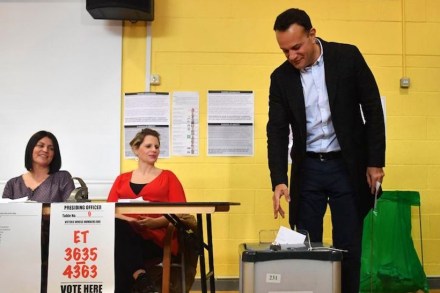
You know the story. A Prime Minister takes a tough line on Brexit talks and holds a snap election thinking voters will be impressed - instead, they don't care and it ends in disaster. It happened to Theresa May in 2017 and it just has happened to Leo Varadkar. The votes are still being counted, but it's clear that no party has a majority, or anything close to a majority and that Varadkar's gamble failed. Support for his Fine Gael has plunged and a stunning Sinn Fein surge has changed everything. It's not just that Sinn Fein won most of the first preference votes. For decades, Irish politics has been divided between Fine Gael and Fianna Fail. Now, the big two are a big three - which means none of them are near power. It's new territory for Ireland.

Why the government is planning a tax raising Budget

Tory activists are in uproar this morning over varying reports of tax raising measures Boris Johnson and Sajid Javid are considering for next month’s Budget. Plans currently being mooted include cuts to pension tax relief and the introduction of a recurring property tax that could replace stamp duty. Critics have been quick to say that neither proposal fits with what the Tory party traditionally claims to want to do – rather than new taxes and limits Johnson ought to be pushing for tax cuts. However, the view in both No. 10 and No. 11 is that this is the year for tough – and potentially unpopular – decisions.

Dawn Butler: Tories ‘bullying’ Bercow by refusing him a peerage

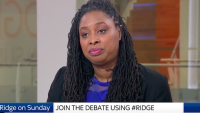
How would you define bullying? Perhaps it involves aggression or intimidation? Or perhaps bullying might include name-calling or the use derogatory language? But according to Labour's would-be deputy Dawn Butler, bullying goes quite a bit further than that. During an interview with Sky's Sophy Ridge this morning, Butler told the presenter that she thought the Tories were 'bullying' John Bercow by denying him a seat in the House of Lords. The former Speaker is himself currently subject to multiple allegations of workplace bullying, allegations that he denies. Butler told the show: ‘It is the norm that the Speaker of the House is always given a peerage, so I think the first question for me is why hasn’t he been given a peerage from the Conservatives?

Labour’s radicals need to grow up

As the well-worn cliché has it: if you’re not a socialist at 16, you don’t have a heart; if you’re still one at 60, you don’t have a head. The Labour party is on the brink of extinction. To survive, its members must use their heads. At 16, I was a fanatical socialist, reading Lenin, wearing a Chairman Mao hat and marching against the Iraq war. At 19, I went to Cuba. I learned about the revolution and planted crops with farmers, working with Amnesty workers and middle-aged Trots. The year I left university, David Cameron was elected prime minister and, for the first time since I was in primary school, we had a Tory government.

Guilt by association at Rome’s National Conservatism Conference

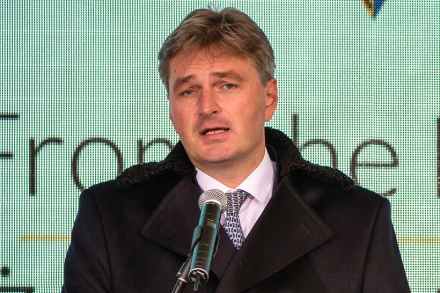
This week’s National Conservatism Conference in Rome was an important meeting of national conservatives from all over the world. Sadly, it has been sullied by disgusting attacks from British liberals against the Conservative MP Daniel Kawczynski for agreeing to take part. Publications from BuzzFeed to the Guardian pounced on Kawczynski’s decision to appear alongside European leaders such as Hungary’s Viktor Orbán and Italy’s Matteo Salvini as proof of ‘anti-Semitic’, ‘racist’ and ‘homophobic’ beliefs, held not only by Daniel but the political party to which he belongs, the Conservative party. The Tories subsequently proved themselves to be utterly witless in the face of the attack (a point to which I return to below).

How will the government try and deal with the terrorist threat?

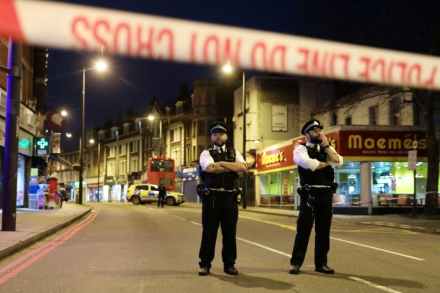
Next week, the government will introduce emergency legislation to stop anyone convicted of terrorist offences from being automatically released half-way through their sentence. But, as Whitehall sources acknowledge, this only tackles one vulnerability in the system. So, as I write in The Sun today, a broader plan to deal with the jihadi threat is being drawn up. One idea under discussion is for a sex offenders’ register for terrorists. This would enable the state to place restrictions on terrorists long after they have completed any prison sentence. These restrictions could include who they are allowed to meet with, where they are allowed to travel to both at home and abroad and a requirement to show the police their phones, laptops and internet and social media use.