Politics

Read about the latest political news, views and analysis

Boris Johnson: Britain must become the Superman of global free trade

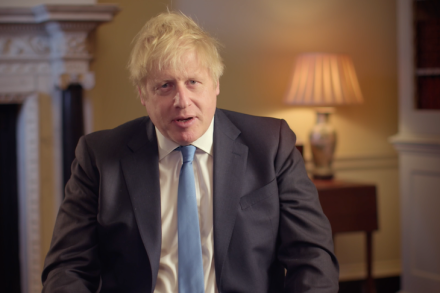
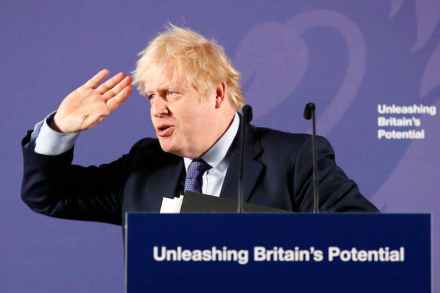
This morning Boris Johnson spoke at the Old Royal Naval College in Greenwich, setting out Britain’s plans for a trade deal with the EU. Below is a transcript of the speech: "It is great to welcome everyone here to Greenwich and I invite you first to raise your eyes to the heavens. The Vatican has Michelangelo. Greenwich has Thornhill who spent 20 years flat on his back on top of the scaffolding, so rigid that his arm became permanently wonky, and he’s left us this gorgeous and slightly bonkers symbolic scene that captures the spirit of the United Kingdom in the early 18th century. This painting above you was started in 1707, the very year when the union with Scotland was agreed – and does it not speak of supreme national self-confidence?
Why I’m going to the National Conservatism conference in Rome

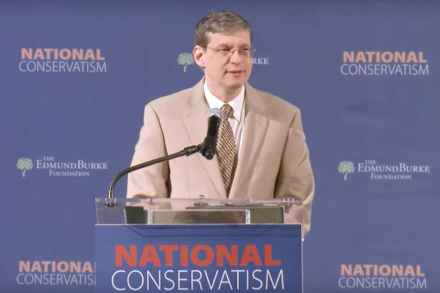
The Guardian has heavily criticised me for agreeing to speak at a conference on national conservatism in Rome, alongside several European political leaders. The paper has suggested a Tory MP should not speak at an event 'with far-right' figures on the subject of nationalism. But they are wrong – and here is why I will be going nonetheless. What is the fate of national independence and self-determination in the context of today’s European Union? Are the freedom of nations that were promised when the Berlin Wall fell a generation ago still desirable now? Both are fair questions, you might think and ones the conference will aim to answer. But any mention of the word ‘nationalism’ tends to send even some open-minded people into a tailspin.

Lord Kerr’s ‘stupid’ Brexit jibe shows some Remainers have learned nothing

I have always loved the story of Hiroo Onoda, a Japanese soldier who refused to believe the Second World War was over and stayed hiding in the Philippines until his former commanding officer was brought out of retirement and ordered him to surrender. That was in, 1974, 29 years after the end of hostilities. But I wouldn’t bet on the final Remainer holdouts giving up their struggle so quickly. If Lord Kerr of Kinlochard can be gently persuaded out from behind one of the red benches in the House of Lords before 2049 – when he’ll be 106 – I would consider it a triumph of negotiation. It would be an even greater wonder if Lords Adonis and Heseltine could be tempted out by the same date.

Sunday shows round-up: ‘One year is enough’ to complete a UK-EU trade deal, says Tusk

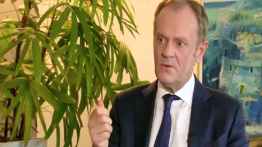
Donald Tusk - 'One year is enough' to complete trade deal Andrew Marr spoke to the former President of the European Council, Donald Tusk. Boris Johnson's critics have heaped scorn upon the idea that the UK and the EU can reach a comprehensive free trade agreement without extending the current Brexit transition period past the end of 2020. Tusk however, begged to differ on this: https://twitter.com/BBCPolitics/status/1223929174244691974?ref_src=twsrc%5Etfw DT: One year is enough to finalise our negotiations... We have to demonstrate good will on both sides... Business is business... The campaign is also over. The game is over.

Brexit talks resume – and the war of words is back on

Downing Street briefings that the EU is 'moving the goalposts' for a free trade agreement and is belatedly demanding that the UK should not be compelled to maintain standards on state aid, competition, workers rights and environment seem either flaky or deliberately designed to once again cast Brussels as a duplicitous enemy. If you look at the March 2018 EU Council guidelines (below) for the future relationship between the EU and the UK and the actually-agreed framework for the future relationship agreed in October 2019 (also below), the importance for the EU of maintaining a level playing field between the UK and EU is explicit.

Why Australia-style deal is the new Brexit buzzword in government

As the second round of Brexit negotiations loom with the EU, there's already talk of an early bust-up coming up the track. James reports in his Sun column that the UK and the EU are currently very far apart when it comes to expectations for the trade talks. Figures on the Brussels side believe that they can get the UK to sign up to things – such as a continued role for the European Court of Justice – when Boris Johnson is seeking a much looser arrangement. This distance between the two sides means that figures in government have already begun work on a Plan B in the event Johnson cannot secure the Canada-style free trade deal – that would cover goods but at most only minimally cover services – he desires.

Britain needs to rediscover failure if it wants to prosper

What was Brexit for? After finally taking Britain out of the European Union, the Prime Minister can now start to give us his answer — and the opportunity in front of him is pretty clear. He could speed up, perhaps double, the rate of economic growth by unleashing innovation. After leaving the slow steaming European convoy, Britain must not chug along but go full speed ahead. That means rediscovering trial and error, serendipity and swiftness — the mechanisms by which the market finds out what the consumer wants next. The stifling of innovation by vested interests in the corridors of Brussels has held Britain back for too long — but it is not the only reason for our sluggish innovation capacity.

China’s response to coronavirus shows a one-party state in action

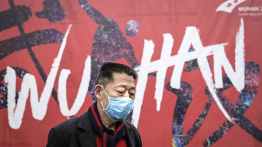
My hometown of Nanjing is more than 300 miles away from Wuhan but my family there, like Chinese families everywhere, have been gripped by the coronavirus story. We use WeChat (a Chinese version of WhatsApp) to share medical tips, the latest intel and even a spattering of dry jokes. A snippet of information from an official bulletin — passed on by my aunt — jumped out at me. The disease had made its way to Nanjing, with three patients reported. And the authorities knew rather a lot about their location. The government message read: ‘Patient Two: January 18th at 16:15 to 17:54 shopped at Hanzhongmen Avenue Oushang Supermarket (Hanzhongmen Avenue No 151); January 20th at 10:00 took the Number 48 bus at Chating East Street Bus Stop, and disembarked at the terminal station.

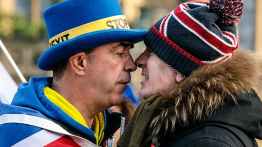
Brexit ruined our social lives. Can we now kiss and make up?

Brexit spoilt our social lives for three and a half years. I was in Austria in a house party of 20 Britons when the result came through. Sixteen of us had voted Remain (three while ‘holding their noses’) and four had voted Leave. The Leave voters stayed silent while the rest of us raged about the stupidity of the voting public. One of the party got busy cancelling a long-planned canal-boat trip with a lifelong friend who she knew had voted Leave. She suddenly couldn’t face sleeping in close proximity to him. In London, protest marches were being organised and it was considered very bad form if, as a Remainer, you failed to turn up and be counted.

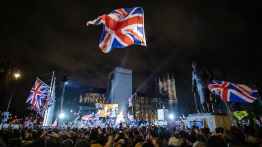
‘We will never return, there is no going back’: the Brexit Day party, as it happened

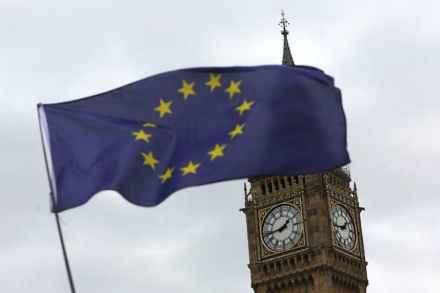
Remainers were there too. The first people I met at the Brexit Day festivities were opposed to the whole idea. I found them on Westminster Bridge, a man and his wife, posing with an EU flag. When the man spoke his voice faltered as if his pet spaniel had just died. ‘I married a German woman. I’ve been brought up to tolerate other cultures and lifestyles.’ I asked which of the many crises outlined by Project Fear would strike us first. ‘Economic slump,’ he said. Will Britain ever re-join? ‘Maybe in two generations.’ A couple with a toddler spotted the EU flag and joined us for a chat. They’d planned to enlist in a Remain Fightback Demo and were dismayed by the poor turnout.

Brexit won’t end the Tory wars

Now that Britain is out of the European Union, it will be very hard to go back in. In the 2016 referendum campaign, one of the things that Vote Leave did most effectively was point out that because the EU was constantly evolving, no one could be confident that a vote for Remain was a vote for the status quo. And now Rejoin campaigners will be the ones who want to rip up current arrangements. There is no certainty about the terms on which the country could rejoin. Would the UK, for instance, be expected to commit to ‘ever closer union’ if in the future it were to return to the fold? Even if, say, a party were to win an election on a Rejoin platform, that would not be sufficient for Britain to actually rejoin.

Portrait of the week: Withdrawal Agreement signed, Huawei allowed in – and coronavirus spreads

Home Using a Parker fountain pen (a brand now made in Nantes), Boris Johnson, the Prime Minister, signed the EU withdrawal agreement, which had been signed by Charles Michel, the President of the European Council, and Ursula von der Leyen, the President of the European Commission, in Brussels and sent to London by train. The Queen had given royal assent to the Withdrawal Bill. All that remained was for the agreement to be rubber-stamped by the European Parliament to allow the United Kingdom to leave the European Union at 11 p.m. GMT on 31 January. A 50p coin was minted, inscribed: ‘Peace, prosperity and friendship with all nations’; Lord Adonis declared: ‘I am never using or accepting this coin.

Brexit is the start, not the end

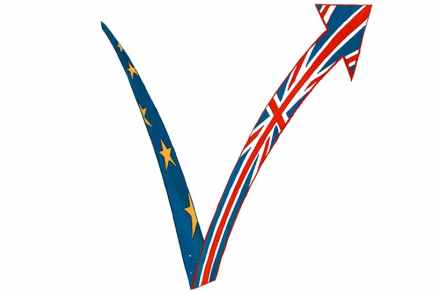
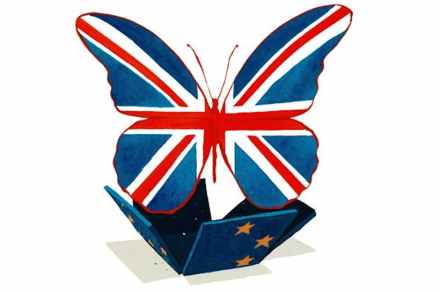
The moment of Britain’s departure from the EU was always likely to be an anticlimax, both for those who expect great things from Brexit and for those who had been braced for disaster. Departure day is not much of an event in itself, merely a moment at which new economic policies become possible. Thanks to the transition period and the Withdrawal Act, there is no cliff edge — at least not for now. Tough negotiations will begin again, but the Prime Minister has a chance to handle all this in a better, less divisive way than his predecessor. After leaving, Britain now takes on a new role: as the European Union’s strongest ally. Although the UK has opted out of the EU’s bureaucratic hierarchy, we remain part of Europe in terms of geography, culture, trade and outlook.

The agony of Brexit – for us Germans

In the early hours of 13 December, I called my newspaper in Berlin and suggested we run a piece about what might happen on Brexit day, 31 January 2020. For a second the line went strangely quiet. ‘Hello? Last night’s result means Brexit,’ I said to my colleague. ‘It’s really happening.’ I imagined the news slowly penetrating her mind. It took a while to sink in and no wonder. Throughout the years of obstruction and stagnation in Britain, many of us in Germany allowed ourselves to think Brexit wouldn’t ever happen. More than any other European nation, we Germans have been in denial about Brexit. There’s a widespread idea here that Brits and Germans belong together.

Trade talks between the UK and the EU are heading to an early bust up

Britain is no longer a member of the EU. Attention now shifts to what kind of trade agreement the EU and the UK are going to come to. I say in The Sun this morning, that the two sides are currently far apart—as we’ll see when the two sides set out their positions on Monday—and the negotiations are heading for a mighty smash. The UK thinks that the EU doesn’t realise how much has changed over the last few months. They fear that the EU has not clocked that this will be a very different negotiation because Boris Johnson has a majority in parliament and wants a free trade deal, and nothing more.

The reason our civil service is soft on China

The creation of the National Security Council under David Cameron was supposed to join up parts of British government which had not previously had the right forum. We would now be able to survey all functions of security right across government. How odd it is that this coordination was not applied to the issue of Huawei years ago. Whatever may be said against great powers, they do have in their political bloodstream a constant sense of security threat, both external and internal, which helps them develop strategy. The United States and China both devote huge amounts of money and brainpower to the subject.

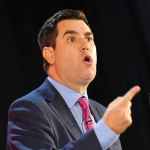
Labour’s Richard Burgon problem

Richard Burgon is an idiot. Yes, I know you subscribe to The Spectator expecting more high-brow invective but I believe in being direct. Now, ordinarily I’d be in favour of leaving such a simple creature to his own devices, but this is the Labour Party we’re talking about, so Daisley’s First Law applies: The worst candidate in any Labour election is the one most likely to win. Elections for the deputy leader of the Labour party are generally to be filed under ‘private grief’, but Burgon is bent on spreading the misery around. He wants to be ‘campaigner in chief’ and pledges that, ‘within the first month of being deputy leader I will visit every single seat we lost’.

The UK has left the EU

In practical terms, little has changed tonight. Businesses and citizens here will not feel any real difference in the coming weeks and months as they interact with the EU. But in another sense, everything has changed tonight. The UK is now out of the EU and the bar for rejoining will be very high. First of all, a party would have to win an election on a rejoin platform and then, probably, have a referendum. It is hard to imagine a party serious about winning office choosing to reopen this issue in the foreseeable future. Second, there would have to be a national consensus in favour of rejoining. The EU would be reluctant to readmit Britain if it feared that it could want to come out again after the next election.

Boris Johnson: This is the dawn of a new era

Below is a transcript of Boris Johnson's address to the nation, as we prepare to leave the EU at 11pm. Tonight we are leaving the European Union. For many people this is an astonishing moment of hope, a moment they thought would never come. And there are many of course who feel a sense of anxiety and loss. And then of course there is a third group – perhaps the biggest – who had started to worry that the whole political wrangle would never come to an end. I understand all those feelings, and our job as the government – my job – is to bring this country together now and take us forward. The most important thing to say tonight is that this is not an end but a beginning. This is the moment when the dawn breaks and the curtain goes up on a new act in our great national drama.