Why Sajid Javid quit
20 min listen
.
Read about the latest political news, views and analysis
20 min listen
.
Plenty of questions were already circulating about next month's Budget, even before Sajid Javid's dramatic resignation as Chancellor – and Rishi Sunak's appointment as his replacement – this morning. With this shock change in Number 11, we know even less than we did: what are Sunak's policy plans? How involved will Number 10 be in the process? And will financial plans already in the works be radically altered in the weeks to come? But the most pressing question of all is: what is Boris Johnson's Government's economic vision for the years to come? The process of building an economic legacy can take many twists and turns. When Margaret Thatcher first came to power, she raised taxes.
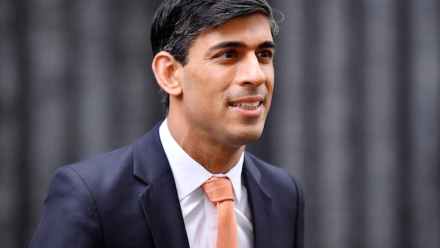
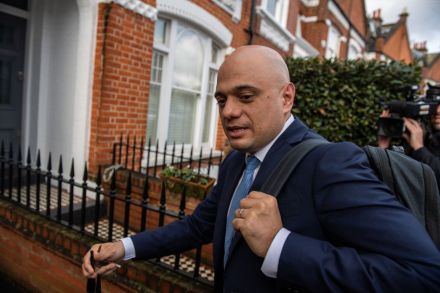
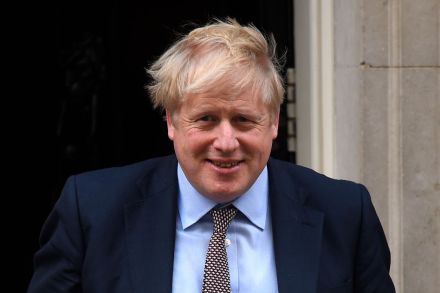
Boris Johnson’s Cabinet reshuffle has been blown off course this lunchtime after Sajid Javid quit as Chancellor. Javid resigned after being presented with an ultimatum by the Prime Minister. After a fortnight of negative No.10/No.11 briefings, Javid was told he could stay in his post on the condition he agreed to a SpAd restructuring. This would have involved all of his special advisers bar one losing their job and a new special adviser unit being created between No. 10 and No. 11. Javid refused and as a result has left his position as Chancellor. This is a surprising turn. It’s been clear for some time that the relationship between No. 10 and No. 11 was not harmonious. As I previously reported, Javid was not on good terms with senior No.
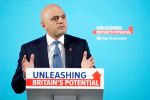
Why has Sajid Javid quit as Chancellor? Because he wanted his political advisers to be his own courtiers and servants, as is the tradition, and not those of Dominic Cummings, the prime minister’s chief aide. To the contrary, Johnson agreed with Cummings that Javid’s current special advisers should be dismissed and replaced with new advisers who would answer and report to Cummings. The PM and Cummings believe the success of the government in these challenging times require Downing Street and the Treasury to act, as far as possible, as one seamless unit. According to one of Johnson’s close colleagues, the current Prime Minister admires how Cameron and Osborne acted as a two-headed single political monster.
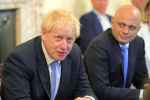
Boris Johnson had been getting increasingly irritated by the number of unhelpful stories in newspapers quoting a ‘senior Treasury source’. Number 10 didn’t blame Sajid Javid for them, but – rightly or wrongly – his team. It all reinforced Boris Johnson’s desire for a joint Number 10/ 11 operation. He wanted a relationship between the two political teams akin to that between Cameron and Osborne’s; indeed, what Number 10 is doing is exactly what Cameron and Osborne would have done if they had won a majority in 2010. So when Sajid Javid went to see Boris Johnson this morning, Johnson told Javid that he wanted a joint operation and that only one of Javid’s team would be kept on. Javid felt that he could not accept these terms and quit.
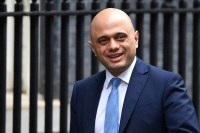
Boris Johnson's much-lauded Cabinet reshuffle has arrived. The sackings are now finished and the new hirings are underway. The biggest news by far is the loss of Sajid Javid.
If Labour had chosen Liz Kendall instead of Jeremy Corbyn in 2015, she’d be prime minister by now. She was young. She had ideas. Inevitably, she got 4.5 per cent of the vote. It is therefore my solemn duty to inform Lisa Nandy that I consider her the best candidate for Labour leader. On balance, she seems to have the surest chance of saving the party. Not, of course, that Labour deserves to be saved. But it is in the country’s interest that the party that emerges over the next few years is the least extreme and least anti-Semitic one possible. Like anyone of good sense, I endeavoured to avoid this leadership election entirely, but then I started reading Nandy’s speeches and got hooked. ‘For decades...

12 min listen
.
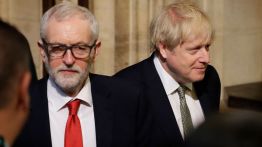
Things got pretty tasty at PMQs. Jeremy Corbyn was well prepared and emerged, messily, as the victor. It started badly for the Labour leader. Ironic cheers rang out when his name was called. Up he stood. But instead of building to a joyous climax, the cheers dropped to nothing. Stark silence followed. This seemed amusing and was greeted by facetious guffaws. Poor Jezza. Even his pauses are laughing at him. He brought up the 17 foreign-born criminals deported to Jamaica. A tricky case has emerged. A boy who arrived in Britain aged five, was coerced into peddling drugs and was given a jail-term. But since his release he hasn’t re-offended. ‘Does he deserve to be deported?’ asked Corbyn. ‘Entirely right,’ said the PM. Corbyn gloated.
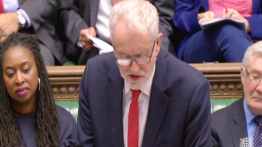
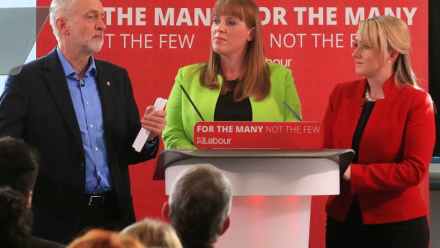
Labour's leadership contest has been attracting less and less media interest as it goes on. Despite this, Jeremy Corbyn's successor won't be announced until April so there's still over a month of the contest to go. Part of the reason for the lack of excitement is a growing sense that it isn't really a contest anymore; barring a major upset, Keir Starmer will be the victor. Starmer has a significant lead on Constituency Labour party nominations at 280, to Rebecca Long-Bailey's 132 (as of the weekend). And he even won in Jeremy Corbyn's Islington constituency. His main rival Long-Bailey's campaign is yet to achieve the levels of excitement that Corbyn's triggered in 2015.

Jo Swinson’s dismal election campaign was unlikely to have been helped by her inability to define the word woman. But if there are any lessons from Swinson’s ability to alienate people on the subject of gender, it seems Labour is determined not to learn them. Rebecca Long-Bailey and Angela Rayner are vying to become leader and deputy leader of the Labour party. Yet like Swinson before them, both seem oblivious that the public has little time for extreme transgender ideology. As a result, Labour is lurching towards a crisis brought on by transgender campaigners whose demand for compliance is total.
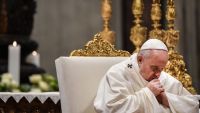
Pope Francis today issued his official response to October’s ‘Amazon Synod’, which discussed a plan to ordain married men in the region. He was expected to endorse it and thus open the door for the ordination of married men throughout the whole Catholic Church. (It’s already permitted in Eastern-rite Churches.) Instead, his apostolic exhortation ignores the subject. The Pope has ‘rejected the proposal’, reports CNN disapprovingly. It adds: ‘The lack of an opening for married priests, or women deacons, is expected to disappoint the Pope’s liberal supporters, particularly in the Americas and Europe.
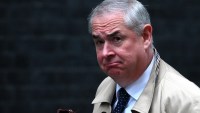
A good barrister will always keep his options open. And the Attorney General, Sir Geoffrey Cox, has the letters Q and C at the end of his name, so he must be a good barrister. During an event this morning Cox laid out the case both for his continuation as Attorney General, while also hyping himself up as a potential chair of the government's upcoming constitutional review. He told the crowd: Have I had enough of the job [of AG]? let me make plain, absolutely not. This has been one of the greatest – in fact, thegreatest – honour of my political life… If you gave me the opportunity to continue, I would embrace it eagerly. But equally, if it is not to be, well then there are other doorways that will open for me.

Dominic Cummings’s two catchphrases ‘take back control’ and ‘get Brexit done’ have transformed British politics. Now the PM’s top aide wants to do the same with the British economy through the creation of another ARPA. But will it work? The first Advanced Research Projects Agency was created in the US in 1958. The previous year the Soviets had launched the world’s first artificial orbital satellite, Sputnik, which made Americans fear that the USSR’s economy was about to overtake the US’s. The thought was that only if the US immediately copied the brilliant engineers who ran the Soviet Union could the West hope to keep up. ARPA was the outcome.
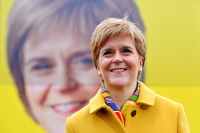
When Boris Johnson said no to another referendum on Scottish independence, Alex Neil, a former health secretary in the Scottish government, called on Scots to force the PM’s hand by emulating Mahatma Gandhi. Passive resistance, “securing rights by personal suffering” as Gandhi put it, was the way, thought Neil, to shame the British oppressor into acquiescence. To borrow a tactic for Scots dissent from the Indian national movement is to reveal how nationalists see Scotland (once a great reservoir of imperial officials, high and low): as an oppressed colony under the despotic rule of the South England Company. Nationalists have long believed Scots are a more moral people than the English (a view not confined to nationalists, to be fair).
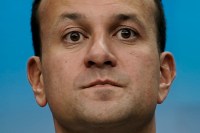
There has been a revolt in Ireland. Not a huge one. It isn’t a Brexit-sized rebellion. It isn’t an all-out populist protest against the establishment of the kind we have seen in the US and various European countries in recent years. But still, the result of Saturday’s general election is a brilliant blow against the Irish establishment and its obsessively pro-EU, anti-Brexit leanings. People are talking up the election result as a humiliation for Taoiseach and Fine Gael leader, Leo Varadkar. It certainly is that. Varadkar’s attempt to make the election about Brexit — and about his apparently brave efforts to frustrate Brexit — fell spectacularly flat.

During his first run for the Democratic presidential nomination in 2016, Vermont senator Bernie Sanders won big in New Hampshire. Claiming 60 per cent of the vote, Sanders trounced establishment favourite (and eventual nominee) Hillary Clinton by 22 points. Bernie’s Granite State victory last night wasn’t as large, but it was a victory nonetheless. By the end of the night, Sanders took 26 per cent, edging out mayor Pete Buttigieg by just over 4,000 votes. You may recall that both candidates also finished at the top of the polls in Iowa last week. But the most significant story of the night was not who won or who exceeded expectations (Minnesota senator Amy Klobuchar raked in a respectable third-place showing), but rather who went to bed angry and upset.
12 min listen
.
15 min listen
.
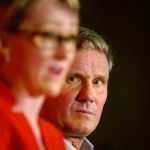
The persecution complex of the British left is both a psychological reality and the outcome of a cynical strategy. No one can doubt that the left feels victimised. But left-wing politicians have an interest in pretending that dark forces predetermine its defeat. If they are to keep their supporters in line, they can never take responsibility. They must convince Labour members they are victims of an elite conspiracy rather than of their own abysmal leadership. https://twitter.com/adamec87/status/1227239993623506944?ref_src=twsrc%5Etfw Maintaining the necessary levels of paranoia in the current Labour leadership contest looked a hard task. Until this week, the Labour party has resembled a Victorian family with a dirty secret.