Politics

Read about the latest political news, views and analysis

Will you clap for Nicola?

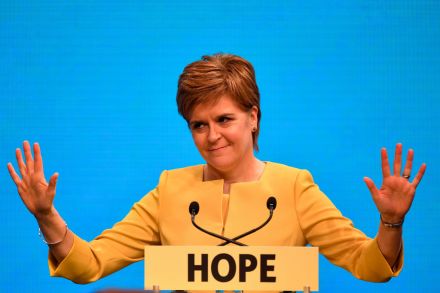
What will you be doing next Sunday at 8pm? If you live north of the border, the ideologically correct answer is clapping for ‘Oor Nicola’. Nicola Sturgeon is turning 50 and several thousand of her more enthusiastic admirers are planning to hold a clap in her honour. The news was reported, amazingly enough, not in the pages of Rodong Sinmun but in the Daily Record. The salutation to the Supreme McLeader is being organised through Facebook by Siobhan McCann. The Record quotes McCann saying: ’Our First Minister has done an exceptional job throughout what's been a strange year so far, to say the least. We clapped for our fantastic NHS. We even clapped for Boris at some point (why, I’m not quite sure).
The government’s inconsistent messaging on lockdown easing

11 min listen

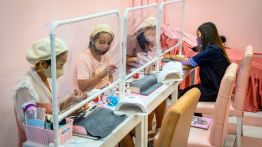
New lockdown easing measures have been announced, so later this month swimming pools, gyms, and outdoor theatres will be reopening in England. At the same time, the government advice on offices is still to work from home and do not travel by public transport. So are offices and trains really much less safe than beauty salons and pools? Katy Balls talks to James Forsyth and Fraser Nelson.

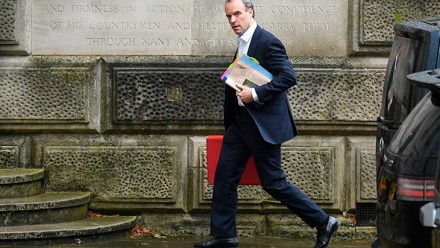
The hypocrisy of Raab’s selective sanctions

Will the new wave of sanctions on foreign human rights abusers, announced by Dominic Raab this week, work? While much of the coverage focused on the fact that, for the first time, London was acting unilaterally, rather than as part of a European or wider initiative, the actual measures – controls on entry to the country to them and their money – are pretty familiar. So, too, are the targets. In the first wave (we are promised more) are 49 'individuals and organisations involved in some of the most notorious human rights violations and abuses in recent years', from Russia, Saudi Arabia, Myanmar and North Korea.

The missing link in the government’s lockdown easing

After Rishi Sunak's attempts to kickstart the economy on Wednesday, the government has announced plans to further unwind the lockdown. From this weekend, artists and musicians can perform live outside while outdoor pools will also be opened. As of Monday, beauticians, spas, tattooists, and tanning salons can reopen. Finally those looking to work off any lockdown pounds can celebrate the news that gyms, indoor pools and leisure centres will open on 25 July. As has become the new normal, each relaxation comes with new caveats on social distancing. The announcement suggests that, as things stand, the UK's roadmap out of lockdown is broadly going to plan. However, there are still missing parts.

Magic money: what can possibly go wrong?

39 min listen

We've been told for years that the magic money tree doesn't exist - but has the Chancellor just found it? (00:55) Now that Hong Kong has come into closer orbit with Beijing, is Taiwan next? (21:15) And finally, we find out a little about the weird and wonderful world of hotel carpets - see them here! (32:35)With The Spectator's Economics Correspondent Kate Andrews; Miatta Fahnbulleh from the New Economics Foundation; security expert Alessio Patalano; Taiwan expert Shelley Rigger; pilot and carpet connoisseur Bill Young; and journalist Sophie Haigney.Presented by Cindy Yu.

Is Rishi Sunak really hinting at tax rises?

15 min listen

The Chancellor's statement has gone down well but the big question is how the government will pay for all this. On the podcast, Cindy Yu talks to Katy Balls and James Forsyth about the possibility of tax rises, why the Governor of the Bank of England is still planning to address the 1922 committee, John Lewis's troubles, and Mark Sedwill's severance pay.

Is Boris brave enough to stand up to the Nimbys?

In the next few weeks, the government will publish planning reforms designed to simplify the system and free up land for development, I report in the magazine this week. It is by far the government’s most significant supply-side reform. One of those involved says ‘this is what the Thatcher government should have done but didn’t’. The plans would see the UK move to a zonal development system. In certain land classes, building would be actively encouraged, with a presumption in favour of development. The Housing Secretary Robert Jenrick has pushed aesthetic standards, influenced by the work of the late Roger Scruton, which he believes will ensure new homes are more attractive so garner greater local support.

Target for half of kids to go to university dropped

In a sign of how worried the government is about youth unemployment, it will – quiet literally – pay firms to hire 16 to 24 year olds. But, as I say in the magazine this week, these government-funded jobs can only be a short-term fix. Any medium-term solution is going to require fixing post-16 education. A third of British graduates are in non-graduate jobs. The government subsidises this failing system The expansion of higher education has not worked out as intended; the 50 per cent target for pupils going to university has been hit, but too many students are doing courses that don’t represent value for money.

Gavin Williamson is right to call out educational snobbery

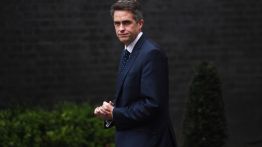
Politicians give speeches all the time, but with differing levels of significance. Can you think of a genuinely important political speech given by a minister this week? Maybe your answer is Rishi Sunak’s fiscal statement, and I’m not going to suggest that speech isn’t a big deal. It is. But I am going to make the case for a speech given today by Gavin Williamson, the Education Secretary. The speech was to the Social Market Foundation, the think-tank I run, so I obviously have an interest here. Nonetheless, I think Williamson’s speech deserves to be seen as a big deal.

New polling: who’s to blame for the UK’s Covid mistakes?

This week Boris Johnson came under heavy criticism for suggesting 'too many care homes didn’t really follow the procedures in the way that they could have'. While the Prime Minister has since said he stands by the comments, the intervention appears to be part of an inevitable blame game over who is at fault for mistakes made in the coronavirus pandemic. A public inquiry is eventually expected to take place – but in the meantime there is no shortage of public figures keen to tell anyone who will listen what went wrong. While the Opposition have pointed to government mistakes, ministers have suggested civil service inadequacies played a role. So, what do voters think?

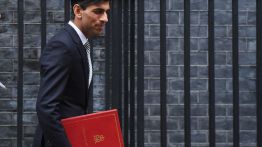
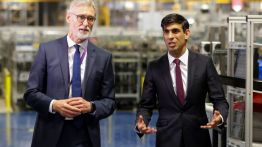
The rise of Brand Rishi

Long before he even ran for Mayor of London, Boris Johnson had developed an unusually strong political brand, to the extent that few bothered referring to him using his surname. Brand Boris inspires and infuriates in equal measure: his supporters have long argued he is able to reach parts of the electorate others can’t, while his critics find his first name alone to be a hair-trigger for impressive amounts of anger. At the bottom of this anger is often a great deal of envy that Johnson seems able to use his brand to get through scrapes and avoid scrutiny in a way other politicians wouldn’t. Both sides know, whether they would admit it or not, that Brand Boris is one of the most potent in modern politics.

Sunak’s Job Retention Bonus is a catastrophe

Such is the polarised state of the UK in 2020 that to unite the policy wonks of the left and the right a government policy must be either magnificent, or magnificently stupid. Unfortunately for the otherwise fêted chancellor Rishi Sunak, his policy to encourage companies to keep their furloughed workers in employment has managed to fall into the second category. Like many truly stupid policies, the Job Retention Bonus sounds quite sensible when it’s first set out: for every furloughed employee who is brought back to work and who still has a job by the end of January 2021, the government will pay the company that employs them a £1,000 bonus. On the face of it, that sounds reasonable – why not reward companies for sticking with their workers?

What the £15bn spend on PPE tells us about the mess we’re in

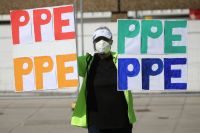
The £15 billion spent on PPE, personal protective equipment, since March is one of those numbers that once it's in your head, it's impossible to unthink it, like a ghoul from a nightmare. It gauges both the scale of the health and economic crisis we're enduring, but also quite how astonishingly unprepared the government really was. Remember at the beginning the Health Secretary Matt Hancock said we had more than adequate stocks of PPE because of no-deal planning. Just for the record, the £15bn dispensed on face masks, gowns and visors – which have a user life of anything from a day to a few weeks – would, on the government's sums, be enough to pay for at least 18 new hospitals.

A bailout for the arts is good – but reopening would have been better

The government’s £1.57 billion lifeline for the cultural sector was bigger than most practitioners were expecting — and drew a chorus of approval from arts panjandrums lined up to offer quotes on the end of the DCMS press release. A nifty media exercise, then, and a smart deployment of the Hank Paulson ‘big number’: when the US treasury secretary unveiled his $700 billion bailout package in 2008, a staffer admitted the number had been pulled out of the air simply because it sounded huge.

The ineptitude of despots

Displaying the pristine neutrality that has made her such a popular figure, Newsnight’s Emily Maitlis apparently tweeted the following last week: ‘No. 10 is trying to control the media, and everyone in our democracy should be afraid.’ Sadly, this typically sane and measured observation was later deleted. Was she told to delete it? Or did she think better of it but was not quite up to tweeting: ‘No. 10 isn’t trying to control the media and we should probably all rest easy.’ I wonder how many other tweets she’s deleted before I got around to seeing them? ‘The schools are closed not on account of Covid but because giant Tory goblins are devouring our children. And nobody says anything.

The young are the most vulnerable to the Covid crash

Coronavirus is deadlier for the old than the young. But for the young, it is economically devastating. A third of working 18- to 24-year-olds have lost work because of the pandemic. Between March and May, the number of those under 24 claiming universal credit doubled to almost half a million, and those who leave school or university this year can expect to earn less a decade from now than they otherwise would have done. During lockdown the young have, to a remarkable extent, accepted their lives being put on hold to protect their elders. Fairness dictates that steps must now be taken to prevent them from bearing the brunt of the coming recession. Without help, the young will be hit hard in the next few years.

‘Whitelisting’ banned in Whitehall

Brexit, coronavirus and an upcoming Whitehall shake-up is enough to keep the Cabinet Office busy – but it seems some civil servants are still more worried about other pressing issues. In an email on Wednesday to staff from the Cabinet Office's 'Digital and Technology Team' comes an apology. What for?  'Some people have raised concerns about the use of the term 'whitelisting' in our previous email,' the message says. 'We’re sorry for using inappropriate language, and we’re currently reviewing all of our guidance and communication to make sure it’s accessible'. The email goes on to reassure worried Whitehall workers that 'we’ll...

Mark Sedwill’s golden goodbye

Britain’s top Civil Servant Mark Sedwill, who is standing down as Cabinet Secretary in September, received a pleasant package in the post on Wednesday evening. In a public letter from the Prime Minister, it was announced that the departing civil servant would receive a whopping £250,000 boost to his pension pot – an incredible amount of money for a taxpayer-funded public servant. In 2015 the government promised to cap public sector payoffs at £95,000, but the policy was never implemented. Sedwill’s departure as Cabinet Secretary was announced at the end June, following multiple reports that he had clashed with Boris Johnson’s team about the UK’s coronavirus response.