Politics

Read about the latest political news, views and analysis

Is Boris’s Huawei ban quick enough for Tory MPs?

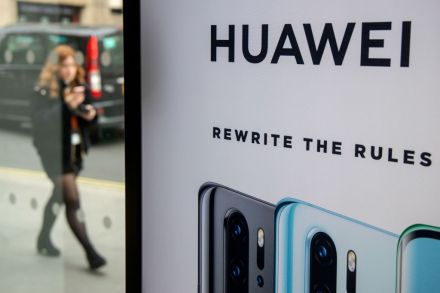
It is a big deal that the Chinese telecoms giant Huawei is being totally excluded from the UK's new fast 5G mobile network, and is redolent of a de facto cold war between the West and China. But Johnson has taken a more gradualist approach to the exclusion of Huawei than his Tory critics wanted and UK telecoms companies feared. BT and Vodafone got more time than they expected to move away from Huawei as a 5G and broadband supplier. The Tory MPs who want no involvement of the Chinese company in important communications infrastructure will feel only partially vindicated; many of them will be disappointed and angry. The UK telecoms giants had hoped they would have till 2027 to remove all kit from 5G.
Why Boris u-turned on Huawei

The government has today u-turned on allowing Huawei a role in the building of the UK’s 5G network. From the end of this year, mobile providers will be banned from buying Huawei kit and it’ll have to be removed altogether from their 5G networks by 2027. The UK government’s line is that this change in position is a result of the new US sanctions on the company. But it is also part of the government's broader strategy of trying to get the UK off the trajectory of ever-increasing dependence on China. Beijing’s actions in Hong Kong have illustrated the true nature of the regime while its attempts to bully Australia have highlighted how it is prepared to use economic links to punish countries that step out of line.

Should we abandon hopes of a V-shaped recovery?

It is an uptick so small that it could almost be comic, but the UK economy started to grow in May: by 1.8 per cent following a 20 per cent slump in April. Office for National Statistics figures out today show that, even in lockdown, surging online retail sales - coupled with signs of a recovery in construction - show a small increase in GDP. The big question is what shape we can now see: a L, a Nike swoosh or a sharp V? Reopening the economy can only go so far: tackling people’s fear of Covid-19 is key for a V-shaped recovery Today’s increase suggests growth is  - every so slightly - on the up, easing doomsday concerns about an L-shape (that is, no recovery at all).

Watch: Minister’s mixed messages on remote working

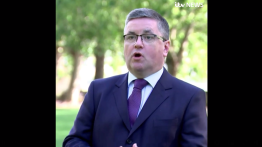
The government’s messaging on the coronavirus has left a lot to be desired in recent days – with confused statements on the easing of lockdown and the efficacy of face masks becoming the norm. Now it appears that even the government’s own ministers are struggling to keep up. On Monday, Justice Secretary Robert Buckland was interviewed by ITV, and was specifically asked about the guidance on working from home. Last week, Boris Johnson appeared to change the government’s position when he told members of the public that they should ‘go back to work if you can’. Despite this, the official guidance still states that the public should work from home where possible. Robert Buckland appeared to fully embrace that contradiction in his interview.

The two faces of Polish rebellion

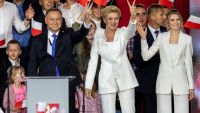
The narrowness of President Andrzej Duda's victory in this weekend's Polish presidential elections, where he defeated Rafał Trzaskowski, the Mayor of Warsaw, by less than 2 per cent, was God's gift to opinion commentators. What with Brexit, Trump et cetera we can write 800-1200 words about a nation being ‘divided’ and ‘polarised’ in our sleep. Why even write different pieces? Just shift the names around and you are golden. The problem with that kind of article is it often obscures national distinctions. In Poland, for example, President Duda's Law and Justice Party – unlike the Conservatives and the Republicans – is the more redistributionist of the two leading parties.

Britain’s GDP figures are dreadful but Sunak must still hold his nerve

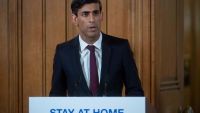
A five hundred quid shopping voucher for everyone. Five per cent off VAT across the board. Maybe suspending income tax for a couple of months, or getting rid of corporation tax until the end of the year. As today’s disappointing GDP numbers landed on his desk, the Chancellor Rishi Sunak must have been tempted to reach for the Treasury folder marked ‘extreme emergency measures’. The V-shaped recovery he was no doubt hoping to engineer is increasingly looking more like an L – a big drop followed by a flat line. Another round of government stimulus right now would be tempting. But it would also be a mistake: the Treasury has already borrowed and spent enough. All it can do now is to steadily re-open the economy and let supply catch up with demand.

Will making face masks compulsory help us get back to normal?

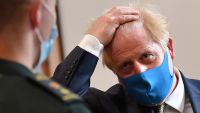
The government will announce today that from 24 July face coverings will be mandatory in shops and supermarkets. Those who don’t wear one risk a hundred pound fine. This decision is partly about reducing the spread of the virus – in a shift from the beginning of the crisis the government now thinks masks are effective in this regard, but also about giving people the confidence to go out. The argument goes that if we know everyone will be wearing a mask, so are less likely to spread the virus, when we go to the shops, we’ll be more inclined to head to the high street and spend money. I can see this case. But there is also a risk that the fact everyone is wearing masks will make people less inclined to go out, by emphasising how far from normal things still are.

What Conservative MPs make of Keir Starmer’s first 100 days

As Sir Keir Starmer marks 100 days this week as Labour leader, the polls have shown encouraging signs for his leadership. After leading Boris Johnson a few weeks ago on the question of who would make the best prime minister in an Opinium poll, an Observer poll over the weekend found that he also leads on competence, while 52 per cent of voters now say they could imagine Starmer inside No 10. Notably, the Conservatives still lead on economic competence. So, what does the Conservative party make of Starmer's leadership so far? During the leadership election, he was regarded as a safe if dull choice. Johnson's senior aide Dominic Cummings has since described him as a 'Remainer Lawyer'.

Does anyone know the truth about face masks?

15 min listen

In recent days, more supportive noises have been made by those on the top of government about the wearing of face masks indoors, especially in shops. Scotland has already made it compulsory. But it wasn't long ago when the government was saying that face masks may even harm efforts to control the virus. So does anyone know the truth about face masks? Katy Balls talks to James Forsyth and Fraser Nelson.

Revealed: Philip Hammond becomes Saudi advisor

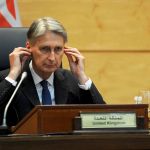
This week, former Chancellor Philip Hammond delivered a stark warning to Boris Johnson’s government about China. Speaking on Radio 4, the former Tory MP suggested that Britain should avoid weakening trade links with the world’s second largest economy, and instead be ‘frank’ in private about our ‘strong differences of opinion’. It was a strange intervention for him to make, as China implements its National Security Law in Hong Kong which threatens to undermine basic freedoms in the region.

Has the abuse of ‘test and trace’ started already?

I was followed three times in five days by men I didn’t know. During a pandemic – at any time, really – you would think they would have something better to do. They made gestures, shouted, catcalled, but I managed to lose them each time, partially because they had none of my details. They didn’t know my name, my number or my address. But what if they did know that information? What if they had been working at a bar I had gone to with friends and given my contact details over, for test and trace. That was the experience of one young woman this week. Shortly after she went to the pub, she received a message online by the bartender serving her.

Sunday shows round-up: Wearing face masks to shop is ‘good manners’, says Gove

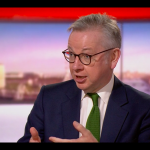
Michael Gove - We want to see more people back on the shop floor It was Michael Gove's turn to lead the government's broadcast rounds this morning. Sophy Ridge began by seeking clarification from the Cabinet Office Minister about the government's message on returning to the workplace: https://twitter.com/RidgeOnSunday/status/1282228898852462593?ref_src=twsrc%5Etfw MG: We want to see more people back at work, on the shop floor, in the office, wherever they can be. Of course, in some cases it's appropriate and convenient for some people to work from home, but we want to make sure that... the economic engines of this country are fired up again. Wearing face masks while shopping is 'good manners' Andrew Marr asked Gove if wearing face masks should be required while in shops.

Coronavirus has exposed the EU’s greatest flaw

Politics begins and ends with sovereignty: the duty and right to make the legitimate final decision. We have seen this clearly during the pandemic. In every country, people have come to depend on their governments, whose authority rests on acknowledged sovereignty. This is as true, or even truer, in democracies: while monarchs and aristocrats could dispute sovereignty – and, where it suited them, divide up the cake amongst themselves – in a democracy there can only be one ultimate sovereign: the people. No sovereignty, no democracy. For years we have been told the illusion, if not a fraud, that sovereignty can be ‘pooled’. Who takes the final decision when sovereignty is ‘pooled’? If we cannot answer that question, then it shows the fallacy.

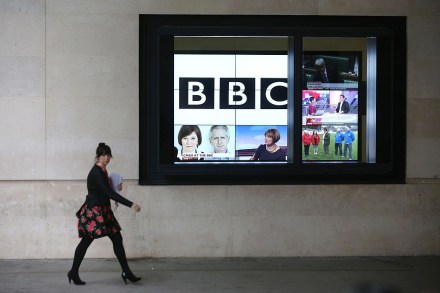
Will the BBC become a victim of its own bias?

The BBC is losing me. It’s a sudden estrangement and an unwelcome one but I can’t seem to shake it off. The cause is the Corporation’s coverage of this thing that is happening that we still don’t have a name for but definitely should not call a ‘moment’.  The butterfly effect from George Floyd’s killing is one of the biggest stories in a generation. Once revered men have been torn down; a new history is being written; radical propositions about race, identity and the regulation of ideas have burst into the mainstream. This may well be an overdue reckoning with a racist past and present, but it is accompanied by an intellectual terror that is making honest debate impossible. Liberal society itself is under attack.

‘Rishinomics’ could cost the Tories the next election

A truism is emerging that the Tories’ massive public spending has left Labour politically with nowhere to go. This quasi-social-democrat version of conservatism supposedly leaves all of the opposition’s attacks on the Tories blunted – if there’s a Conservative government spending big, what does Labour have to offer? There is another way of looking at this, however. The current Chancellor’s spending plans could result in a perfect storm for Labour at the next election – a chance for Starmer to attack the Tories from both the left and the right. From the left, Labour can claim that they will spend money in a more ‘caring and thoughtful’ manner, something their audience is already geared to believe.

Prepare for Javid vs Sunak in the next Tory leadership contest

In 1992 a young footballer named Dion Dublin left my local team, Cambridge United, to take up one of the most coveted jobs in football – centre-forward at Manchester United. After a promising first few outings, disaster struck when he suffered a broken leg. By the time he was restored to fitness a genius named Eric Cantona had been signed and was strutting his stuff up front. Being a good lad, young Dion took it well enough. But it was basically game over for him at Old Trafford. As Sajid Javid rose from the Commons back benches this week to ask Chancellor Rishi Sunak a question about his summer economic statement, I could not help but be reminded of Dion and Eric. Sunak had just given yet another breathtakingly fluent, pitch-perfect performance.

Boris Johnson changes ‘work from home’ advice

Has government policy on going back to work just shifted? Today at his "People’s PMQs", the Prime Minister was asked about support for universities and the social distancing measures that will be needed to make it safe for students and faculty to return. But Boris Johnson applied his response further than the university sector, turning the formal guidance - 'working from home where possible' - on its head: ‘I want people to go back to work as carefully as possible – it’s very important that people should be going back to work if they can, now. I think everybody’s taken the ‘stay at home if you can’. I think now we should say ‘go back to work if you can’.