Politics

Read about the latest political news, views and analysis

Keir Starmer’s undiplomatic incident at PMQs

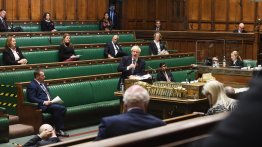
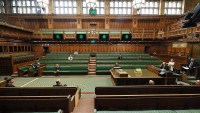
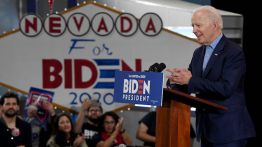
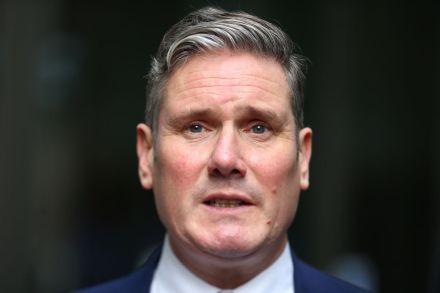
America loomed large at PMQs. The Labour leader, Sir Keir Starmer, blundered immediately. None of his advisers seem to know that Americans are highly sensitive to putdowns from snooty Brits. And Sir Keir – who is not just a posh Englishman but a Knight of the Bath as well – reinforced the stereotype by smearing the 70 million citizens who voted Republican. He called the Democratic victory ‘a new era of decency and compassion in the White House.’ In return for suggesting that half of America is indecent and uncaring, Sir Keir gained absolutely nothing. Keep him away from foreign affairs. He also struggled to score against Boris.
Covid or no Covid, next year’s exams must go ahead

The decision to cancel next summer’s GCSE and A-Level exams in Wales has left teachers and pupils in uncharted waters. After Scotland scrapped its GCSE-equivalent National 5 exams in 2021 – opting for teacher assessments and coursework instead – England is under pressure to follow suit. But education secretary Gavin Williamson must stick to his guns and ensure that next year's exams do go ahead. Why? Because it's worth remembering that we are not in the same position we were in back in March. The UK-wide decision taken then, to replace school exams with 'centre assessed grades' was made at the tail end of the school year.

Could the vaccine trigger another Tory divide?

13 min listen

Backbench Tory MPs are questioning the government's plan for rolling out the vaccine. Meanwhile, rumours over a new Downing Street chief of staff have triggered a spat inside No. 10. Gus Carter talks to James Forsyth and Katy Balls.

Did Brexit boost Britain’s vaccine deal?

The government’s successful deal to secure 40 million shots of Pfizer's vaccine is a political coup in more ways than one. Not only have ministers successfully backed what looks like the winning vaccine from a pool of 150, it has also pipped the EU to the post. The EU has only just signed on the dotted line with Pfizer to secure 200 million shots of the vaccine, with the coordinator of the European parliament's committee on public health Peter Liese saying that pharmaceuticals 'need to respect EU law and that’s why it took a while’.

Keir Starmer should welcome a Labour party split

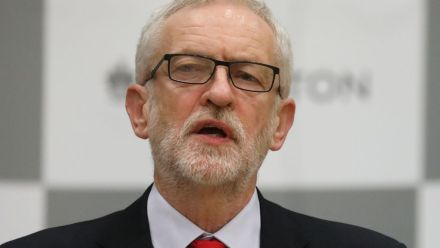
‘A split party will be doomed to defeat,’ says Len McCluskey, with a hint of threat. The left of Labour are sabre rattling behind the scenes and starting to go public; talk of them actually leaving the party is becoming louder. They are annoyed at Jeremy Corbyn’s ongoing suspension more than anything, but there are other gripes. They are irritated at Keir Starmer avoiding the culture wars as much as he can instead of taking their side without question. They are angered by the fact that Biden’s victory has robbed them of the ‘centrists can’t win’ narrative they were hoping to promote. But if the Labour party does split as a result, it could prove to be a blessing rather than a curse for Starmer in his bid to become prime minister.

The next parliamentary scandal waiting to happen

David Davis said something remarkable yesterday. In a debate on the membership of the Committee on Standards, he told MPs that the Tory deputy chief whip has 203 proxy votes. If Davis’s numbers are right, that is more than half the Tory parliamentary party. Obviously this is a consequence of Covid. But it has profound constitutional implications. If MPs can simply let their whips vote for them, they won’t have to think about what they are supporting in the same way they would if they had to walk through the division lobbies. The system will also, if left unchecked, lead to pressure on MPs to simply give their whip their vote and exercise it by proxy. The pandemic has inevitably forced changes on Parliament.

Three key questions on the Pfizer Covid vaccine

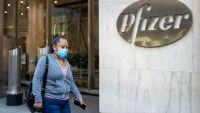
News that the Pfizer vaccine is 90 per cent effective has sparked a number of questions about the prospect of a vaccine ending this pandemic. As a special adviser in the Department of Health and Social Care until recently, my job was not to be an expert in epidemiology or science. My job was to ask questions, challenge answers, and ensure ministers had the right advice to be able to take important decisions. When it comes to working out how successful a vaccination programme will be, and what they can do to make it as successful as possible, there are three key questions ministers will be considering. First question: how effective is the vaccine? Clinical trials consist of enrolling a huge number of participants (43,538 in Pfizer’s case) and splitting them into two groups.

The ghastly race to phone the American president

Boris Johnson spoke to Joe Biden yesterday! Did you feel the thrill of it all? These Romans may be uncouth but they still know their Greeks. Or were you, instead, secretly annoyed that the new American president did not make good on all those breathless intimations that, summoning the ghosts of ancient persecutions and more recent insults, he would ‘snub’ the Prime Minister? Much of the Westminster village appears consumed by this absurdity on a quadrennial basis. Hence the manner in which the presence – or absence – of a bust of Winston Churchill in the Oval Office is deemed a reflection of the specialness of the special relationship. If Winston is there, all is fine; if he is not, irrelevance awaits.

Can the NHS get the vaccine roll-out right?

What could possibly go wrong with the coronavirus vaccine? Boris Johnson has boasted that the UK is 'towards the front of the pack' when it comes to orders of the Pfizer/BioNTech inoculation, and health chiefs say they hope to start rolling it out from December, if it gets approval. The biggest 'if' now isn't so much the approval process as it is the government's ability to deliver a vaccination programme at such a big scale. So far, large government projects involving coronavirus have not inspired a great deal of confidence. First there was the government's insistence that it was on top of demand for personal protective equipment for hospitals and care homes. Then there was the – ongoing – saga of the Test and Trace programme.

Boris gets Biden’s first European call

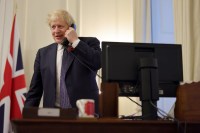
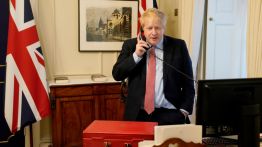
Although there has been much speculation of late that Boris Johnson will struggle to forge ties with Joe Biden, the pair's relationship has got off to a promising start. After making his first phone call to America's neighbour Canada, the president-elect shared a phone call with the UK Prime Minister. A Downing Street spokesperson says Johnson used the call to congratulate Biden on his election as president of the United States and vice president-elect Kamala Harris on her historic achievement:  'They discussed the close and longstanding relationship between our countries and committed to building on this partnership in the years ahead, in areas such as trade and security – including through Nato'.

Taoiseach’s Biden fail

Oh dear. There has been much amusement today over the revelation that the graphic Boris Johnson shared to congratulate Joe Biden on winning the US election had originally been meant for Donald Trump. Still, it could be worse. Although there has been a lot of talk in the media of the Irish government's close links to the President-Elect, it turns out that there is still some work to do. This afternoon the Prime Minister of Ireland Michael Martin took to social media to share the news that he had shared a much coveted early phone call with Biden. Only shortly after that tweet aired, it was deleted. It turns out at the time of tweeting no such call had taken place – instead it's 'being arranged'.

Why is No. 10 so cautious about a Covid vaccine?

14 min listen

The Pfizer vaccine is being lauded by many as the silver bullet that could end the Covid crisis. Meanwhile, the UK has seen a record number of redundancies. Also, No. 10 suffered serious defeat in the Lords last night over its controversial Brexit bill. Katy Balls talks to James Forsyth and Kate Andrews.

Pfizer’s Covid vaccine is a victory for the free market

There are still safety trials to be completed. Data has to be collected, checked, double-checked, and then peer-reviewed. And we still need to find out whether it is the most effective of the various candidates currently in development or whether there is something even better just around the corner. But the Pfizer vaccine has already proved something beyond any reasonable doubt. Free enterprise works. And for all its flaws, it remains the best system for solving complex problems. Amid all the justifiable excitement over the potential approval of the first safe and effective vaccine against Covid-19 it would be easy to overlook one point: the vaccine was developed with private money.

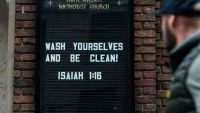
Vicars against lockdown

Is it time for vicars to speak out against lockdown? As an Anglican priest, I've watched in bemusement as some of my colleagues have waded in on Brexit, Black Lives Matter, or Dominic Cummings's trip to Barnard Castle. But why are many of these same voices silent on an issue that affects far more of us: the Prime Minister's drastic order for us to stay at home and the curtailing (again) of church services? The church used to pride itself on robust debate. It was a seedbed for intellectual giants who were not afraid to say their mind. But whatever happened to those colourful canons, dotty theologians, and rebellious bishops who made the Church of England so gloriously interesting, if not fun?

Patrick Vallance was right to hedge his vaccine bets

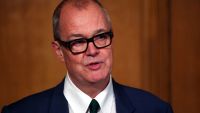
Patrick Vallance has rightly come under fire over the use of statistics during the government’s now infamous lockdown press conference, but we ought to give him some credit for the UK’s preparedness for a Covid vaccine. It was Vallance’s forward thinking that established the taskforce responsible for securing 40 million doses of the Pfizer vaccine (enough to cover 20 million people) back in May 2020. This taskforce also made the call to spread the UK’s vaccine investment across six suppliers. People will quibble about the number of doses ordered, but thanks to Vallance, the UK is in a position to benefit from whichever vaccine reaches the market first. After months of negative headlines, Boris Johnson's government also deserves some praise.

In praise of Big Pharma

In the last decade, the mega corporation has taken a lot of stick from just about everyone. But hold on. It is just about to rescue us from the worst global crisis since world war two. Drugs giant Pfizer — part of the Big Pharma — has announced that its Covid-19 vaccine was effective in trials. It looks safe as well. It may well be approved before the end of 2020. With luck we should have a few million doses this year, and a billion by next year. AstraZeneca may not be far behind with the Oxford vaccine. And a few more are on the way. With a safe effective vaccine, a world that has been plunged into chaos can start getting back to normal. Lockdowns can be ended. Mass unemployment can be avoided. The threat of bankruptcy will be lifted from millions of business.

‘We are no longer a great power’: The twin hazards of Covid and Brexit

On this day in 1923, Hitler failed to seize power in Germany; in 1938, it marked Kristallnacht and the Nazi assault on Jews; and, in 1989, the Berlin Wall fell. Each of these events impacted on the wider world – and that wider world will now impact on “The State We’re In”. The future of that State requires plain speaking if we are to be honest with our nation. And, of course, with ourselves. The great powers of our age are the United States, China, and the European Union. The world they straddle is fractious. The values of liberal society are stalled, if not in retreat. America and China are in a Trade War and an embryonic Cold War. Europe and America are far apart on many issues, but both deplore China’s authoritarian direction under President Xi.

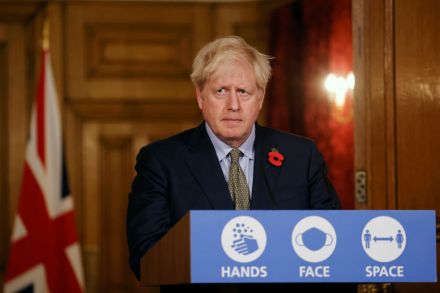
Boris Johnson’s sobering press conference

Although the Prime Minister is known to be an optimist, he was at pains to play down reports of a vaccine breakthrough in Monday's coronavirus press conference. After early findings from stage three of the Pfizer and BioNTech vaccine trial suggested it could prevent more than 90 per cent of people from getting Covid-19, Johnson warned of the long road ahead. He said that while the search for an effective vaccine had 'cleared one significant hurdle' there are several more to go. Johnson's caution is in part down to the fact that the Pfizer vaccine trials are not over. More data needs to be published, its safety proved and regulatory approval to be found.