Politics

Read about the latest political news, views and analysis

Boris Johnson’s ‘reset’ week gets off to a bad start

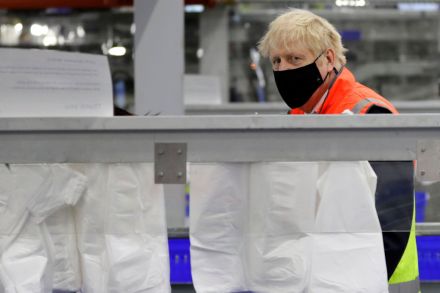
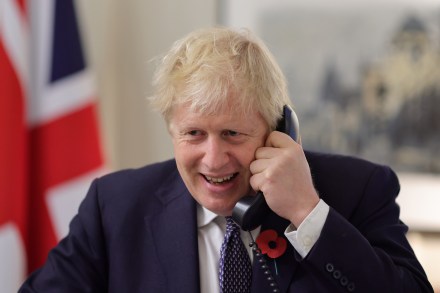
After a weekend of torrid headlines over infighting in 10 Downing Street, Boris Johnson had hoped to use this week to prove his critics wrong about the state of the government. Following the departure of his senior aides Dominic Cummings and Lee Cain and amid speculation the Tory party could pivot to a softer form of Conservatism, the Prime Minister planned to reassure voters about his commitments on Brexit – with talks nearing their conclusion – as well as the leveling up agenda. Some in government were even describing this as a 'reset week'. However, such plans have become more complicated. The Prime Minister is self-isolating this evening after coming into contact with an MP who has since tested positive for coronavirus.
Sunday shows round-up: Brexit deal could fall down over fishing

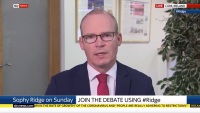
Simon Coveney - Internal Market Bill could mean no trade deal Ireland's Foreign Minister Simon Coveney returned to Sophy Ridge's show this week to make clear his objections to the government's Internal Market Bill. The bill, which famously threatened to break the EU Withdrawal Agreement in 'a specific and limited way', has recently been watered down by the House of Lords. However, it is expected that the government will reinsert the offending clauses, which would keep Northern Ireland's market aligned with Britain in the event of no trade deal. Coveney warned that this move could derail the prospective trade deal altogether: https://twitter.com/RidgeOnSunday/status/1327899546903588864?

The Pascoe emails: London to be locked down until Spring

The £12 billion splurge of taxpayer cash into a test-and-trace system meant that due process was suspended. Cash was spent without question, shortcuts were taken, and basic questions were dodged. For example: was contact tracing ever going to stop a virus which, as we knew as early as March, left no symptoms in many of those it infects? As well, in the rush, mates were hired pretty quickly. Today’s Sunday Times focuses on a scandal that has been brewing for some time now: the way that friends of well-connected Tories have been looped in on the biggest Covid projects. Some are on rich contracts, others as unpaid advisers. If you’re a lobbyist, like Portland chairman George Pascoe Watson, you don’t need the money.

Brexit Britain will be the winner in the EU’s war on Joe Biden

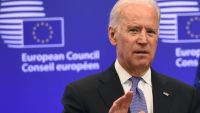
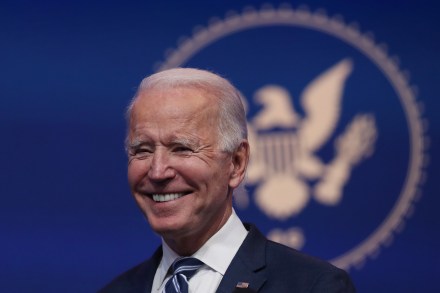
A new era of transatlantic cooperation will have begun. The United States will pivot towards Brussels. The trade wars will come to a swift end, and the American president will once again be a respected figure on this side of the Atlantic.  With Donald Trump finally defeated, if not quite yet evicted from the White House, most commentators are expecting a far closer relationship between Berlin, Paris, Brussels and Washington, with Boris’s Brexit Britain left out in the cold. But hold on. Something is not quite right with that narrative. Instead, the EU seems intent on going to war with Joe Biden. In the very same week that the veteran politician finally made it to the presidency, the European Union has, oddly, made two extraordinarily aggressive moves against the US.

How Tory MPs are reacting to Dominic Cummings’ departure

With Boris Johnson's senior aides Dominic Cummings and Lee Cain both working from home until they officially leave their roles, attention is turning to what will follow the Downing Street Vote Leave era. Up until now, aides from the Vote Leave campaign have held the balance of power in No. 10. This has seen Johnson successfully re-establish the Tories as a party of Brexit and adopt a more combative approach on a range of issues. As I say in the i paper, the departure of the pair marks a new chapter for Johnson’s government.  One place where this is broadly being viewed positively is the Tory backbenches. 'It’s good news that Vote Leave are weakening their grip,' one Conservative MP from the 2015 intake says of this week’s events.

What do special advisers actually do?

24 min listen

Dominic Cummings walked out of No. 10 Downing Street last night – but what did he actually do in there? Katy Balls is joined by Fraser Nelson and Peter Cardwell, a former SpAd and author of The Secret Life of Special Advisers.

The time is ripe for a Boris comeback

‘The thing about the greased piglet is that he manages to slip through other people’s hands where mere mortals fail.’ That was the wry assessment of Boris Johnson, given last autumn by David Cameron who has followed the Prime Minister’s brilliant career since their schooldays with many a chuckle and shake of the head. A week or so ago it seemed as though the piglet had finally been cornered. Authority was ebbing away in the wake of Johnson’s chaotic imposition of a second nationwide lockdown. The decisive shift in the polls which Keir Starmer had been waiting for appeared finally to be happening. And then, on Monday, came the Pfizer announcement that its vaccine worked, with an amazing 90 per cent effectiveness rate.

A warning from history for Keir Starmer

It is nearly a year since one of the Labour party’s worst ever election defeats; and just over six months since Keir Starmer became its leader. Starmer has acknowledged that his party has a mountain to climb if it is to win the next election, but that is his target. Most opinion surveys suggest he has started well: Labour has drawn level with the Conservatives. This rapid improvement might however be courtesy of the Prime Minister’s uncertain handling of the unprecedented Covid crisis. With a vaccine in the offing, voters might again look favourably on Boris Johnson as Britain returns to something-approaching normality.

Did Big Tech sway the election?

30 min listen

Joe Biden won the 2020 election, but was support from social and legacy media the reason why? Freddy Gray speaks to Allum Bokhari, author of #Deleted, about whether Big Tech swung the result.

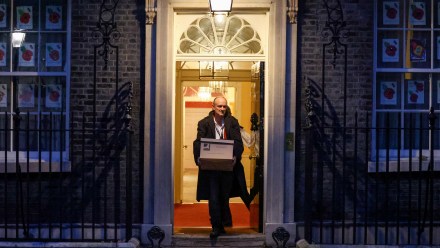
Dominic Cummings leaves the building

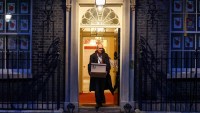
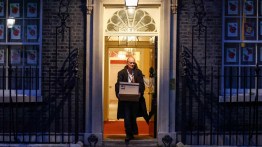
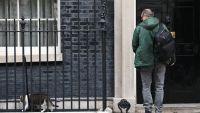
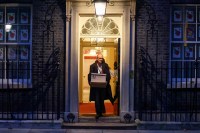
After a week of infighting in Downing Street which saw the resignation of Director of Communications Lee Cain and senior aide Dominic Cummings, both men have left the building for what government aides believe will be the last time. Although Cain and Cummings intended to continue their work until mid December, the suggestion is that they will do this working from home.  Johnson held a meeting with the pair this evening where he discussed their departures. While they decided it was best for them to work remotely until they left, one person aware of the discussion say it was amicable – with the Prime Minister paying tribute to them both for their work.

Is lockdown II working?

How much has this week’s ructions in Downing Street been influenced by the Prime Minister’s decision, two weeks ago, to call for a new 28 day lockdown – and the subsequent questions asked of the data to justify it? On the one side are the 50 or so Conservative MPs who have joined the Covid Recovery Group calling for an end to lockdowns, and the many others who sympathise with them. On the other was Dominic Cummings, believed to be a keen proponent of lockdown. Last week’s infection survey – the weekly Office of National Statistics study showing the prevalence of Covid-19 in the general population – suggested that the number of people with the disease had begun to level off even before the announcement of the new lockdown on 31 October.

The strategic consequences of a no-deal Brexit

If it was not for the drama in Downing Street, Brexit would be dominating the news right now. Next week is regarded as a crucial week for the negotiations. If they don’t make progress, then the UK leaving without a trade deal will become the most likely outcome. The geopolitical consequences of this failure would dwarf the economic ones, I say in the Times today. No deal would be acrimonious. The EU would probably take a hard-line approach to border checks to try to force Britain back to the table. Boris Johnson would, as the Internal Market Bill proposes, override parts of the withdrawal agreement that he himself signed. The EU would take legal action.

Dominic Cummings doesn’t matter. Boris Johnson does

Yesterday I wrote here that the shenanigans of special advisers weren’t very important and shouldn’t get so much attention. And then Dominic Cummings resigned, and the world shifted on its axis, so what sort of idiot am I, eh? It’s important that when journalists get things wrong, they say so. But this isn’t a mea culpa. I stand by my point about the importance of political advisers being overstated and over-reported. Dominic Cummings doesn’t really matter. Boris Johnson does. There is talk in many papers and places this morning about the impact of Cummings’s departure from No. 10. Will it lead to a change in approach, a shift in policy focus from the centre?

Why Dominic Cummings had to go

On 24 July last year, I wrote that the government of Boris Johnson was being taken over by Dominic Cummings and his Vote Leave team. That was not hyperbole. Since then, both the reality of Cummings and the myths about him, have defined Johnson's first 16 months as Prime Minister. Which is why, as one Downing Street insider put it to me, Cummings' departure ‘feels like a fire has raged through the building.’ For all the controversy stirred up by Cummings – or perhaps because of it, to an extent – Johnson owes a substantial debt to the eccentric special adviser who organised the referendum campaign for leaving the EU.

With Dominic Cummings gone, Boris can reinvent himself

Dominic Cummings's departure has been described as a big loss to Boris Johnson. There is no doubt that his top advisor played a significant role in the Tories' thumping election win a year ago. But his time in Downing Street has been less successful. So could Cummings' departure actually help Boris? His Christmas resignation – which Cummings insists is in keeping with the pledge made at the start of this year – is a chance for Boris Johnson to reinvent himself. It could also ultimately help save his flagging premiership, one dragged down by the Covid crisis and the continuing impossibility of ending Brexit in a satisfactory manner.

Dominic Cummings’s departure is dangerous timing for Boris

Dominic Cummings didn’t angle for this job: Boris Johnson begged him to take it. The Tories faced extinction after the Theresa May debacle. Boris needed purpose, direction and miracles – which Cummings had a track record in supplying. He brought with him into No. 10 both Vote Leave staff and its modus operandi: a fixed focus on purpose, dedication to delivering and not caring too much about what commentators (like me) say. The result: an unexpected Brexit deal followed by an 80-strong Tory majority. The team stayed in place to work on what Johnson thought would be the defining issue of 2020: a Brexit deal.

Cummings set to leave No. 10 by Christmas

Dominic Cummings will leave Downing Street at the end of this year, the BBC’s political editor Laura Kuenssberg is reporting. Cummings is one of those rare individuals who has bent the arc of history. He has been crucial, if not indispensable, to several key moments in this country’s recent past. His work at Business for Sterling is one of the things that put Tony Blair off attempting to take the UK into the Euro. Even more importantly, it is hard to believe that Leave would have won the 2016 referendum without the brilliant, heterodox campaign that Cummings devised. Cummings has long been more interested in how government works The victory in that Brexit referendum might have come to very little if Cummings had not returned to the fray in 2019.