Jamie Njoku-Goodwin

Jamie Njoku-Goodwin

Jamie Njoku-Goodwin is chief executive of UK Music, and a former special adviser at the Department for Health and Social Care

Do chess players make for better politicians?

From our UK edition

11 min listen

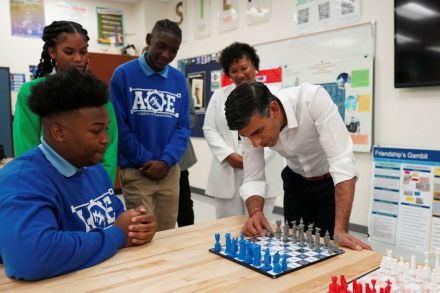
Rishi Sunak is apparently looking to expand the teaching of chess in schools, and to install chess sets in public parks, and will unveil the policy alongside a giant chessboard in the No. 10 garden. What is the Prime Minister thinking? And what does it say about Sunak’s idea of education?  Cindy Yu speaks to Katy Balls and Jamie Njoku-Goodwin, a former special adviser and Westminster chess hustler.
Podcast special: Britain in the global fight against Covid

From our UK edition

39 min listen

The UK was the first country in the world to begin its formal vaccine rollout, starting with the 91 year old Margaret Keenan. In the years since, the pandemic has been almost entirely routed in this country (though its impact on the economy, on healthcare, on the criminal justice system, continue to be suffered). But the British vaccine – developed by Oxford University and AstraZeneca – was a key part of the global fight against the pandemic. What was it like to be on the inside during those crucial first months? The Spectator has brought together politicians, advisors and scientists who played key roles during that time, to reveal a picture of dealing with unprecedented crisis in smart ways.

Court of Chaos: Boris’s style of government isn’t working for him — or his country

From our UK edition

43 min listen

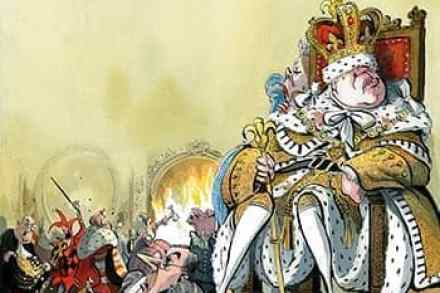
In this week’s episode: Who is advising the PM? In our cover story this week, our editor Fraser Nelson takes a deep dive into No. 10 politics and finds a court of chaos inside. With a large parliamentary majority, an extremely young team and the departure of Domonic Cummings is there anyone left in the Conservative party who can stand up to the Prime Minister? Fraser talks on the podcast with former Conservative party chairman, Kenneth Baker on the reign of King Boris. (00:45)Also this week: Should the West be prepared to defend Taiwan?Tensions over the island of Taiwan are rising at an alarming rate.

The weird and wonderful world of underground chess

From our UK edition

Most people have a set list to tick off when visiting a new country. The national museum, the famous bridge, the legendary music venue. For me, no holiday is complete until I’ve checked out the local chess scene. The habit started on a solo trip to Paris a few years ago. As a keen chess player — no master, but a competent amateur — I made sure to visit Jardin du Luxembourg, where chess enthusiasts famously congregate for games. After enjoying some matches before dusk fell and the regulars packed up, I offhandedly asked my opponent where else was good to play. In the manner of a John le Carré character, he gave me a time, a name and an address. Intrigued, I followed his instructions and found myself in an empty bar, about to close, in the 11th arrondissement.

Three key questions on the Pfizer Covid vaccine

From our UK edition

News that the Pfizer vaccine is 90 per cent effective has sparked a number of questions about the prospect of a vaccine ending this pandemic. As a special adviser in the Department of Health and Social Care until recently, my job was not to be an expert in epidemiology or science. My job was to ask questions, challenge answers, and ensure ministers had the right advice to be able to take important decisions. When it comes to working out how successful a vaccination programme will be, and what they can do to make it as successful as possible, there are three key questions ministers will be considering. First question: how effective is the vaccine? Clinical trials consist of enrolling a huge number of participants (43,538 in Pfizer’s case) and splitting them into two groups.

How we can save our summer

From our UK edition

The crisis facing hospitals is truly awful and cannot be understated. But while the short term situation is grim, it is important that we detach the immediate challenges from the post-vaccine outlook. They are radically different landscapes and must be addressed separately. Before enough people are vaccinated against Covid-19, we can't pull any punches in cracking down on the virus. This is not just because of the increased transmissibility of this new variant, or the huge challenges facing the NHS, but because with the vaccine being rolled out we are so close to success against this awful virus. The lower the infection rates, the sooner we can relax restrictions properly. So it is in all our interests to do everything we can to suppress infections rates now.

Why a spring return to normal might still be possible

From our UK edition

The new mutant strain of Covid-19 is concerning and is likely to make the next few months particularly difficult. But here's the good news: its emergence doesn't necessarily mean that the government's previous optimism about a spring return to normal is off the cards During this Covid-19 outbreak, a common mistake has been to adopt a binary outlook: things are either good or bad, ‘getting better’ or ‘getting worse’. But pandemics are not linear – they are curves. Things can be getting better in the long term, but worse in the immediate short term. The events of the last few days are a good example. It's worth then seeing the decision to 'cancel Christmas' and the imposition of Tier 4 rules in this wider context.