Politics

Read about the latest political news, views and analysis

Boris can’t just say no to Nicola

By May, the acute phase of the Covid crisis should be over. But the elections scheduled for that month threaten to throw the government into a fresh crisis. Nicola Sturgeon looks set to lead the Scottish National Party to a majority in the Holyrood elections. Given that the SNP manifesto will commit the party to a second independence referendum, she will claim this victory as a mandate for holding one. But no legal referendum can take place without Westminster’s consent, which will be refused. As Covid recedes into the distance, a fresh justification will be needed for saying no But, as I argue in the Times today, the danger is that a two-letter answer with no further explanation could be seen as typical Tory, or English, arrogance.
Is the Cabinet divide on Covid back?

11 min listen

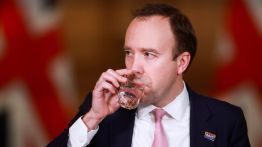
The Guardian reported today that the Department of Health is considering offering a £500 isolation fee to encourage more people with symptoms to get tested. But the Treasury hit back fast saying that they had not seen these proposals and that the idea was 'bonkers'. Katy Balls talks to James Forsyth and Fraser Nelson about what the row says about the conversations behind the scenes.

The BBC needs to face up to the truth about the licence fee’s future

It won’t come as much of a surprise to learn that the National Audit Office thinks the BBC faces 'significant' uncertainty over its financial future due to changes in viewing habits. The NAO’s findings are about as ground-breaking as your average anodyne Beeb drama, but they do tighten the cilice on a funding model that is impossibly outdated in the 21st century.  In the past decade alone, there has been a 30 per cent decline in BBC TV viewing; on average, the amount of time an adult spent watching broadcast BBC TV fell from 80 minutes per day in 2010 to 56 minutes in 2019. When it comes to younger viewers, the NAO’s findings are ever more troubling for the BBC: in the UK, 18-34 year olds now watch seven times as much Netflix and YouTube as BBC1 content.

The courts, the bishops and the troubling case of a dying man

It’s not every day a Polish bishop asks an English bishop to write to Matt Hancock to plead for the life of a Polish citizen living in England, but that’s what’s happened this week. Last year, Mr RS, as he’s known, had a heart attack, went to hospital in Plymouth and was given hydration and nutrition through tubes into his body. The hospital withdrew this support after a court ruling earlier this month. RS’s wife and children, living here, wanted the hydration and feeding stopped; his Polish mother and sisters wanted it maintained. The Court of Appeal has sided with his wife and children, while the European Court of Human Rights has refused applications by his Polish family to intervene.

When will Boris come clean to Tory MPs about the length of lockdown?

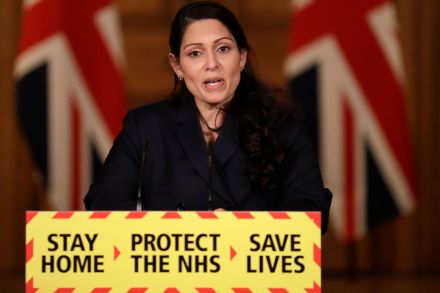
This evening's Downing Street coronavirus press briefing showed that ministers are still focused on enforcement of existing restrictions, rather than introducing even tighter curbs. Home Secretary Priti Patel announced £800 fines for people attending house parties, which will double for each repeat offence, up to a maximum of £6,400. Patel said the police would target the 'small minority that refuse to do the right thing', and warned that the police were increasingly enforcing the rules.  Speaking alongside her, NHS England regional medical director for London Dir Vin Diwakar issued a moral warning to members of the public who think it is acceptable to flout the rules.

Biden time: can he stop America’s ‘uncivil war’?

35 min listen

Can Joe Biden unite America? (01:05) Why is the UK's vaccine rollout its most important economic policy? (12:10) And how can re-enactments bring history to life? (22:15)With The Spectator's economics correspondent Kate Andrews; US editor Freddy Gray; political editor James Forsyth; Capital Economics chairman Roger Bootle; re-enactor Chris Brown and historical consultant Justin Pollard.Presented by Lara Prendergast.Produced by Max Jeffery, Alexa Rendell, Sam Russell and Matt Taylor.

Will the English lockdown last past Easter?

12 min listen

No 10 refused to rule out the possibility today, and the Health Secretary has also refused to be drawn on whether or not the vaccinating the most vulnerable would provide the roadmap out of lockdown. Cindy Yu talks to James Forsyth and Katy Balls about the possibility that England's lockdown will last into the summer.

Is Boris Johnson woke?

Is Boris Johnson woke? That's a question the Prime Minister's spokesperson struggled to answer today in a lobby briefing. Instead of a 'yes' or 'no', they responded by saying Johnson was committed to levelling up all communities. The reason for the question in the first place relates to an interview shadow foreign secretary Lisa Nandy gave to the Guardian in which she asserted that new US president Joe Biden was 'woke' (that may come as news to him, given he was confused what the term meant during his presidential campaign).   This, in turn, led to the Prime Minister being asked whether he agreed that Biden was woke – to which Johnson looked lost for words.

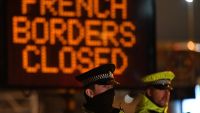
Could Britain close its borders once lockdown ends?

The government’s most important economic policy is its vaccination programme, I say in the magazine this week. The speed at which people are immunised will determine when — and how quickly — the economy can reopen. ‘The advantage the vaccine has given us is so huge that we have to protect that’ But even when the so-called ‘non-pharmaceutical interventions’ are lifted domestically, there will likely continue to be restrictions on those entering from abroad. The view is that testing and tighter procedures at the border will be needed to protect the UK from the danger of any vaccine-resistant strain.

Britain’s copyright law is a mess

Copyright often seems like a joke. Most of us infringe it constantly, and publicly, without a second’s thought. With the advent of the internet, the public uploads countless videos, music, photographs, art, and a whole host of other things without the permission of the creators. Even large organisations get away with it. A few years ago, for example, the National Trust posted a picture of an unusual, heart-shaped honeycomb to social media, claiming it had been made by bees at one of their properties. It went viral, but it wasn’t actually theirs. Luckily for them, the beekeeper who took the photograph didn’t press the issue. Even creators, whom the system was created to benefit, are often blissfully unaware of the rules.

Boris’s woke nightmare

Labour’s shadow Foreign Secretary, Lisa Nandy, opened a Pandora’s box yesterday in an interview with the Guardian, in which she praised the new US President Joe Biden for being a ‘woke guy’ and, according to the paper, appeared to suggest that those defending the Parliament square statue of Churchill were comparable to white supremacists marching in America. Mr S imagines that isn’t quite the strategy the party had in mind to win back Red Wall towns lost in 2019. Nonetheless, it appeared to be Boris Johnson who was struggling most with the idea of a ‘woke’ US President yesterday. In an interview with Sky News, the PM was asked if he thought Joe Biden was woke as well.

My stamp duty solution for the Chancellor

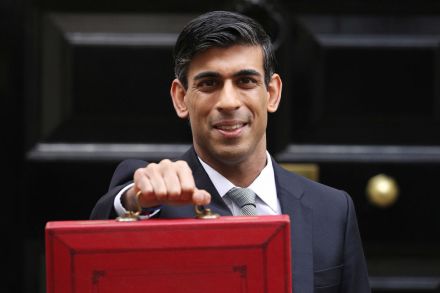
On the Wednesday in early July when Rishi Sunak announced a temporary increase from £125,000 to £500,000 in the stamp duty threshold for house purchases, a record 8.5 million people visited the Rightmove property website and I’m pretty sure I was one of them. I continued visiting it weekly: it became a lockdown obsession, alongside French television thrillers, until last month I finally spotted a London flat I wanted to buy. Now, like thousands of others, I’m pushing to complete before 31 March, when the stamp duty holiday — a £15,000 saving for me but the equivalent of a £3.9 billion annual giveaway for the Treasury — is due to expire.

Could the Australian approach to Covid work in Britain?

The government’s most important economic policy is its vaccination programme. The speed at which people are immunised will determine when — and how quickly — the economy can reopen. If all goes to plan, Britain will be the first country in Europe to get rid of restrictions and start the job of social repair. Three factors give grounds for hope. First, there is remarkably little ‘anti-vax’ sentiment in the UK. More than 70 per cent of the population ‘would definitely get’ a Covid vaccine if it were made available to them this week. In Germany, it’s just 41 per cent; in France, 30 per cent. The willingness of the British to have the jab means that there will be no major problems with take-up.

Rishi Sunak’s Singapore problem

For those trying to argue that the evils of colonialism still hang over former lands of the British Empire, the legacy of racism suppressing their ambitions and achievements, the Republic of Singapore presents something of a challenge.  Just how did this particular colony manage to become not only one of the wealthiest countries in the world, but one of the highest-fliers in the United Nations' Human Development Index? Indeed, the Asian city state has once again this week been promoted as a model for its former colonial master to emulate.  It can’t just be the Guinness that has attracted investment to another former corner of British soil over the past couple of decades: the Republic of Ireland.

Will Theresa May’s intervention be the first of many?

17 min listen

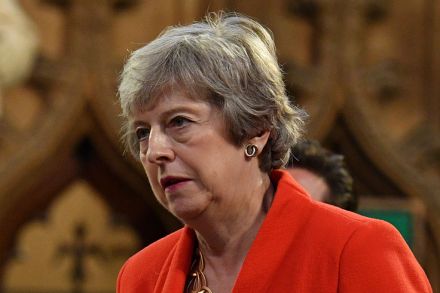
Timed with the inauguration of Joe Biden, Theresa May has written an op-ed in the Daily Mail criticising her successor for his 'abandon of our global moral leadership'. Cindy Yu talks to Katy Balls and Fraser Nelson about what this former prime minister will do from the backbenches.

James Corden and the problem with post-Trump comedy

With admirable and determined positivity, James Corden and the Late, Late Show released a Les Mis-themed video last night, bidding a fond adieu to the Trump era. It was a coup — if you’ll forgive the word — de théatre. Corden and his team are well-versed in the well-oiled machinery of the viral video. And this one was no exception.  The Les Misérables number 'One Day More' was transposed from its original setting on the eve of the 1832 Paris Uprising to the eve of the departure of Trump, plucked as he was by helicopter like a thorn from the lion’s paw of American democracy after four short, limping years. It was neatly done.

Sturgeon advisor: independent Scotland would have handled Covid better

Scottish nationalists put a lot of stock in the mystical powers of independence, but this is a new one to Mr S: independence would apparently have improved Scotland’s response to Covid-19. At least according to Devi Sridhar, professor of global public health at Edinburgh University and member of the Scottish government’s Covid-19 advisory group. Interviewed on Holyrood magazine’s podcast, she was asked whether a separate Scotland would have made different decisions on the pandemic. ‘Yes, definitely,’ she reportedly replied.

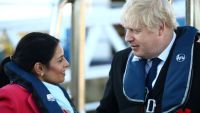
Priti Patel admits Boris got borders wrong

The government's border policy has become an increasing cause of bemusement among MPs and the country at large. The UK did not close its borders during the first lockdown when countries such as New Zealand did. When they did eventually bring in tighter border restrictions, it was just at the point Conservative MPs thought they ought to be opening up.  This time around, things are stricter, yet there were still delays. A new requirement to have a negative Covid test 72 hours before travelling to the UK has been brought in but even that had little sense of urgency with confusion over whether it would come into effect last Friday or Monday. Border restrictions will be in place for some time, even if the vaccine rollout goes well.