Politics

Read about the latest political news, views and analysis

Why are the Tories split on universal credit?

12 min listen

The Commons will today see a debate over extending the universal credit uplift. While Thérèse Coffey, the work and pensions secretary, wants the weekly increase to remain, Rishi Sunak wants to replace it with a one-off £500 payment. Isabel Hardman talks to James Forsyth and Katy Balls about the Tory split.

The Tory split over universal credit

Today's papers are splashed with good news on the pace of the vaccine rollout, with over-70s now being invited for a jab. However, the issue currently causing angst in the Tory party is universal credit. Last week, Labour attacked the government over free school meals, today they will put the government under pressure over the universal credit uplift. At the start of the pandemic in April last year, Rishi Sunak increased the payment by £20 a week.  The issue of whether that increase will continue will be discussed at opposition day debate this evening. Boris Johnson is being urged to extend the benefit increase beyond 31 March when it is currently set to come to an end. This is an idea that has won support with many Tory MPs.

From Russia with love: 12 films set in the former Soviet Union

With Russia back in the news yet again, it’s interesting to note how comparatively few English language movies are set in the country. Admittedly in TV there’s been an uptick lately, with two recent series on Catherine The Great in youth/middle age, the Andrew Davies version of War & Peace, McMafia and the multi award-winning Chernobyl. But in terms of film, depictions of Russia are often confined to WWII, Cold War and other (surprise surprise) spy-related themes. Here are a few of the most memorable: Enemy at the Gates (2001, Amazon Rental/Buy) https://www.youtube.com/watch?v=4O-sMh_DO6I File this under ‘could have been better’.

Alexei Navalny: a profile in courage

Vladimir Putin likes his opponents in exile: it makes them easier to portray as defectors who have turned their back on Russia. It suited him to have Alexei Navalny, the most prominent opposition leader in Russia, hiding in Germany fearing he’d be arrested (or worse) if he returned. But now, Navalny has flown back to Moscow – and was duly arrested at passport control. Every stage of his return – his flight out, his arrest, his goodbye to his wife – has been vividly documented on social media with images already making their way around Russia and the world. Navalny has made a swap: he has sacrificed his liberty to leave no doubt about his commitment to his country. And no doubt about how Putin operates.

Sunday shows round-up: All adults to be offered vaccine by September, says Raab

If there is one area that the government can point to as having had a successful pandemic, it would be the speed at which the UK has been able to rollout the vaccines for Covid-19. The Telegraph has even reported that their Whitehall sources believe that every adult will be able to receive their first jab by the end of June. Andrew Marr put this scenario to the Foreign Secretary Dominic Raab, who despite sticking to the government script, suggested that this target was not completely unfeasible: https://twitter.com/BBCPolitics/status/1350735780461867009?ref_src=twsrc%5Etfw DR: We’re making good progress… The entire adult population, we want to have been offered a first jab by September… That’s the roadmap.

Why the ECJ still has a role to play in Britain’s lawmaking

Now that Britain has left the EU, we are no longer bound by the European Court of Justice. Some may view that as something to celebrate. Yet there may also be downsides. The ECJ is the final court of the EU. It hears lots of cases about EU member states who break EU law. It then reaches conclusions which form case law. All 27 members of the EU are bound by this, but Britain, outside the EU, is not. But here’s the catch: some of those decisions might actually be good ones. The solution is that we should borrow these good ones for ourselves. English law is a magpie. We pick up shiny bits of ‘good law’ that other places have and we make them ours. It is what lots of sensible sovereign states do, and there is nothing wrong with this. There is no copyright in law.

Why does Keir Starmer always play it safe?

Keir Starmer’s keynote speech at the Fabian conference today was focused almost completely on foreign policy. The thrust of the Labour pitch was that Starmer is ‘pro-American but anti-Trump’. Given Corbyn’s tendency to see the United States at the Great Satan, this marks a huge shift in Labour’s foreign policy outlook. However, the speech was also classic Starmer and not in a good way: correcting the most obvious mistakes from the Corbyn era but going absolutely no further. I should take a moment to applaud Starmer for at least pivoting Labour back to a foreign policy position that is sensible and won’t stand in the way of the party trying to win elections again.

Has the government reached a truce with the BBC?

12 min listen

The new chairman of the BBC has been announced. It's not Charles Moore, or Paul Dacre, but a low-profile former banker called Richard Sharp. On the podcast, Cindy Yu talks to James Forsyth and Katy Balls about what Sharp's appointment reflects about the government's war on the BBC.

Lionel Shriver, Matthew Parris and Jonathan Beswick

25 min listen

On this week's episode, Lionel Shriver says we believe what we want to believe. (00:45) Then, Matthew Parris says Peter Mandelson, infamously nicknamed the Prince of Darkness, could have been prime minister. (09:50) And finally, Father Jonathan Beswick explains why he's keeping his church open during lockdown.

Johnson is learning to curb his vaccine enthusiasm

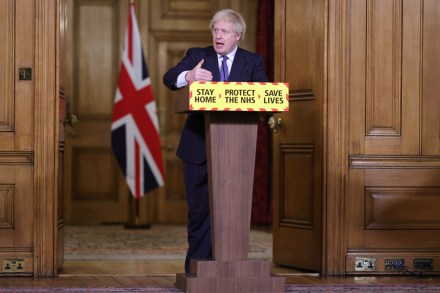
Boris Johnson had a few positive things to offer this evening's coronavirus briefing. Speaking alongside chief medical officer Professor Chris Whitty and chief scientific adviser Sir Patrick Vallance, the Prime Minister announced that 3.3 million people had received their vaccines, including nearly 45 per cent of the over-80s. Whitty, meanwhile, had the sort-of good news that the government thinks the peak of infections has now passed in London, the South East and East of England. The considerably less cheery flip side of that, of course, is that we have yet to reach the peak of hospitalisations and deaths in these regions, let alone the rest of the country.

Boris can’t afford to move slowly on lifting Covid restrictions

At 3.48pm on Thursday the Sun’s political editor tweeted out an explosive story that Steve Baker, the co-convenor of the Covid Recovery Group of Tory MPs, had warned that Boris Johnson’s party leadership would soon be under threat if restrictions were not lifted soon. Less than 100 minutes later, Baker put out his own tweet as follows: ‘What this country needs is the complete success of Boris Johnson… I am clear Boris is the only person to lead us out of these difficulties and I support him in that endeavour.’ In short, Baker had overplayed his hand to an embarrassing extent – much to the delight of those parliamentary colleagues who regard him as insufferable.

Is the government underpromising on the vaccine rollout?

15 min listen

A leaked Scottish government document suggested that all over-50s could be vaccinated by the end of March, and that UK has capacity to deliver 3.8 million jabs next week. Has the government been underselling its efforts? Katy Balls speaks to Fraser Nelson and James Forsyth.

The three-day Covid travel loophole

The government has finally attempted to crack down on the problem of people bringing Covid back into the UK, a mere 11 months after the pandemic began. The transport minister Grant Shapps has announced that from Monday, for the first time, travellers will be required to present a negative Covid test at the border, to ensure new variants aren’t brought into the country. The rules will apply equally to British and foreign nationals, which means holidaymakers will be forced to seek out a Covid test abroad before they return to the UK. But has Shapps missed a trick when it comes to the new testing regime? According to the rules, travellers will have to present a negative Covid test which has been taken 3 days before they arrive at the border.

Reforming workers’ rights is an upside of Brexit

Of all the arguments put out against Brexit during the bitter referendum debate, one of the least convincing was that it would give a UK government the opportunity to repeal employment law, thereby impoverishing Britain and its people. Jeremy Corbyn once asserted that a Conservative government would turn the country into a 'low-wage tax haven'. That is an interesting concept, which like the chemical element Seaborgium might theoretically exist but which has yet to be discovered in the real world – most tax havens seem to be pretty wealthy, at least compared with similar countries which haven’t set the fiscal and regulatory conditions to attract businesses and wealthy individuals.

Why the UK is sending a tough message on China

One of the arguments made against leaving the EU was that Brexit Britain would have to subordinate everything in its foreign policy to economics and the need for trade deals. But the UK’s approach to China in recent months shows that this hasn’t turned out to be the case, as I say in the magazine this week. On Tuesday, the government – in conjunction with Canada – announced measures to try and ensure that no products made using the forced labour of Uyghur Muslims end up in UK supply chains. Whitehall fully expects some kind of retaliatory response from China to this – just look at how Australia has been treated for saying there needs to be an independent inquiry into the origins of coronavirus – but went ahead anyway.

Amber Rudd’s ‘establishment’ dig at Boris Johnson

It’s now been over a year since the former Work and Pensions Secretary Amber Rudd resigned from Boris Johnson’s Cabinet, over the possibility of a no-deal Brexit and the ‘purge’ of 21 Tory MPs who voted against the government. After standing down in 2019, Rudd has since left frontline politics. Could the former frontbencher still be smarting over her departure though? Rudd certainly seemed to give that impression in an interview with the think tank, the Institute for Government.

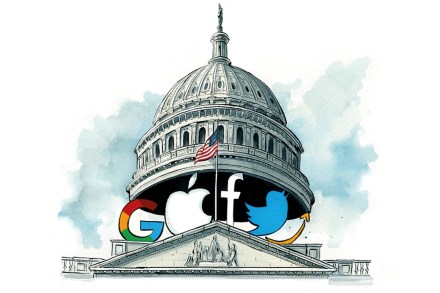
The tech supremacy: Silicon Valley can no longer conceal its power

36 min listen

Joe Biden won the US election, but is Big Tech really in power? (00:45) Churches are allowed to open during lockdown, but should they? (13:20) And can comfort eating and cosy socks replace human connections? (25:50)With historian Niall Ferguson; New York Times editorial board member Greg Bensinger; Father Jonathan Beswick; The Very Reverend Peter Howell-Jones; journalist Laura Freeman and psychology professor Dr Shira Gabriel.Presented by Lara Prendergast.Produced by Max Jeffery, Sam Russell and Matt Taylor.

Is Boris’s leadership really under threat?

12 min listen

Steve Baker, deputy chairman of the backbench Covid Recovery Group, has warned that Boris Johnson's leadership will be 'on the table' unless he gives a path out of lockdown. But is the PM really under threat? Cindy Yu speaks to James Forysth and Katy Balls.

Richard Leonard’s successor has an unenviable task ahead

Seventh time lucky? Richard Leonard, who has resigned this afternoon, was the sixth Scottish Labour leader since the SNP elbowed the party out of power in 2007. His tenure was the second-longest since devolution began, mostly because Labour is in such bad nick north of the border that no one else wants the job. The Yorkshire-born Scot secured the leadership in 2017 in part by allowing the impression to get about that he was a Corbynista. In truth, he hails from the harder edge of the soft-left and in his three years at the helm of Scottish Labour he did not shift the party significantly to the left. He leaves little in the way of a legacy and cannot claim to have changed much.