Politics

Read about the latest political news, views and analysis

Matt Hancock is right: we are in a vaccine race with France

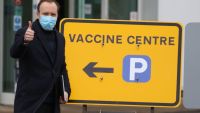
There are plenty of different ways in which Matt Hancock, the health secretary, can be criticised for his handling of the Covid-19 crisis. Track and trace didn’t work, lockdowns were sporadic and probably too late, and the messaging wobbled all over the place. But comparing the British vaccination drive to France and the rest of the EU? That was completely right. When Hancock remarked on Sky News yesterday that the UK had vaccinated more people in just three days than France had managed in total, his critics on social media went into a predictable meltdown. It’s not a competition or a race lectured the finger-waggers. We have only done one dose.

‘That’s insulting’: Therese Coffey walks out of Piers Morgan interview

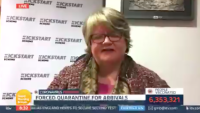
It wasn't long ago that the government was staging a boycott of Piers Morgan's breakfast show. Now, Tory ministers are back on the show. But it's safe to say there is still no love lost between those speaking on behalf of the government and Morgan. This morning, it was Therese Coffey's turn to appear on Good Morning Britain.  Morgan quizzed Coffey on why Britain had one of the highest Covid death rates in the world. Coffey responded by saying there were plenty of reasons, including, possibly, the age of our population and Britain's obesity problem. Morgan then asked Coffey whether she was blaming Brits for our country's Covid crisis.  'I think that is a very insulting thing you've just said,' Coffey said.

The rise of the super pessimist

Covid isn’t the only thing to have developed a dangerous strain in the UK; pessimism has also mutated and is on the rise. BBC news recently reported in horrified tones that the economy had contracted 2.6 per cent in November, barely mentioning the fact that this was largely down to the nation being in lockdown. I don’t know what our national broadcaster has up its sleeve next but I’m expecting a dambing connection between home schooling and black market valium. That kind of contraction during lockdown is actually something to be proud of. The resilience of British consumerism during this last year has been this generation’s Dunkirk. Instead of hopping in tiny boats we’re resolutely buying tiny dresses for parties we’ll never attend.

Sunday shows round-up: Sturgeon insists she ‘did not mislead’ Scottish parliament

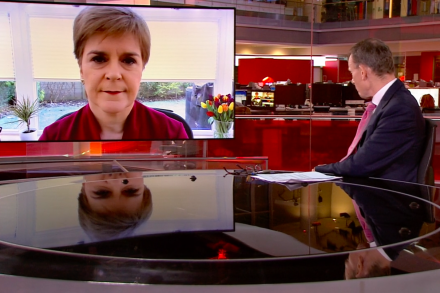
Nicola Sturgeon - ‘False conspiracy theories’ being spread in Salmond assault inquiry Continuing his series of interviews with the UK’s major party leaders, Andrew Marr this morning spoke to Nicola Sturgeon, the First Minister of Scotland. A major feature of the interview was the continuing row between Sturgeon and her predecessor and former mentor Alex Salmond. Salmond was famously put on trial for multiple allegations of sexual assault and harassment in early 2020, and was acquitted of all charges. A Holyrood inquiry is being conducted into the handling of the complaints made against Salmond, who has accused Sturgeon of misleading the Scottish Parliament over what was known when and by who.

New poll: when should lockdown end?

With Boris Johnson reported to want to ease the lockdown slowly in the hope that doing so will prevent the need for another, he faces a growing backlash among the Tory MPs who make up the Covid Recovery Group. But what about voters? So far, polling has suggested that the public are generally supportive of social distancing and restrictions – often claiming they would like the rules to go even further.  A new poll for Coffee House by Redfield and Wilton – with a sample size of 2,000 – saw the public quizzed on the current lockdown, restrictions and vaccines.

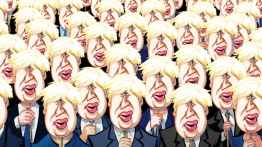
Do Tories know the truth about Boris Johnson?

Exactly 40 years ago tomorrow, four Labour party grandees issued the Limehouse Declaration, signalling 'the re-emergence of social democracy in Great Britain'. The declaration, made on a windswept bridge near the east London home of Dr David Owen, marked the formation of a Council for Social Democracy, that soon became a fully-fledged political party, the SDP. The 'gang of four' very nearly succeeded in breaking the mould of British politics, as their moderation hit the spot with millions of voters who opposed Thatcherism but also recoiled from Labour’s radical socialist agenda of the time. But they were thwarted, first by Britain’s first past the post electoral system that made gaining a big parliamentary representation all but impossible.

Protests for Navalny sweep Russia

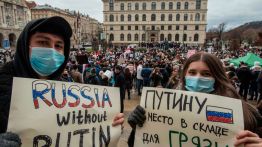
The protests began in Vladivostok, on Russia’s Pacific coast, and spread Westwards across 85 cities across the country’s nine time zones. The ritual was familiar enough from the last major wave of protests in the summer of 2019 - several thousand banner-carrying protesters calling for the release of opposition leader Alexei Navalny, an overwhelming show of force by the police, baton charges, cracked heads, mass arrests. By the end of the day over 2000 protesters had been detained, forty policemen and thousands of protesters injured.  So Navalny got, in one sense, what he wanted. By voluntarily returning from Berlin, where he had been recovering from Novichok poisoning, Navalny has indeed triggered a wave of indignation and anger against the Kremlin.

We could be understating the ‘Kent’ Covid strain

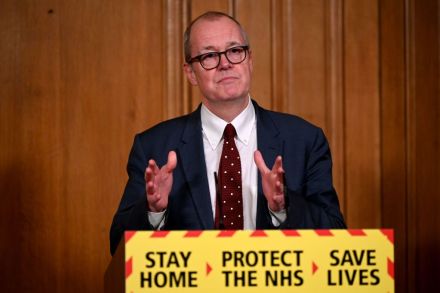
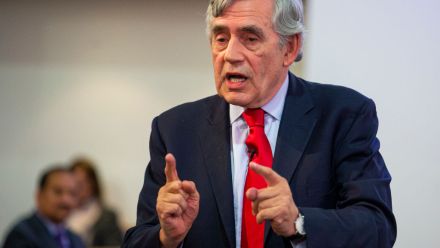
‘Our estimate which is that the risk of death increases by 30 per cent is itself uncertain. We think it could be anywhere between 10 per cent and 50 per cent according to our analyses,’ said Dr Nick Davies, the author of one of the studies referenced in Friday’s Downing Street press conference, during an interview on Radio 4. Between listening to the press conference last night and Dr Nick Davies, you could be forgiven for thinking that this latest development is all rather tentative and possibly merely a quirk of statistics that is - as yet - no cause for alarm.

How will history remember Brexit?

25 min listen

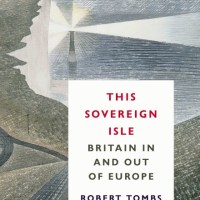
In his upcoming book, the historian Robert Tombs writes that Brexit may not be the historically significant event we think it is. On the podcast, Katy Balls speaks to him and James Forsyth about just how history will remember Brexit, and what are the future events that can still change our memory of it.

Word of the week: Sceptic

Definition: A person who questions the beliefs of others Lord Sumption, is a sceptic. The former Supreme Court judge has questioned the government’s lockdown policies and raised uncomfortable questions: ‘are we punishing too many for the greater good?’; ‘is the life of my grandchildren worth more than my own, because they have much more of it ahead?’ These are moral questions about the value that we place on each life, as well as the price that we are prepared to pay to prevent death. There are no easy answers.  But now is not the time for debate. The enlightenment spawned an array of critical thinkers, sceptics and dissenters.

The banality of Matt Haig

It doesn't seem like a bad time to be Matt Haig. He’s written multiple bestselling books, including the reputation-making memoir Reasons to Stay Alive about his own experience of severe depression. His latest, The Midnight Library, is proving impossible for everyone but Richard Osman and JK Rowling to knock out of the bestseller charts. There’s a movie adaptation of one of his novels on the way. And we now know that his high-profile admirers run all the way to royalty (well, ex-royalty): Meghan and Harry chose him as one of the guests for their holiday edition of their podcast 'Archewell', to offer 'inspiration, perspective, and reflection' for these difficult Covid times. On the podcast, Haig talks affectingly about his own struggles with depression.

‘Smart’ motorways are an accident waiting to happen

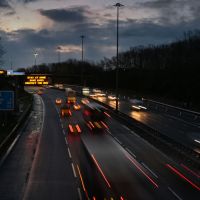
If I could wave a wand and reverse just one government policy it would be the expansion of so-called 'smart motorways' in the face of what seems the iron determination of the Department for Transport to press ahead with them. These are motorways where the hard shoulder is incorporated into the motorway to create an extra lane – a loss supposedly compensated for with periodic refuges for breakdowns. If you wondered why stretches of the M4 are shut most weekends for works, this is what they are doing. The consequences of such supposed 'improvements' can be lethal.

‘Feathers have been ruffled’: Life after Cummings at No.10

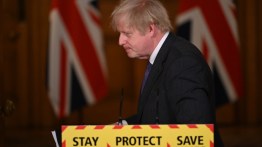
Boris Johnson used today's press conference to issue sobering news: warning that the new Covid strain may be more deadly. The better news? The vaccines that have been approved are likely to be as effective against the new strain as the original. There were also figures to suggest things are slowly improving: the R number has fallen to a rate of between 0.8 and 1. And 5.4 million people, around one in ten of the adult population, have now received their first dose of the vaccine. Yet despite the good news on the vaccine rollout, there is little in the way of optimism in 10 Downing Street this week.

Why the Welsh Tory leader has to go

For a party that is so obsessed with bursting the ‘Cardiff Bay Bubble’, the Welsh Conservatives certainly enjoy the Senedd’s tearoom. This week reports emerged that Tory members of the Senedd, including party leader Paul Davies, drank alcohol on Welsh parliament premises, days after a ban on serving it in pubs took effect. A Senedd commission report confirmed today there was a ‘possible’ breach of rules and referred the incident to Cardiff city council and the standards commissioner. It's miserable timing for the Tories, coming four months before an election. All parties involved insist they haven't broken any Covid rules. But while Labour's Alun Davies has been suspended by his party, the Tories involved have not.

Boris Johnson warns that new Covid variant could be more deadly

Those in the lookout for good Covid news will found precious little of it in Boris Johnson's latest Covid press conference. Although the Prime Minister had cause for optimism in the form of the vaccine rollout – over 5.4 million people have now received their first dose of the vaccine, one in ten adults, – the overall message was of difficult times ahead. Johnson said there was evidence to suggest that the 'Kent variant' not only spreads faster but is deadly. The PM pointed to data assessed by scientists on the New and Emerging Respiratory Virus Threats Advisory Group which, he said, suggested the variant could be up to 30 per cent more deadly than the original.

Has Covid killed the EU’s dream of open borders?

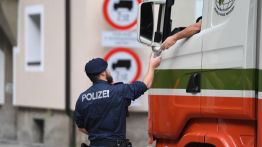
‘All non-essential travel should be strongly discouraged both within the country and of course across borders,’ Ursula von der Leyen, head of the European Commission, has said. As a result of the Covid crisis, the dream of open borders across the continent of Europe has never seemed so imperilled. Meanwhile, a post-Brexit Britain has the ability to flex its borders as much as it chooses. To some Brexiteers, this alone makes Brexit worth it. The Schengen agreement was signed in 1985 and became pan-EU in 1999, meaning that, from then on, any country without an opt-out needed to allow free movement of people from any other signatory country (almost all of the rest of the European Union).