Politics

Read about the latest political news, views and analysis

Is Boris being too soft on China?

11 min listen

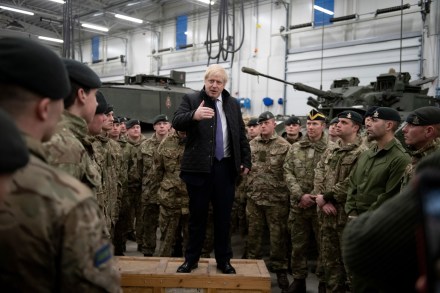
Starting 'a new Cold War on China' would be 'a mistake', Boris Johnson said today as he set out the government's integrated defence review. The military reassessment - the biggest in decades - also outlined plans to lift the UK's cap on the number of nuclear warheads from 180 to 260. Why does the review matter, and is the PM being too soft on China? Isabel Hardman speaks to James Forsyth and Katy Balls.
Why the hospital money row is going to the wire

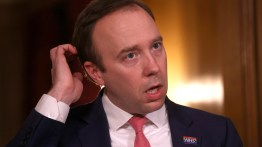
The row over the NHS pay rise is taking up most of the political attention when it comes to the health service at the moment. But it's not the only – or indeed the biggest – problem facing the politicians and officials involved. This morning Matt Hancock appeared before the Health Select Committee, and after being grilled on the proposed pay increase, found himself having to explain why, with just 16 days to go, hospitals still have no idea what their Covid-related funding is going to look like for the next six months and beyond. The NHS budget for 2021/22 still has not been signed off.

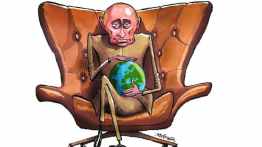
Boris’s Russia review will delight Putin

The strategy outlined within the integrated review lacks the urgency, agility, and need for ambiguity needed to take on the country it deems our ‘most acute threat’: Russia. Described as the ‘biggest review of our foreign, defence, security and development policy since the end of the Cold War’, in fact — when it comes to Russia — much of the IR reads more like a literature review than a 21st Century ‘Long Telegram’. Russia is referenced only fourteen times directly, and then with a great deal more descriptive analysis than comprehensive plans of action. Much of the content is welcome: one section deals with Russia under the new term of ‘state threats’.

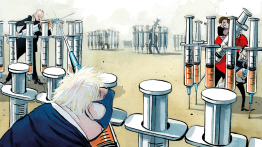
Don’t blame the EU for the latest Covid vaccine clash

Far from subsiding, as it seemed to be doing last week, the European war over the AstraZeneca vaccine has intensified. Over the past few weeks, EU leaders have swung from accusing the company – and Britain – of hoarding the vaccine and failing to supply it to EU countries, to claiming that it is ineffective, back to accusing us of hoarding it again. But the decision by several European countries to suspend rollout of the vaccine over fears of blood clots is the most serious challenge yet. This time, however, the blame cannot be laid at the door of the EU – the European Medicines Agency continues to declare the vaccine to be safe and has said that any negative side-effects are outweighed by the benefits.

We’ll miss Cressida Dick when she’s gone

To all those – from Left and Right – joining in the clamour for Cressida Dick to resign as Commissioner of the Metropolitan Police, a pertinent question hangs in the air: Who would you hire to replace her and what good do you think it would do? If you are on the old-fashioned right of politics, you’d probably have in mind a figure in the mould of the no-nonsense former Commissioner Lord Stevens, a ‘copper’s copper’. If you are on the liberal left, you are much more likely to demand a ‘Common Purpose’ clone, steeped in the fashionable jargon of the College of Policing and identifying structural racism and non-crime hate incidents as the central challenges of our age.

Undercover police in nightclubs is a terrible idea

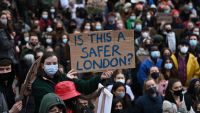
It has been a dreadful week for the police. A police officer has been charged with the kidnap and murder of Sarah Everard; officers badly mishandled the Clapham Common vigil, drawing political criticism from all sides; there have been numerous calls for Commissioner Cressida Dick to resign; and now another officer involved in the search operation for Sarah Everard is under investigation for sending his colleagues a graphic meme about violence against women. In an attempt to get a grip on the situation, Boris Johnson has announced a new plan to protect women: bars and nightclubs will be patrolled by plain clothes officers to identify predatory men.

Coming soon: red wall by-election

Things are not going well for Labour’s Keir Starmer. After yesterday’s polling showed his first negative satisfaction ratings and a seven point Conservative lead, today brings news that Hartlepool MP Mike Hill has resigned from the Commons to trigger a by election deep in red wall territory. Given the suspension of last May's mayoral and local elections, this will be the first time Boris Johnson's popularity will be tested with the northern voters who gave him his majority in December 2019. https://twitter.com/keiranpedley/status/1371439039358906369?ref_src=twsrc%5Etfw While the timing of the contest is yet to be set, CCHQ will be licking their lips at Hill’s 3,595 majority.

Caprice the Covid seer

Today marks a special anniversary for those who have been following the course of the coronavirus since it first reared its ugly head in Wuhan. Exactly one year ago, arguably the UK’s finest scientific mind managed to predict how the UK would end up responding to the disease – weeks and months ahead of the scientists on Sage. This person wasn’t an academic or expert, however, but the businesswoman and model, Caprice. Speaking on the Jeremy Vine show, Caprice argued that we should close the borders and quarantine arrivals, wear masks and have a short, sharp lockdown to stop the disease before the outbreak got any worse. Caprice cited the experience of Taiwan and Singapore, who had used similar methods at the beginning of the pandemic.

Boris Johnson’s blueprint for ‘Global Britain’

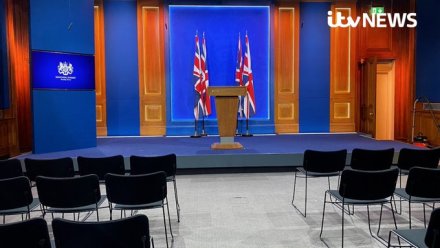
Boris Johnson will today unveil the government's integrated review which promises to set out the blueprint for 'Global Britain'. The 100-page document – titled 'Global Britain in a Competitive Age' – has been heralded as the most radical reassessment of Britain's place in the world since the Cold War. The Prime Minister is due to unveil the plans in the Commons to MPs this afternoon – but in the meantime the document has been leaked to several papers.  With Sino-scepticism building in the Tory party, the review appears to go a step further than many backbenchers would like So, what's next for Global Britain? The aspect which is already leading to the most animated debate in the Tory party relates to China.

The EU-AstraZeneca row: a complete timeline

Oh dear. This morning Sweden has become the latest European country to suspend use of the AstraZeneca-Oxford University vaccine. It follows reports that some people have suffered blood clots after being given the jab despite AstraZeneca's data showing there have only been 37 such reports among the 17 million people across Europe who have been given the vaccine. Yet while some European health ministries across the continent are raising concerns about its effectiveness, others are lambasting AstraZeneca for failing to deliver enough jabs. French Europe minister Clement Beaune appeared on Radio Classique this morning and raised the prospect of the EU actually suing the company over breach of contract.

Labour’s awkward opposition to the policing bill

MPs will continue debating the second reading of the Police, Crime, Sentencing and Courts Bill today, with a vote later. Last night's debate gave us a pretty good idea of what the legislation's progress through the Commons is going to look like: it is going to be far more partisan and noisy than anything Parliament has seen in the past year. There was a battle of interventions from Conservative and Labour backbenchers as their own sides set out their positions on the bill. Tory MPs had clearly come primed to argue that voting against the legislation would be a mistake for Labour, while Opposition MPs were busy pointing out that it contained scant reference to protecting women.

Is Nicola Sturgeon’s loyalty her big weakness?

Loyalty is an important virtue. Indeed, it was loyalty to my former boss which led me to offer to act as Alex Salmond’s spokesman during his Court of Session battle with the Scottish Government. It was, at the time, a thankless task, trying to persuade sceptical former media colleagues that the whole affair was a stitch-up. Those same journalists don’t require much persuasion today. Once the Scottish Government belatedly conceded the errors in their flawed complaints procedure, at a cost to the taxpayer of at least a million pounds, and the accusations against Salmond were thrown out by a criminal court, the repercussions began.

Is the Oxford AstraZeneca vaccine safe? A doctor’s view

One of the few positives to have come out of the Covid-19 pandemic has been the remarkable speed at which vaccines have been developed and rolled out in months, rather than the many years that was the previous norm. Their effectiveness is being increasingly proved as more people are vaccinated, and they appear to be extremely well tolerated in terms of side effects.  In the UK at least, vaccine hesitancy does not appear to be as great a problem as was initially feared and no new potential side effects have been reported that were not already known about from the vaccine trial data.

Labour and Tories clash over policing

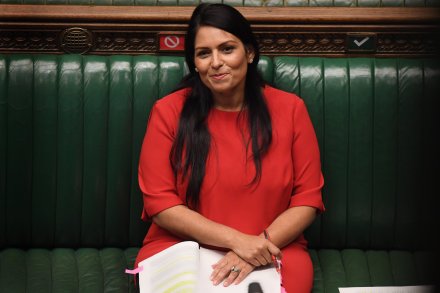
After the widespread backlash against the policing of the Sarah Everard vigil over the weekend, the government and Labour have managed to find some common ground. While both parties raised concerns over the handling of the event, Boris Johnson and Keir Starmer agreed that the Metropolitan Police chief Cressida Dick should not resign. However, any hopes for cross-party unity on the issue received short shrift in the chamber today. The Home Secretary appeared before the Commons to update MPs on the government response to the Met's policing of the event. Patel began by talking about the sense of national unity in the aftermath of Everard's death.

The twisted logic of Shamima Begum’s defenders

Shamima Begum is back in the news. Firstly because she’s had a makeover. She can be seen on the front page of today’s Telegraph sporting long, flowing locks, trendy shades and Western clothing. Is Shamima the Islamist now aspiring to be Shamima the celeb? Perhaps she’s angling for her own reality TV show: The Real Housewives of Raqqa. But the second reason she’s in the news is because the British-Indian sculptor Anish Kapoor has expressed sympathy for her. He says she’s a victim of British racism. I really wish Sir Anish would stick to what he’s (very) good at — public art installations — and leave the Shamima business alone. Because his comments are risible.

Andrew Bailey’s note of Covid caution

Speaking to BBC Radio 4’s Today programme this morning, Andrew Bailey threw his support behind one of the more optimistic scenarios for a post-Covid economic recovery: that the UK will be back to pre-pandemic levels by the end of the year. The combination of the UK’s hugely successful vaccine rollout combined with increased levels of lockdown immunity – that is, the economic impact of restrictions ‘reducing as we all adapt’ – had the Governor of the Bank of England suggesting that we could see a full recovery by the end of the year (notably earlier than the Office for Budget Responsibility’s Budget forecast of roughly the middle of next year).

Corbyn’s plan to revolutionise the mainstream media

Jeremy Corbyn is hitting the comeback trail. The former Labour leader made the keynote speech at this week’s Media Democracy Festival organised by the Media Reform Coalition. He began by citing his own journalistic credentials. ‘I produced 500 columns for the Morning Star.’ Then he turned to India where 250 million strikers are protesting against the removal of state support for farmers. The strike involves ‘one in thirty of the entire population of the world,’ enthused Corbyn, which makes it the largest industrial dispute in history. But coverage in the UK has been minimal, 'which says a lot about the priorities and the news values of much of our media outlets in this country, that they don't think it's worth reporting'.