Politics

Read about the latest political news, views and analysis

Was the civil service compromised by the Salmond affair?

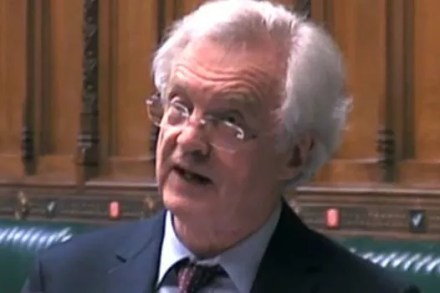
The fallout from David Davis’s intervention in the Alex Salmond affair is all about the messages. The texts which the veteran Tory says he was given by a ‘whistleblower’ contain disturbing conversations between senior SNP and Scottish Government staffers. They raise questions about party involvement in a government investigation, the alleged ‘interference’ of Nicola Sturgeon’s chief of staff, and what the First Minister knew and when. The motivations behind these exchanges will be picked over by those convinced Salmond was the victim of a conspiracy, those convinced the Scottish Government fouled up but had good intentions, and a small smattering of Scots patiently waiting for the Holyrood inquiry to put all these matters to rest. Bless.


How Brexit has boosted Global Britain

The government’s integrated review of foreign and security policy, published yesterday, has landed surprisingly well considering that much of the Whitehall blob has been so dismissive of Boris Johnson’s concept of Global Britain. A few longstanding critics have been snippy about the new document. But no one can disagree that the review offers a genuine strategy. In recent years, one of the most persistent ideas about the UK’s future on the world stage has been that we cannot make a go of things post-Brexit. Such ideas, so the counter-argument goes, are based on the deluded nostalgia of a ‘buccaneering’ nation, foolishly going it alone on trade and much else besides.

What’s behind the EU’s vaccine flip flop?

14 min listen

Ursula von der Leyen today said that the EU could block vaccine shipments to the UK if it doesn't export AstraZeneca jabs to the bloc. The Commission's head is under pressure to fix a rollout programme that continues to flounder - just 12 per cent of EU citizens have received a dose compared to 39 per cent in the UK. But why does the continent want vaccines it won't approve? Katy Balls speaks to Fraser Nelson and James Forsyth.

Boris needn’t outflank Biden on China

‘We must prepare together for a long-term strategic competition with China… We cannot and must not return to the reflexive opposition and rigid blocs of the Cold War. Competition must not lock out cooperation on issues that affect us all.’ These words were not spoken by Boris Johnson as he presented the integrated review to the House of Commons this week. Rather, they were said by President Joe Biden, in his speech to the Munich security conference a month ago. In setting out his vision for a future relationship with China, the Prime Minister and this week’s integrated review may well have been taken from Biden’s script. So why has the IR caused so much controversy?

Watch: Nicola Sturgeon’s hostile Covid briefing

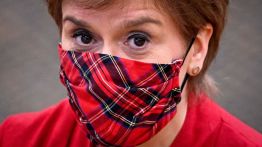
First Minister Nicola Sturgeon appeared to be in a poor mood today, after David Davis used parliamentary privilege in the Commons last night to make a series of allegations against the Scottish government over its handling of the Salmond investigation. After the ITV journalist Peter Smith asked Sturgeon about the new allegations at the Scottish government’s Covid briefing, the First Minister at first refused to answer the question at all, saying ‘I’m not having this briefing side-tracked into the latest instalment of the conspiracy theories we’ve all be hearing about for a long time’. Sturgeon then took a rather more hostile approach, saying she would only answer questions from the journalist about Covid.

Starmer ends up on the back foot at PMQs

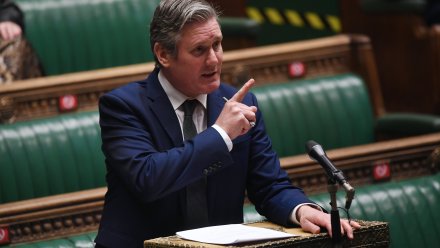
Prime Minister's Questions is usually a session where the PM defends his handling of one issue or another, under attack from the leader of the Opposition. But today's session involved an attempt by Sir Keir Starmer to defend his approach to the Police, Crime, Sentencing and Courts Bill. Labour knows it has an exposed flank on this because the legislation contains such a large mix of different policies, and because it adopted its position of opposing the Bill rather late on. The Labour leader devoted his questions to asking Johnson about how the government would respond to the aftermath of the murder of Sarah Everard, arguing that 'sometimes a tragedy is so shocking it demands both justice and change' and that 'this must also be a watershed moment'.

Brussels embraces vaccine nationalism

Just what on earth is happening in Brussels? The latest saga in the European Commission's botched vaccine roll out is president Ursula von der Leyen's threat today to block vaccine shipments to the UK from Europe. Speaking at a press conference this afternoon, the under-fire Eurocrat singled out Britain and suggested she could block imports of Pfizer unless UK-manufactured AstraZeneca jabs are shipped to the Continent. https://twitter.com/SkyNews/status/1372169441690185728?ref_src=twsrc%5Etfw She said: 'All options are on the table.

Labour frontbencher in fake news row (again)

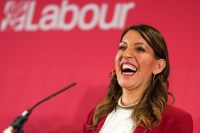
Oh dear. At the beginning of Covid, Dr Rosena Allin-Khan won plaudits across parliament for returning to do shifts on the NHS frontline. But in recent months the former deputy leader contender has earned herself the wanted reputation of being one of Parliament's worst offenders for disseminating 'fake news' – no mean feat considering some of the contenders she is up against. In January the self-styled shadow 'cabinet' minister for mental health sent a bizarre tweet late one Saturday night that claimed the vaccine minister Nadhim Zahawi had managed to fast track the vaccine queue. After first asking people not to pile on the minister over the unsubstantiated rumour that she herself had started, Allin-Khan finally deleted it and apologised.

Dominic Cummings’s return will worry No. 10

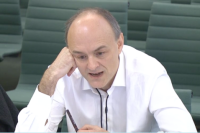
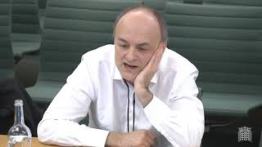
Dominic Cummings has been giving evidence this morning to the Commons science committee. Ahead of his appearance, there was much speculation about what problems the session would bring up for his former boss, Boris Johnson. Since leaving government, there has been concern across government over what Johnson's former righthand man might do or say – his relationship with Downing Street can hardly be described as cosy these days. By many he is regarded as a threat. However, the aim of today's session was to look at the government's new research funding agency, ARIA, and the session that is likely to give No. 10 the biggest headache is yet to come.

David Davis’s bombshell leak spells trouble for Nicola Sturgeon

The first thing to be said about David Davis’s dramatic intervention in the Salmond-Sturgeon affair is that it is a masterful piece of concern-trolling. The second thing to be said is that this does not matter. Davis, speaking armoured by parliamentary privilege, revealed information passed to him by a 'whistleblower' that has hitherto been kept secret. On the face of it, there are very good reasons explaining why the SNP and the Scottish government would wish to keep it that way. Ostensibly, Davis’s intervention is motivated by concern that the Scottish parliament and its members lack the ability to pursue the truth wherever it may lead. He came, he said, to strengthen the Scottish parliament, not to bury it.

Dominic Cummings returns to parliament – the best bits

Dominic Cummings today returned to face a select committee for the first time since his fiery clash with Andrew Tyrie five years ago. Cummings — who was found in contempt of parliament for refusing to appear in 2018 — is up this morning before the Science and Technology panel of MPs. It is the first time the former No. 10 adviser has made public comments about his time in Government since leaving Downing Street in November.The subject of discussion is ARIA — the new £800 million Advanced Research and Invention Agency he championed in government which aims to fund 'high-risk, high-reward' inventions. MPs broadly stuck to the issue in hand, allowing Cummings to explain the successes of the US agency DARPA on which ARIA is based.

Germany’s vaccine debacle goes from bad to worse

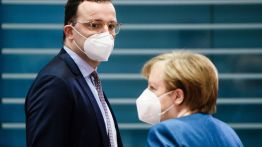
Germany's decision to stop using the AstraZeneca Covid vaccine has been condemned internationally. It has also gone down badly with Germans. Once again, the country's health minister Jens Spahn is under fire.  A year into the pandemic, Germans are fed up with what they see as a government which is too cautious to use its only weapon out of this crisis. Even before the suspension of the vaccine this week, the rollout was painfully slow. While Britain has issued 22million doses, Germany is lagging way behind: only 9.3million of its people have received their vaccinations. This latest hold-up will only further slow down the vaccine programme. And Germans fear that this means the anticipated end of most corona-related restrictions by summer is now more and more unlikely.

The SNP’s nonsensical Covid book ban

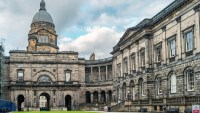
Why is the SNP banning books? On 5 January the Scottish government introduced a strict new lockdown in response to the spread of a more infectious strain of Covid-19. As a student at the University of Edinburgh, one particular restriction has baffled me ever since. Unlike in England, Wales or Northern Ireland, the Scottish government decided to ban students from reading, borrowing or even touching books in their university libraries. Even as fears rose over the rapidly spreading ‘Kent’ variant, it seemed that this policy lacked any scientific foundation. The Scottish government’s explanation for its book ban is baffling, and seems to be just copied and pasted advice from public websites and bluster over the importance of fighting Covid.

The census is the latest Brexit battleground

The end of the Brexit wars have left some Remainers feeling redundant. A few are now turning their attention to a new target: the census. The small group of voters who are reluctant to accept the result of the referendum are responding to the question asking 'How would you describe your national identity?', not with 'British', or 'English' but, with the answer, 'European'. As a Remainer, this strikes me as somewhat embarrassing. For a start, of course, 'European' is not a nationality. But that small point aside, how is this going to convince Brexit voters that their votes were a mistake?

What would a conversion therapy ban mean for gay Christians like me?

As a gay Christian, I'm worried about the calls to ban 'gay conversion therapy'. Of course, it's right that gay people are protected and some of the practices referred to as conversion therapy are deeply wrong. But there's a danger that  badly-drafted legislation could make life impossible for those working in churches when gay people come to us for help. I’ve worked on the staff of Anglican churches for twenty years. Over that time the people I have served have asked to talk and pray with me about their families, workplaces, dreams, failures, marriages, singleness, finances, addictions, sexualities, gender – and more. I have heard it all, but have welcomed each unique human being, and the chance to try and help them as best I can.

The art of the public apology

If your genetic code survived the Pleistocene epoch, and prospered sufficiently that you find yourself reading this, I feel I ought to warn you that you are in great danger. For though the woolly marmoset and sabre-toothed sloth may be extinct, a new apex predator has emerged: human beings, or more specifically, other human beings. In this latest evolutionary cycle, they have turned cannibalistic, traversing great swathes of the webosphere at high speed to feast on their favoured delicacy: you and your opinions. Far from becoming a more civilised species, we are in the midst of an epidemic of cancellations. We have no dinner dates to bail on, so we cancel each other instead. It can be for almost anything — a racist sneeze here, a transphobic pair of shoes there.

David Davis: Scotland – A deficit of power and accountability

For the past few months, Scotland has been transfixed by the Holyrood inquiry seeking the truth of what went wrong with the investigations into the former First Minister, Alex Salmond.  The inquiry is investigating matters of the most serious kind. Serious for the proper handling of sexual harassment complaints in Scotland. Serious for the accountability of those in positions of power, including the Scottish Government’s Permanent Secretary and its Lord Advocate. And serious, if the former First Minister’s claims hold any water, for the future of the present First Minister’s administration of Scotland. These matters are unquestionably something that should properly be dealt with in Holyrood.

MPs question Johnson’s plan for Global Britain

Boris Johnson still has a journalist's ear for snappy phrases — levelling up, an oven-ready Brexit, Global Britain. The PM attempted to flesh out one of those headlines on Tuesday with his integrated review — so called because it ties together foreign and defence policy alongside trade and international aid.  The 100-page document — designed to set the course for 'Global Britain' over the next ten years — identifies Russia and China as the UK’s two biggest international challenges. The former is described as an 'active threat', a dangerous rogue state, while the East Asian country is seen instead as a 'systemic challenge'.