Americano
The next chapter in American politics has begun, but is it going to be any less crazy? The Spectator’s Americano podcast delivers in-depth discussions with the best American pundits to keep you in the loop. Presented by Freddy Gray.

The next chapter in American politics has begun, but is it going to be any less crazy? The Spectator’s Americano podcast delivers in-depth discussions with the best American pundits to keep you in the loop. Presented by Freddy Gray.
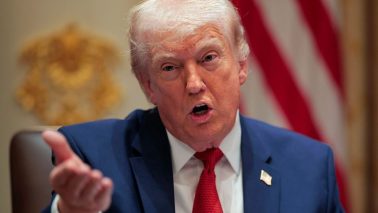
Donald Trump likes to use the phrase ‘go big or go home’ to describe his political strategy. It looks as though the US President is about to stress test its efficacy as he weighs dispatching another 10,000 troops to the Middle East, a move that would further embroil him in the widely unpopular war in Iran. According to a recent Quinnipiac poll, 74 per cent of Americans are opposed to a ground war against Iran. Small wonder. The prospect of an American Gallipoli is hardly calculated to inspire support for the fresh war of choice in the Middle East, one that Trump embarked upon without inspiring any backing in the
When the war against Iran started, President Trump could have justifiably felt confident that the price of oil could be controlled from the White House. America, after all, is the biggest oil producer in the world. It has the most refining capacity, and, separately, it has by far the world’s strongest military. And yet, over the last 24 hours it has become alarmingly clear that America has lost its ability to cap the price of an oil barrel. Does big trouble lie ahead for both the President and the global economy? With a single Truth Social post yesterday, President Trump managed to send the prices of both WTI crude oil,
33 min listen
Steven Crowder, host of Louder with Crowder, joins Freddy Gray to discuss the warring factions in the podcast world, worsened since Charlie Kirk’s assassination; the global leftwing alliance promoting communism in Cuba, whether Trump was wrong to attack Iran & why Mark Carney kowtowed to China.

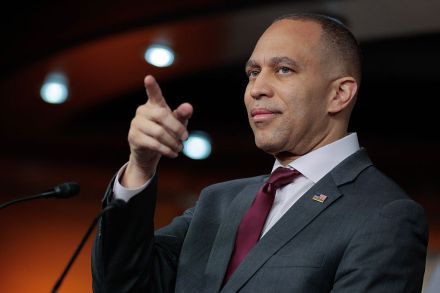
Given my longstanding disgust with America’s lawlessly interventionist and self-destructive foreign policy, I should be outraged by Donald Trump’s cavalier remarks justifying – and weirdly minimizing – his surprise attack against Iran in collaboration with Israel. After all, a president stupid enough to mock the new Supreme Leader as “damaged” and only “alive in some form” – while simultaneously urging sitting-duck oil tanker captains to “show some guts” by running the Iranian blockade of the Strait of Hormuz – is someone who logically should be rebuked in the firmest possible terms. But this wildly unstable solipsist is very different from other politicians. Moreover, I can still find the President,
31 min listen
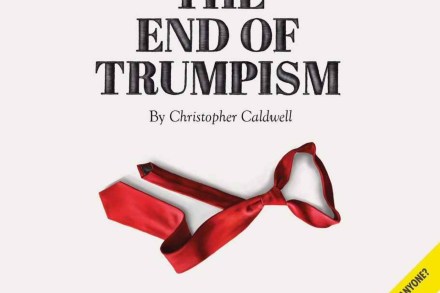
The attack on Iran is so wildly inconsistent with the wishes of Trump’s base that it is likely to mark the end of Trumpism as a project. Freddy Gray is joined by Spectator columnist Christopher Caldwell to discuss Trumpism, J.D. Vance vs Marco Rubio, what’s left of the Republican party after Trump and the competing ambitions of Israel and Iran.
22 min listen
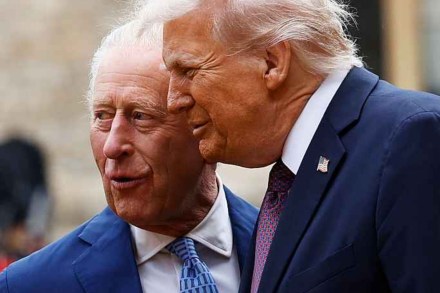
King Charles is due to travel to the US on a state visit to see President Trump. Given the turbulence between Keir Starmer and Trump over the war in Iran, some politicians such as Ed Davey have suggested the King should not go. Freddy speaks to royal author and Daily Mail journalist Robert Hardman about the history of controversial state visits, why Donald Trump loves the British royal family and how King Charles navigates his royal duties and subtle influence over leaders.

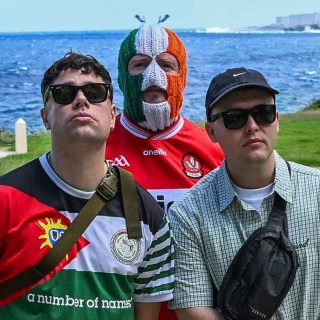
When asked about a united Ireland earlier this week, Zohran Mamdani admitted that he “hadn’t thought enough on that question.” The Mayor of New York then recited a stiff set of platitudes about “solidarity” in language that he repeated word for word in his St. Patrick’s Day address. There was an incongruity between his comments and his attendance at the James Connolly Irish-American Labor Coalition’s annual luncheon, where he schmoozed for selfies with Sinn Féin politicians. There was incongruity, too, with past mayors like Ed Koch and David Dinkins, the latter of whom lobbied for Irish republican prisoners. Context is everything, though, and both the city and the Irish national
For Vladimir Putin, Donald Trump is the gift that keeps on giving. Just as Moscow was tiring of the American president’s assurances that he could strong-arm Volodymyr Zelensky into accepting Russia’s terms for peace in Ukraine, the US-Israeli intervention in Iran caused a spike in the oil price. This has given Russia the chance to supply more oil to the global market and boost its flagging budget revenues. On balance, the war in the Middle East is set to bring significant benefits for Russia, but they will not be enough to bring about Putin’s most urgent desire: the defeat of Ukraine. Of course, the Russian president can bask in the
30 min listen
Freddy speaks to James D. Boys, author of the new book US Grand Strategy and the Madman Theory. He is also a senior research fellow at UCL. They discuss the origins of the madman theory – which applies insights from psychology to understand how your enemies think. James covers it from from Nixon to Trump and its intellectual home in Boston. They also explore how the madman theory is being applied in the Middle East conflict and how regularly the theory can be misapplied.
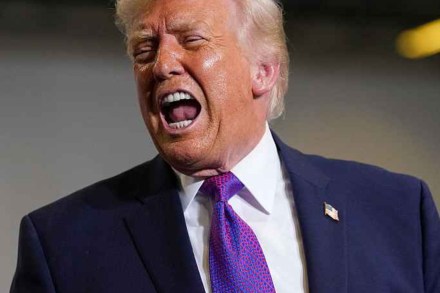
As soon as Operation Epic Fury, America’s latest campaign against the Islamic Republic of Iran, got underway on the last day of February, political, military and economic minds around the world should have turned their attention to the Strait of Hormuz. The waterway provided the only shipping route from the Persian Gulf to the Gulf of Oman and the open seas beyond. That has long made the strait the dagger Iran holds at the throat of the world. At its narrowest, it is less than 25 miles across, and Iran controls the northern shore; to the south is the Musandam Peninsula, shared by the United Arab Emirates and an exclave
30 min listen
Freddy speaks to Roger Kimball, editor of the New Criterion and Spectator writer, about Trump’s SAVE Act – a bill to tackle voter integrity soon to be voted on in the Senate.
Remember Signalgate? It was quite the story, and worth revisiting now in light of Operation Epic Fury, the ongoing crisis in the Strait of Hormuz and its dire implications for the global economy. In March last year, Donald Trump’s then National Security Advisor, Mike Waltz, somehow added Jeffrey Goldberg, the editor-in-chief of the Atlantic, to a Signal messaging group for senior government officials to discuss top secret military action against the Houthis in Yemen. The group included the Vice President J.D. Vance, Secretary of State Marco Rubio, Defense Secretary Pete Hegseth, Director of National Intelligence Tulsi Gabbard, White House Chief of Staff Susie Wiles and deputy chief of staff Stephen Miller,
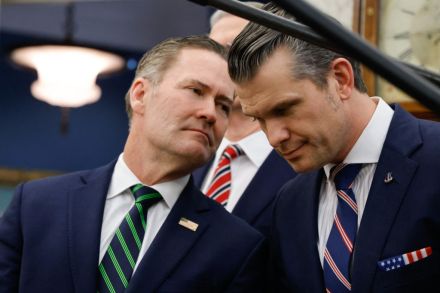
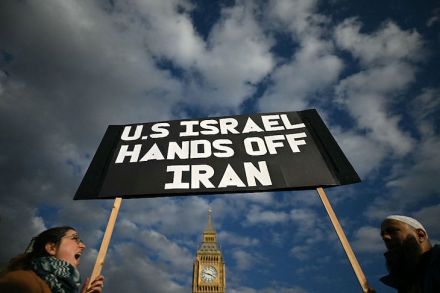
I’ve been thinking a lot about the phrase “unprovoked war.” It’s been rolling off leftist tongues since the explosion of hostilities in Iran. This week, Jeremy Corbyn, Zarah Sultana and scores of hoary peaceniks wrote a letter to the Guardian insisting Britain should have nothing to do with America and Israel’s “unprovoked war” in Iran. Trump’s noisy doubters and Israel’s legion haters are using language as a weapon Here’s my question: is the rape and murder of Jews not a provocation? Was the worst anti-Jewish atrocity since the Holocaust – 7 October – not a provocation? The tyrants of Tehran were the paymasters of the jihadist brutes who carried out
26 min listen
President Trump has signaled that the Middle East war could be “over soon” and pledged to lift sanctions after talks with Russian President Vladimir Putin. Freddy is joined by Jacob Heilbrunn and Robert Bryce to discuss why Trump was potentially unprepared for Iran’s retaliation, what could come from the talks with Putin, and why Britain can only get their energy prices down by drilling.

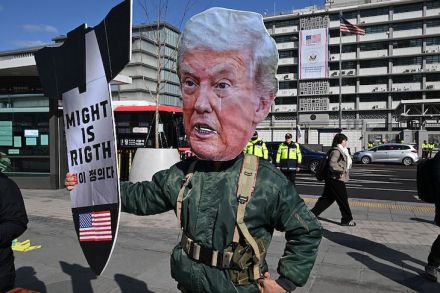
The social media video with which the White House has promoted its attack on Iran is, even by the standards we’ve come to expect from the Trump administration, grotesque on a level that still manages to be flabbergasting. Prefaced in the usual block capitals “JUSTICE THE AMERICAN WAY”, with a flag and flame emoji of the sort favored by pubescent boys rather than, usually, government agencies, it’s three quarters of a minute of pure brainrot. It isn’t a sign of Trump Derangement Syndrome to consider this video obscene It begins with Tony Stark in front of a bank of computers saying “Wake up. Daddy’s home.”, before launching into a rapid-cut
30 min listen
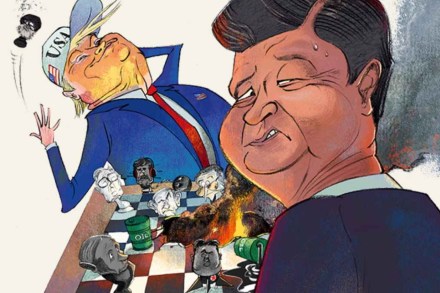
As the crisis in the Middle East has escalated, Donald Trump’s posturing has led many to question his strategy – and if he even has one. Geoffrey Cain, former foreign correspondent, expert on authoritarian regimes – and the author of this week’s cover piece in The Spectator, joins Freddy to explain why Trump’s ultimate target in the war is China. From the Belt and Road development initiative to more tacit bilateral support, President Xi has been playing a game of chess, to try to check America’s power. With Nicolás Maduro arrested and Ayatollah Khamenei assassinated, President Trump is showing his willingness to project American power, at whatever cost – so
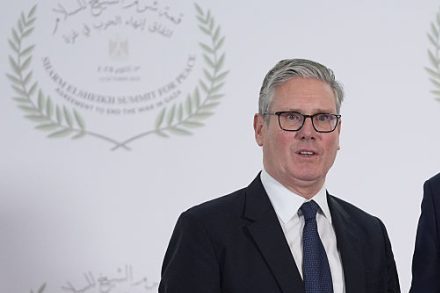
Britain’s refusal to fully back the United States over strikes on Iran has triggered an unusually public transatlantic row. It has also revived an old question about the future of the so-called “Special Relationship.” When Donald Trump returned to the White House last year, many in Westminster doubted Keir Starmer could build a workable relationship with him. The two men could hardly be more different in temperament or politics, and predictions of an early rupture were widespread. For a time, however, Starmer appeared to defy those expectations. Britain weathered Trump’s latest tariff wars better than most countries, and the Prime Minister seemed to have found a cautious way of managing
45 min listen
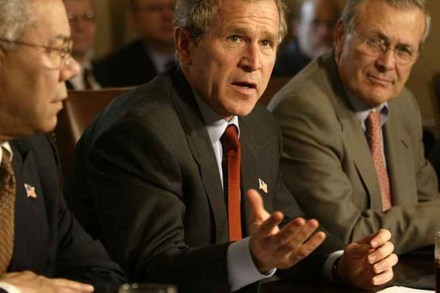
Spectator columnist and Heritage Foundation fellow Daniel McCarthy joins Freddy to explain how Trump’s war with Iran could mark the end of an era, that of neoconservatism. For Daniel, there is no contradiction between Trump’s “America First” policy and its overseas interventions: Trump is pursuing a version of hegemony that will reduce the need for future interventions. If all goes to plan, this could mark an ideological watershed that stretches back to the first Gulf War in the early 1990s – but it’s a big “if.” What if the conflict spirals out of control? To what extent was this driven by Trump, or by Netanyahu? And what are the dynamics
34 min listen
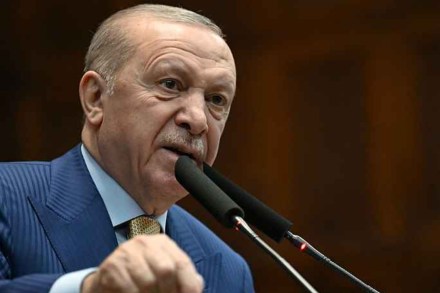
Today NATO forces intercepted an Iranian missile headed for Turkey. While it remains unclear where that missile was intended to land, questions have emerged over whether President Erdoğan can continue his strategy of geopolitical pragmatism. So far the Turkish leader has managed to appeal to China, Russia, Europe and the US. But will he be forced to pick a side? Freddy discusses this with Spectator writer Owen Matthews and the recent reemergence of Kurdish forces being funded by Israel and the US to attack the Iranian regime.
33 min listen
Freddy is joined by historian and former diplomat Charlie Gammell. They discuss the situation in Iran, whether the US is heading for a decisive confrontation, and examine the regional consequences: proxy warfare, Gulf energy security, Pakistan’s delicate position, and migration pressures on Europe.
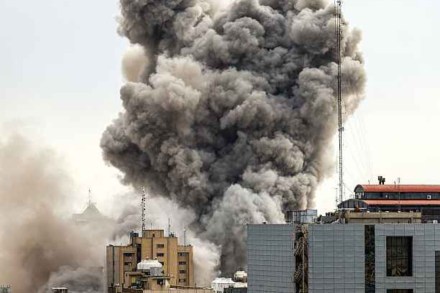
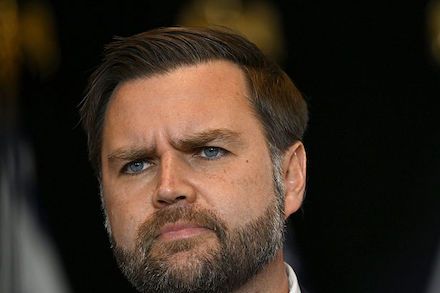
Twenty eight hours or so into the new war against Iran, and America’s Vice President J.D. Vance has yet to declare his support in public. His social media account on X, which is normally so lively, has been conspicuously silent for the last two days. He seems keen to position himself apart from the administration’s more ardent hawks when it comes to the Middle East It’s likely that will all change today and Vance, as he did after the Venezuela operation, will take to the airwaves for the big Sunday news shows in order to once again repeat that administration’s line that Donald Trump, the ultimate decider, has boldly done