Economy

  • AAPL

    213.43 (+0.29%)

  • BARC-LN

    1205.7 (-1.46%)

  • NKE

    94.05 (+0.39%)

  • CVX

    152.67 (-1.00%)

  • CRM

    230.27 (-2.34%)

  • INTC

    30.5 (-0.87%)

  • DIS

    100.16 (-0.67%)

  • DOW

    55.79 (-0.82%)

Is Britain losing its sense of fairness?

Has Britain become a freeloader’s paradise, asks the Spectator’s economics editor Michael Simmons in our cover piece this week. Michael analyses ‘the benefits of benefits’, at a time when Britain’s welfare bill is burgeoning and most households are struggling with cost of living. For example, while a family of four can expect to pay £111 to visit the Tower of London, that is just £4 total on Universal Credit (UC), and for London Zoo it is £108 compared to £26. Michael is not arguing against the idea of helping those in need, but pointing out that – as the benefits bill continues to increase – this is another case of

Spotlight

Featured economics news and data.

Cutting Britain’s giant welfare bill would be an act of kindness

Does having money really matter that much? There are those, usually with quite a bit of it, who want us to care less about materialism. But, unequivocally, money really does matter – not because of any status it supposedly brings, but for the freedom it buys: freedom to choose how we live and how we look after others. Considering this, it seems that the deep disillusionment with mainstream politicians in recent years stems from a protracted and ongoing period of stagnant living standards over which they have presided. But the truth is that the average person has not got poorer since the global financial crisis. They have got a little

Britain’s economy is struggling with so many off sick

One of the UK’s biggest economic problems is having so many people out of work – and the slowest return to pre-pandemic workforce levels in Europe. This is costly and slows growth, as taxpayers foot the bill for benefits while employers struggle to fill vacancies. Today’s figures show that it is getting better – but slowly.  The official unemployment count crept up to 3.9 per cent in the latest statistics. This is, ironically, a good sign as it shows more people are actually looking for work (about 12 per cent of the working-age population are on out-of-work benefits, although this is a figure that ministers seldom update and never publicise).

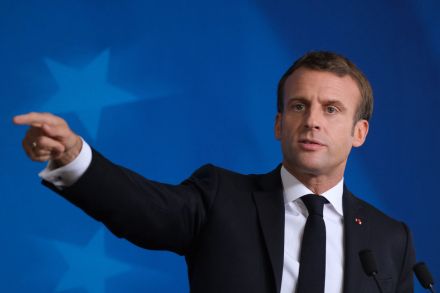
Macron has no idea how to pay for ‘reindustrialisation’

Emmanuel Macron is playing the emperor again. Last week he proudly announced a grand new strategy, but without any indication of how to pay for it. The French President said that ‘“Made in Europe” should be our motto,’ and urged Europeans to ‘take back control of our supply chains, energy and innovation’. Macron’s call for Europe’s reindustrialisation reflects a new transatlantic consensus. The age of ‘globalisation’ and ‘neoliberalism’ is over. We were too naive about our trading partners during the 1990s and the 2000s, and we now need to build up national resilience. Heavy-handed industrial policy and protectionism are making a comeback in the United States and Europe alike. But

Shrinking GDP shows how stagnant the economy has become

The UK economy shrank by 0.3 per cent in March, as ongoing strike action continued to take its toll. But the fall wasn’t enough to push the UK into recession territory, as the Office for National Statistics announced this morning that the economy grew by 0.1 per cent in the first three months of the year. This was thanks to stronger-than-expected growth in January (which was then followed by zero growth in February). Do today’s updates paint an optimistic or pessimistic picture for the UK economy? While the risk of entering formal recession has been dodged once again, today’s news highlights just how stagnant the UK economy has become. We are years on from

Why interest rates continue to rise

The Bank of England has hiked interest rates again, taking the base rate from 4.25 per cent to 4.5 per cent. This is the 12th consecutive rise, voted for 7-2 by the Bank’s Monetary Policy Committee (MPC). It takes rates to their highest level since 2008. The Bank had hoped it could stop raising interest rates months ago. It would require evidence of ‘persistent pressures’ on prices for them to keep hiking the base rate, the MPC said in February. But since then, we’ve had two more rate rises: one in March, which took the base rate from 4 per cent to 4.25 per cent. And another today. So when will

The scourge of London’s ‘American candy’ stores

Should US regulators ban short-selling of bank stocks? That’s a hot topic as investors refuse to accept reassurance from the Fed chairman Jerome Powell that the recent banking crisis-that-wasn’t is over. Following JPMorgan’s rescue of First Republic, shares in other regional banks such as PacWest in Los Angeles, Western Alliance (Phoenix) and First Horizon (Memphis) have fluctuated wildly and fingers have pointed at short-sellers – who borrow shares they think are about to fall in order to sell, buy back cheaper and pocket a profit. That’s bad, say critics, in the broad sense that it’s a negative form of investment, the reverse of backing companies you believe in; and much

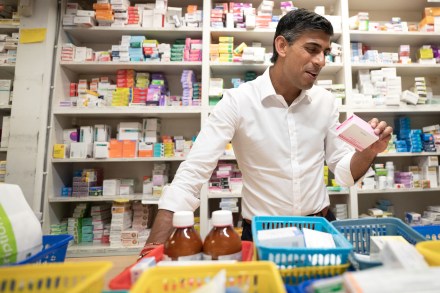
Will Sunak’s pharmacy plan work?

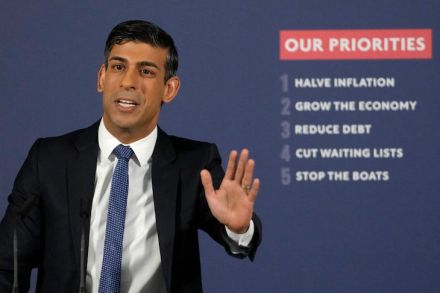
The 8 a.m. rush for a GP appointment is one of the emblematic problems the NHS is facing. It’s something both Keir Starmer and Rishi Sunak like to talk about: the former because he wants to emphasise that he is more in touch than the Prime Minister, who admitted to using private healthcare for his family, while Sunak wants to remind people that his mother owned a pharmacy in Southampton. Sunak is in that city today to launch reforms which he says will make it easier for patients to get the treatment they need – and make that 8 a.m. rush a great deal calmer. Pharmacy First is already a

Another rate rise from the Fed. Is it enough?

Will the Bank of England raise interest rates again? We’ll know for sure next Thursday, when we get the Monetary Policy Committee’s next announcement on the base rate, but today’s decision from the Federal Reserve to hike rates again makes it more likely that the Bank will follow suit. The Fed has announced another interest rate hike: a quarter of a percentage point, taking the rate to 5 – 5.25 per cent. This tenth consecutive hike in the United States has taken its key interest rate to the highest level since 2007 – approximately where rates sat before the financial crisis hit.  This has caused plenty of controversy across the pond, as fears

Can reforms save the London stock market?

The decline of the UK stock market has finally reached the Financial Conduct Authority (FCA). It has proposed to deregulate it in order to attract more companies to list in London rather than do as, for example, UK-based chip-maker ARM is doing and choosing to list in New York (it was once a UK-listed company before being bought out by the Japanese Softbank and is now being refloated).   The FCA has proposed that the London market become more tolerant of dual share structures – where, for example, a start-up might float on the stock exchange but retain a ‘golden share’ to ensure that the founders remain in full control over

Why Liz Truss fans might come round to Keir Starmer

We might have thought Trussonomics was dead and buried for a generation after its author’s short-lived premiership last autumn. But all of a sudden it has a high-profile, if slightly unexpected, convert: Sir Keir Starmer. In an interview with BBC Radio 4’s Today programme this morning, Starmer was sounding a lot like Kwasi Kwarteng last September: We’ve got the highest tax burden since the second world war. What we’ve had from the government is tax rise upon tax rise on tax rise. If they’ve proved one thing, it’s that their high-tax, low-growth economy doesn’t work. The Labour leader is absolutely correct, even if he is a little late to the

Ed Miliband is wrong about BP’s profits

Are BP’s profits of $5 billion in the first quarter of this year really the ‘unearned, unexpected windfalls of war’, as Ed Miliband asserted this morning? The idea that any oil company’s profits are unearned must come as news to the geologists and engineers who are employed in the tricky business of exploring and drilling for oil. You might claim that oil traders sometimes make unearned profits, but surely not the oil companies which extract the stuff from the ground – a business which involves large amounts of capital and vast numbers of hours of human effort. BP certainly can’t be accused of profiting from Covid. In 2020 it made a thumping

When does a banking wobble become a crisis?

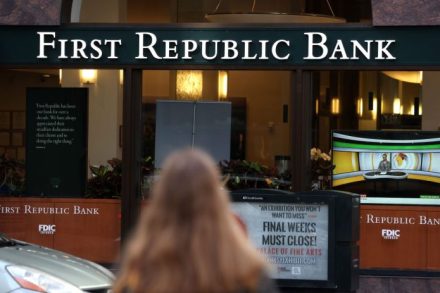
Can a banking crisis really be going this well? After a week of panic withdrawals and a crashing share price, the First Republic Bank in the US will be taken over nearly in its entirety by J P Morgan Chase, in a shotgun marriage facilitated by the Federal Deposit Insurance Corporation (FDIC). No depositors will lose money, and most of the bank’s functions will continue uninterrupted – just as they did in the case of HSBC’s takeover of the UK arm of Silicon Valley Bank last month.     We have now had four major banking collapses in the space of six weeks, with remarkably little spillover into the economy at large

Our nanny state holds back Britain’s young

Clever people often believe that their cleverness gives them the right to control other people. Nowhere is this more manifest than in nanny state Britain.  So fixated was Public Health England on shielding us from our own bad decisions that when an infectious disease arrived on our shores the quango was woefully unprepared. Junk food advertising bans were prioritised over protecting us against an epidemic.  And so determined are politicians to insulate us from hardship that they attempt to regulate anything that moves. Arguably the most troubling recent development concerns the tacit raising of the age of majority. Since 1969 it has been accepted that we are treated as adults by law

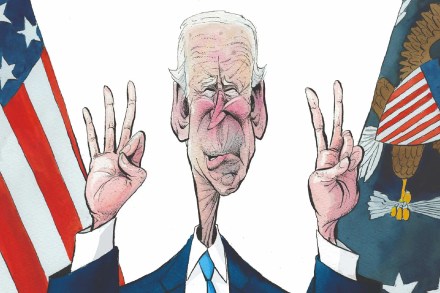
Will the Fed torpedo Joe Biden’s re-election? 

Hollywood will be backing him en masse. The major newspapers will be rooting to put him back in the White House. And most of corporate America, in between filling in the forms for the next round of ‘green subsidies’, will be quietly hoping for another four years of lavish spending and protectionism to keep out all those irritating foreign competitors. As he launched his re-election campaign this week, President Joe Biden could count on plenty of mainstream support. There is just one problem: the Federal Reserve is about to torpedo his campaign – by tipping the American economy into recession.  GDP figures for the US released today showed an economy

The UK’s treatment of Activision shows it is closed for business

It was, admittedly, not quite as thrilling as an action sequence from Call of Duty. Even so, the statement put out by Bobby Kotick, chief executive of US video game publisher Activision, following the UK’s bizarre decision to block the company’s acquisition by Microsoft was about as bloodthirsty as any ever put out by a major corporation. The ruling ‘contradicts the ambitions of the UK to become an attractive country to build a technology business,’ he argued. Even worse, ‘it does a disservice to UK citizens, who face increasingly dire economic prospects’, and, to cap it all off, it shows that Britain is ‘closed for business’. Of course, it would

Are we entering an unknowable future?

Neither of the UK’s main political parties is saying anything especially interesting about education. In an economy chronically short of skills – more than ten million people lack the skills they need to do their jobs effectively – that’s odd. The education cupboard is not entirely bare. Last week saw the latest instalment of the Prime Minister’s programme to support maths education to age 18. And a big number – more than £500 million – is being bunged at the UK’s numeracy problem through the government’s Multiply programme. This maths initiative has had its critics but, as vice-chair of the charity National Numeracy, I am not one of them. We

The war on landlords is a plague on the economy

During a lull in the pandemic I rented a little flat in Oxford for the academic year I was thrilled to have been offered; then Covid came back, my college all but closed and I made so little use of my lodgings that it would have been cheaper per night to stay in a suite at Le Manoir aux Quat’Saisons. As bills mounted, I learned that modern renting is astonishingly expensive – while for the landlord, I thought, it looked like easy money. So in the next phase of life, I became a buy-to-letter myself – and as I do the maths at the end of the tax year, I’m

The Bank of England is right: Brits can’t keep demanding pay rises

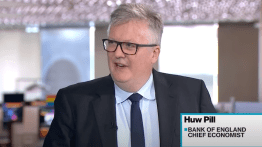
Bank of England chief economist Huw Pill isn’t going to win a popularity contest. Speaking on a podcast for Columbia Law School – a medium in which he perhaps felt a little less exposed than had he said it on a British TV programme – he said:  ‘Somehow in the UK, someone needs to accept that they are worse off and stop trying to maintain their real spending power by bidding up prices….What we’re facing now is that reluctance to accept that yes, we’re all worse off and we all have to take our share.’ Nurses, doctors, train drivers and everyone else contemplating striking for an inflation-beating, or even inflation-matching,

The era of big state spending is here to stay

Lockdown ended, the economy reopened – and public sector borrowing went up. Provisional figures for 2022/23 released by the Office for National Statistics (ONS) this morning show that the government borrowed £139.2 billion. This is an increase of £18.1 billion on the previous year, when the economy was still being disrupted by Covid. The figure was made much worse by figures for March this year, when the government borrowed £21.5 billion – £16.3 billion more than in March 2022.  A huge surge in borrowing during the pandemic was to be expected. The government was, after all, paying the wages of 9 million people at one stage through the furlough scheme.

This season of bank panics may not be over

‘March madness’ was a tag applied with hindsight to last month’s scare provoked by the unconnected collapses of Silicon Valley Bank and Credit Suisse. Nothing systemic there, said the wise men. But this week began with another rumble, as reputable US institutions, including State Street of Boston and the stockbroker Charles Schwab, reported large deposit outflows, while shares in others dived. Meanwhile, the Bank of England was assessing whether to raise the state guarantee of bank deposits from its current £85,000 to avert social-media panics. But the problem is becoming circular: as interest rates rise, depositors are keener to move money around in search of higher yield. The bigger the

Stubborn inflation rates spell trouble for Rishi Sunak

The rate of inflation has come down, barely. This morning’s update from the Office for National Statistics shows inflation fell to 10.1 per cent on the year in March, down from 10.4 per cent in February. The rate remains in the double digits, where it has hovered since September 2022. Today’s update takes the rate back down only to where it was in January.  A trend has emerged with inflation data in the UK. As predicted across the board, energy prices are falling at significant pace, with the largest ‘downward contributions’ in March coming from a drop in motor fuel prices – which fell by 5.9 per cent in the year to