Economy

  • AAPL

    213.43 (+0.29%)

  • BARC-LN

    1205.7 (-1.46%)

  • NKE

    94.05 (+0.39%)

  • CVX

    152.67 (-1.00%)

  • CRM

    230.27 (-2.34%)

  • INTC

    30.5 (-0.87%)

  • DIS

    100.16 (-0.67%)

  • DOW

    55.79 (-0.82%)

Is Britain losing its sense of fairness?

Has Britain become a freeloader’s paradise, asks the Spectator’s economics editor Michael Simmons in our cover piece this week. Michael analyses ‘the benefits of benefits’, at a time when Britain’s welfare bill is burgeoning and most households are struggling with cost of living. For example, while a family of four can expect to pay £111 to visit the Tower of London, that is just £4 total on Universal Credit (UC), and for London Zoo it is £108 compared to £26. Michael is not arguing against the idea of helping those in need, but pointing out that – as the benefits bill continues to increase – this is another case of

Spotlight

Featured economics news and data.

Cutting Britain’s giant welfare bill would be an act of kindness

Does having money really matter that much? There are those, usually with quite a bit of it, who want us to care less about materialism. But, unequivocally, money really does matter – not because of any status it supposedly brings, but for the freedom it buys: freedom to choose how we live and how we look after others. Considering this, it seems that the deep disillusionment with mainstream politicians in recent years stems from a protracted and ongoing period of stagnant living standards over which they have presided. But the truth is that the average person has not got poorer since the global financial crisis. They have got a little

Record pay deals will worry the Bank of England

Wages are slowly closing the gap with inflation, up 7.2 per cent in the year to April versus inflation of 8.7 per cent. It adds up to a real-terms decrease. It’s the 18th real-terms fall in a row – though the fastest nominal rise on record outside the pandemic. The new minimum wage (up nearly 10 per cent to £10.42 an hour) was a factor. The economy created 250,000 more jobs with the number in employment rising to 33.1 million. This shows signs of the worker shortage crisis softening a bit – the number of people either in work or looking for it rose to 34.4 million, the highest since

Will the tax burden finally start falling?

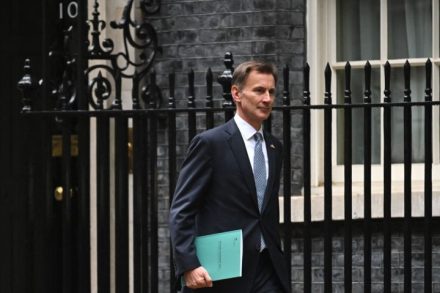
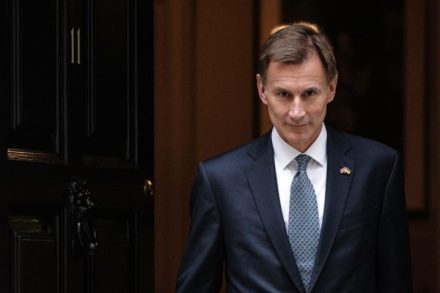
Is the government ready to start cutting taxes? After taking the burden to a post-war high, it seems ministers are preparing to change direction – in one area, anyway. This morning Jeremy Hunt announced that the energy levy on oil and gas companies, known as the ‘windfall tax’, will come to an end in 2028 – a direct response to growing fears that the effective 75 per cent tax on profits was driving business and investment out of the country. Divestment from the North Sea has become a heavily contested topic. Keir Starmer announced that Labour would ban all new production in the North Sea, perhaps putting into perspective for

Sunak has hitched a ride on Biden’s climate gravy train

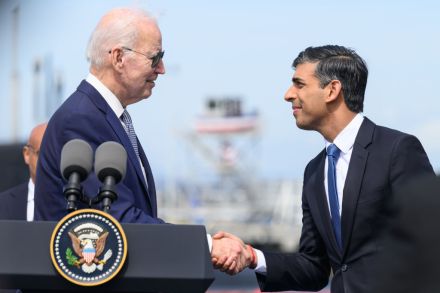
Sometimes it helps to have a banker as Prime Minister. They have plenty of faults. They can be dry, calculating, and they are typically far too rich to connect with ordinary people. But if they have one thing going for them it is this: they can spot free money when they see it. And Rishi Sunk has seized a chance for the UK to take a percentage of the unlimited cash that President Biden is spraying at American industry.  Hundreds of billions in corporate bungs are available, and because it is all in tax credits there is hardly any oversight Most people will dismiss the Atlantic Declaration that Sunak negotiated

Britain faces plenty of economic pain – even if it dodges a recession

The UK will narrowly avoid a formal recession this year. That’s the consensus that is emerging based on the current data. This morning’s Economic Outlook from the OECD – which forecasts 0.3 per cent growth in 2023 – reflects similar projections from the IMF’s latest update and the Office for Budget Responsibility, which have revised their figures upwards in recent months. But to what extent will this modest growth actually be felt by Brits? Here the picture is far less positive. Inflation – which remains stubbornly high, in Britain especially – continues to eat away at real wages. The OECD predicts that the UK will continue to suffer from some

Why Russia blew up the Kakhovka dam

When I first heard that the Russians had blown up the Kakhovka dam, I assumed that this was an effective tactic to frustrate the Ukrainian counteroffensive. It will surely slow it. But a Ukrainian friend raises an additional possibility – that these are the scorched-earth tactics the Germans used in much the same places 80 years ago. Writing from Kyiv, she quotes a letter from Himmler to the SS commander in Ukraine in September 1943: ‘It is necessary to make sure that when retreating from Ukraine, not a single person, not a single animal, not a single gram of grain, not a single metre of railway track is there, so

If inheritance tax can’t be scrapped let’s change it for the better

I’d happily jump on the Telegraph bandwagon for the abolition of inheritance tax, even in the company of Liz Truss and Nigel Farage. The urge to provide a cushion of capital for children and grandchildren is an honourable one. Recipients of already-taxed cash from deceased relatives are arguably less likely to be burdens on the state in their own later lives, just as the state is unlikely to spend the same money, if confiscated, in efficient ways for the greater good. And to argue against inheritance is to put socialist hostility to wealth ahead of the worthy aim of family betterment. Enough said. The trouble with this campaign, however, is

Abolishing inheritance tax would be a mistake for the Tories

Liz Truss’ fallen star has been rising again of late (at least a few degrees above the horizon) as gilt yields return to the heights they reached during her brief premiership. Together with sluggish GDP figures this has led many to wonder whether she was not right, after all, to make growth the absolute priority of her economic policy. Whether she can maintain her momentum following her latest intervention, adding her name to the 50 Conservative MPs calling for the abolition of inheritance tax, is another matter. There would be nothing more fatal to the Tories than to go into the next election offering one tax cut – for millionaires

Whose job is it to keep airport e-gates open?

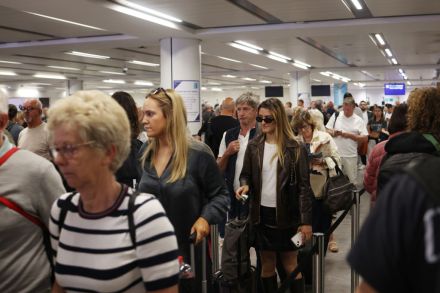
Do you hate airport e-gates? Me too. The instructions are poor, the facial recognition frequently fails and the ‘Don’t abuse our staff’ posters tell you you’re trapped in a system that’s bound to annoy. Last Saturday it went from bad to worse, when all 270 e-gates at UK entry points stopped working. ‘A technical nationwide border system issue’, the Home Office called it. But I think we should know who’s responsible – and a Hollywood-hacker-style trawl has led me to a 2021 report by David Neal, ‘independent chief inspector of borders and immigration’. Neal reveals that a single-supplier contract for UK e-gates was awarded in 2013, until 2023-24, to a

Starmer’s economic promises would spell disaster for the UK

Britain is paying a terrible price for two decades of fiscal incontinence. Our borrowing costs have risen to the highest amongst advanced economies. Core inflation (which excludes food and energy) is actually rising. Mortgage costs are spiking as expectations mount that interest rates will be raised once again. Chancellor Jeremy Hunt has conceded he would be comfortable with a recession if it brought down inflation. We have been living beyond our means, and the day of reckoning is here.  Rishi Sunak has lost any claim of being a ‘safe pair of hands’ at the tiller; all the opposition really needs to do is sit back and watch the Conservatives lose the

Brexit could fix inflation

Has food price inflation finally peaked? Figures released by the British Retail Consortium (BRC) this morning reveal that food prices were up 15.4 per cent in the past 12 months, down from 15.7 per cent in the year to April. Last week’s figures from the Office of National Statistics also showed a small fall, from 19.2 per cent in March to 19.1 per cent to April. The BRC’s methodology is different from the ONS’s, not only in that it tends to produce slightly lower figures but that it also runs slightly ahead. The inflation story has subtly changed, from being one led by energy prices to being dominated by food

The madness of Sunak capping food prices

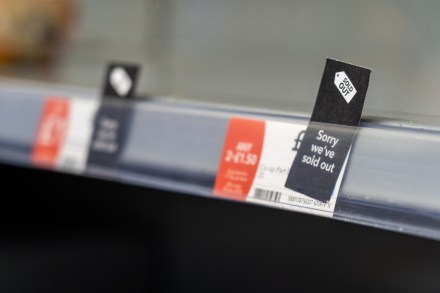
It wasn’t long ago that supermarkets stood accused of selling food too cheaply. Their price wars and two-for-the-price-of-one deals were destroying farmers, undermining local shops and making us fat. How long ago that now seems, with the government now considering 1970s-style price controls. While the measures would apparently be voluntary, they would fix the prices of a number of basic foodstuffs – the sort which Jack Monroe keeps her eyes on. The price of price-fixing is likely to be more pictures of empty shelves, which of course will be blamed on Brexit You don’t need to have studied economics in any depth to understand the problem with price controls. In

Hunt’s honesty on a recession to tackle inflation is refreshing

The government has been claiming since the start of the year that it’s on a mission to ‘halve inflation’ – despite having virtually no control in this area. Still, this week Rishi Sunak ramped up the narrative when the latest set of data showed the headline rate falling from 10.1 per cent on the year in March to 8.7 per cent in April. It was false optimism. And it’s backfired. Markets quickly saw past the headline rate and looked at all the worrying news underlying it: mainly that core inflation actually rose, nearing 7 per cent on the year in April. Borrowing costs have spiked since then: 10-year gilt yields hit 4.37 per cent

Online shopping has not killed off the high street, yet

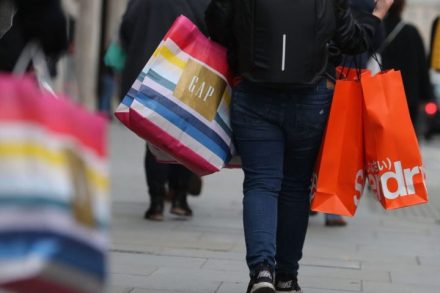
It wasn’t supposed to turn out this way, not at the beginning of the year when the wise and good were confidently predicting that Brexit-bound Britain would turn out to have the worst economy in the developed world in 2023. The UK economy would be contracting, they said, while almost everyone else’s expanded. We have had enough of trying to buy clothes online, though we are happy to buy other stuff in this way Now, as Germany descended officially into recession this week, more evidence emerges that Britain, so far, has avoided the same fate. The Office for National Statistics’ retail figures for April show that sales volumes were up

Sunak should stop pretending that he controls inflation

The government is delighted with today’s inflation update. Rishi Sunak released a clip this afternoon, talking about his government’s efforts to ‘halve inflation’ by the end of the year. ‘I know it’s still tough’ he says, but ‘the plan is working, and we are delivering.’ The problem is that it is not in his gift to deliver on his particular pledge. The economics in this video rival his chancellor’s coffee cup video from a few months back – in that they simply don’t add up. Politicians do not control inflation. They have no reliable mechanism for doing so. Windfall taxes do not bring down inflation, as he suggests in the video; and

What will it take to crash the housing market?

Is there anything that might cause the much-predicted crash in UK house prices? Not – evidently – a pandemic (which perversely caused prices to surge). A sharp, upwards jerk in the Bank of England’s base rate to 4.5 per cent didn’t do it either.    The latest edition of the Office for National Statistics’s UK House Price Index – the most comprehensive of house prices indices, but which tends to trail Halifax and Nationwide – shows that prices rose by an average of 4.1 per cent in the 12 months to March. That is down from 5.8 per cent in February and is lower than inflation, indicating a real-terms fall in house

Regulators should not roll over for Revolut

Since we launched our Economic Innovator (originally ‘Disruptor’) awards in 2018, I’ve had enjoyable contacts with well over 100 entrepreneur-led high-growth companies picked as finalists from across the UK. Most I met at convivial pitching lunches; the rest told me their stories by Zoom or phone. Only one chosen finalist has ever shunned both the lunch and the opportunity for a call: it was Revolut, the London fintech venture that’s currently hustling for a UK banking licence. Revolut’s 38-year-old Russian-born founder Nikolay Storonsky has built a serious disruptor, valued in 2021 at $33 billion. Though Schroders – as a Revolut shareholder – has marked that figure down to $18 billion,

Inflation falls to 8.7% – but pressures remain

Since the start of the year, politicians and central bankers have been promising a collapse in the inflation rate. But monthly data kept rolling in, and the rate remained in double digits. This put even more pressure on the data this morning, published by the Office for National Statistics, with the Bank of England (BoE) making clear in its last report that April’s figures would turn the corner on price hikes. Unlike its previous predictions in this inflation saga, it seems the BoE has managed to get this one right. Prices rose 8.7 per cent on the year to April – still a staggeringly high figure, but down from 10.1

Are things beginning to look up for the UK economy?

We learned this morning just how much the government is struggling to keep its promise to bring down the national debt. But news from the International Monetary Fund (IMF) will be lifting spirits in No. 10. Perhaps it can make good on another pledge: to grow the economy. The IMF has once again revised its figures for estimated GDP growth, and it’s good news for Britain. Following on from a fairly dramatic lift last month in which the IMF halved its recession forecast for the UK, but still predicted a contraction, the Fund has once again upgraded its forecasts, now predicting 0.4 per cent growth this year. Moreover, the UK has been lifted from

Jeremy Hunt is yet to get a grip on government borrowing

All eyes are on tomorrow’s inflation rate figures, which need to start falling fast for Rishi Sunak to make good on his pledge to ‘halve inflation’ by the end of the year. But this morning we got an update on the one pledge from No.10 that was never likely to be made good on: the promise to get national debt falling. This morning’s figures show us the extent to which those numbers are going in the wrong direction. Public sector borrowing in the month of April rose to £25.6 billion, almost £12 billion more than April last year. This makes last month the second-highest borrowing April on record. Rather than