Economy

  • AAPL

    213.43 (+0.29%)

  • BARC-LN

    1205.7 (-1.46%)

  • NKE

    94.05 (+0.39%)

  • CVX

    152.67 (-1.00%)

  • CRM

    230.27 (-2.34%)

  • INTC

    30.5 (-0.87%)

  • DIS

    100.16 (-0.67%)

  • DOW

    55.79 (-0.82%)

Why Xi thinks he has the upper hand

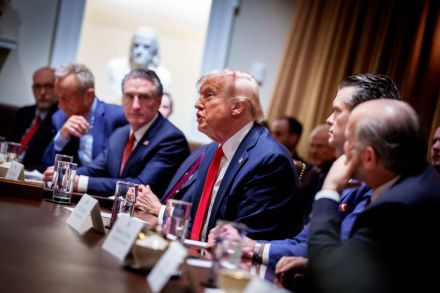
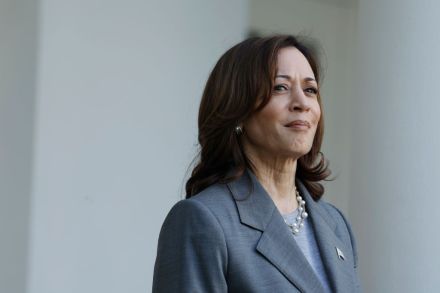
Taiwan is “the most important issue,” Xi Jinping warned Donald Trump. “If mishandled, the two nations could collide or even come into conflict, pushing the entire China-US relationship into a highly perilous situation,” according to Chinese state media. The contrast with Trump’s comments was striking. Trump had earlier named trade as the most important issue. In opening remarks, the American President stuck to bland flattery, saying he and Xi had a “fantastic relationship,” that Xi was a “great leader” and that “it is an honor to be your friend.” “The relationship between China and the USA is going to be better than ever before,” he insisted.

Spotlight

Featured economics news and data.

Cutting Britain’s giant welfare bill would be an act of kindness

Does having money really matter that much? There are those, usually with quite a bit of it, who want us to care less about materialism. But, unequivocally, money really does matter – not because of any status it supposedly brings, but for the freedom it buys: freedom to choose how we live and how we look after others. Considering this, it seems that the deep disillusionment with mainstream politicians in recent years stems from a protracted and ongoing period of stagnant living standards over which they have presided. But the truth is that the average person has not got poorer since the global financial crisis. They have got a little bit richer. Employment levels are still exceptionally high. And, both historically and internationally, we are a very rich country.

How AI helps the tech giants

Artificial intelligence (AI) and its related technologies — machine learning and the metaverse — represent a watershed in the evolution of the global economy. Like other such shifts, its emergence is likely to favor certain interests, notably a handful of technology giants, the media and a small cadre of highly skilled programmers. Everyone else faces economic danger, certain to roil domestic and international politics in coming years. Eighty-two percent of millennials fear AI will reduce their earning ability — and they are right to be worried. The first group to lose will be the usual suspects: factory and warehouse workers as well as professionals with largely routinized occupations suited to automation.

ai
game

How game ranching protects endangered species

Game ranching in Africa is big business, farming wild animals that unlike regular livestock have evolved there and don’t need much care. What they do need is space. South Africa’s most famous reserve, Kruger National Park, is an 8,000-square-mile chunk of wilderness on the border with Mozambique, but private land stocked with wildlife covers almost ten times that area. Ranchers stock their property at game auctions where animals are sold to ranchers who either want to introduce a species or add a new bloodline. In 2019, American cattle breeders were delighted when an Angus bull sold in North Dakota for a record $1.51 million. But in 2016, the winning bid for a stud buffalo in South Africa was close to $10 million.

The thirty-two-hour work week: another of Bernie’s bad ideas

Bernie Sanders is the bottomless cup of bad ideas. He keeps refilling it. Take his latest venti, a law that says everybody gets to work thirty-two hours for forty hours pay. That’s a magical 25 percent pay increase. His next trick is to pull free steak dinners out of a hat. What do you think would actually happen if such Bernie’s law were passed, enforced and found constitutional? (None of those would actually happen, of course.) The immediate effects would be another 25 percent price increase for labor-intensive products, a huge burden on low-income consumers and an additional incentive to replace more expensive workers with machines and computers.

bernie sanders

The magic of making maple syrup

On one of those dark-too-early winter afternoons that might as well be midnight, I assessed my Subaru’s all-wheel drive capabilities with a slick spin up a long, snow-covered driveway. My destination: the sugar shack. Scott and Kelly Kolesar live on a piece of property Kelly’s great-grandfather homesteaded. And for all I know, standing on the clear-cut hillside that’s only ever been disturbed by the planting of some potatoes and strawberries and the hooves of cattle that grazed it decades ago, I could be right back in those early days of central Pennsylvania’s settling. The sky is clear and dark, with no light pollution to speak of, and diamonds twinkle above. The Kolesar home glows as a North Star up ahead, and another beacon next door serves as Halley’s Comet.

syrup

Is China using Mexico as a back door to trade with the US?

The governor of the Mexican northern state of Durango Esteban Villegas announced last Monday the first “grand investment of the year.” The investment is of close to $400 million — and the investor is China. This project is one of many. So it appears shortsighted to celebrate Mexico surpassing China to become the US’s top trading partner as an absolute “decoupling” success. While Mexico and the US are economically integrating, so are Mexico and China. Politicians in Washington, most notably members of the Select Committee on the Chinese Communist Party, are now warning that Beijing is attempting to use Mexico as a “back door” to the American market as direct trade between the great competitors sharply declines.

mexico

The gloomy future facing trade unions

Few developments have more cheered progressive activists than the perceived resurgence of labor unions. This has been sparked by largely symbolic efforts to unionize in places such as Starbucks and Amazon, as well as more sizable wins by the Writers Guild of America and the Screen Actors Guild and United Auto Workers, the country’s most important private labor union. In 2022 strike activity more than doubled from the previous year. Yet ultimately these wins may turn out to be largely Pyrrhic.

unions

The rise and fall of US Steel

US Steel, which came in with a bang in 1901, is going out with a whimper. It has agreed to sell itself to Japan’s Nippon Steel for $14.1 billion, $55 per share in an all-cash deal. While steel is still an indispensable commodity (world production has doubled in the last twenty years, to 1.951 billion tons, about half produced in China), it has long ceased to be the iconic measure of industrial power that it was in the late nineteenth century. Steel — iron with a carefully calibrated amount of carbon added — has been known since ancient times. But it could be made only in small batches, and thus was so expensive to produce that it was almost a semi-precious metal, its use reserved for razors, sword blades and surgical instruments.

Revealed: how Disney hijacked Reedy Creek to become its own government

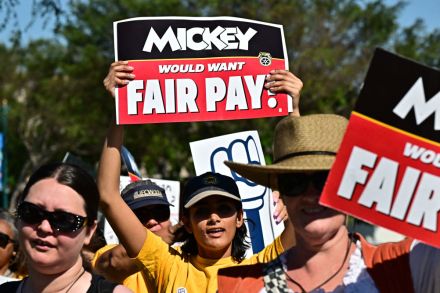
A soon-to-be-public audit of Disney’s special governing district in Florida details the “shocking” ways in which the nearly $200 billion company was effectively governing itself for half a century. Investigators described the Reedy Creek Improvement District as Disney’s “creature” that maximized company profits at the expense of Floridians, according to a copy of the report obtained by The Spectator. Disney placated Reedy Creek employees with millions of dollars' worth of special park passes, significant discounts on cruises, food and merchandise and handpicked leadership through shady land deals to ensure that Reedy Creek would do its bidding.

disney reedy creek

Was 2023 the year of the labor union?

It is only fitting that the low point of the American labor movement occurred in 2009, the Year of the Rat. The Great Recession may have started with Wall Street speculation in the housing market, but your average American had most likely never heard of Henry Lehman or his siblings until the day Dick Fuld drove the 150-year-old bank bearing their name into the ditch. But General Motors, Chrysler? Cars, even more than Hollywood, jazz and the semi-automatic rifle, are the quintessential American business. How could those get driven into the ground? As soon as freshly evicted homeowners finished packing the remains of their subprime split-levels into the backseats of their battered Tahoes, they went looking for culprits. They settled on the United Auto Workers.

labor

As America’s fiscal storm approaches, government prepares to save itself

It’s a familiar response whenever the National Weather Service warns of a Category 5 hurricane, a life-threatening winter blizzard or some other looming natural disaster. Government officials urge local citizens to seek shelter immediately, while promising that area police will keep guard to ensure that looters do not use the emergency to rob boarded-up homes and abandoned stores. Today, Americans are being warned to brace for another kind of storm, one involving not the weather but their personal finances.

fiscal debt

Justin Trudeau is tanking Canada’s economy

In September the leaders of the world’s most powerful nations met in New Delhi for the annual G20 Summit to address such heady matters as the war between Russia and Ukraine, the future of energy production and the criticality of food security. Everyone smiled for the cameras, shook hands politely and agreed to do their best to do something about everything, just so long as they weren’t asked to make any enforceable commitments. At the end of the weekend, all the great men and women of the world put their shoes back on, took one more group photo and bid adieu to their friends (and enemies). Then they all headed for home. All, that is, except one.

trudeau
doormen

The secret lives of New York’s doormen

The first test was the audacious cockroach that sidled into our apartment about three days after we moved in. Hardly enough of a native Manhattanite to calmly swat it and flush it and go on eating my pizza, I pollyannaish-ly sprinted downstairs instead. “Excuse me,” I breathlessly announced to the crossword-solving bald guy manning the front desk — I hadn’t even had the courtesy of introducing myself to him yet. “There’s a cockroach in my living room.” Visibly unimpressed but with an air of professional politeness that almost hid what he actually wanted to say (“suck it up, princess”), he looked up at me sympathetically: “The exterminator comes Tuesdays.” It was Friday.

Conservatives should cheer Dove’s new ‘fat liberation’ spokesperson

Zyahna Bryant, a “fat acceptance” and Black Lives Matter activist, has been named the new face (and body?) of Dove, the company known primarily for its soaps. Conservatives are up in arms over the new campaign, and a Dylan Mulvaney-style boycott has begun among conservative consumers opposed to "wokeness" and also to Bryant’s role in attempting to get fellow University of Virginia student Morgan Bettinger expelled from UVA for “racist” comments she didn’t make. https://www.instagram.com/reel/CwnKlIGybvO/?utm_source=ig_embed&ig_rid=ddb08da2-6f29-4243-b80e-e93e92bba4ee Newsweek provides a brief recap of Bryant’s unsuccessful headhunt: “In the summer of 2020, Bryant claimed that she heard Bettinger refer to BLM protesters as ‘good speed bumps.

dove zyahna bryant

The problem facing US cemeteries

On a hillside on the outskirts of my town is an expansive cemetery where more than 20,000 of Philipsburg’s ancestors have been laid to rest since 1869. For decades, its thirty or so acres have been cared for by three dedicated men who dig and fill graves, mow and trim the grass, repair equipment, patch and plow roads, maintain old headstones and gather leaves “for next to nothing,” as Paul Springer puts it. This work must “go on constantly,” says Paul, but changes in the mores surrounding death mean “generating the income necessary to support these activities is becoming impossible.” Paul is my friend and one of those indispensable do-ers small towns across the country rely on to keep things ticking.

cemeteries
klein

How does Michael Klein do it?

Soon after the stunning news broke on June 7 that LIV Golf and the PGA were burying the hatchet, dropping the litigation between them and joining forces, my phone started blowing up. My Wall Street sources were nearly dumbstruck. The deal itself was a stunner, of course, conducted so secretly by the leaders of both the PGA and LIV that the professional golfers who make the two warring organizations possible had been clueless about what was happening. But that’s not what my people wanted to discuss. All they wanted to talk about was how Michael Klein — a longtime Wall Street investment banker with an eponymous advisory firm, M. Klein & Co. — had once again tapped into his deep relationships with Saudi leaders and was representing them in the LIV merger with the PGA.

The high odds of a Chinese black swan

I have a memory picture of an urban highway in Shenzen, southern China. Recently built, with abundant flowering shrubs planted along its central reservation, it was lined as far as the eye could see by uncountable apartment towers, many of them unfinished. This was 2009 and it was my first glimpse of the debt-fueled property bonanza that had begun to grip the Chinese economy — alongside the export-led manufacturing boom that was also plainly visible, thanks to satellite maps of the vast agglomeration of factories surrounding the new-rich residential areas. It’s easy to be a permanent bear in any market, because history tells us they all come crashing down in the end.

Evergrande

Biden’s green agenda pokes a big hole in America’s social safety net

With the current inflation rate still well above the Federal Reserve’s 2.0 percent target, it is only natural that critics of President Biden’s Inflation Reduction Act (IRA) treated its recent one-year anniversary as an opportunity to once again stress that the bill never had anything to do with inflation. Biden himself has finally admitted as much. But what has received almost no attention is the degree to which big spending programs like the IRA — whose estimated cost has already spiraled up from $384.9 billion to $1.5 trillion — will further erode America’s social safety net. Especially the Medicare hospital insurance fund (Medicare Part A), which its trustees say will be depleted in 2031, and Social Security, which runs out of money just three years later, in 2034.

energy green biden

Is the era of the corporate DEI officer coming to an end?

Barely three years after the death of George Floyd, it appears the era of the corporate DEI officer is rapidly coming to an end. Or at least experiencing a major contraction. Across American business, the number of Diversity, Equity and Inclusion roles grew by 55 percent following the protests of summer 2020, reported the Society of Human Resource Management. At the start of 2022, the entire DEI “industry” was worth an estimated $9.4 billion. In 2023, it’s a very different story. According to the workplace trends consultancy Revelio Labs, DEI jobs shrank by one-third last year. The key problem with the DEI industrial complex is not the idea that American workplaces should be more representative of America — but the means often used to achieve those ends.

DEI
patriot

Has the patriot economy’s moment finally arrived?

It’s Saturday. You just rolled out of your MyPillow Giza Dream sheets, spent a little extra time trimming your beard with your Jeremy’s Razor, and brewed yourself a fresh cup of MAGA Dark Roast COVFEFE. You call your best friend on your Patriot Mobile cellphone to shoot the breeze. Hell, it’s five o’clock somewhere. Go ahead and crack open an Ultra Right beer and waste away the afternoon. Welcome to life in the patriot economy — the parallel economy being developed by conservative entrepreneurs and investors. Or at least an exaggerated version of it. The idea of the patriot economy is fueled by two convictions. The first is that the right needs its own economic infrastructure so consumers aren’t forced to buy goods from “woke” corporations.

The end of American retirement

Cockburn has been mulling over in his mind a gloomy new report about his retirement prospects. “In a July poll conducted jointly by Axios and Ipsos,” the Hill writes, “29 percent of workers under fifty-five answered a retirement query with, ‘I don’t think I will ever retire.’ Asked why not, three-quarters of the never-retire group said they could not afford to stop working. A smaller share said they didn’t want to.” With inflation doing a number on folks’ 401ks and future inflation fears rising, Cockburn is not surprised by people’s responses to this poll (except for those who don’t want to stop working — seek mental evaluation). Still, he wonders: what does our future workforce look like if it’s composed of geriatric personnel refusing or unable to retire?

retirement