Economy

  • AAPL

    213.43 (+0.29%)

  • BARC-LN

    1205.7 (-1.46%)

  • NKE

    94.05 (+0.39%)

  • CVX

    152.67 (-1.00%)

  • CRM

    230.27 (-2.34%)

  • INTC

    30.5 (-0.87%)

  • DIS

    100.16 (-0.67%)

  • DOW

    55.79 (-0.82%)

Why Xi thinks he has the upper hand

Taiwan is “the most important issue,” Xi Jinping warned Donald Trump. “If mishandled, the two nations could collide or even come into conflict, pushing the entire China-US relationship into a highly perilous situation,” according to Chinese state media. The contrast with Trump’s comments was striking. Trump had earlier named trade as the most important issue. In opening remarks, the American President stuck to bland flattery, saying he and Xi had a “fantastic relationship,” that Xi was a “great leader” and that “it is an honor to be your friend.” “The relationship between China and the USA is going to be better than ever before,” he insisted.

Spotlight

Featured economics news and data.

Cutting Britain’s giant welfare bill would be an act of kindness

Does having money really matter that much? There are those, usually with quite a bit of it, who want us to care less about materialism. But, unequivocally, money really does matter – not because of any status it supposedly brings, but for the freedom it buys: freedom to choose how we live and how we look after others. Considering this, it seems that the deep disillusionment with mainstream politicians in recent years stems from a protracted and ongoing period of stagnant living standards over which they have presided. But the truth is that the average person has not got poorer since the global financial crisis. They have got a little bit richer. Employment levels are still exceptionally high. And, both historically and internationally, we are a very rich country.

Inside the unlikely return of WeWork’s Adam Neumann

Imagine for a moment you are Adam Neumann, the slick, smooth-talking Israeli-born entrepreneur who took the world by storm thirteen years ago with WeWork, his ultimately failed effort to rethink the way we office. After your start up took a tumble and your IPO failed, you nonetheless walk away with roughly $600 million in cash, plus another $400 million loan, and a new lease on life. You head underground, lick your wounds and claim to be trying to learn from what went wrong, including the relentless overhyping, the mismanagement and the enormous losses that your investors suffered. When you re-emerge, you decide to start again and persuade one of Silicon Valley’s most respected investors to back you. Whoa.

Neumann

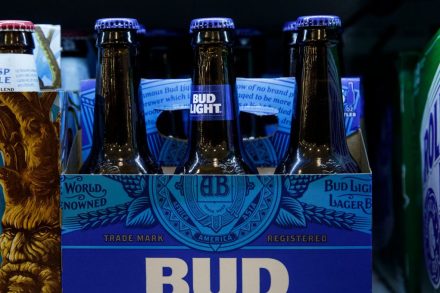
Bud Light: from Spuds MacKenzie to Dylan Mulvaney

Goodbye Spuds MacKenzie, the original party animal and pitch man for Bud Light, the nation’s leading beer. The most clever ad campaign ever, Spuds debuted during the 1987 Super Bowl game. The nation instantly fell in love with the bold bull terrier in dark glasses and a Hawaiian shirt. https://www.youtube.com/watch?v=0K5BgCI-U7c&ab_channel=STEVEHEROLD There’s Spuds, looking good in baggies on a surfboard in an ad titled “Hang Twenty.” Now that’s fun, appealing and catchy — and, most importantly, apolitical — in a way that TikTok’s dreary Dylan Mulvaney and Anheuser-Busch’s Alissa Gordon Heinerscheid are not and cannot be.

spuds mackenzie

The ESG winter is here. Just ask Larry Fink

In some ways, Larry Fink is an unsurprising villain. Wall Street titans aren’t in the business of being loved, and as the Chairman of BlackRock, the world’s largest asset manager assets, Fink isn’t a Master of the Universe. He’s the guy they work for. Paradoxically, though, it isn’t good, old-fashioned greed that has made Fink a figure of popular contempt, but his quest for political approval. With a foray into win-win talk of responsible capitalism and ethical investing, Fink has turned himself, and his firm, into a punchbag for both the left and the right.  In recent years, Fink has become the face of ESG — the multifarious push to put environmental, social and governance concerns at the heart of investment decisions. At first, Fink leant into the role.

larry fink

What’s going on with Dylan Mulvaney and Bud Light?

Transgender TikTok star Dylan Mulvaney infuriated beer drinkers around America on Saturday after posting about an alleged partnership with Bud Light. Mulvaney, who has amassed over 10 million followers on TikTok and 1.7 million on Instagram by documenting his transition from male to female, dropped a video on Instagram that showed the influencer sipping from the famous blue can while wearing a black cocktail dress and matching elbow-length opera gloves, à la Audrey Hepburn in Breakfast at Tiffany's. Toward the end of the video, Mulvaney reveals that Bud Light sent him a custom can with his likeness printed on the side and a congratulations for spending an entire year as a girl.

Is trans TikToker Dylan Mulvaney a Bud Light partner? (Instagram Screenshot)

Nassim Nicholas Taleb, the anti-confidence man

Dealing with the writer, statistician, Twitter warrior and self-described flâneur Nassim Nicholas Taleb is no simple matter. First there was the initial approach, months ago. I ventured to email him and ask for an interview despite his long-held and often-expressed low opinion of journalists. (Heuristic: those who make the biggest deal out of disliking the media care about it the most.) To my surprise, Taleb agreed to it almost immediately even though he “doesn’t do interviews.” Some logistical back and forth ensued. Then a twist: he would only agree to be interviewed if he wasn’t photographed. Why? Because in photos he is “made to look sickly and weak.

taleb

The unstoppable march of the gambling giants

There’s an old adage in the gambling business: “You never hear anyone say ‘I used to be a bookie but then I went broke.’” So if you’re betting on the DraftKings sportsbook app going under soon, even though the company lost $242 million in the fourth fiscal quarter of last year, you’re as big a sucker as the people who think they’re going to get rich by hitting a ten-team parlay. The company brought in $855 million in revenue in the same time period, up 81 percent from the previous quarter, and increased its user base to 2.6 million, up 31 percent. It only lost money because it spent a fortune on advertising and promotions, which, given the other numbers, have clearly been successful.

gambling

Credit Suisse lingers still. Why?

If G-SIBs were a gentlemen’s club rather than a category invented by the Basel-based Financial Stability Board, Credit Suisse would have been kicked down the front steps months ago. G-SIBs are the thirty "global systemically important banks" and even within that list, Credit Suisse counted among those with the lowest "required levels of addition capital buffers": in short, regulators considered it rock-solid. But that was a judgment on its end-2021 balance sheet, not its management. Credit Suisse has been so badly run for so long — so riven by tension between the dull Swiss wealth business it ought to have been and the global player it imagined itself to be — that some of us wondered how it survived.

credit suisse

The last banking crisis and its architects, Dodd and Frank

The Dodd-Frank law, enacted in 2010 following the financial crisis of 2007-08, was named for two of its chief architects, Senator Chris Dodd, Democrat of Connecticut, and Representative Barney Frank, Democrat of Massachusetts. It's ironic that both had been involved, politically or personally, in exactly what had caused the financial crisis in the first place. In the 1930s, only about 10 percent of American non-farm families owned their own homes. But that began to change with the New Deal. The Federal Housing Administration was established in 1934 to guarantee mortgages, making banks much more willing to initiate them.

How hidden fees spiraled out of control 

Last week, a friend was halfway through a Hollywood wax when she complained to her beautician about stubborn hairs that were often missed. “That’ll be extra,” she was told. Apparently now the outcome of a Hollywood — famously meaning that your entire vagina is left completely bare — depends on what the beautician you have at the time can be bothered to do. She paid the money. What’s worse is that she didn’t even recount this story to me with pure, incandescent rage. When she finished talking and saw me red-faced and flapping my arms about, she laughed calmly and said, “It happens all the time now.”  Tragically, this does happen all the time. Last week, I went to Rome and decided that I’d get my hair done for the trip. A treat, I know.

hidden fees

How mediocre employees are forcing companies to be woke

Why are so many American corporations espousing progressive social views? It doesn’t seem to make much sense on its face. Companies that publicly endorse left-wing politics and internally subject employees to Diversity, Equity & Inclusion, or DEI, initiatives risk alienating a huge portion of their customer base and excising talented staff to appease a vocal minority of progressive keyboard warriors. As I write in my upcoming book, The Snowflakes’ Revolt, one major reason is that the woke left "create[s] a culture of fear in which everyone — including the adults who are supposed to be in charge — is terrified of stepping out of line and becoming a target of the bullies.

esg woke

SVB was more interested in virtue-signaling than sound banking

Even by the standards of bank runs, the collapse of Silicon Valley Bank was remarkable. In February, Forbes magazine had put it on its Best 100 Banks list. Yet on Thursday, depositors withdrew $48 billion. That’s $14 million a second. Lines formed outside the bank’s various branches, reminiscent of the Great Depression. California banking authorities shut it down and turned it over to the Federal Deposit Insurance Corporation (FDIC) for sale or liquidation. So what happened? Silicon Valley Bank had grown very quickly over the past few years, In early 2020, it had a deposit base of $55 billion. A mere two years later, its deposits had reached $220 billion. But that was more money than it could put into lending to its narrow base.

svb silicon valley

WATCH: Markwayne Mullin’s macho Teamster throwdown

Cockburn looked on at what he at first took to be a run-of-the-mill sports bar fight at 4:30 in the afternoon — only to realize it was Oklahoma senator Markwayne Mullin throwing down with Teamsters president Sean O’Brien in the hallowed halls of Congress. Mullin, a Republican, came in guns a’blazing to a Senate Health, Education, Labor and Pensions Committee hearing, saying he is “not at all against unions,” before listing the reasons unions are bad. The exchange between Mullin and O’Brien is painful to watch — and the transcript reads pretty much like what you'd expect to hear before a fistfight in a Chili’s parking lot. Cockburn has assembled, for your reading pleasure, a play-by-play highlight reel of the clash...

The new age of the con man

In the precarious world economy of 2023, everyone is selling you something — and much of that something doesn’t amount to anything. Companies, of course, sell you products and services; much of their junk amounts to solutions for problems that didn’t previously exist, though at least there’s still some sort of deliverable. Meanwhile, in worlds as essential to human flourishing as personal finance and bodily fitness, an ever-expanding class of so-called “influencers” are selling a whole lot of nothing dressed up as something. Their underlying success, ostensibly tied to their ability to help people become richer or fitter, depends in actuality on their ability to sell advice or investment opportunities that are likely only to enrich themselves. How did this happen?

con
vivek ramaswamy vanguard

‘Mostly a farce’: Vivek Ramaswamy on Vanguard’s withdrawal from ESG fund

Vivek Ramaswamy, the anti-woke entrepreneur running for president in 2024, cautioned skepticism Monday in response to Vanguard's decision to withdraw from a major Environmental and Social Governance initiative. "I'm proud to see at least some iota of movement which would not have existed without, bluntly, my efforts at Strive," Ramaswamy told The Spectator. "So I take it as a positive sign." Vanguard CEO Tim Buckley pulled out from the $59 trillion Net Zero Asset Managers initiative, an alliance that asks asset managers to invest only in companies that committed to reducing their greenhouse gas emissions to net-zero by 2050. Buckley insisted that Vanguard cannot abide by its fiduciary duty while refusing to invest in traditional energy sources and the companies that use them.

When celeb-backed crypto schemes took over the Super Bowl

This time last year, football fans dubbed the Super Bowl the "Crypto Bowl," after eToro, Coinbase, Crypto.com and FTX all paid for airtime. Just twelve months on, Mark Evans, the executive vice president of ad sales for Fox Sports, told the Associated Press there would be "zero representation in that category on the day at all," following the disastrous downfall of FTX, In other sporting news, NFL legend Tom Brady has finally retired, which is nice for him. Anyone who took his investment advice won’t be doing that any time soon. The seven-time Super Bowl champion is currently named in a class action lawsuit that claims he and his now-ex Gisele Bundchen lured fans into a massive fraud.

Kardashian

Why it’s time to end the debt ceiling and fund the IRS

Amid the much-anticipated debt ceiling imbroglio, it’s become clear that our national debt can't keep growing like this. To tackle this issue, we need to start by admitting the problem: about 70 percent of federal spending is mandatory, meaning it grows automatically without congressional input. Unfortunately, most of this is Social Security, Medicare, Medicaid, and other politically popular entitlement programs. Cutting the benefits these programs dole out is a political third rail most self-interested political actors won’t dare to touch. Luckily, we don't need to eliminate these programs. What entitlement reform supporters want is to secure these programs’ solvency and make sure they’re there for future generations.

The beautiful people turn their private jets towards Davos

Larry Fink is unhappy. The grand panjandrum of BlackRock, the world’s largest and most odoriferously PC pile of pelf, can’t understand why the Lilliputians of the world are singling him out for abuse. Having jetted in on his private plane to the World Economic Forum (WEF) at Davos in order to join the squads of beautiful people warning about the environmental dangers of gas stoves, the moral virtue of eating bugs not meat, and the need to “recalibrate” our understanding of free speech, the poor little rich boy is pouting because people are waking up to the totalitarian reality of what the WEF stands for. What is that reality?

The DEI industrial complex

In the wake of the Black Lives Matter protests in 2020, chief diversity officer hires tripled among the largest publicly traded companies. American companies paid an estimated $3.4 billion to firms for diversity, equity and inclusion, or DEI, programs, according to Princeton professor Betsy Levy Paluck in an op-ed at the Washington Post. And yet, moans Paluck, there is practically no research evaluating the results of these DEI initiatives.

dei

Report: baby boomer CEO exits on the rise

The number of CEOs leaving US companies surged in November, according to a new report. There were almost 100 exits for the month, roughly twenty more than were reported in October. The report, from global outplacement firm Challenger, Gray, & Christmas, Inc., shows that these exits were not replacements or instances of “stepping down” to pursue other opportunities, either. For thirty-seven of the executives, retirement was the primary reason for leaving, the most retirements in a single month since January 2020. The larger trend of CEO exits may have some staying power, too. Andrew Challenger, the firm's senior vice president, predicts, “We may begin to see large numbers of CEO changes as we enter 2023 amid an economic downturn.

boomer blockade

ProPublica to return SBF cash — will other outlets follow suit?

Sam Bankman-Fried may have been arrested, but he's not the only one with questions to answer following the FTX implosion. ProPublica, the nonprofit investigative news outlet, has finally claimed in an internal email that it will return the $1.6 million it received from Bankman-Fried's family foundation, according to Axios. In a memo, ProPublica president and co-CEO Robin Sparkman and editor-in-chief and co-CEO Stephen Engelberg said the company will be returning the money from Bankman-Fried’s family foundation, called Building a Stronger Future, because "it does not seem appropriate to keep these funds." Go figure.

sam bankman-fried propublica